Pneumatic Carving Polishing Machine
CN → US| HS Code | Tariff Rate | Origin | Destination | Doc |
|---|---|---|---|---|
| 8465930091 | 38.0% | CN | US | Official Doc |
| 8465930075 | 38.0% | CN | US | Official Doc |
| 8467111040 | 39.5% | CN | US | Official Doc |
Product Images
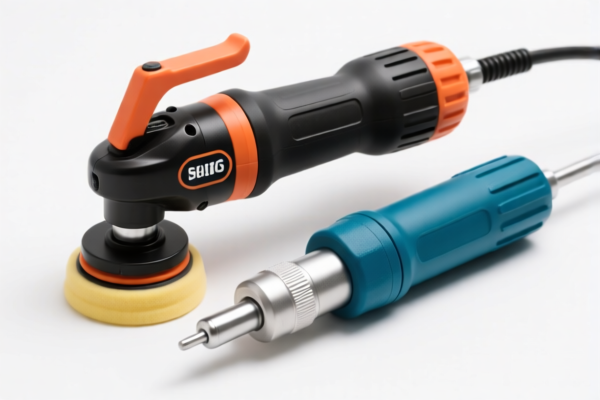
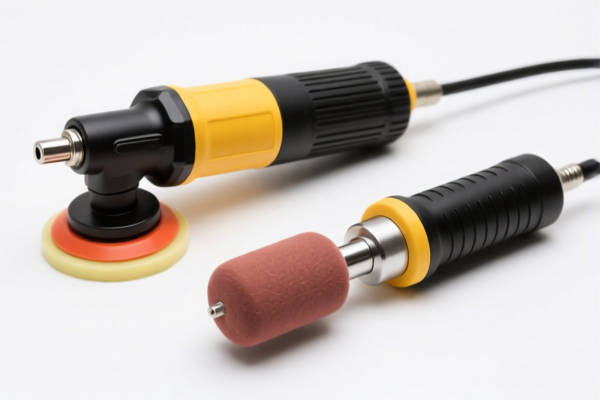
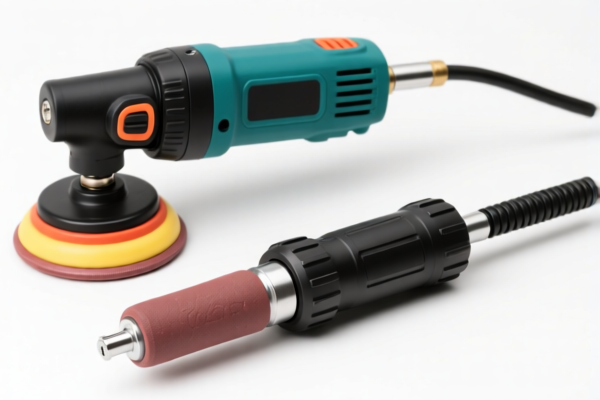
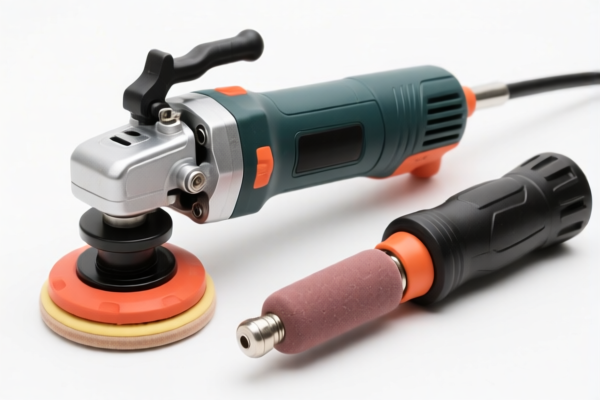
AI Analysis
🛠️ Pneumatic Carving & Polishing Machine: The Ultimate HS Code & Tax Guide for US Importers
🌐 HS Code Reference & Customs Clearance Guide | 2026 Latest Tariff Analysis | Professional Compliance Strategy
📌 I. Product Definition: What Exactly Is a "Pneumatic Carving Polishing Machine"?
A Pneumatic Carving Polishing Machine is a power tool driven by compressed air (pneumatic motor) used for surface finishing, shaping, and smoothing. In international trade, the HS Code classification is NOT universal—it depends strictly on two critical factors:
- The Material Being Processed: Is it metal, wood, hard plastic/rubber, or bone/ivory?
- The Form of the Tool: Is it a standalone hand-held tool, or a machine part/component?
⚠️ Critical Distinction:
- If used primarily on Metal → It is classified as a Hand Tool (Chapter 84.67).
- If used primarily on Hard Rubber/Plastic → It is classified as a Machine Part (Chapter 84.65).
- If used primarily on Wood/Bone/Hard Plastic → It is classified as a Machine Part (Chapter 84.65).
📦 II. HS Code Classification Details (2026 Latest Tariff Authority)
Based on the specific application and material, here are the three most relevant HS Codes from the provided data:
| HS Code | Product Description | Application Scenario | Key Classification Feature |
|---|---|---|---|
8467.11.10.40 |
Other hand-held tools with self-contained electric or pneumatic motor | Primarily Metal Processing | ✅ Pneumatic, Hand-held, Metal-focused |
8465.93.00.91 |
Parts of woodworking or working wood/cork/bone/ivory machinery | Hard Rubber/Plastic Polishing | ✅ Machine Part, Hard Material Focus |
8465.93.00.75 |
Other parts of woodworking or working wood/cork/bone/ivory machinery | Wood/Bone/Hard Plastic Polishing | ✅ Machine Part, Hard Material Focus |
🔍 Key Reminder:
- Metal vs. Non-Metal: This is the biggest pitfall. Many pneumatic polishers are dual-purpose. However, if the primary design or marketing targets metalworking, use8467.11.10.40. If designed for hard plastics/rubbers/wood, use8465.93.xx.xx. - Hand-held vs. Machine Part: Even if it's a "machine," if it's a hand-held tool with a pneumatic motor, it might fall under 84.67. But if it's considered a "part" of a larger woodworking/crafting machine, it falls under 84.65. The provided data suggests8465for wood/plastic/rubber and8467for metal.
💰 III. 2026 Latest Tariff Rate Breakdown (Including Surtaxes & Policy Add-ons)
✅ Applicable Country: United States (US)
✅ Country of Origin: China (CN)
✅ Effective Date: Post-2025 (including subsequent imports)
🎯 1. 8467.11.10.40 —— Pneumatic Hand-held Tool (Metal Processing Focus)
| Item | Content |
|---|---|
| Base Tariff Rate | 4.5% |
| Section 301 Surtax | +25.0% |
| 122 Clause Tariff | +10.0% |
| Total Tariff Rate | 39.5% |
| Tax Calculation | CIF Value × 39.5% |
| De Minimis Eligibility | ❌ Not Eligible (De Minimis is denied for most Chinese industrial machinery/tools) |
| Legal Basis Path | USITC:8467.11.10.40 → Section 301: Footnote 9903.88.01 → 122 Clause: IEEPA 10% |
📌 Explanation:
- Base Rate (4.5%): The standard Most Favored Nation (MFN) rate for pneumatic hand tools. - Section 301 (+25%): The Trump/Biden era tariff on Chinese industrial goods. - 122 Clause (+10%): Additional tariff under IEEPA for specific Chinese categories. - Total: 39.5%. This is a high-cost classification.
🎯 2. 8465.93.00.91 —— Part of Woodworking/Machining Machine (Hard Rubber/Plastic)
| Item | Content |
|---|---|
| Base Tariff Rate | 3.0% |
| Section 301 Surtax | +25.0% |
| 122 Clause Tariff | +10.0% |
| Total Tariff Rate | 38.0% |
| Tax Calculation | CIF Value × 38.0% |
| De Minimis Eligibility | ❌ Not Eligible |
| Legal Basis Path | USITC:8465.93.00.91 → Section 301: Footnote 9903.88.01 → 122 Clause: IEEPA 10% |
📌 Explanation:
- Base Rate (3.0%): Slightly lower than metal-hand tools because parts of woodworking machines often have lower base duties. - Surtaxes are identical: Still subject to 301 (25%) and 122 Clause (10%). - Total: 38.0%. Slightly cheaper than metal tools, but still significant.
🎯 3. 8465.93.00.75 —— Part of Woodworking/Machining Machine (Wood/Bone/Hard Plastic)
| Item | Content |
|---|---|
| Base Tariff Rate | 3.0% |
| Section 301 Surtax | +25.0% |
| 122 Clause Tariff | +10.0% |
| Total Tariff Rate | 38.0% |
| Tax Calculation | CIF Value × 38.0% |
| De Minimis Eligibility | ❌ Not Eligible |
| Legal Basis Path | USITC:8465.93.00.75 → Section 301: Footnote 9903.88.01 → 122 Clause: IEEPA 10% |
📌 Explanation:
- Identical tax structure to8465.93.00.91. - Total: 38.0%.
🛠️ IV. Customs Clearance Practical Advice (Avoiding Pitfalls)
✅ 1. Document Checklist (Mandatory)
| Document | Required? | Description |
|---|---|---|
| ✅ Product Spec Sheet | ✔️ | Must clearly state: Pneumatic, Motor Type, Max RPM, Intended Material (Metal/Wood/Plastic). |
| ✅ Photos (Including Nameplate) | ✔️ | Show air inlet, tool body, nozzle/accessories. Nameplate must show model/power rating. |
| ✅ Commercial Invoice | ✔️ | Clearly describe item as "Pneumatic Polishing/Carving Tool" or "Parts for Woodworking Machine". Avoid vague terms like "Grinder." |
| ✅ Packing List | ✔️ | Detail items included (e.g., air hose, sanding discs, carving bits). |
| ✅ Third-Party Test Report | ✔️ | If claiming safety standards (e.g., CE, ISO), provide reports. |
| ✅ Certificate of Origin (CO) | ✔️ | Essential for verifying Chinese origin (triggers 301/122 tariffs). |
✅ 2. Declaration Strategy (Key Tips)
🔥 "Material Dictates Code, Pneumatic Dictates Chapter!"
| Scenario | Correct HS Code | Risk if Misclassified |
|---|---|---|
| Tool used on Metal | 8467.11.10.40 (39.5%) |
If declared as 8465 (38%), it may be rejected if evidence shows metal use. |
| Tool used on Wood/Plastic | 8465.93.00.75 (38.0%) |
If declared as 8467, it may be rejected as it's not a "hand-held tool" in the metalworking sense. |
| Used on Hard Rubber | 8465.93.00.91 (38.0%) |
Same as above. Must prove application for hard rubber. |
📌 Important:
- Do NOT split shipments to hide value.
- Do NOT use "Grinder" as the only description. Use "Pneumatic Polishing Machine for [Material]".
- Pneumatic vs. Electric: Ensure the description clearly states "Pneumatic". If classified as electric, different codes apply (e.g., 8467.21), which may have different tax rates.
✅ 3. Special Case Handling
| Case | Handling Advice |
|---|---|
| OEM Custom Tools | Provide design specs showing intended use. If designed for metal, use 8467. If for wood, use 8465. |
| Dual-Purpose Tools | Choose the code that matches 70%+ of your sales or primary marketing. Provide evidence (catalogs, ads) supporting that use. |
| Small Parts Kits | If importing only sanding discs/bits, they may be classified under 6804 (Abrasive articles) or 8205 (Hand tools), which may have lower base tariffs. However, surtaxes may still apply. |
| Used/Refurbished | Prohibited for many machinery imports. Ensure new condition. |
🌍 V. Global Market Comparison (2026)
| Country/Region | Recommended HS Code | Tariff (China Origin) | Certification Required | Notes |
|---|---|---|---|---|
| 🇺🇸 USA | 8467.11.10.40 or 8465.93.00.xx |
38.0% - 39.5% | FCC (if electric), but for pneumatic, no FCC needed. | High Surtaxes Apply |
| 🇨🇳 China | 8467.11.10.40 or 8465.93.00.xx |
0% - 5% | CCC (if electric), not for pneumatic. | Low duty, no surtaxes. |
| 🇪🇺 EU | 8467.11.10.40 or 8465.93.00.xx |
0% - 5% | CE Marking. | No Section 301/122 Tariffs. Significantly cheaper! |
| 🇦🇺 Australia | 8467.11.10.40 or 8465.93.00.xx |
5% - 10% | RCM. | Moderate duty. |
| 🇯🇵 Japan | 8467.11.10.40 or 8465.93.00.xx |
0% - 5% | PSE (if electric). | Low duty. |
📌 Conclusion:
- USA is the most expensive market due to 301 and 122 Clause tariffs (38-39.5%).
- EU, Japan, Australia offer much lower duty rates (0-10%).
- Strategy: If possible, export to EU/Japan first, then re-export to US? (Note: Rules of Origin apply! Transshipment without substantial transformation is illegal.)
- Alternative: Consider supply chain diversification (e.g., Vietnam, Mexico) to avoid US surtaxes.
📌 VI. Common Mistakes & Pitfalls (Lessons Learned)
❌ Mistake 1: Declaring as "Air Grinder" without specifying material.
👉 Consequence: Customs may guess 8467.21 (Electric) or 8467.89 (Other), leading to audit delays.
❌ Mistake 2: Using "Polishing Machine" for a hand-held tool.
👉 Consequence: If classified as 84.65 (Machine), it may be rejected if it's clearly a hand-held tool (84.67). Mismatch in description and code.
❌ Mistake 3: Ignoring the 122 Clause.
👉 Consequence: Underpaying by 10%. Penalties + Interest.
❌ Mistake 4: Assuming De Minimis ($800) applies.
👉 Consequence: Denied. Industrial tools from China are not eligible for De Minimis under current rules.
✅ Correct Action:
"Pneumatic Polishing Tool, Model XYZ, for Use on Hard Rubber, 1/4" Air Inlet, No Electric Components"
🎯 VII. Conclusion: Professional Classification Saves Money!
🎯 Key Takeaways:
🔹 "Material Determines Code": Metal →
8467; Wood/Plastic/Rubber →8465.
🔹 "Pneumatic Means No FCC": Save on electrical certification costs.
🔹 "38-39.5% Total Tax": Budget carefully for US imports.
🔹 "301 + 122 Clause": Both apply. Do not forget the 10% 122 Clause.
📌 Pro Tip:
If you are importing large volumes, consider applying for a HTSUS Exclusion (if available for your specific model) or Advance Ruling from CBP to confirm the HS Code. This provides legal certainty and avoids future disputes.
📣 Immediate Action:
📞 Contact a Licensed Customs Broker
📄 Provide Detailed Product Specs (Photos, Manuals, Intended Use)
📝 Request a Binding Tariff Ruling from CBP
🚀 Optimize Supply Chain to minimize US tariff impact!
✨ Accurate Classification, Smooth Customs, Maximum Profit!
💼 Your Bottom Line Depends on Your HS Code!
Customer Reviews
About HS Code Classification
The Harmonized System (HS) is an internationally standardized nomenclature developed by the World Customs Organization (WCO) to classify traded products. Over 200 countries use the HS system as the basis for customs tariffs, trade statistics, and import/export regulations.
Each HS code follows a hierarchical structure:
- Chapter (2 digits) — Broad category of goods (e.g., Chapter 84: Machinery and Mechanical Appliances)
- Heading (4 digits) — More specific grouping within the chapter
- Subheading (6 digits) — Internationally standardized breakdown, used by all WCO member countries
- National subdivisions (8-10 digits) — Country-specific extensions for further classification, such as US HTSUS 10-digit codes
Correct HS code classification is essential for smooth customs clearance, accurate duty payment, and compliance with trade regulations. Misclassification can lead to customs delays, overpayment of duties, or penalties.
When importing from CN to US, the applicable tariff rates may include:
- Most-Favored-Nation (MFN) rate — The standard duty rate applied to WTO members
- General rate — Applied to countries without trade agreements
- Trade remedy duties — Additional tariffs such as Section 301 (anti-dumping), Section 232 (national security), or countervailing duties
The information provided on this page is for reference purposes only. For official classification, please consult with your local customs authority or a licensed customs broker.