Pneumatic Rubber Tires for All Terrain Vehicles
CN → US| HS Code | Tariff Rate | Origin | Destination | Doc |
|---|---|---|---|---|
| 4012118000 | 38.4% | CN | US | Official Doc |
| 4012124035 | 39.0% | CN | US | Official Doc |
| 4013100010 | 38.7% | CN | US | Official Doc |
Product Images
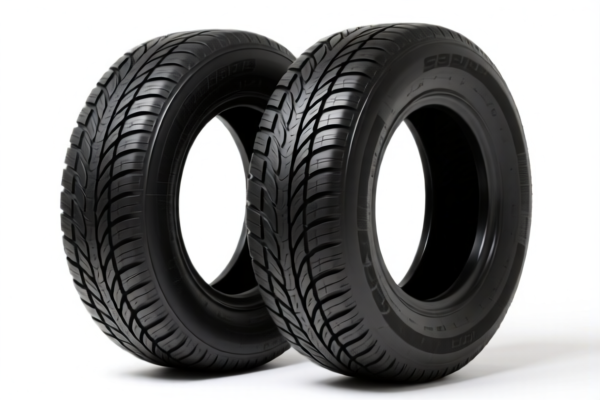
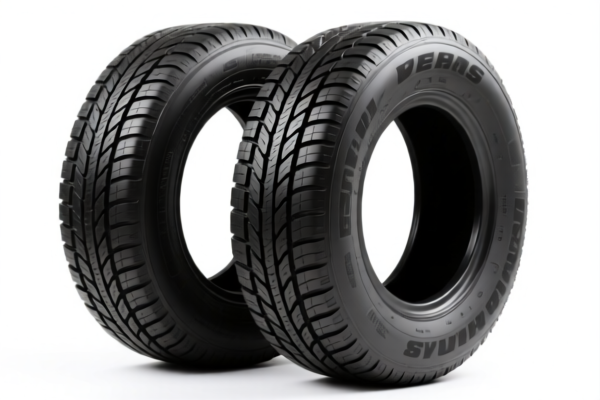
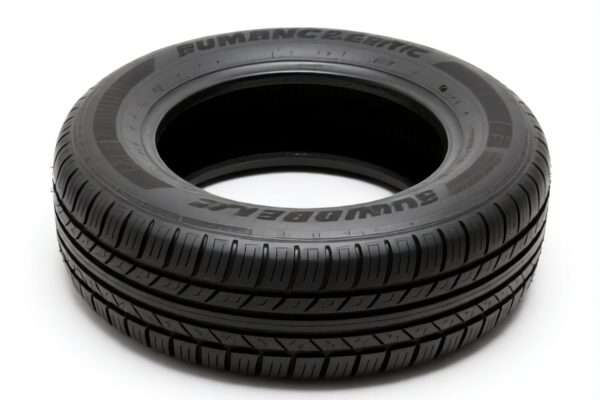
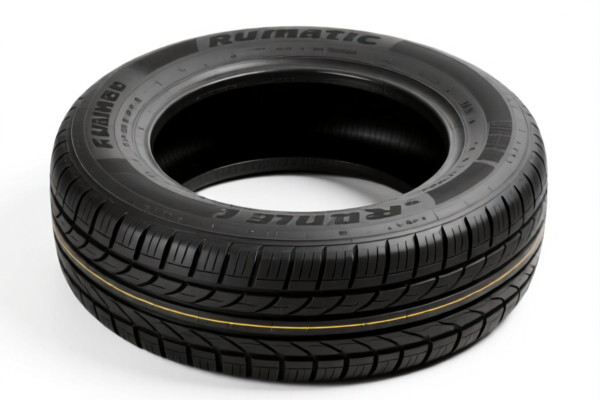
AI Analysis
🚙 Pneumatic Rubber Tires for All Terrain Vehicles (ATV)
🌐 HS Code Reference & Customs Clearance Guide | 2026 Latest Tariff Analysis | Professional Clearance Strategy
📌 1. Product Definition & Classification: Do You Really Understand "ATV Tires"?
ATV tires are specialized rubber pneumatic tires designed for off-road vehicles, featuring deep treads for traction on uneven terrain (mud, sand, rocks). In international trade, they fall under Chapter 40 (Rubber and Articles Thereof), specifically heading 4012 (Retreaded or Used Pneumatic Tires) or 4013 (Pneumatic Tires).
⚠️ Key Classification Logic: - New vs. Retreaded: New tires fall under 4013; used/retreaded under 4012. - Material & Form: Must be "rubber" and "pneumatic" (air-filled). - Matching Rule: Since the exact vehicle model isn't specified, we use "Other" or "Matching" rules to determine the best fit. If the tire matches a specific vehicle category (e.g., motorcycles, trucks), it may fall under different subheadings. For general ATV tires, 4013.10.00.10 is often the primary match due to material/usage consistency, while 4012.xxxx codes are fallbacks based on other categories.
📦 2. HS Code Classification Details (2026 Latest Tariff Authority Mapping)
Based on the provided data, here are the three possible HS Codes with their corresponding tax implications. Note that all codes include US Import Duties (assuming origin: China to US, given the "122 Clause" and "Additional Duties" structure typical of US-China trade).
| HS Code | Product Description | Matching Logic | Total Tax Rate | Tax Breakdown |
|---|---|---|---|---|
4012.11.80.00 |
Rubber Tires | Fallback Rule: Matches material & form; classified under "Other" fallback rules. | 38.4% | Base: 3.4% Additional: 25.0% Section 122: 10% |
4012.12.40.35 |
Rubber Tires | Other Category Match: Matches material & form; classified under "Other" matching rules. | 39.0% | Base: 4.0% Additional: 25.0% Section 122: 10% |
4013.10.00.10 |
Rubber Tires | Core Element Match: Material and usage align with core elements of this reference classification. | 38.7% | Base: 3.7% Additional: 25.0% Section 122: 10% |
🔍 Critical Note:
- 4012 generally refers to used or retreaded tires, while 4013 refers to new pneumatic tires.
- If your ATV tires are NEW,4013.10.00.10is likely the most accurate classification (Core Match).
- If they are USED/RETREADED,4012.11.80.00or4012.12.40.35applies.
- All three codes incur significant additional duties (25% + 10%), resulting in a total tax burden of 38.4%–39.0%.
💰 3. 2026 Latest Tariff Rate Breakdown (Including Additional Duties)
✅ Applicable Country: USA (US)
✅ Origin: China (CN)
✅ Effective Date: Current rates apply (Section 301 & 122 Clause)
🎯 1. 4012.11.80.00 – Rubber Tires (Fallback Classification)
| Item | Content |
|---|---|
| Base Duty Rate | 3.4% |
| Section 301 Additional Duty | +25.0% |
| Section 122 Clause Duty | +10.0% |
| Total Tax Rate | 38.4% |
| Tax Calculation | CIF Value × 38.4% |
| De Minimis Exemption | ❌ Not Eligible (High-value industrial goods) |
| Legal Basis | USITC:4012.11.80.00 → Section 301: 25% → Section 122: 10% |
📌 Explanation:
- The 25% additional duty is under Section 301 (China-related tariffs).
- The 10% is under "Section 122" (likely referring to specific trade remedy or anti-dumping clauses).
- Total 38.4% is high; misclassification can lead to penalties.
🎯 2. 4012.12.40.35 – Rubber Tires (Other Category Match)
| Item | Content |
|---|---|
| Base Duty Rate | 4.0% |
| Section 301 Additional Duty | +25.0% |
| Section 122 Clause Duty | +10.0% |
| Total Tax Rate | 39.0% |
| Tax Calculation | CIF Value × 39.0% |
| De Minimis Exemption | ❌ Not Eligible |
| Legal Basis | USITC:4012.12.40.35 → Section 301: 25% → Section 122: 10% |
📌 Note:
- This code has a slightly higher base rate (4.0%) than4012.11.80.00, making it 39.0% total.
- Use this only if4012.11.80.00is not applicable due to specific tread/size differences.
🎯 3. 4013.10.00.10 – Rubber Tires (Core Element Match)
| Item | Content |
|---|---|
| Base Duty Rate | 3.7% |
| Section 301 Additional Duty | +25.0% |
| Section 122 Clause Duty | +10.0% |
| Total Tax Rate | 38.7% |
| Tax Calculation | CIF Value × 38.7% |
| De Minimis Exemption | ❌ Not Eligible |
| Legal Basis | USITC:4013.10.00.10 → Section 301: 25% → Section 122: 10% |
📌 Key Insight:
-4013.10.00.10is the most accurate if tires are new and match standard ATV/motorcycle tire categories.
- It offers a competitive rate (38.7%) between the two 4012 options.
- Always prefer 4013 for new tires to avoid customs disputes over "used/retreaded" status.
🛠️ 4. Customs Clearance Practical Advice (Risk Avoidance Guide)
✅ 1. Required Documentation Checklist
| Document | Mandatory | Description |
|---|---|---|
| ✅ Product Specification Sheet | ✔️ | Tread pattern, size (e.g., 25x8-12), load index, speed rating |
| ✅ Photos (Tread & Sidewall) | ✔️ | Clear images of branding, size markings, and DOT codes |
| ✅ Commercial Invoice | ✔️ | Must state "New Pneumatic Rubber Tires for ATV" |
| ✅ Packing List | ✔️ | Number of tires, weight, dimensions per carton |
| ✅ Origin Certificate | ✔️ | Proof of origin (if claiming exemptions elsewhere) |
| ✅ FCC/CPSC Compliance (if applicable) | ✔️ | Some tires require safety certifications |
✅ 2. Declaration Tips (Key Mantra)
🔥 "New vs. Used, Tread Depth, Size Spec – Wrong Class = 39% Tax!"
| Situation | Correct Declaration | Wrong Practice |
|---|---|---|
| New ATV Tires | 4013.10.00.10 |
Misdeclare as 4012 → 38.4–39.0% (but risk of penalty if "new") |
| Used/Retreaded Tires | 4012.11.80.00 or 4012.12.40.35 |
Declare as new → Smuggling/Fraud Risk |
| Tire Tubes (Not Pneumatic) | 4009.xxxx |
Declare as pneumatic tires → Wrong Code |
| Solid Rubber Tires (Non-Pneumatic) | 4011.xxxx |
Declare as pneumatic → Rejection |
⚠️ Critical:
- Pneumatic means air-filled. Solid tires are NOT pneumatic and fall under different codes (e.g.,4011).
- If you declare "Pneumatic" but send solid tires, customs will reclassify and penalize.
✅ 3. Special Cases
| Case | Handling Advice |
|---|---|
| OEM Private Label Tires | Provide client order + design specs to prove "new" status |
| Mixed Loads (Tires + Accessories) | Declare tires separately from rims/wheels to avoid misclassification |
| High-Value Premium Tires | Consider Advance Ruling to confirm 4013.10.00.10 eligibility |
| Retreaded Tires | Must provide proof of retreading process to justify 4012 codes |
🌍 5. Global Market Clearance Comparison (2026)
| Country/Region | Recommended HS Code | Tariff (China Origin) | Certification | Note |
|---|---|---|---|---|
| 🇺🇸 USA | 4013.10.00.10 |
38.7% (Total) | DOT, US DOT | High tariffs due to Section 301 & 122 |
| 🇨🇳 China | 4013.10.00.10 |
5–7% | CCC | No additional duties |
| 🇪🇺 EU | 4013.10.00.10 |
0% (if ECE marked) | ECE R54, R117 | No Section 301 |
| 🇬🇧 UK | 4013.10.00.10 |
0% (if UKCA) | UKCA, ECE | Post-Brexit rules |
| 🇦🇺 Australia | 4013.10.00.10 |
5% | RCM, ADR | No additional duties |
📌 Conclusion:
- USA is the most expensive market for ATV tires due to 38.4–39.0% total duties.
- EU/UK/Australia offer 0–5% tariffs, making them more cost-effective for non-China origins.
- Always verify if tires are "Pneumatic" – solid tires are cheaper to import into the US.
📌 6. Common Mistakes & Pitfalls (Lessons Learned)
❌ Mistake 1: Declaring Solid Tires as Pneumatic Tires
👉 Consequence: Customs reclassifies to 4011, may impose penalties for misdeclaration.
❌ Mistake 2: Using 4012 for New Tires
👉 Consequence: 38.4–39.0% tax + risk of anti-dumping investigation if classified as "used."
❌ Mistake 3: Ignoring Section 122 Clause
👉 Consequence: Underpaying 10% → Back taxes + Interest + Fines.
❌ Mistake 4: Vague Description "Tires for Vehicles"
👉 Consequence: Customs delays, requests additional docs, delays shipment by 2–4 weeks.
✅ Correct Practice:
"Pneumatic Rubber Tires, New, for All Terrain Vehicles, Size 25x8-12, Tread Pattern: Mud Terrain, DOT Compliant, Model XYZ"
🎯 7. Conclusion: Precision Classification, Lower Costs!
🎯 Remember:
🔹 "New Tires = 4013, Used = 4012, Solid = 4011"
🔹 "38.4–39.0% Tax in US, 0% in EU – Choose Market Wisely!"
🔹 "HS Code is King, Misclassification is Death!"
📌 Pro Tip:
If your tires are originally manufactured in Vietnam, Thailand, or Malaysia, you may qualify for lower tariffs due to trade agreements. Consider supply chain restructuring to avoid high US duties.
📣 Immediate Action:
📞 Contact a Customs Broker + Provide Product Photos + Apply for Advance Ruling
🚀 Clear Customs Smoothly, Reduce Costs, Boost Profits!
✨ Professional Clearance Starts with Accurate Classification!
💼 Every Percent of Duty Saved is Pure Profit!
Customer Reviews
About HS Code Classification
The Harmonized System (HS) is an internationally standardized nomenclature developed by the World Customs Organization (WCO) to classify traded products. Over 200 countries use the HS system as the basis for customs tariffs, trade statistics, and import/export regulations.
Each HS code follows a hierarchical structure:
- Chapter (2 digits) — Broad category of goods (e.g., Chapter 84: Machinery and Mechanical Appliances)
- Heading (4 digits) — More specific grouping within the chapter
- Subheading (6 digits) — Internationally standardized breakdown, used by all WCO member countries
- National subdivisions (8-10 digits) — Country-specific extensions for further classification, such as US HTSUS 10-digit codes
Correct HS code classification is essential for smooth customs clearance, accurate duty payment, and compliance with trade regulations. Misclassification can lead to customs delays, overpayment of duties, or penalties.
When importing from CN to US, the applicable tariff rates may include:
- Most-Favored-Nation (MFN) rate — The standard duty rate applied to WTO members
- General rate — Applied to countries without trade agreements
- Trade remedy duties — Additional tariffs such as Section 301 (anti-dumping), Section 232 (national security), or countervailing duties
The information provided on this page is for reference purposes only. For official classification, please consult with your local customs authority or a licensed customs broker.