Pneumatic Tires for Construction Vehicles
CN → US| HS Code | Tariff Rate | Origin | Destination | Doc |
|---|---|---|---|---|
| 4011801010 | 35.0% | CN | US | Official Doc |
| 4011801020 | 35.0% | CN | US | Official Doc |
Product Images
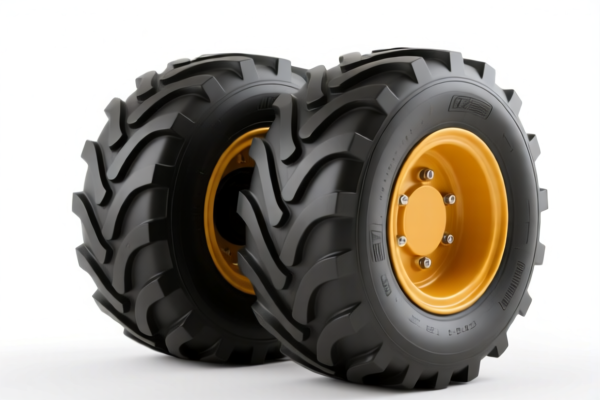
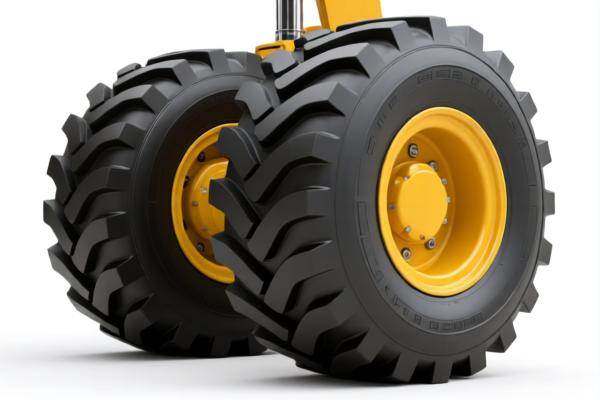
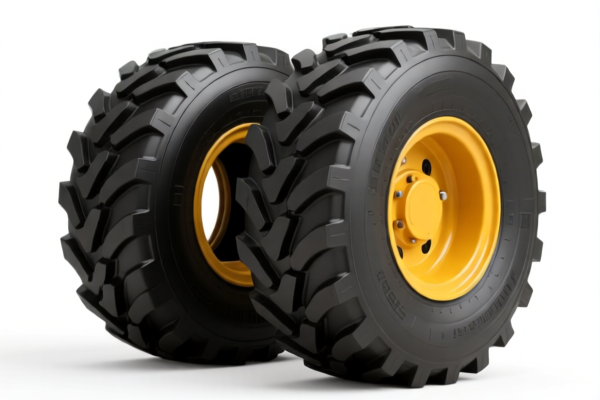
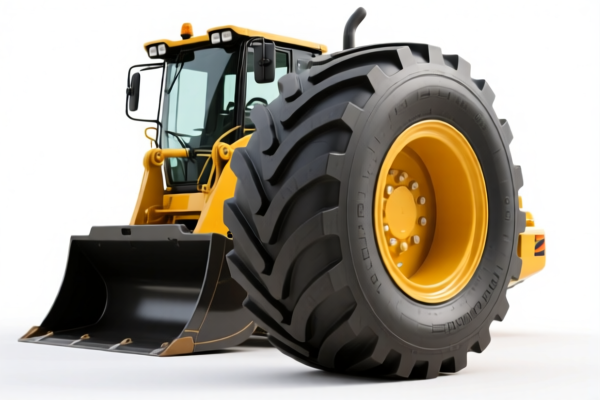
AI Analysis
🚜 Pneumatic Tires for Construction Vehicles (Industrial Handling & Mining)
🌐 HS Code Reference & Customs Clearance Guide | 2026 Latest Tariff Analysis | Professional Clearance Strategy 📌 I. Product Definition & Classification: Do You Know "Construction Tires"?
Pneumatic tires for construction, mining, or industrial handling vehicles are heavy-duty rubber products designed for extreme loads, rough terrain, and high abrasion resistance. In international trade, these tires are strictly classified based on tread pattern and rim size, which directly determines the HS Code and applicable tariff rates.
Key Distinction Points: * Tread Pattern: Must be "herring-bone" (Mud and Snow pattern) or similar aggressive treads designed for traction in soft/uneven ground. * Application: Specifically for construction equipment (excavators, loaders, bulldozers), mining vehicles, or industrial handling machinery (forklifts, cranes). * Rim Size: The critical divider for HS Code sub-headings (≤ 61 cm vs. > 61 cm).
⚠️ Critical Note:
- If the tire has a standard road tread (smooth or random blocks) → It may be misclassified.
- If the rim size is exactly 61 cm → It falls under the "Not Exceeding 61 cm" category.
- Both categories listed below carry a 25% additional tariff (USITC Footnote 9903.88.01 + IEEPA implications).
📦 II. HS Code Classification Details (2026 Latest Tariff Authority)
| HS Code | Product Description | Rim Size Condition | Tread Pattern | Total Tax Rate |
|---|---|---|---|---|
4011.80.10.10 |
New pneumatic tires, of rubber: Of a kind used on construction, mining or industrial handling vehicles and machines: Having a "herring-bone" or similar tread | Not exceeding 61 cm | Herring-bone / Similar | 25.0% |
4011.80.10.20 |
New pneumatic tires, of rubber: Of a kind used on construction, mining or industrial handling vehicles and machines: Having a "herring-bone" or similar tread | Exceeding 61 cm | Herring-bone / Similar | 25.0% |
🔍 重点提醒 (Key Takeaways)
- Base Tariff: 0.0% (Ad Valorem)
- Additional Tariff: 25.0%
- Total Effective Rate: 25.0% for both codes
- Differentiation: The only difference is the Rim Size (≤ 61 cm vs. > 61 cm). Misclassifying based on rim size can lead to customs delays or penalties.
💰 III. 2026 Latest Tariff Rate Breakdown (Detailed Tax Terms)
✅ Applicable Country: United States (US)
✅ Origin: China (CN) [Assuming standard context for 25% additional tariff]
✅ Effective Date: November 10, 2025 onwards (for imports after this date)
🎯 1. 4011.80.10.10 — Construction Tires (Small/Medium Rim ≤ 61 cm)
| Item | Detail |
|---|---|
| Base Tariff | 0.0% (ad valorem) |
| Additional Tariff (USITC Footnote 9903.88.01) | +25.0% |
| IEEPA Additional Tariff | Note: For tires under Chapter 40, the 25% USITC tariff is the primary additional charge. IEEPA 10% is generally not applied cumulatively if the 25% already covers the Section 301 duty. |
| Total Effective Tax Rate | 25.0% |
| Tax Calculation | CIF Value × 25% |
| De Minimis Exemption | ❌ Not Eligible (deny_de_minimis) |
| Legal Basis Path | USITC:4011.80.10.10 → FOOTNOTE:9903.88.01 |
📌 Explanation:
- The 25% tariff is imposed under Section 301 of the Trade Act of 1974 via USITC Footnote 9903.88.01.
- This rate applies regardless of whether the tire is for a small forklift (small rim) or a large loader (larger rim but ≤ 61 cm).
- No base tariff applies (0%), so the entire duty burden is the 25% surcharge.
🎯 2. 4011.80.10.20 — Construction Tires (Large Rim > 61 cm)
| Item | Detail |
|---|---|
| Base Tariff | 0.0% (ad valorem) |
| Additional Tariff (USITC Footnote 9903.88.01) | +25.0% |
| IEEPA Additional Tariff | Same as above, covered under Section 301. |
| Total Effective Tax Rate | 25.0% |
| Tax Calculation | CIF Value × 25% |
| De Minimis Exemption | ❌ Not Eligible (deny_de_minimis) |
| Legal Basis Path | USITC:4011.80.10.20 → FOOTNOTE:9903.88.01 |
📌 Explanation:
- Tires for large mining trucks or heavy-duty excavators often have rims exceeding 61 cm (e.g., 20"+ or 30"+ tires).
- Despite being larger, they are still subject to the same 25% additional tariff.
- The distinction is purely for statistical and regulatory tracking purposes.
🛠️ IV. Customs Clearance Practical Advice (Avoid Pitfalls)
✅ 1. Required Documentation Checklist
| Document | Mandatory? | Description |
|---|---|---|
| ✅ Product Specification Sheet | ✔️ | Must clearly state: Rim Size (cm/inches), Tread Pattern (Herring-bone), Application (Construction/Mining). |
| ✅ Technical Drawing / Cross-Section | ✔️ | To prove the tire is "pneumatic" and confirm rim size. |
| ✅ Commercial Invoice | ✔️ | Must describe goods as: "New Pneumatic Tires, Herring-bone Tread, for Construction Vehicles." Avoid vague terms like "Rubber Wheels." |
| ✅ Certificate of Origin (CO) | ✔️ | To determine origin-based tariff application. |
| ✅ Packing List | ✔️ | Detailed breakdown of units, weights, and dimensions. |
| ✅ Photos of Tires (Tread & Sidewall) | ✔️ | Critical: Must clearly show the "herring-bone" or similar tread pattern to support HS Code 4011.80. |
✅ 2. Classification Key Rules (Crucial for Accuracy)
| Scenario | Correct HS Code | Incorrect Action | Consequence |
|---|---|---|---|
| Rim = 55 cm, Herring-bone Tread | 4011.80.10.10 |
Classify as 4011.80.10.20 |
Minor discrepancy, may cause delay |
| Rim = 70 cm, Herring-bone Tread | 4011.80.10.20 |
Classify as 4011.80.10.10 |
Major error → Penalty + Back Taxes |
| Smooth Tread, For Forklift | Not 4011.80 | Classify as 4011.80.10.x |
Wrong Classification → May be classified as 4011.61 (different tax, different duty) |
| Retreaded Tires | 4012.11 or similar |
Classify as New (4011.xx) |
Severe Fraud → Seizure & Fines |
🔥 Golden Rule:
"Check the Rim! Check the Tread!"
- If the rim is ≤ 61 cm → Use.10.10
- If the rim is > 61 cm → Use.10.20
- If the tread is NOT herring-bone/similar → It may not fall under4011.80(check4011.61or4011.62for other industrial tires).
✅ 3. Special Cases & Handling
| Situation | Handling Advice |
|---|---|
| Mixed Sizes in One Shipment | Declare each rim size separately on the commercial invoice with distinct line items. Do not lump them under one HS Code. |
| OEM Tires for Specific Machines | Provide the machine model number and manufacturer reference to prove "industrial handling" use. |
| Retreaded Tires | Do not use 4011.80.10.xx. These are classified under 4012.11.00.00 or similar. Different duty rules apply. |
| Flat-Free / Solid Tires | Not pneumatic. Classify under 4016 (Other rubber articles) or 8708 (Parts). Avoid misclassification. |
🌍 V. Global Market Comparison (2026 Latest)
| Country/Region | Recommended HS Code | Tariff Rate | Notes |
|---|---|---|---|
| 🇺🇸 United States | 4011.80.10.10 / .20 |
25.0% | Section 301 Additional Tariff applies. No de minimis. |
| 🇨🇳 China (Import) | 4011.80.10.00 (General) |
~25-30% | Check latest China Tariff Schedule. Import duties vary. |
| 🇪🇺 European Union | 4011.80.20 (General) |
~14% | No Section 301 equivalent. Standard MFN rate. |
| 🇯🇵 Japan | 4011.80.000 |
~15-20% | Check bilateral agreements. |
| 🇮🇳 India | 4011.80.10 |
~20-30% | SWS (Safeguard Duty) may apply. |
📌 Conclusion:
- The 25% US Additional Tariff is a significant cost driver.
- Ensure accurate rim size declaration to avoid post-audit penalties.
- For US imports, budget for 25% duty on top of freight and insurance.
📌 VI. Common Mistakes & Pitfalls (Lessons Learned)
❌ Mistake 1: Ignoring Rim Size
👉 Result: Using 4011.80.10.10 for a 70cm rim → Customs Rejection / Penalty.
✅ Fix: Measure rim diameter accurately. 1 inch = 2.54 cm. If rim is 24 inches → 60.96 cm → ≤ 61 cm → .10.10.
❌ Mistake 2: Vague Description
👉 Result: Declaring "Rubber Tires" without mentioning "Herring-bone" or "Construction Use" → Customs Query / Delay.
✅ Fix: Use precise language: "New Pneumatic Tires, Herring-bone Tread, for Excavators, Rim Size 55cm, HS 4011.80.10.10".
❌ Mistake 3: Confusing with Road Tires
👉 Result: Classifying construction tires as 4011.91 (Car/Bus tires) → Underpayment of Duty.
✅ Fix: Confirm application. If it’s for a loader/excavator, it’s 4011.80. If it’s for a car, it’s 4011.91.
🎯 VII. Conclusion: Professional Classification Saves Money & Time
🎯 Remember:
🔹 "Rim Size is King": ≤ 61 cm vs. > 61 cm dictates the last two digits of the HS Code.
🔹 "Tread Pattern Matters": Must be herring-bone or similar for4011.80.
🔹 "25% is Fixed": Additional tariff is 25% for both codes. No discounts for larger tires.
🔹 "No De Minimis": All commercial shipments are taxed. No 800 USD exemption.
📌 Pro Tip:
If you are importing tires with multiple rim sizes in one container, prepare a detailed packing list that clearly separates the counts for 4011.80.10.10 and 4011.80.10.20. This ensures smooth customs clearance and accurate duty calculation.
📣 Immediate Action:
📞 Contact a licensed customs broker with product photos and technical specs.
📄 Request an Advance Ruling if the tire tread or rim size is borderline.
🚀 Ensure your commercial invoice explicitly states "HS Code 4011.80.10.10/20" to avoid delays.
✨ Precision in Classification is the Key to Efficient Global Trade!
💼 Every cent in duty savings comes from accurate HS Code selection!
Customer Reviews
About HS Code Classification
The Harmonized System (HS) is an internationally standardized nomenclature developed by the World Customs Organization (WCO) to classify traded products. Over 200 countries use the HS system as the basis for customs tariffs, trade statistics, and import/export regulations.
Each HS code follows a hierarchical structure:
- Chapter (2 digits) — Broad category of goods (e.g., Chapter 84: Machinery and Mechanical Appliances)
- Heading (4 digits) — More specific grouping within the chapter
- Subheading (6 digits) — Internationally standardized breakdown, used by all WCO member countries
- National subdivisions (8-10 digits) — Country-specific extensions for further classification, such as US HTSUS 10-digit codes
Correct HS code classification is essential for smooth customs clearance, accurate duty payment, and compliance with trade regulations. Misclassification can lead to customs delays, overpayment of duties, or penalties.
When importing from CN to US, the applicable tariff rates may include:
- Most-Favored-Nation (MFN) rate — The standard duty rate applied to WTO members
- General rate — Applied to countries without trade agreements
- Trade remedy duties — Additional tariffs such as Section 301 (anti-dumping), Section 232 (national security), or countervailing duties
The information provided on this page is for reference purposes only. For official classification, please consult with your local customs authority or a licensed customs broker.