Pneumatic tires for trucks
CN → US| HS Code | Tariff Rate | Origin | Destination | Doc |
|---|---|---|---|---|
| 4016996050 | 37.5% | CN | US | Official Doc |
| 4016996010 | 37.5% | CN | US | Official Doc |
| 4012909000 | 37.7% | CN | US | Official Doc |
| 4011808010 | 38.4% | CN | US | Official Doc |
| 4011808020 | 38.4% | CN | US | Official Doc |
Product Images
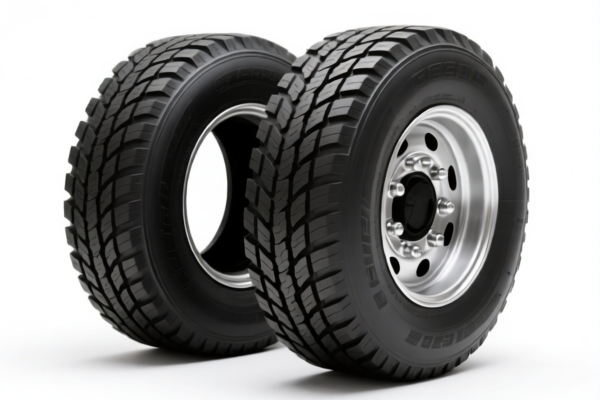
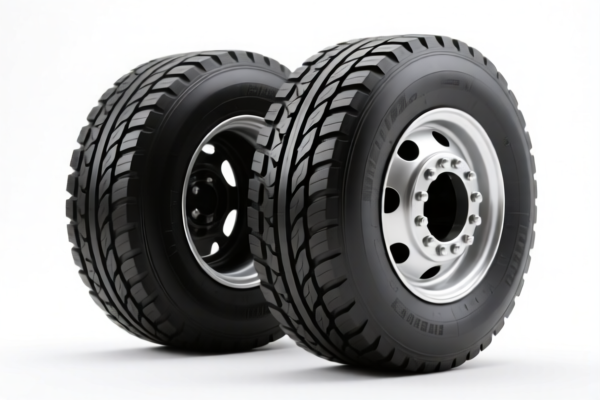
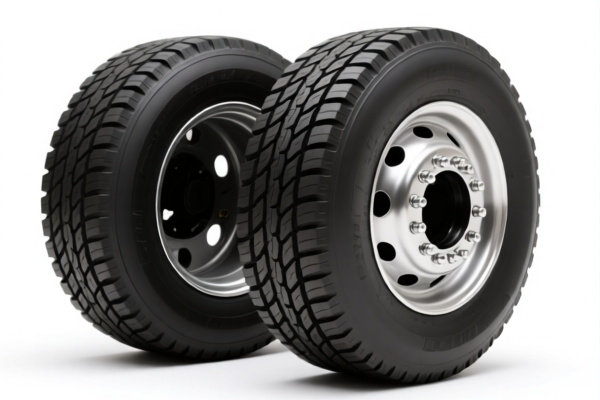
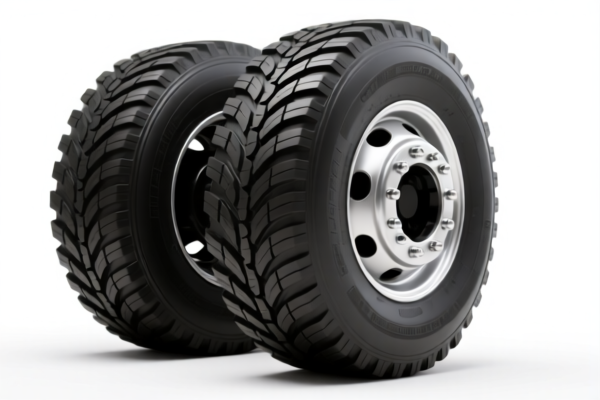
AI Analysis
🚛 Pneumatic Tires for Trucks (Truck Tires)
🌐 HS Code Reference & Customs Clearance Guide | 2026 Latest Tariff Analysis | Professional Clearance Strategy
📌 I. Product Definition & Classification: Are You Sure You Know "Truck Tires"?
Pneumatic tires for trucks are critical components of heavy-duty vehicles, designed to support significant loads, withstand high speeds, and operate under harsh road conditions. In international trade, they are classified based on their rubber material, inflatable structure, and specific application.
Unlike passenger car tires, truck tires often fall under different subcategories depending on whether they are radial, bias-ply, or solid pneumatic (though "solid" is often excluded from "pneumatic"). For general pneumatic truck tires, the classification hinges on whether they are considered "other" specific types or standard industrial rubber goods.
⚠️ Key Distinction Point:
- If the tire is a standard rubber inflatable tire for trucks, it typically falls under Chapter 40 (Rubber and articles thereof).
- Specific HS Codes depend on the exact wording of the tariff line (e.g., "Other pneumatic tires" vs. "Industrial rubber products").
- Critical Note: Many HS Codes for truck tires attract high additional tariffs due to trade tensions (Section 301, Section 122, IEEPA).
📦 II. HS Code Classification Details (2026 Latest Tariff Authority Reference)
Based on the provided data, here are the applicable HS Codes for Pneumatic Tires for Trucks, their summaries, and tax implications.
| HS Code | Product Description & Logic | Applicable Scenario | Total Tax Rate |
|---|---|---|---|
4016.99.60.50 |
Industrial Pneumatic Tires as Vulcanized Rubber Products Classified under "Other vulcanized rubber products" rather than specific tire codes. |
Industrial use, specific rubber composition that fits "other vulcanized rubber" category. | 37.5% |
4016.99.60.10 |
Industrial Pneumatic Tires as Other Rubber Articles Meets material and usage criteria for "other vulcanized rubber products." |
Similar to above; emphasizes rubber material and industrial purpose. | 37.5% |
4012.90.90.00 |
Pneumatic Tires as Rubber Air Cushions/Tires Classified under "Other pneumatic tires" (Chapter 40, Heading 4012). |
General pneumatic truck tires, rubber-made air tires. | 37.7% |
4011.80.80.10 |
Industrial Pneumatic Tires (Rubber Inflatable) Meets rubber material and shape requirements. |
Standard truck tires, rubber inflatable type. | 38.4% |
4011.80.80.20 |
Industrial Pneumatic Tires (Purpose-Limited) Meets specific use limitations and rubber material requirements. |
Truck tires with specific industrial application constraints. | 38.4% |
🔍 Key Observation:
- All listed HS Codes for truck tires attract high total tariffs (37.5% – 38.4%).
- The difference lies in whether they are classified as Chapter 40 Heading 4011 (Pneumatic tires of rubber) or Chapter 40 Heading 4016 (Other articles of vulcanized rubber).
- Heading 4011 is the more standard classification for tires, while 4016 is used for rubber articles that don't fit specific tire subcategories or are treated as industrial rubber goods.
💰 III. 2026 Latest Tariff Rate Breakdown (Including Surtaxes & Policy Add-ons)
✅ Applicable Country: United States (US)
✅ Country of Origin: China (CN)
✅ Effective Time: Ongoing (Section 301 & IEEPA tariffs apply)
🎯 1. HS Codes: 4016.99.60.50 & 4016.99.60.10 (Total Tax: 37.5%)
| Item | Detail |
|---|---|
| Base Tariff | 2.5% |
| Section 301 Surcharge | +25% (From USITC Footnote 9903.88.01) |
| Section 122 Surcharge | +10% (Specific trade action) |
| Total Tariff | 37.5% |
| Tax Calculation | CIF Value × 37.5% |
| De Minimis Exemption? | ❌ No (Deny de minimis for Chinese goods under these sections) |
| Legal Basis Path | USITC:4016.99.60.50 → FOOTNOTE:9903.88.01 → Section 122 |
📌 Explanation:
- "Base Tariff 2.5%": Standard Most Favored Nation (MFN) rate for vulcanized rubber articles.
- "Section 301 Surcharge 25%": Applied due to trade tensions with China.
- "Section 122 Surcharge 10%": Additional tariff under U.S. Trade Act of 1974, Section 122.
- Total 37.5%: This is a high-cost item for importers.
🎯 2. HS Code: 4012.90.90.00 (Total Tax: 37.7%)
| Item | Detail |
|---|---|
| Base Tariff | 2.7% |
| Section 301 Surcharge | +25% |
| Section 122 Surcharge | +10% |
| Total Tariff | 37.7% |
| Tax Calculation | CIF Value × 37.7% |
| De Minimis Exemption? | ❌ No |
| Legal Basis Path | USITC:4012.90.90.00 → FOOTNOTE:9903.88.01 → Section 122 |
📌 Explanation:
- Slightly higher base rate (2.7%) compared to 4016.99.60.50/10 (2.5%), resulting in a total of 37.7%.
- Classified as "Other pneumatic tires of rubber."
🎯 3. HS Codes: 4011.80.80.10 & 4011.80.80.20 (Total Tax: 38.4%)
| Item | Detail |
|---|---|
| Base Tariff | 3.4% |
| Section 301 Surcharge | +25% |
| Section 122 Surcharge | +10% |
| Total Tariff | 38.4% |
| Tax Calculation | CIF Value × 38.4% |
| De Minimis Exemption? | ❌ No |
| Legal Basis Path | USITC:4011.80.80.10/20 → FOOTNOTE:9903.88.01 → Section 122 |
📌 Explanation:
- Highest base rate (3.4%) among the options.
- Total tariff reaches 38.4%.
- These are standard pneumatic truck tires under Heading 4011.
🛠️ IV. Customs Clearance Practical Advice (Real-World Pitfall Guide)
✅ 1. Preparation Checklist (All Documents Mandatory)
| Document | Required | Notes |
|---|---|---|
| ✅ Product Specification Sheet | ✔️ | Must include size, load index, speed rating, radial/bias structure. |
| ✅ Product Photos (with Markings) | ✔️ | Must show DOT numbers, size markings (e.g., 11R22.5), brand. |
| ✅ Commercial Invoice | ✔️ | Clearly state "Pneumatic Tires for Trucks" and value. |
| ✅ Packing List | ✔️ | Detail weight, dimensions, and packaging type. |
| ✅ Certificate of Origin (CO) | ✔️ | If non-Chinese origin, may qualify for lower tariffs. |
| ✅ Third-Party Test Reports | ✔️ | If applicable (e.g., ECE, DOT compliance). |
✅ 2. Declaration Tips (Key Mantras)
🔥 "Accurate HS Code, Clear Description, Avoid Misclassification!"
| Scenario | Correct Declaration | Incorrect Practice |
|---|---|---|
| Standard Truck Tire | 4011.80.80.10 or 4011.80.80.20 |
Misclassify as 4016.99 (Rubber Articles) → Potential penalty |
| Special Industrial Rubber Tire | 4016.99.60.50 or 4016.99.60.10 |
If it's a standard tire, this may be rejected |
| Tire as "Part of Vehicle" | ❌ Do not declare as "Truck Parts" | Truck parts may have different rates but risk misdeclaration |
| Mixed Shipment (Tires + Accessories) | Declare separately | Combining may confuse customs and lead to delays |
✅ 3. Special Situation Handling
| Situation | Recommendation |
|---|---|
| OEM Truck Tires | Provide original equipment manufacturer (OEM) contracts and design specs. |
| Used Tires | 🚫 Note: U.S. import regulations on used tires are extremely strict. Ensure compliance with EPA and DOT rules. |
| Non-Chinese Origin | If tires are made in Vietnam, Thailand, etc., provide Certificate of Origin to avoid Section 301/122 tariffs. |
| Pre-Ruling | 📌 Highly Recommended: Apply for an Advance Ruling to confirm HS Code and tax rate before shipment. |
🌍 V. Global Market Clearance Comparison (2026 Latest)
| Country/Region | Recommended HS Code | Tariff (China Origin) | Certification | Notes |
|---|---|---|---|---|
| 🇺🇸 USA | 4011.80.80.10 or 4012.90.90.00 |
37.5% – 38.4% | DOT, EPA | High tariffs due to Section 301 & 122 |
| 🇨🇳 China | 4011.80.80.10 |
10% (Standard) | CCC (if applicable) | No additional surcharges |
| 🇪🇺 EU | 4011.80.80.80 |
0% (MFN) | ECE R75 | No anti-dumping surcharge for China |
| 🇮🇳 India | 4011.80.80.80 |
10-15% | ISI/BIS | May have anti-dumping duties |
| 🇧🇷 Brazil | 4011.80.80.80 |
14% | INMETRO | Complex tax regime |
📌 Conclusion:
- USA imposes the highest tariffs (37.5%-38.4%) due to multiple surcharges.
- EU and China have significantly lower or zero tariffs for standard truck tires.
- Supply Chain Strategy: Consider sourcing from non-China countries (e.g., Thailand, Vietnam) to avoid U.S. surcharges.
📌 VI. Common Mistakes & Pitfall Guide (Lessons Learned)
❌ Mistake 1: Misclassifying truck tires as "Rubber Parts" (4016) instead of "Tires" (4011)
👉 Consequence: May lead to customs inquiry, delays, or penalties if the classification is deemed incorrect.
❌ Mistake 2: Ignoring Section 122 and Section 301 tariffs
👉 Consequence: Underpaying duties by 35%+, leading to back taxes, fines, and seizure.
❌ Mistake 3: Failing to provide proper DOT markings or certificates
👉 Consequence: U.S. Customs and Border Protection (CBP) may reject entry if safety standards are not met.
❌ Mistake 4: Using generic terms like "Rubber Wheels" instead of "Pneumatic Tires"
👉 Consequence: Customs may reclassify with higher duties or require additional documentation.
✅ Correct Practice:
"Radial Pneumatic Truck Tire, Size 11R22.5, Radial, New, DOT Compliant, Origin: China, Model XYZ"
🎯 VII. Conclusion: Professional Declaration, Cost Saving, Efficiency!
🎯 Remember the Mantra:
🔹 "Tires are 4011, Rubber Articles 4016; Check Base Rate, Add Surcharges, Total is High!"
🔹 "Section 301 + Section 122 = 35%+ Surcharge; Plan Ahead, Avoid Surprises!"
📌 Tips:
- If your truck tires are originated in Vietnam, Thailand, or Indonesia, you may avoid U.S. surcharges by providing valid Certificates of Origin.
- Apply for Advance Ruling to confirm HS Code and tariff rate before shipment.
- Consult a Customs Broker for complex shipments.
📣 Immediate Action:
📞 Contact a professional customs broker + Provide product photos + Apply for HS Code Advance Ruling
🚀 Ensure your truck tires clear customs smoothly, reduce costs, and boost profits!
✨ Professional clearance starts with accurate classification!
💼 Every cent of your cost deserves precise calculation!
Customer Reviews
About HS Code Classification
The Harmonized System (HS) is an internationally standardized nomenclature developed by the World Customs Organization (WCO) to classify traded products. Over 200 countries use the HS system as the basis for customs tariffs, trade statistics, and import/export regulations.
Each HS code follows a hierarchical structure:
- Chapter (2 digits) — Broad category of goods (e.g., Chapter 84: Machinery and Mechanical Appliances)
- Heading (4 digits) — More specific grouping within the chapter
- Subheading (6 digits) — Internationally standardized breakdown, used by all WCO member countries
- National subdivisions (8-10 digits) — Country-specific extensions for further classification, such as US HTSUS 10-digit codes
Correct HS code classification is essential for smooth customs clearance, accurate duty payment, and compliance with trade regulations. Misclassification can lead to customs delays, overpayment of duties, or penalties.
When importing from CN to US, the applicable tariff rates may include:
- Most-Favored-Nation (MFN) rate — The standard duty rate applied to WTO members
- General rate — Applied to countries without trade agreements
- Trade remedy duties — Additional tariffs such as Section 301 (anti-dumping), Section 232 (national security), or countervailing duties
The information provided on this page is for reference purposes only. For official classification, please consult with your local customs authority or a licensed customs broker.