Pocket Handkerchief
CN → US| HS Code | Tariff Rate | Origin | Destination | Doc |
|---|---|---|---|---|
| 6309000010 | 17.5% | CN | US | Official Doc |
| 6309000020 | 17.5% | CN | US | Official Doc |
Product Images
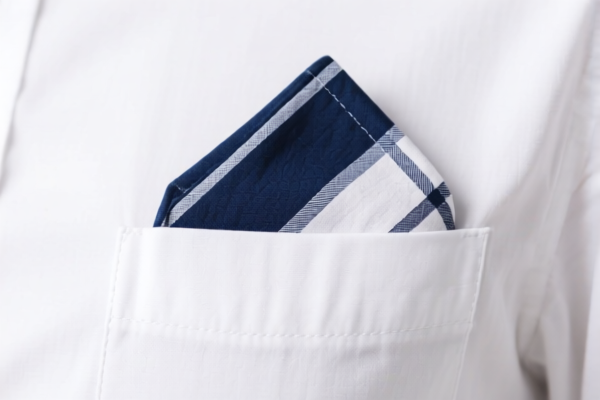

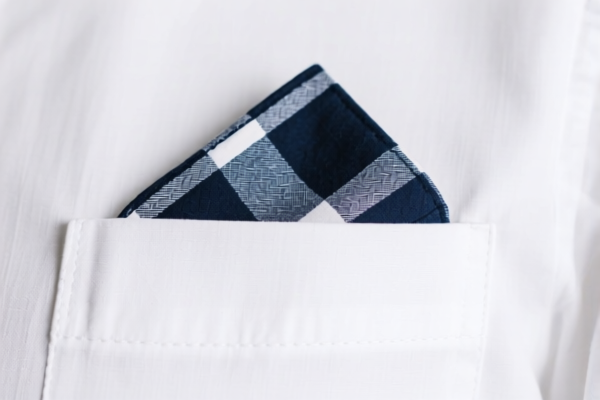

AI Analysis
🧣 Pocket Handkerchief (Used/Worn)
🌐 HS Code Reference & Customs Clearance Guide | 2026 Latest Tariff Analysis | Professional Level Clearance Strategy
📌 1. Product Definition and Classification: What Exactly is a "Pocket Handkerchief"?
A pocket handkerchief, specifically when classified under the provided data, refers to worn clothing and other worn articles. In international trade, this category focuses on textile articles that have been used, indicating they are no longer "new" goods but rather second-hand or discarded items. The classification hinges heavily on the condition of the item (worn vs. new) and its material composition.
⚠️ Key Distinction:
- If the handkerchief is new, unused, and made of textile materials: It typically falls under Chapter 62 (Articles of Apparel and Clothing Accessories, Knitted or Crocheted) or Chapter 63 (Other Made Up Textile Articles), often requiring different HS codes not listed in the current scope.
- If the handkerchief is worn, used, or discarded: It falls under HS Code 6309.00 ("Worn clothing and other worn articles"). The provided data specifically addresses this "worn" category.
📦 2. HS Code Classification Details (Based on Provided Data)
The provided data contains two specific HS codes for Worn Clothing and Other Worn Articles. Both fall under the heading 6309.00.00.
| HS Code | Product Description | Key Characteristics |
|---|---|---|
| 6309.00.00.10 | Worn clothing and other worn articles: Worn clothing | Applies to handkerchiefs classified specifically as "worn clothing" items (e.g., personal hygiene items worn against the skin, if legally categorized as such in this specific tariff schedule). |
| 6309.00.00.20 | Worn clothing and other worn articles: Other | Applies to worn textile articles that do not fit the strict definition of "worn clothing" but are still "worn articles." This is often the default for generic worn textiles like rags, worn handkerchiefs not deemed "clothing" per se, or mixed used textiles. |
🔍 Critical Note:
- The distinction between 6309.00.00.10 and 6309.00.00.20 lies in whether the customs authority classifies a handkerchief as "clothing" (an article worn on the body) or "other worn article."
- Since handkerchiefs are often considered "accessories" or "other articles," 6309.00.00.20 is frequently the more applicable code unless specific national interpretations classify them strictly as worn clothing.
- Importantly, these codes ONLY apply if the item is WORN/USED. New handkerchiefs are NOT covered by this data.
💰 3. 2026 Latest Tariff Rate Details (Detailed Breakdown)
✅ Applicable Countries: As per the provided data, this applies to imports under specific trade agreements (likely US-China trade context given the tax structure).
✅ Origin: Likely China (implied by the specific tax details provided in the data).
✅ Status: Worn/Used Textile Articles (HS 6309)
🎯 1. 6309.00.00.10 – Worn Clothing: Worn Clothing
| Item | Content |
|---|---|
| Base Tariff | 0.0% |
| Additional Tariff (Retaliatory/Section 301) | 7.5% |
| Total Tariff Rate | 7.5% |
| Tax Calculation | CIF Value × 7.5% |
| Applicability | Applies if the worn handkerchief is explicitly classified as "Worn Clothing." |
📌 Explanation:
- The base tariff is 0%, reflecting the general policy on second-hand goods in some jurisdictions to encourage recycling or reduce waste.
- However, a 7.5% additional tariff is applied. This is likely a specific trade duty (e.g., Section 301 or similar retaliatory measure) applied to certain Chinese-origin worn textiles.
- Total Cost Impact: Importers must budget for a 7.5% duty on the customs value.
🎯 2. 6309.00.00.20 – Worn Clothing: Other
| Item | Content |
|---|---|
| Base Tariff | 0.0% |
| Additional Tariff | 0.0% |
| Total Tariff Rate | 0.0% |
| Tax Calculation | CIF Value × 0% = $0 Duty |
| Applicability | Applies if the worn handkerchief is classified as "Other Worn Articles" (not strictly "clothing"). |
📌 Explanation:
- This is the most favorable rate for imported worn textiles if classified correctly.
- Both the base tariff and additional tariffs are 0%.
- Strategic Implication: If possible, classifying worn handkerchiefs under 6309.00.00.20 ("Other") rather than "Worn Clothing" can save 7.5% in duties. However, this depends on strict customs interpretation of what constitutes "clothing."
🛠️ 4. Customs Clearance Practical Advice (Battle-Tested Pitfall Guide)
✅ 1. Essential Documentation Checklist
| Document | Required? | Notes |
|---|---|---|
| Commercial Invoice | ✅ Mandatory | Must clearly state: "WORN", "USED", "SECOND-HAND". Do not list as "New Handkerchiefs." |
| Packing List | ✅ Mandatory | Detail the quantity and weight. Ensure no new items are mixed with worn items. |
| Proof of Origin | ✅ Recommended | To confirm country of origin for accurate tax application. |
| Product Photos | ✅ Highly Recommended | Show signs of wear (stains, holes, fading) to prove "used" status. |
| Declaration Statement | ✅ Mandatory | Explicit declaration that goods are NOT NEW and fall under HS 6309. |
⚠️ WARNING: If "worn" handkerchiefs are declared as "new" by mistake, they may be subject to much higher tariffs (potentially 10-25% or more for new textiles) plus penalties for misdeclaration.
✅ 2. Declaration Strategy (Key Mnemonics)
🔥 "WORN MUST BE STATED, CODE 6309, TAX DEPENDS ON DEFINITION!"
| Scenario | Correct HS Code | Tax Rate | Why? |
|---|---|---|---|
| Worn Handkerchief (General) | 6309.00.00.20 |
0.0% | Classified as "Other Worn Articles," often exempt from additional duties. |
| Worn Handkerchief (Strict "Clothing") | 6309.00.00.10 |
7.5% | Classified as "Worn Clothing," subject to additional tariffs. |
| NEW Handkerchief (Misdeclared) | Not in Data | Higher | DO NOT USE 6309. New handkerchiefs belong in Chapter 62/63 (e.g., 6213, 6302). |
| Mixed Shipment (New + Worn) | Split Declaration | Varies | Must separate new and worn items. Mixed shipments risk rejection. |
✅ 3. Special Cases & Handling
| Case | Handling Advice |
|---|---|
| Hygiene Concerns | Customs may inspect worn textiles for biological contamination. Ensure items are clean and packaged properly. |
| Recycling Export | If exporting for recycling (not re-use), some countries require special permits or environmental declarations. |
| Anti-Dumping/Countervailing | While not explicitly listed in the data, always check for additional trade remedies on textile waste/recycled goods. |
| De Minimis Threshold | Check if the shipment value falls below the de minimis threshold (e.g., $800 in the US). If so, duties may still be $0, but proper classification is still required. |
🌍 5. Global Market Comparison (2026 Latest)
| Country/Region | Recommended HS Code | Estimated Duty (Worn) | Notes |
|---|---|---|---|
| 🇺🇸 United States | 6309.00.00.20 |
0.0% (Best Case) | 0% base, 0% additional for "Other." |
| 🇺🇸 United States | 6309.00.00.10 |
7.5% | 0% base, 7.5% additional for "Worn Clothing." |
| 🇪🇺 European Union | 6309.00.00 |
Varies by Member State | EU has strict hygiene rules for used textiles. Duties may vary. |
| 🇨🇳 China (Import) | 6309.00.00 |
Varies | China restricts import of used textiles for hygiene reasons. Check local regulations. |
📌 Conclusion:
- For the US market,6309.00.00.20offers the best duty rate (0%) for worn handkerchiefs if classified as "Other Worn Articles."
- Misclassification as "Worn Clothing" (6309.00.00.10) results in a 7.5% additional cost.
- Always emphasize "WORN" in documentation to avoid being misclassified as new goods.
📌 6. Common Errors & Pitfalls (Lessons Learned)
❌ Error 1: Declaring worn handkerchiefs as "New Cotton Handkerchiefs"
👉 Consequence: Subject to higher tariffs (e.g., 10-15%+) + penalties for false declaration.
❌ Error 2: Using HS Code 6213 (New Handkerchiefs) for worn items
👉 Consequence: Customs may reject the declaration, delay shipment, or impose fines for incorrect classification.
❌ Error 3: Failing to state "WORN" on the commercial invoice
👉 Consequence: Customs may assume the goods are new and apply higher standard duties.
✅ Correct Practice:
"Used Cotton Pocket Handkerchiefs, Second-Hand, Worn Condition, HS Code 6309.00.00.20"
🎯 7. Conclusion: Precise Classification Saves Money!
🎯 Remember:
🔹 "WORN MUST BE CLEARLY STATED, CODE 6309 IS THE KEY."
🔹 "Choose 20 (Other) for 0% Duty, Choose 10 (Clothing) for 7.5% Duty."
🔹 "New Goods Do NOT Belong in 6309!"
📌 Pro Tip:
- If your business deals with significant volumes of used textiles, consider applying for a Customs Ruling to confirm whether your specific type of handkerchief is classified as "Worn Clothing" or "Other Worn Articles."
- Ensure your suppliers provide clear evidence of the used condition (e.g., photos, certificates) to support your classification.
📣 Immediate Action:
📞 Verify the "WORN" status with your supplier.
📋 Draft a Commercial Invoice clearly stating "WORN" and the correct HS Code.
🚀 Achieve smooth customs clearance with accurate documentation!
✨ Professional Customs Clearance Starts with Accurate Classification!
💼 Every percentage point counts in international trade!
Customer Reviews
About HS Code Classification
The Harmonized System (HS) is an internationally standardized nomenclature developed by the World Customs Organization (WCO) to classify traded products. Over 200 countries use the HS system as the basis for customs tariffs, trade statistics, and import/export regulations.
Each HS code follows a hierarchical structure:
- Chapter (2 digits) — Broad category of goods (e.g., Chapter 84: Machinery and Mechanical Appliances)
- Heading (4 digits) — More specific grouping within the chapter
- Subheading (6 digits) — Internationally standardized breakdown, used by all WCO member countries
- National subdivisions (8-10 digits) — Country-specific extensions for further classification, such as US HTSUS 10-digit codes
Correct HS code classification is essential for smooth customs clearance, accurate duty payment, and compliance with trade regulations. Misclassification can lead to customs delays, overpayment of duties, or penalties.
When importing from CN to US, the applicable tariff rates may include:
- Most-Favored-Nation (MFN) rate — The standard duty rate applied to WTO members
- General rate — Applied to countries without trade agreements
- Trade remedy duties — Additional tariffs such as Section 301 (anti-dumping), Section 232 (national security), or countervailing duties
The information provided on this page is for reference purposes only. For official classification, please consult with your local customs authority or a licensed customs broker.