Pocket Hug Gift
CN → US| HS Code | Tariff Rate | Origin | Destination | Doc |
|---|---|---|---|---|
| 9503000073 | 10.0% | CN | US | Official Doc |
| 9503000071 | 10.0% | CN | US | Official Doc |
| 4823908620 | 35.0% | CN | US | Official Doc |
| 4823908000 | 35.0% | CN | US | Official Doc |
Product Images
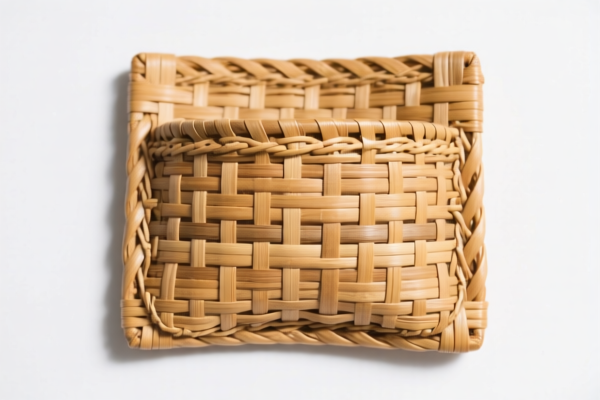
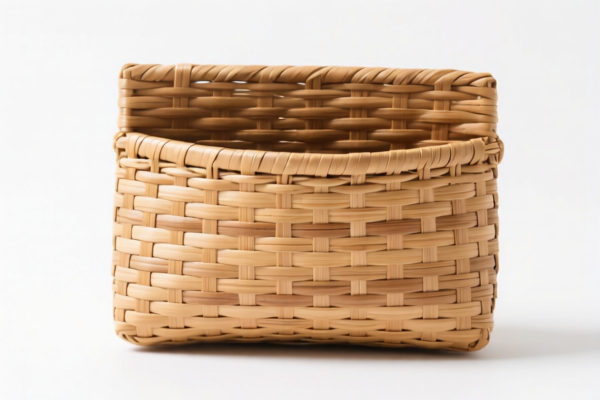
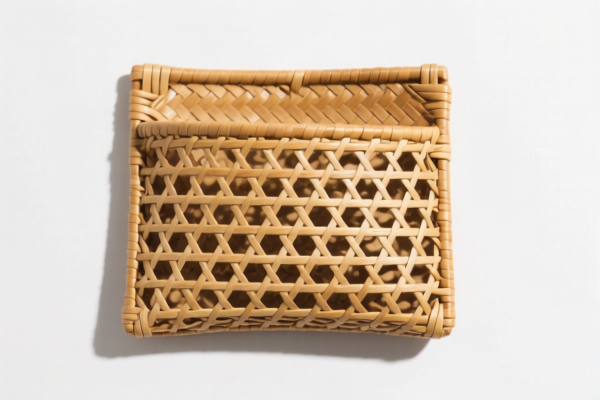
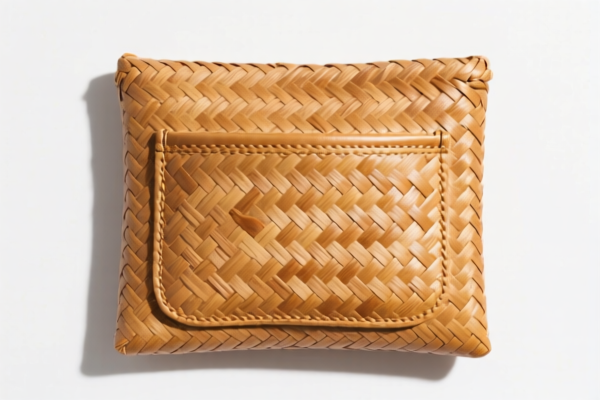
AI Analysis
🎁 Pocket Hug Gift (Emotional Support & Comfort Items)
🌐 HS Code Reference & Customs Clearance Guide | 2026 Latest Tariff Analysis | Professional Strategy for High-Value, Low-Volume Goods
📌 I. Product Definition & Classification: What is a "Pocket Hug Gift"?
The term "Pocket Hug Gift" is a marketing description, not a standardized trade term. In international trade, these items are generally categorized based on their material composition and intended function. They typically fall into two main categories:
- Paper/Cardboard Products: Small paper-based comfort items, such as decorative paper shoe covers ("booties"), decorative seals, gaskets, or intricate paper art designed for gifting.
- Toys/Children's Products: Small plush toys, puzzles, or novelty items intended as comforting gifts, often marketed to children or adults seeking emotional support.
⚠️ Critical Distinction:
- If the item is primarily paper/cardboard (e.g., decorative paper covers, paper seals) → It falls under Chapter 48.
- If the item is a toy, doll, or puzzle → It falls under Chapter 95.
- Do NOT misclassify paper items as toys to avoid tariffs, or vice versa. The material and primary function determine the HS Code.
📦 II. HS Code Classification Details (Based on Provided Data)
| HS Code | Product Description | Applicable Scenario | Material/Type | Tax Rate (Total) |
|--------|--------------------------|--------------------------|------------------|
| 4823.90.86.20 | Shoe Covers (Booties) of paper/paperboard, cut to size/shape; other articles of paper pulp, paper, etc. | Decorative paper "booties," paper-based comfort gifts, paper seals used in packaging | ✅ Paper/Cardboard | 25.0% |
| 4823.90.80.00 | Gaskets, Washers, and Other Seals of paper/paperboard | Paper-based seals, decorative paper gaskets, paper inserts for gifts | ✅ Paper/Cardboard | 25.0% |
| 9503.00.00.73 | Toys, Dolls, Puzzles: Intended for persons 3 to 12 years of age | Small plush "hug" toys, comforting puzzles, novelty toys for kids | ✅ Toy/Plush | 0.0% |
| 9503.00.00.71 | Toys, Dolls, Puzzles: Intended for persons Under 3 years of age | Small plush toys, baby comfort items, sensory toys | ✅ Toy/Plush | 0.0% |
🔍 Key Insight:
- Paper-based "Pocket Hug" items (e.g., decorative paper booties, paper seals) are subject to a 25% tariff.
- Toy-based "Pocket Hug" items (e.g., small plush dolls, puzzles) are duty-free (0%) if correctly classified as children's products.
- Misclassification Risk: Declaring a paper-based item as a "toy" to avoid the 25% tariff is a customs violation. Ensure the product description matches the physical composition.
💰 III. 2026 Latest Tariff Rate Details
✅ Applicable Country: United States (US)
✅ Origin: China (CN)
✅ Effective Time: 2025-11-10 onwards
🎯 1. 4823.90.86.20 & 4823.90.80.00 —— Paper/Cardboard Products
| Item | Details |
|---|---|
| Base Duty Rate | 0.0% |
| Section 301 Additional Duty | +25.0% |
| Total Tax Rate | 25.0% |
| Tax Calculation | CIF Value × 25% |
| De Minimis Exemption | ❌ Not Eligible for Section 301 duties under current rules for high-value shipments. |
| Legal Basis | USITC Footnote 9903.88.01 (Section 301) |
📌 Explanation:
- These paper products are classified under Chapter 48, which is subject to the 25% additional tariff under Section 301 of the Trade Act.
- Even if the base duty is 0%, the 25% additional duty applies, making the total cost significantly higher.
- Cost Impact: For every $1,000 of goods, you pay $250 in tariffs.
🎯 2. 9503.00.00.73 & 9503.00.00.71 —— Toys/Children's Products
| Item | Details |
|---|---|
| Base Duty Rate | 0.0% |
| Section 301 Additional Duty | 0.0% |
| Total Tax Rate | 0.0% |
| Tax Calculation | CIF Value × 0% = $0 |
| De Minimis Exemption | ✅ Eligible under $800 value (if applicable) |
| Legal Basis | HTSUS Chapter 95 |
📌 Explanation:
- Toys and children's products are not subject to Section 301 additional tariffs in this classification.
- Cost Impact: Zero tariffs, making these items highly competitive in price.
- Condition: Must be clearly labeled or determined by the importer as intended for persons under 13 years of age.
🛠️ IV. Customs Clearance Practical Advice
✅ 1. Preparation Checklist (Essential Documents)
| Document | Required | Notes |
|---|---|---|
| ✅ Product Specification Sheet | ✔️ | Clearly state material (e.g., "Paper" vs. "Plush Fabric"). |
| ✅ Product Photos | ✔️ | Show the item from multiple angles. If paper, show texture. If toy, show stitching/contents. |
| ✅ Labeling Statement | ✔️ | For toys: Must state "Intended for children under 13" or specific age range. |
| ✅ Commercial Invoice | ✔️ | Accurate description: "Paper Decorative Booties" vs. "Plush Comfort Toy." |
| ✅ Packing List | ✔️ | Detail contents per package. |
| ✅ CPSIA Compliance (for Toys) | ✔️ | If classified under Chapter 95, provide Children’s Product Certificate (CPC) if for US market. |
✅ 2. Classification Strategy & Optimization
| Scenario | Correct HS Code | Tariff | Strategy |
|---|---|---|---|
| Paper-based "Hug" Items (e.g., paper booties, paper seals) | 4823.90.86.20 or 4823.90.80.00 |
25% | Accept the cost. Ensure accurate description to avoid penalties. Consider if paper alternatives can be replaced. |
| Plush/Toy "Hug" Items (e.g., small dolls, puzzles) | 9503.00.00.73 (3-12 yrs) or 9503.00.00.71 (<3 yrs) |
0% | Opt for this classification if the product can be legitimately marketed as a toy. Ensure proper labeling. |
| Mixed Packages | N/A | High Risk | Do not mix paper and toy items in one shipment without clear separation. Mixed shipments may be classified as the highest-tariff item. |
🔥 Key Tip:
If your "Pocket Hug Gift" is paper-based, you cannot reclassify it as a toy to avoid the 25% tariff. However, if you can design the product as a small plush toy or puzzle, you can achieve 0% duty. Evaluate product design flexibility.
✅ 3. Special Considerations
| Situation | Advice |
|---|---|
| OEM Custom Paper Items | Provide design files to prove it is a "paper article" and not a "toy." |
| Plush Toys with Electronics | If it includes lights/sound, it may fall under Chapter 85 (Electrical), which could have different tariffs. Check carefully. |
| Small Value Shipments (<$800) | Toys under $800 may qualify for De Minimis exemption (Section 321), even from China, reducing duty to 0% and simplifying clearance. Paper items may also qualify, but Section 301 restrictions may apply. Consult a broker. |
🌍 V. Global Market Comparison (2026)
| Market | Recommended HS Code (Toy) | Tariff | Notes |
|---|---|---|---|
| 🇺🇸 USA | 9503.00.00.73/71 |
0% | Toys are duty-free. Paper items: 25%. |
| 🇨🇳 China | 9503.00 |
5% | Import duty for toys. |
| 🇪🇺 EU | 9503.00 |
0% | Most toys enter duty-free if proper CE marking. |
| 🇬🇧 UK | 9503.00 |
0% | Similar to EU post-Brexit. |
📌 Conclusion:
- The US market is unique in its 0% duty on toys but 25% duty on paper products.
- Strategic Advantage: If you can transform your "Pocket Hug Gift" from a paper item to a toy (e.g., plush doll instead of paper bootie), you save 25% in tariffs.
📌 VI. Common Mistakes & Pitfalls
❌ Mistake 1: Calling a paper item a "toy" to avoid tariffs.
👉 Result: Customs may reclassify, impose 25% duty + penalties + delay.
❌ Mistake 2: Missing age labeling on toys.
👉 Result: Rejection under CPSIA regulations. Must specify "3-12 years" or "Under 3 years."
❌ Mistake 3: Mixing paper and toy items in one box.
👉 Result: Customs may classify the entire shipment based on the highest-tariff item or require splitting.
✅ Best Practice:
Use precise descriptions:
- "Paper Decorative Booties, Gift Item, Not for Wear" for4823.90.86.20.
- "Small Plush Comfort Toy, Intended for Children 3-12 Years" for9503.00.00.73.
🎯 VII. Conclusion: Strategic Classification for Profit Maximization
🎯 Key Takeaway:
🔹 Paper Items = 25% Tariff (
4823.90)
🔹 Toy Items = 0% Tariff (9503.00)
📌 Action Plan:
1. Audit your product: Is it paper or a toy?
2. If paper: Accept the 25% cost, ensure accurate declaration, and consider if price absorption is possible.
3. If toy: Leverage the 0% duty, but ensure CPSIA compliance and correct age labeling.
4. Consider De Minimis: For shipments under $800, toys may qualify for duty-free entry with simplified clearance.
📣 Immediate Action:
📞 Consult a licensed customs broker to confirm the material composition and intended use of your "Pocket Hug Gift."
🚀 Classify correctly to save 25% in tariffs.
✨ Smart Classification, Smarter Profits.
💼 Every percentage point matters in global trade.
Customer Reviews
About HS Code Classification
The Harmonized System (HS) is an internationally standardized nomenclature developed by the World Customs Organization (WCO) to classify traded products. Over 200 countries use the HS system as the basis for customs tariffs, trade statistics, and import/export regulations.
Each HS code follows a hierarchical structure:
- Chapter (2 digits) — Broad category of goods (e.g., Chapter 84: Machinery and Mechanical Appliances)
- Heading (4 digits) — More specific grouping within the chapter
- Subheading (6 digits) — Internationally standardized breakdown, used by all WCO member countries
- National subdivisions (8-10 digits) — Country-specific extensions for further classification, such as US HTSUS 10-digit codes
Correct HS code classification is essential for smooth customs clearance, accurate duty payment, and compliance with trade regulations. Misclassification can lead to customs delays, overpayment of duties, or penalties.
When importing from CN to US, the applicable tariff rates may include:
- Most-Favored-Nation (MFN) rate — The standard duty rate applied to WTO members
- General rate — Applied to countries without trade agreements
- Trade remedy duties — Additional tariffs such as Section 301 (anti-dumping), Section 232 (national security), or countervailing duties
The information provided on this page is for reference purposes only. For official classification, please consult with your local customs authority or a licensed customs broker.