Pole
CN → US| HS Code | Tariff Rate | Origin | Destination | Doc |
|---|---|---|---|---|
| 7326908630 | 87.9% | CN | US | Official Doc |
| 7326908688 | 87.9% | CN | US | Official Doc |
| 9403999015 | 85.0% | CN | US | Official Doc |
Product Images
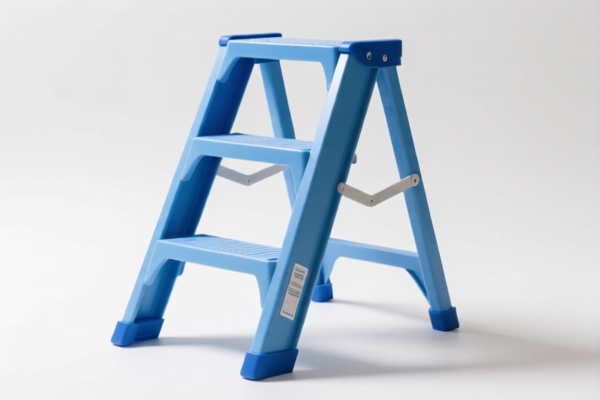
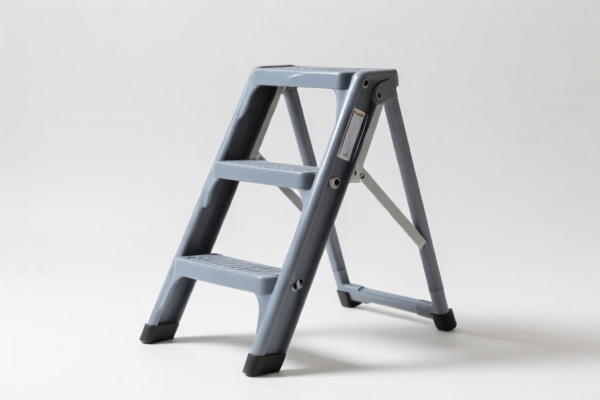
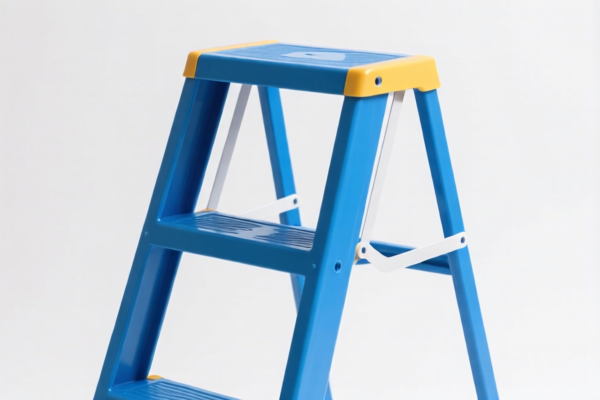
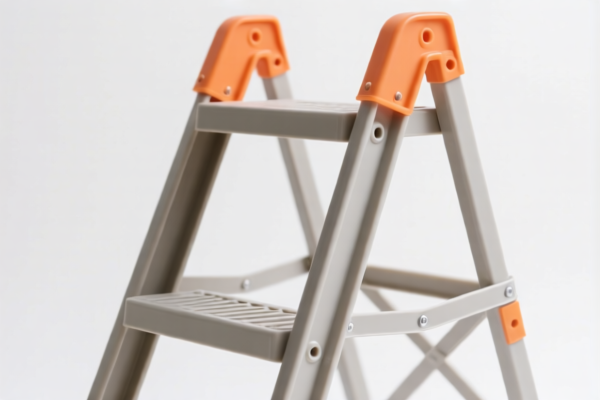
AI Analysis
🏗️ Support Rods / Poles (Structural Supports)
🌐 HS Code Reference & Customs Clearance Guide | 2026 Latest Tariff Analysis | Professional Clearance Strategy
📌 I. Product Definition & Classification: What Exactly is a "Pole"?
In international trade, "Support Rods" or "Poles" are versatile structural components. Their classification depends heavily on their material, end-use, and specific design. Based on the provided data, these items fall into three distinct categories, each carrying significantly different tax implications.
⚠️ Critical Distinction:
- If the pole is a generic structural support for industrial or general use → Chapter 73 (Iron/Steel Articles)
- If the pole is a specific part of furniture (e.g., a children’s playpen) → Chapter 94 (Furniture Parts)
- Misclassification Risk: Declaring a furniture part as a generic steel rod (or vice versa) can lead to significant duty errors or customs delays.
📦 II. HS Code Classification Details (2026 Latest Tariff Authority)
| HS Code | Product Description | Applicable Scenario | Total Tax Rate (China Origin) |
|---|---|---|---|
7326.90.86.30 |
Support rods classified as iron/steel hangers and similar supports | Industrial brackets, structural supports, generic hanging rods | 87.9% |
7326.90.86.88 |
Support rods classified as other articles of iron or steel | Generic steel poles not specifically designed as hangers; miscellaneous steel structures | 87.9% |
9403.99.90.15 |
Support rods classified as parts of furniture (Children’s Fencing Parts) | Specifically used as components for children’s playpens, safety gates, or similar furniture structures | 85.0% |
🔍 Key Insight:
- Both7326.90.86.30and7326.90.86.88attract the highest tax burden (87.9%) due to Section 301 and Section 232 duties. -9403.99.90.15offers a 2.9% lower total rate (85.0%), but only if the item is strictly identified as a part of furniture (specifically children’s fencing). - Do not misclassify a generic steel pole as a furniture part to save 2.9%. Customs requires strict proof of end-use.
💰 III. 2026 Latest Tariff Rate Breakdown (Detailed Policy Analysis)
✅ Applicable Country: United States (US)
✅ Origin: China (CN)
✅ Effective Date: 2025/2026 (Current Trade Policies)
🎯 1. 7326.90.86.30 & 7326.90.86.88 —— Iron/Steel Supports (Generic)
These codes fall under Section 73 (Articles of Iron or Steel). They are subject to a complex layering of tariffs.
| Component | Rate | Source/Policy |
|---|---|---|
| Base Duty | 2.9% | Standard Most Favored Nation (MFN) Rate |
| Section 301 Duty (Add-on) | 25.0% | US Trade Act Section 301 (Retaliatory Tariffs) |
| Section 232 Duty (Steel/Aluminum) | 50.0% | IEEPA Executive Order (Steel/Aluminum Products) |
| Total Effective Tax Rate | 87.9% | Sum of all applicable duties |
📌 Explanation:
- The 50% steel/aluminum surcharge is particularly harsh on iron/steel products, regardless of whether they are structural or decorative. - The 25% Section 301 duty applies to most Chinese-origin industrial goods. - Combined Impact: For every $1,000 CIF value, you pay $879 in duties. This is a very high cost that must be factored into pricing.
🎯 2. 9403.99.90.15 —— Parts of Furniture (Children’s Fencing)
This code falls under Chapter 94 (Furniture; Furnishings; Mattresses, Mattress Supports, etc.).
| Component | Rate | Source/Policy |
|---|---|---|
| Base Duty | 0.0% | MFN Rate for Furniture Parts (often duty-free or low) |
| Section 301 Duty (Add-on) | 25.0% | US Trade Act Section 301 |
| Section 232 Duty (Steel/Aluminum) | 50.0% | IEEPA Executive Order (Note: Some furniture parts may be exempt from 232 if not strictly "steel/aluminum" in raw form, but data indicates 50% is applied here for steel components) |
| Total Effective Tax Rate | 85.0% | Sum of all applicable duties |
📌 Explanation:
- The Base Duty is 0%, which is the key advantage. - However, it still faces the 25% Section 301 and 50% Section 232 duties on steel components. - Savings: Compared to the generic steel codes (7326...), this saves 2.9% in base duties, resulting in an 85.0% total vs. 87.9%. - Eligibility: Must be explicitly a part of a furniture item (e.g., a pole for a playpen). It cannot be used for general construction or standalone industrial poles.
🛠️ IV. Customs Clearance Practical Advice (Battle-Tested Tips)
✅ 1. Documentation Checklist (Non-Negotiable)
| Document | Required | Purpose |
|---|---|---|
| Product Specification Sheet | ✔️ | Must detail material (Iron/Steel), dimensions, and exact end-use. |
| Structural Diagram | ✔️ | Critical for 7326 codes to prove it’s a "support" or "hanger." |
| Commercial Invoice | ✔️ | Must clearly state: "Support Rod for [Specific Use]" or "Part for Children’s Fence." |
| Proof of End-Use | ✔️ | For 9403.99.90.15, you must provide evidence that the rod is part of a children’s fencing system. |
| Packing List | ✔️ | Ensure packaging indicates the item’s function to avoid customs confusion. |
✅ 2. Classification Strategy & Warnings
🔥 "Define the End-Use, Avoid the Penalty!"
| Scenario | Correct HS Code | Risk of Misclassification |
|---|---|---|
| Generic Steel Pole (e.g., for shelving, industrial rack) | 7326.90.86.30 or 86.88 |
High Cost (87.9%). No workaround. |
| Rod for Children’s Playpen | 9403.99.90.15 |
Lower Cost (85.0%). Requires proof of furniture association. |
| Rod for Outdoor Garden Use | 7326.90.86.88 |
High Cost (87.9%). Likely classified as "Other Steel Articles." |
⚠️ Red Flag:
- Do not label a generic steel rod as "Furniture Part" to save 2.9%. If customs inspects and finds no furniture context, you will face penalties, back taxes, and potential seizure. - Conversely, do not label a structural industrial bracket as "Furniture Part" if it’s clearly for heavy-duty industrial use.
✅ 3. Special Cases & Optimization
| Situation | Recommendation |
|---|---|
| OEM Custom Poles | Provide design specs showing the pole’s integration into a larger system (e.g., a playpen frame). |
| Mixed Shipment | If shipping both industrial supports and furniture parts, declare separately. Do not bundle under one HS Code. |
| Steel vs. Non-Steel | If the pole is made of plastic or aluminum, the 50% Section 232 steel duty may not apply (check Section 232 exemptions for aluminum). This could drastically reduce the 87.9% rate. |
🌍 V. Global Market Comparison (2026)
| Market | Recommended HS Code | Estimated Duty (China Origin) | Notes |
|---|---|---|---|
| 🇺🇸 USA | 7326.90.86.88 |
87.9% | High barriers due to 301/232 duties. |
| 🇺🇸 USA | 9403.99.90.15 |
85.0% | Slightly lower if strictly furniture parts. |
| 🇨🇳 China | 7326.90.86.30 |
~2.9% + VAT | Export from China has low duties. |
| 🇪🇺 EU | Varies | Varies | EU applies standard tariffs but no Section 301/232. Likely much lower than US. |
📌 Conclusion:
- The US market is the most expensive for Chinese-made steel poles due to layered tariffs. - Furniture parts (9403) offer a slight edge (2.9% savings), but only if the end-use is clearly defined. - Consider supply chain diversification (e.g., Vietnam, Mexico) if volume is high, as these countries may benefit from trade agreements or lower political tariffs.
📌 VI. Common Mistakes & Pitfalls (Learn from Others' Errors)
❌ Mistake 1: Using vague descriptions like "Metal Pole" on the invoice.
👉 Consequence: Customs may classify it under the highest duty rate or request additional documentation, causing delays.
❌ Mistake 2: Claiming "Furniture Part" for a standalone structural rod.
👉 Consequence: Customs rejection, fines, and potential blacklisting of the importer.
❌ Mistake 3: Ignoring the Section 232 Steel/Aluminum duty.
👉 Consequence: Under-declaring duties leads to back taxes + interest + penalties.
✅ Correct Approach:
"Iron Steel Support Rod, Model XYZ, Used for [Specific Application], Manufactured in China."
🎯 VII. Conclusion: Precision is Profit
🎯 Remember:
🔹 "Steel Poles = High Duty (87.9%).
🔹 "Furniture Parts = Slightly Lower (85.0%)".
🔹 "Proof of End-Use = Your Best Defense".**
📌 Pro Tip:
If your support rods are made of aluminum or plastic, investigate if they are exempt from the 50% Section 232 steel duty. This could drop your total tax rate significantly below 87.9%.
📣 Immediate Action:
📞 Consult with a licensed customs broker for Advance Ruling if your product’s end-use is ambiguous.
🚀 Ensure your commercial invoice and technical specs align perfectly with your chosen HS Code.
✨ Clear Classification, Clear Profits!
💼 Every percentage point of duty saved is pure profit.
Customer Reviews
About HS Code Classification
The Harmonized System (HS) is an internationally standardized nomenclature developed by the World Customs Organization (WCO) to classify traded products. Over 200 countries use the HS system as the basis for customs tariffs, trade statistics, and import/export regulations.
Each HS code follows a hierarchical structure:
- Chapter (2 digits) — Broad category of goods (e.g., Chapter 84: Machinery and Mechanical Appliances)
- Heading (4 digits) — More specific grouping within the chapter
- Subheading (6 digits) — Internationally standardized breakdown, used by all WCO member countries
- National subdivisions (8-10 digits) — Country-specific extensions for further classification, such as US HTSUS 10-digit codes
Correct HS code classification is essential for smooth customs clearance, accurate duty payment, and compliance with trade regulations. Misclassification can lead to customs delays, overpayment of duties, or penalties.
When importing from CN to US, the applicable tariff rates may include:
- Most-Favored-Nation (MFN) rate — The standard duty rate applied to WTO members
- General rate — Applied to countries without trade agreements
- Trade remedy duties — Additional tariffs such as Section 301 (anti-dumping), Section 232 (national security), or countervailing duties
The information provided on this page is for reference purposes only. For official classification, please consult with your local customs authority or a licensed customs broker.