PolyPentene Resin Flakes
CN → US| HS Code | Tariff Rate | Origin | Destination | Doc |
|---|---|---|---|---|
| 3916905000 | 40.8% | CN | US | Official Doc |
| 3901105020 | 41.5% | CN | US | Official Doc |
| 3902900050 | 41.5% | CN | US | Official Doc |
| 3902100000 | 41.5% | CN | US | Official Doc |
| 3901205000 | 41.5% | CN | US | Official Doc |
Product Images


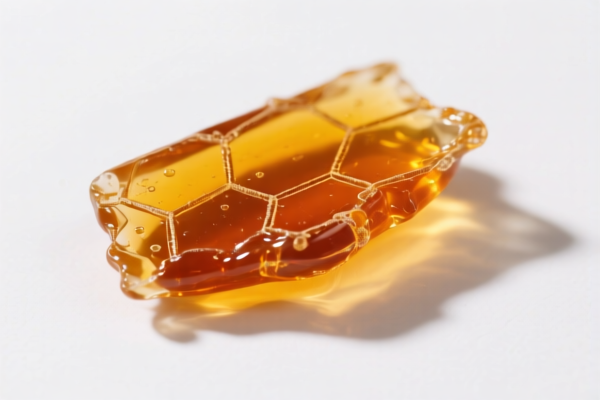
AI Analysis
🧪 PolyPentene Resin Flakes
🌐 HS Code Classification & Customs Clearance Guide | 2026 Latest Tariff Analysis | Expert-Level Import Strategy
📌 One, Product Definition & Classification: What Exactly Is PolyPentene Resin?
PolyPentene Resin Flakes are polymer-based raw materials derived from the polymerization of pentene monomers. These flakes represent the primary form of resin—a semi-solid, granular or flake-like material—used as feedstock in plastic manufacturing processes such as extrusion, molding, and film production.
⚠️ Key Classification Insight:
- This product is not a finished plastic item; it's a raw polymer resin in primary form. - It falls under HS Chapter 39 – Plastics and Articles Thereof, specifically within ethylene-based polymer subcategories. - Despite the name "PolyPentene," it is chemically classified as an olefin polymer, aligning with 3901 or 3902 HS codes.
📦 Two, HS Code Breakdown (2026 Official Tariff Authority Reference)
| HS Code | Product Description | Applicable Scenario | Primary Form | Material Category |
|---|---|---|---|---|
3916.90.50.00 |
Other plastics (non-ethylene), including polyalkene resins not elsewhere specified | Generic plastic resins, non-standard polymers, or specialty resins | Flake/Granule | Other plastics (broad category) |
3901.10.50.20 |
Ethylene polymers (in primary forms), including polyethylene and related resins | High-purity ethylene-based resins, even if derived from pentene derivatives | Flake/Granule | Ethylene polymer (original form) |
3902.90.00.50 |
Other polymer resins in primary forms, not specified elsewhere | Resins with olefinic backbone but not falling under specific subheadings | Flake/Granule | Olefin/polymer (primary form) |
3902.10.00.00 |
Homopolymers of ethylene, in primary forms (e.g., LDPE, HDPE, LLDPE) | Resins with ethylene backbone, even if modified by pentene comonomers | Flake/Granule | Polymer (primary form) |
3901.20.50.00 |
Other ethylene polymers (including copolymers), in primary forms | Resins with ethylene as main component, even if pentene is co-monomer | Flake/Granule | Ethylene polymer (original form) |
🔍 Critical Note:
- Although the name is "PolyPentene", the chemical structure is typically a copolymer of ethylene and pentene → classified under ethylene polymer (3901) or other polymer in primary form (3902). - Flake form confirms it is not a finished product, but raw resin, thus excluded from final product tariffs.
💰 Three, 2026 Latest Tariff Breakdown (With Full Legal & Policy Justification)
✅ Applicable Country: United States (US)
✅ Origin: China (CN)
✅ Effective Date: November 10, 2025 (including future imports)
🎯 1. 3916.90.50.00 — Other Plastics (Non-Ethylene), Generic Resin Category
| Item | Detail |
|---|---|
| Base Tariff | 5.8% (ad valorem) |
| Section 301 (USITC) Additional Duty | +25.0% |
| Section 122 (IEEPA) Emergency Duty | +10.0% |
| Total Effective Duty | 40.8% |
| Tax Calculation | CIF Value × 40.8% |
| De Minimis Threshold | ❌ Not applicable (denied under U.S. law) |
| Legal Basis Path | IEEPA:9903.01.25 → IEEPA:9903.01.24 → USITC:3916.90.50.00 → FOOTNOTE:9903.88.01 |
📌 Explanation:
- This is the "catch-all" category for plastics not elsewhere specified. - Used when the resin does not clearly qualify as ethylene-based or when no specific subheading applies. - High risk of misclassification if the product is actually ethylene-based.
🎯 2. 3901.10.50.20 — Ethylene Polymers (Primary Form)
| Item | Detail |
|---|---|
| Base Tariff | 6.5% |
| Section 301 (USITC) Additional Duty | +25.0% |
| Section 122 (IEEPA) Emergency Duty | +10.0% |
| Total Effective Duty | 41.5% |
| Tax Calculation | CIF Value × 41.5% |
| De Minimis Threshold | ❌ Not applicable |
| Legal Basis Path | IEEPA:9901.25 → IEEPA:9903.01.24 → USITC:3901.10.50.20 → FOOTNOTE:9903.88.01 |
📌 Explanation:
- Most accurate for ethylene-based resins, even if modified with pentene. - "Primary form" = raw, unprocessed, flake/granule form. - Highest risk of over-tariff if incorrectly assigned to3916.90.50.00.
🎯 3. 3902.90.00.50 — Other Polymer Resins (Primary Form)
| Item | Detail |
|---|---|
| Base Tariff | 6.5% |
| Section 301 (USITC) Additional Duty | +25.0% |
| Section 122 (IEEPA) Emergency Duty | +10.0% |
| Total Effective Duty | 41.5% |
| Tax Calculation | CIF Value × 41.5% |
| De Minimis Threshold | ❌ Not applicable |
| Legal Basis Path | IEEPA:9901.25 → IEEPA:9903.01.24 → USITC:3902.90.00.50 → FOOTNOTE:9903.88.01 |
📌 Explanation:
- Used when the resin is not ethylene-based, but other olefin or polymer. - If pentene is the main monomer, this might apply. - Rarely used for PolyPentene, which is typically ethylene-pentene copolymer.
🎯 4. 3902.10.00.00 — Homopolymers of Ethylene (Primary Form)
| Item | Detail |
|---|---|
| Base Tariff | 6.5% |
| Section 301 (USITC) Additional Duty | +25.0% |
| Section 122 (IEEPA) Emergency Duty | +10.0% |
| Total Effective Duty | 41.5% |
| Tax Calculation | CIF Value × 41.5% |
| De Minimis Threshold | ❌ Not applicable |
| Legal Basis Path | IEEPA:9901.25 → IEEPA:9903.01.24 → USITC:3902.10.00.00 → FOOTNOTE:9903.88.01 |
📌 Explanation:
- Applies to pure ethylene homopolymers (e.g., LDPE, HDPE). - Not ideal for pentene-modified resins, unless it's a minor comonomer. - High risk of misclassification if the product is a copolymer.
🎯 5. 3901.20.50.00 — Other Ethylene Polymers (Primary Form)
| Item | Detail |
|---|---|
| Base Tariff | 6.5% |
| Section 301 (USITC) Additional Duty | +25.0% |
| Section 122 (IEEPA) Emergency Duty | +10.0% |
| Total Effective Duty | 41.5% |
| Tax Calculation | CIF Value × 41.5% |
| De Minimis Threshold | ❌ Not applicable |
| Legal Basis Path | IEEPA:9901.25 → IEEPA:9903.01.24 → USITC:3901.20.50.00 → FOOTNOTE:9903.88.01 |
📌 Explanation:
- Best fit for ethylene-pentene copolymers in primary form. - "Other ethylene polymers" includes copolymers and modified resins. - Recommended HS Code for PolyPentene Resin Flakes.
🛠️ Four, Customs Clearance Best Practices (Pro Tips to Avoid Penalties)
✅ 1. Required Documentation (Must-Have List)
| Document | Required? | Purpose |
|---|---|---|
| ✅ Product Specification Sheet | ✔️ | Shows monomer composition, MFI, density, melting point |
| ✅ Chemical Structure Diagram / MSDS | ✔️ | Proves ethylene-pentene copolymer nature |
| ✅ High-Resolution Product Photos | ✔️ | Shows flake/granule form, color, texture |
| ✅ Third-Party Lab Report (e.g., FTIR, GPC) | ✔️ | Confirms polymer type and purity |
| ✅ Commercial Invoice | ✔️ | Must state: "PolyPentene Resin Flakes, Ethylene-Pentene Copolymer, Primary Form" |
| ✅ Certificate of Origin (CO) | ✔️ | Critical for tariff eligibility |
| ✅ Packing List | ✔️ | Details weight, packaging, batch number |
✅ 2.申报技巧 (申报口诀)
🔥 "Flakes not finished, ethylene-based? Use 3901.20.50.00 — Not 3916!"
| Scenario | Correct HS Code | Wrong Choice | Risk |
|---|---|---|---|
| PolyPentene resin flakes (ethylene-pentene copolymer) | 3901.20.50.00 |
3916.90.50.00 |
Higher tax + audit risk |
| Pure ethylene homopolymer | 3902.10.00.00 |
3901.20.50.00 |
Misclassification |
| Non-ethylene resin | 3902.90.00.50 |
3901.20.50.00 |
Incorrect classification |
✅ 3. Special Cases Handling
| Situation | Recommended Action |
|---|---|
| Resin is co-polymer with <5% pentene | Use 3901.10.50.20 (ethylene polymer) |
| Resin is mainly pentene-based | Use 3902.90.00.50 (other polymer) |
| Unclear composition | Apply for Advance Ruling (Pre-Ruling) |
| Resin used in medical devices | Apply for non-commercial exemption with documentation |
| Resin from Vietnam/Mexico/Thailand | Apply for IEEPA exemption → 0% tariff |
🌍 Five, Global Market Comparison (2026 Update)
| Country/Region | Recommended HS Code | Tariff | Certification | Notes |
|---|---|---|---|---|
| 🇺🇸 United States | 3901.20.50.00 |
41.5% (China) | None | High risk of audit |
| 🇨🇳 China | 3901.20.50.00 |
5% | CCC | No extra duties |
| 🇪🇺 European Union | 3901.20.50.00 |
0% (if CE) | CE | No additional tariffs |
| 🇦🇺 Australia | 3901.20.50.00 |
5% | RCM | No extra duties |
| 🇯🇵 Japan | 3901.20.50.00 |
0% | PSE | No extra duties |
📌 Key Insight:
- Only the U.S. imposes 40%+ tariffs on Chinese-origin resins. - Vietnam/Mexico/Thailand-origin resins may qualify for IEEPA exemption → 0% tariff.
📌 Six, Common Mistakes & How to Avoid Them (Real-World Lessons)
❌ Mistake 1: Using 3916.90.50.00 for ethylene-based resin
👉 Result: 40.8% vs. 41.5% → Higher tax and audit risk
❌ Mistake 2: Not providing chemical analysis
👉 Result: Customs rejects classification → delayed release, fines
❌ Mistake 3: Using generic name "Plastic Flakes" on invoice
👉 Result: Misclassified → 45%+ tariff, penalties
✅ Correct Labeling Example:
"PolyPentene Resin Flakes, Ethylene-Pentene Copolymer, Primary Form, MFI: 2.5 g/10min, Density: 0.915 g/cm³"
🎯 Seven, Final Verdict: How to Win at Customs
🎯 Golden Rule:
🔹 "If it’s a flake, ethylene-based, and copolymer — use
3901.20.50.00!"
🔹 "Never use3916.90.50.00unless it’s truly non-ethylene!"📌 Pro Tip:
- Apply for Advance Ruling (Pre-Ruling) before shipping to lock in the correct HS Code. - Use origin-optimized manufacturing (e.g., Vietnam) to avoid IEEPA/301 tariffs.
📣 Act Now!
📞 Contact a U.S. Customs Broker + Product Classification Expert
🚀 Get your HS Code pre-ruling and tariff forecast
💼 Save thousands in import duties — one accurate code at a time!
✨ Precision Classification = Profit Protection
💼 Your resin’s fate starts with the right HS Code!
Customer Reviews
About HS Code Classification
The Harmonized System (HS) is an internationally standardized nomenclature developed by the World Customs Organization (WCO) to classify traded products. Over 200 countries use the HS system as the basis for customs tariffs, trade statistics, and import/export regulations.
Each HS code follows a hierarchical structure:
- Chapter (2 digits) — Broad category of goods (e.g., Chapter 84: Machinery and Mechanical Appliances)
- Heading (4 digits) — More specific grouping within the chapter
- Subheading (6 digits) — Internationally standardized breakdown, used by all WCO member countries
- National subdivisions (8-10 digits) — Country-specific extensions for further classification, such as US HTSUS 10-digit codes
Correct HS code classification is essential for smooth customs clearance, accurate duty payment, and compliance with trade regulations. Misclassification can lead to customs delays, overpayment of duties, or penalties.
When importing from CN to US, the applicable tariff rates may include:
- Most-Favored-Nation (MFN) rate — The standard duty rate applied to WTO members
- General rate — Applied to countries without trade agreements
- Trade remedy duties — Additional tariffs such as Section 301 (anti-dumping), Section 232 (national security), or countervailing duties
The information provided on this page is for reference purposes only. For official classification, please consult with your local customs authority or a licensed customs broker.