Polyamide Automotive Interior Panel
CN → US| HS Code | Tariff Rate | Origin | Destination | Doc |
|---|---|---|---|---|
| 3921905050 | 39.8% | CN | US | Official Doc |
| 3926305000 | 22.8% | CN | US | Official Doc |
| 3921190090 | 41.5% | CN | US | Official Doc |
| 3926301000 | 24.0% | CN | US | Official Doc |
| 3921190090 | 41.5% | CN | US | Official Doc |
Product Images

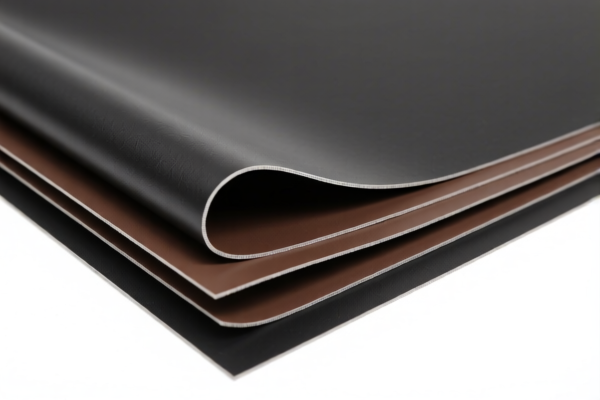

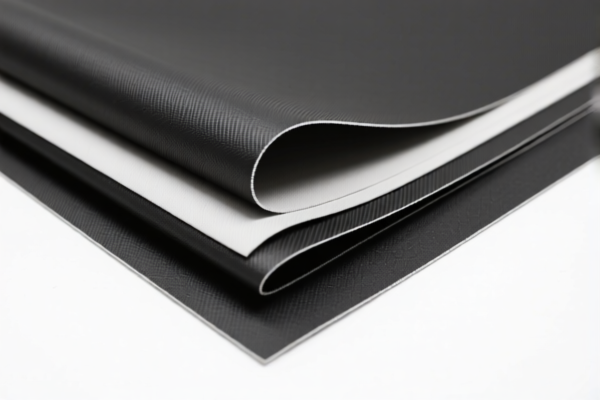
AI Analysis
🚗 Polyamide (PA) Automotive Interior Panels
🌐 HS Code Reference & Customs Clearance Guide | 2026 Latest Tariff Analysis | Professional Level Customs Strategy
📌 I. Product Definition and Classification: Do You Really Understand "Polyamide Automotive Interior Panels"?
Polyamide (commonly known as Nylon), due to its high strength, heat resistance, and wear resistance, is widely used in the automotive industry. However, in international trade, its HS Code classification depends entirely on its physical form and specific application. It is generally divided into two main categories:
1. Raw Material/Form (Plastic Boards/Sheets): Polyamide materials in the form of plates, sheets, films, or strips, intended for further processing (cutting, molding, etc.). 2. Finished/Semi-Finished Parts (Automotive Components): Specific interior parts such as trim panels, door inserts, or dashboard covers already shaped for installation in a vehicle.
⚠️ Key Distinction Point:
- If the product is merely raw material in plate/sheet form (even if intended for automotive use) → Classified under Chapter 39 (Plastics and Articles Thereof) - Plates/Sheets (e.g.,3921.xx).
- If the product is a specific part/component for a car (e.g., interior trim) → Classified under Chapter 39 - Other Articles of Plastics (e.g.,3926.30).
📦 II. HS Code Classification Details (2026 Latest Tariff Authoritative Comparison)
Based on the provided data, here are the four possible classifications for Polyamide Automotive Interior Panels:
| HS Code | Product Description | Applicable Scenario | Total Tax Rate (US Import from CN) |
|---|---|---|---|
3921.90.50.50 |
Polyamide material, plate shape; classified as other plastic plates, sheets, films, foils, strips. | Raw polyamide sheets/plates intended for cutting into car parts. | 39.8% |
3926.30.50.00 |
Polyamide material, purpose: automotive interior panels; classified as other plastic articles for vehicle body connections/components. | Finished or semi-finished interior trim parts specific to cars. | 22.8% |
3921.19.00.90 |
Polyamide material, plate shape; classified as other plastic plates, sheets, films, foils. | Other types of polyamide plates/sheets not covered by specific subheadings. | 41.5% |
3926.30.10.00 |
Polyamide material, purpose: automotive interior use; classified as other plastic articles for vehicle bodies. | General automotive interior plastic parts (broad category). | 24.0% |
🔍 Key Reminder:
- Raw Material vs. Finished Part: If you ship polyamide sheets to be cut locally, use3921.xx. If you ship pre-molded interior panels, use3926.30.xx.
- Tax Implication: Classifying as "Other Plastic Plates" (3921.19.00.90) incurs the highest tax (41.5%). Classifying as "Automotive Interior Parts" (3926.30.50.00) offers the lowest tax (22.8%).
- Accuracy Matters: Misclassifying a finished part as raw material (or vice versa) can lead to customs delays, penalties, or overpayment.
💰 III. 2026 Latest Tariff Rate Details (Including Additional Taxes & Policy Surcharges)
✅ Applicable Country: United States (US)
✅ Origin: China (CN)
✅ Effective Time: 2025/2026 (Current Trade Policy)
🎯 1. 3921.90.50.50 – Polyamide Plates/Sheets (General Other Plastics)
| Item | Content |
|---|---|
| Base Tariff | 4.8% |
| Section 301 Tariff | +25.0% |
| Section 122 Tariff | +10.0% |
| Total Tax Rate | 39.8% |
| Tax Calculation | CIF Value × 39.8% |
| De Minimis Exemption | ❌ Not Eligible |
| Legal Basis | USITC:3921.90.50.50 → Section 301: +25% → Section 122: +10% |
📌 Explanation:
- This code applies to polyamide materials in plate/sheet form that do not fit more specific categories.
- The total burden is nearly 40%, significantly impacting margin.
🎯 2. 3926.30.50.00 – Polyamide Automotive Interior Panels (Specific Component)
| Item | Content |
|---|---|
| Base Tariff | 5.3% |
| Section 301 Tariff | +7.5% |
| Section 122 Tariff | +10.0% |
| Total Tax Rate | 22.8% |
| Tax Calculation | CIF Value × 22.8% |
| De Minimis Exemption | ❌ Not Eligible |
| Legal Basis | USITC:3926.30.50.00 → Section 301: +7.5% → Section 122: +10% |
📌 Note:
- Lowest Tax Option: This is the most advantageous code if the item is a specific automotive interior component.
- Why Lower?: Section 301 rate is only 7.5% (vs. 25% for general plastics), reflecting strategic trade policies on certain manufactured goods.
- Requirement: Must clearly demonstrate "Automotive Interior Panel" purpose in documentation.
🎯 3. 3921.19.00.90 – Other Plastic Plates/Sheets (Highest Risk)
| Item | Content |
|---|---|
| Base Tariff | 6.5% |
| Section 301 Tariff | +25.0% |
| Section 122 Tariff | +10.0% |
| Total Tax Rate | 41.5% |
| Tax Calculation | CIF Value × 41.5% |
| De Minimis Exemption | ❌ Not Eligible |
| Legal Basis | USITC:3921.19.00.90 → Section 301: +25% → Section 122: +10% |
📌 Warning:
- This is the most expensive classification.
- Only use if the product is a generic plastic plate/sheet that doesn't fit3921.90.50.50and is NOT a finished automotive part.
🎯 4. 3926.30.10.00 – Other Plastic Automotive Interior Parts (General)
| Item | Content |
|---|---|
| Base Tariff | 6.5% |
| Section 301 Tariff | +7.5% |
| Section 122 Tariff | +10.0% |
| Total Tax Rate | 24.0% |
| Tax Calculation | CIF Value × 24.0% |
| De Minimis Exemption | ❌ Not Eligible |
| Legal Basis | USITC:3926.30.10.00 → Section 301: +7.5% → Section 122: +10% |
📌 Note:
- Slightly higher than3926.30.50.00(24.0% vs 22.8%).
- Use this if the product is an automotive interior part but doesn't fit the specific "connection/component" description of3926.30.50.00.
🛠️ IV. Customs Clearance Practical Advice (Combat Pitfall Guide)
✅ 1. Required Documentation Checklist (No Missing Items)
| Document | Mandatory | Description |
|---|---|---|
| ✅ Product Specification Sheet | ✔️ | Must detail material (Polyamide/PA), form (Plate vs. Part), dimensions, and weight. |
| ✅ Product Photos | ✔️ | Clear photos showing if it's a raw sheet or a shaped interior panel (e.g., with clips/mounting points). |
| ✅ Statement of End-Use | ✔️ | Explicitly state: "For use in automotive interior panels" if claiming 3926.30. |
| ✅ Commercial Invoice | ✔️ | Must match the HS Code description precisely. Avoid vague terms like "Plastic Item." |
| ✅ Packing List | ✔️ | Detail quantities and packaging to avoid confusion with raw material rolls vs. cut parts. |
| ✅ Third-Party Test Report | ✔️ | Material composition report confirming Polyamide content. |
✅ 2. Declaration Tips (Key Mnemonic)
🔥 "Form Defines Code, Purpose Defines Tax, Be Specific, Save Money!"
| Scenario | Correct Declaration | Wrong Practice |
|---|---|---|
| Raw Polyamide Sheets | 3921.90.50.50 or 3921.19.00.90 |
Labeling as "Car Part" → Misclassification Risk |
| Molded Interior Trim | 3926.30.50.00 |
Labeling as "Plastic Sheet" → Higher Tax (39.8%) |
| Generic Plastic Plate | 3921.19.00.90 |
Labeling as "Auto Part" → Customs Rejects Claim |
| Specific Auto Component | 3926.30.10.00 |
Vague "Plastic Part" → Potential Audit |
✅ 3. Special Situation Handling
| Situation | Handling Advice |
|---|---|
| Semi-Formed Parts | If partially molded but not ready for installation, argue for 3921.xx (Raw Material) if possible, but be prepared for higher tax unless specifically exempted. |
| Custom/OEM Parts | Provide customer POs and design drawings to prove "Automotive Interior" use. |
| Mixed Shipments | Declare sheets and parts separately. Do not mix "Plastic Sheets" and "Interior Panels" in one HS Code line. |
| Origin Declaration | Ensure Certificate of Origin (CO) matches. Any inconsistency triggers audits. |
🌍 V. Global Market Comparison (2026 Latest)
| Country/Region | Recommended HS Code | Tax Rate | Certification Requirements | Notes |
|---|---|---|---|---|
| 🇺🇸 USA | 3926.30.50.00 |
22.8% | None Specific (Trade Compliance) | Lowest tax for auto parts; 41.5% for raw sheets. |
| 🇨🇳 China | 3926.30.50.00 |
~5-10% | CCC (if applicable) | Lower base tariffs; no Section 301. |
| 🇪🇺 EU | 3926.30.50.00 |
~6.5% | REACH, RoHS | No Section 122/301 surcharges. |
| 🇨🇦 Canada | 3926.30.50.00 |
~5% | N/A | Preferential rates under USMCA if originating. |
| 🇲🇽 Mexico | 3926.30.50.00 |
~5% | N/A | USMCA eligibility critical. |
📌 Conclusion:
- USA is the most complex market due to Section 301 and 122 tariffs.
- Classifying as "Automotive Interior Panel" (3926.30) saves ~17% in taxes compared to classifying as "Raw Plastic Plate" (3921.19).
- Evidence is Key: You must prove the "Automotive Interior" purpose to qualify for the lower rate.
📌 VI. Common Errors & Pitfall Guide (Lessons Learned)
❌ Error 1: Labeling a raw polyamide sheet as an "Automotive Interior Panel"
👉 Consequence: Customs may accept it, but if audited and found to be raw material, you face penalties for fraud and may be reassigned to a higher-tariff code retroactively.
❌ Error 2: Labeling a finished interior panel as "Plastic Sheet" (3921.19.00.90)
👉 Consequence: Paying 41.5% tax instead of 22.8%. Overpayment of ~18.7% is a direct profit loss.
❌ Error 3: Vague description: "Plastic Car Part"
👉 Consequence: Customs cannot determine the correct HS Code → Detention, Delay, and Request for Additional Documentation.
❌ Error 4: Ignoring Section 122 Tariff
👉 Consequence: Forgetting the 10% Section 122 surcharge leads to underpayment and interest/penalties.
✅ Correct Practice:
"Polyamide (PA) Automotive Interior Trim Panel, Pre-Molded, Model XYZ, Intended for Door Insert, Material Composition: 100% Polyamide, HS Code: 3926.30.50.00"
🎯 VII. Conclusion: Precision Classification, Cost Optimization!
🎯 Remember the Mnemonic:
🔹 "Raw Sheets = 3921 (High Tax), Auto Parts = 3926 (Low Tax)"
🔹 "Be Specific: 'Interior Panel' Saves 17%, 'Sheet' Costs 41%!"
🔹 "Section 301 + 122 Add Up, Don't Let Surprises Break Your Budget!"
📌 Pro Tip:
If your polyamide panels are originating from Vietnam, Mexico, or Thailand, you may qualify for USMCA or other FTAs exemptions, potentially reducing Section 301/122 tariffs.
Recommend pre-clearance ruling if shipment volume is high.
📣 Immediate Action:
📞 Contact a professional customs broker + Provide product photos + Apply for HS Code Ruling
🚀 Let your Polyamide Panels clear smoothly, maximize profits, and enter the US market efficiently!
✨ Professional Clearance Starts with Accurate Classification!
💼 Every cent of your cost deserves precise calculation!
Customer Reviews
About HS Code Classification
The Harmonized System (HS) is an internationally standardized nomenclature developed by the World Customs Organization (WCO) to classify traded products. Over 200 countries use the HS system as the basis for customs tariffs, trade statistics, and import/export regulations.
Each HS code follows a hierarchical structure:
- Chapter (2 digits) — Broad category of goods (e.g., Chapter 84: Machinery and Mechanical Appliances)
- Heading (4 digits) — More specific grouping within the chapter
- Subheading (6 digits) — Internationally standardized breakdown, used by all WCO member countries
- National subdivisions (8-10 digits) — Country-specific extensions for further classification, such as US HTSUS 10-digit codes
Correct HS code classification is essential for smooth customs clearance, accurate duty payment, and compliance with trade regulations. Misclassification can lead to customs delays, overpayment of duties, or penalties.
When importing from CN to US, the applicable tariff rates may include:
- Most-Favored-Nation (MFN) rate — The standard duty rate applied to WTO members
- General rate — Applied to countries without trade agreements
- Trade remedy duties — Additional tariffs such as Section 301 (anti-dumping), Section 232 (national security), or countervailing duties
The information provided on this page is for reference purposes only. For official classification, please consult with your local customs authority or a licensed customs broker.