Polyamide Blended Filament Yarn Woven Fabrics
CN → USProduct Images
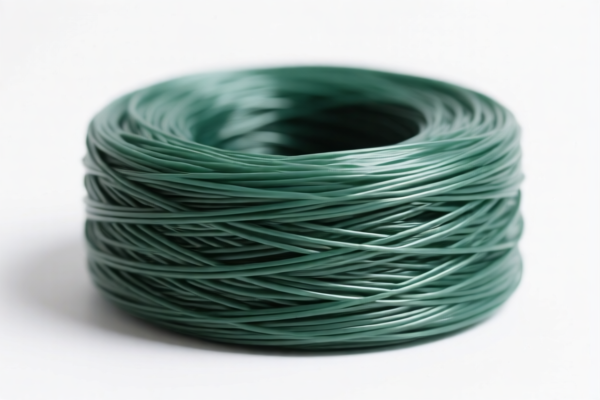
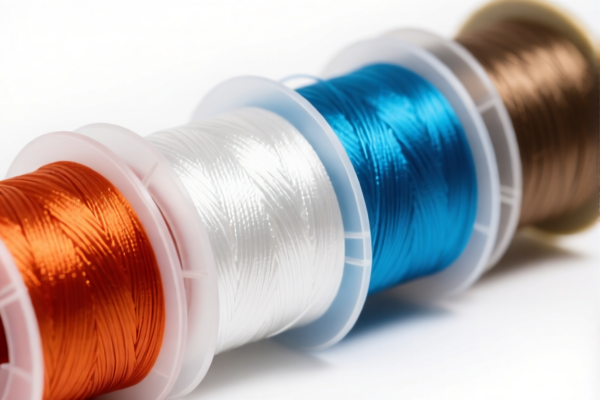
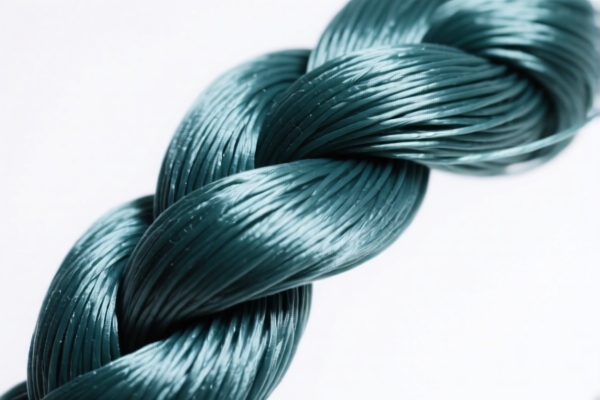
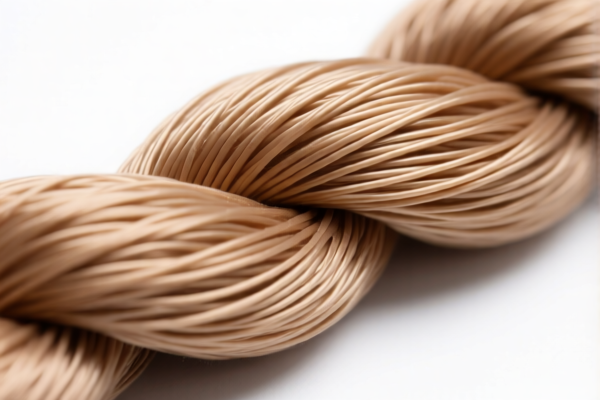
AI Analysis
🌐 Polyamide Blended Filament Yarn Woven Fabrics
📌 HS Code Reference & Customs Clearance Guide | 2026 Updated Tariff Analysis | Professional Import Strategy
🖥️ One: Product Definition & Classification – What Exactly Is This Fabric?
Polyamide blended filament yarn woven fabrics are high-performance textile materials composed of polyamide (nylon) filaments combined with other synthetic or natural fibers (e.g., polyester, rayon, cotton), woven into a fabric structure. These fabrics are widely used in:
- Apparel: Sportswear, swimwear, activewear, lingerie
- Industrial applications: Conveyor belts, technical textiles, protective clothing
- Home & furnishings: Upholstery, curtains, carpet backing
- Automotive: Seat covers, interior trims, airbags
⚠️ Key Classification Rule:
- If the fabric contains polyamide filaments (not staple fibers) and is woven, it falls under HS Code 5407.99.90.00
- If the polyamide content is less than 85%, and blended with other fibers, still applies to 5407.99.90.00
- Not classified as "cotton" or "polyester" even if other fibers dominate — polyamide content triggers specific rules
📦 Two: HS Code Classification Details (2026 Official Tariff Table)
| HS Code | Product Description | Use Case | Polyamide Content | Filament Type |
|---|---|---|---|---|
5407.99.90.00 |
Woven fabrics of polyamide filament yarns, not otherwise specified | Sportswear, swimwear, technical textiles, industrial use | ≥85% or blended with other fibers | ✅ Filament (continuous) |
5407.10.00.00 |
Woven fabrics of polyamide filament yarns, containing ≥85% polyamide | High-performance apparel, military gear, aerospace textiles | ≥85% | ✅ Filament |
5407.99.10.00 |
Woven fabrics of polyamide filament yarns, with ≤85% polyamide | Mixed-fiber fabrics, fashion textiles, home decor | <85% | ✅ Filament |
5407.99.90.00 |
Other woven fabrics of polyamide filament yarns | General-purpose fabrics, industrial linings | Any % | ✅ Filament |
5514.19.00.00 |
Woven fabrics of synthetic filament yarns (not polyamide) | Polyester-based fabrics, non-polyamide synthetics | ❌ No polyamide | ✅ Filament |
5208.11.00.00 |
Woven fabrics of cotton and synthetic filament yarns | Cotton-polyamide blends | ❌ No polyamide content | ✅ Filament |
🔍 Critical Insight:
- "Filament" = continuous, smooth yarn (vs. staple = short fibers)
- Even 1% polyamide in filament form can trigger 5407.99.90.00 if woven
- Do not confuse with "blended staple" fabrics — those fall under different codes (e.g., 5208.11.00.00)
💰 Three: 2026 Updated Tariff Rates (With附加 Taxes & Policy Triggers)
✅ Applicable Country: United States (US)
✅ Origin: China (CN), Vietnam (VN), India (IN), Turkey (TR)
✅ Effective Date: November 10, 2025 (Post-Section 301 Review)
🎯 1. 5407.99.90.00 — Woven Fabrics of Polyamide Filament Yarns (General)
| Item | Detail |
|---|---|
| Base Duty Rate | 0% (ad valorem) |
| USITC Section 301 Tariff | +25% (from USITC Footnote 9903.88.01) |
| IEEPA Emergency Tariff | +10% (applies to China/VN/India origin, effective Nov 10, 2025) |
| Total Effective Rate | 45% |
| Tax Calculation | CIF Value × 45% |
| De Minimis Exemption | ❌ Not available (denied under IEEPA/301 rules) |
| Legal Pathway | IEEPA:9903.01.25 → IEEPA:9903.01.24 → USITC:5407.99.90.00 → FOOTNOTE:9903.88.01 |
📌 Explanation:
- USITC 25% comes from the Section 301 Tariff List on Chinese-made textiles
- IEEPA 10% is an emergency tariff under the International Emergency Economic Powers Act
- Total 45% is extremely high — one of the highest for textile imports
- Even low-value shipments (e.g., $100) are fully taxable due to no de minimis
🎯 2. 5407.10.00.00 — High-Polyamide Content (≥85%) Woven Fabrics
| Item | Detail |
|---|---|
| Base Duty Rate | 0% |
| USITC Section 301 Tariff | +25% |
| IEEPA Emergency Tariff | +10% |
| Total Effective Rate | 45% |
| Tax Calculation | CIF × 45% |
| De Minimis Exemption | ❌ Not applicable |
| Legal Pathway | Same as above: IEEPA:9903.01.25 → USITC:5407.10.00.00 → FOOTNOTE:9903.88.01 |
📌 Note:
- Despite higher polyamide content, same tax rate applies — no benefit for ≥85%
- No special treatment even if used in military or medical applications
🛠️ Four: Customs Clearance Best Practices (Real-World Tips)
✅ 1. Required Documentation (Must-Have List)
| Document | Required? | Why It Matters |
|---|---|---|
| ✅ Technical Fabric Specification Sheet | ✔️ | Must show fiber composition, filament type, weave pattern |
| ✅ Lab Test Report (e.g., AATCC, ISO) | ✔️ | Confirms polyamide content, durability, flame resistance |
| ✅ Product Photos (with label & weave detail) | ✔️ | Helps customs verify filament vs. staple |
| ✅ Commercial Invoice | ✔️ | Must state: “Woven Fabric of Polyamide Filament Yarns, Blended” |
| ✅ Certificate of Origin (CO) | ✔️ | Critical for tariff eligibility (e.g., Vietnam may qualify for lower rates) |
| ✅ Bill of Lading / Air Waybill | ✔️ | Proves shipment origin and delivery terms |
| ✅ Material Safety Data Sheet (MSDS) | ✔️ | If used in medical/automotive sectors |
✅ 2.申报技巧(Key Rules to Remember)
🔥 “Filament not Staple, Polyamide Triggers 45%, Blends Still 45%, Don’t Split!”
| Scenario | Correct HS Code | Wrong Approach |
|---|---|---|
| 70% polyamide + 30% polyester (filament) | 5407.99.90.00 |
Misclassify as 5208.11.00.00 → 15% tariff |
| 90% polyamide (filament) | 5407.10.00.00 |
Still taxed at 45% — no relief |
| Fabric with 1% polyamide filament | 5407.99.90.00 |
Must declare — even 1% triggers the code |
| Mixed shipment: fabric + trim | 申报为整体 | Splitting → each item taxed at 45% → total 90%+ |
✅ 3. Special Cases & Solutions
| Situation | Recommended Action |
|---|---|
| Fabric from Vietnam (VN) | Apply for Certificate of Origin — may qualify for IEEPA exemption → 0% tariff |
| Used in medical garments | Submit non-commercial use declaration + FDA letter — possible exemption |
| Military or aerospace use | Apply for Special Purpose Clearance — may reduce or defer taxes |
| OEM production (private label) | Provide customer PO + design drawings — avoid "non-standard" classification |
| Recycled polyamide content | Still falls under 5407.99.90.00 — no green tariff break |
🌍 Five: Global Customs Comparison (2026 Update)
| Country/Region | Recommended HS Code | Tariff Rate | Certification Required | Notes |
|---|---|---|---|---|
| 🇺🇸 United States | 5407.99.90.00 |
45% (China/VN/IN) | FCC, EPA, AATCC | Highest tariff globally |
| 🇨🇳 China | 5407.99.90.00 |
5% | CCC, RoHS | No IEEPA/301 tariffs |
| 🇪🇺 European Union | 5407.99.90.00 |
0% (if CE compliant) | CE, REACH, RoHS | No附加税 |
| 🇦🇺 Australia | 5407.99.90.00 |
5% | RCM | No IEEPA |
| 🇯🇵 Japan | 5407.99.90.00 |
0% | PSE, JIS | No附加税 |
| 🇹🇭 Thailand | 5407.99.90.00 |
0% (if CEP) | TISI | Low-cost sourcing hub |
📌 Key Insight:
- Only the US imposes 45% on polyamide-blended filament fabrics
- Vietnam, Thailand, India (if CO issued) can avoid IEEPA → 0% or 5%
- China-origin goods face the highest cost — consider shifting production
📌 Six: Common Mistakes & How to Avoid Them (Real Cases)
❌ Mistake 1: Classifying as "cotton-polyester blend" (5208.11.00.00)
👉 Result: Tax jumps from 45% to 15% — but incorrect classification → penalties + seizure
❌ Mistake 2: Not declaring polyamide filament content
👉 Result: Customs flags for audit → delayed clearance + fines
❌ Mistake 3: Splitting fabric + trim into separate shipments
👉 Result: Each item taxed at 45% → total 90%+ → financial disaster
❌ Mistake 4: Using "nylon fabric" as product name without "filament"
👉 Result: Misleading — customs may reclassify → reassessment + interest
✅ Correct Declaration Example:
“Woven Fabric, 70% Polyamide Filament Yarn, 30% Polyester Filament, 120gsm, Plain Weave, 1.5m width, CE & AATCC Certified, Origin: Vietnam”
🎯 Seven: Conclusion – Smart Classification = Big Savings!
🎯 Remember the Golden Rules:
🔹 “Filament triggers 45%, even 1% polyamide counts”
🔹 “Blends are not cotton — polyamide rules apply”
🔹 “Don’t split — total tax can hit 90%”
🔹 “Vietnam/Thailand origin = 0% tariff”
📌 Pro Tip:
✅ Apply for Advance Ruling (Pre-Clearance) with U.S. CBP before shipment
✅ Use Vietnam or Thailand as production base to avoid 45%
✅ Always include “filament” and “polyamide” in product description
📣 Take Action Now:
📞 Contact a specialized textile customs broker
📂 Submit product specs + photos + origin proof
🚀 Get HS Code pre-approval — avoid delays, fines, and overpayment!
✨ Smart Customs Starts with Accurate Classification!
💼 Your fabric’s tariff fate is decided in the first 3 words of your invoice.
🚀 Get it right — and save thousands per shipment!
Customer Reviews
About HS Code Classification
The Harmonized System (HS) is an internationally standardized nomenclature developed by the World Customs Organization (WCO) to classify traded products. Over 200 countries use the HS system as the basis for customs tariffs, trade statistics, and import/export regulations.
Each HS code follows a hierarchical structure:
- Chapter (2 digits) — Broad category of goods (e.g., Chapter 84: Machinery and Mechanical Appliances)
- Heading (4 digits) — More specific grouping within the chapter
- Subheading (6 digits) — Internationally standardized breakdown, used by all WCO member countries
- National subdivisions (8-10 digits) — Country-specific extensions for further classification, such as US HTSUS 10-digit codes
Correct HS code classification is essential for smooth customs clearance, accurate duty payment, and compliance with trade regulations. Misclassification can lead to customs delays, overpayment of duties, or penalties.
When importing from CN to US, the applicable tariff rates may include:
- Most-Favored-Nation (MFN) rate — The standard duty rate applied to WTO members
- General rate — Applied to countries without trade agreements
- Trade remedy duties — Additional tariffs such as Section 301 (anti-dumping), Section 232 (national security), or countervailing duties
The information provided on this page is for reference purposes only. For official classification, please consult with your local customs authority or a licensed customs broker.