Polyamide Food Packaging Film
CN → US| HS Code | Tariff Rate | Origin | Destination | Doc |
|---|---|---|---|---|
| 3920920000 | 39.2% | CN | US | Official Doc |
| 3920992000 | 39.2% | CN | US | Official Doc |
| 3919905040 | 40.8% | CN | US | Official Doc |
| 3923900080 | 38.0% | CN | US | Official Doc |
| 3923290000 | 38.0% | CN | US | Official Doc |
Product Images

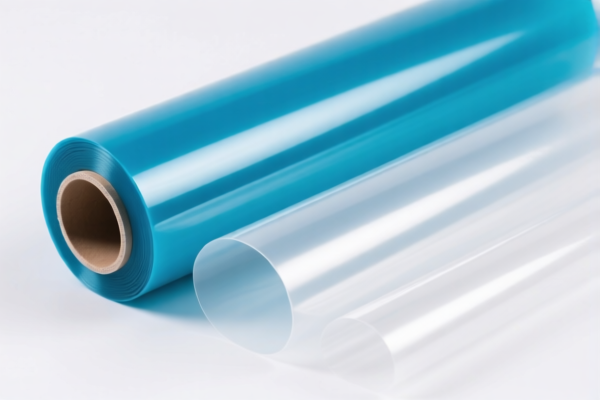

AI Analysis
🎒 Polyamide Food Packaging Film (Vacuum Packaging Film)
🌐 HS Code Reference & Customs Clearance Guide | 2026 Latest Tariff Analysis | Professional-Level Clearance Strategy
📌 I. Product Definition & Classification: Do You Really Understand "Polyamide Packaging"?
Polyamide (PA) Vacuum Packaging Film is a high-barrier, durable plastic film widely used in food preservation, vacuum sealing, and protective packaging. In international trade, its classification hinges on its material composition (Polyamide) and its form/function (Sheet/Film vs. Finished Packaging Article).
Key Distinction Points: * As a Raw Material (Sheet/Film): If classified under Chapter 39 as a general plastic sheet/film (not yet converted into a specific container), it falls under headings like 3920 (Other plates, sheets, film, foil and strip). * As a Self-Adhesive Product: If the film comes with an adhesive backing suitable for immediate bonding, it may fall under 3919 (Self-adhesive plates, sheets, film, etc.). * As a Finished Packaging Article: If it is specifically recognized as a "packaging article" (like sacks, bags, or specialized pouches), it may fall under 3923 (Articles for the conveyance or packaging of goods).
⚠️ Critical Note for US Imports (China Origin): Due to Section 301 and IEEPA tariffs, Polyamide Film from China faces significant additional duties. Misclassification can lead to severe penalties or delayed customs clearance. The following HS Codes represent the most common and legally defensible classifications for this product based on current trade data.
📦 II. HS Code Classification Details (2026 Latest Tariff Authority Comparison)
| HS Code | Product Description | Classification Logic | Applicable Scenario |
|---|---|---|---|
3920.92.00.00 |
Polyamide Film, General | Material: Polyamide; Form: Film/Sheet. Fits the classification of "Plastics... of polyamides." | Generic PA vacuum packaging film, rolled stock, not specifically finished bags. |
3920.99.20.00 |
Polyamide Film, Flexible | Material: Polyamide; Form: Flexible Film. Logic: Non-cellular, non-reinforced flexible plastic film. | Standard vacuum packaging rolls, flexible PA layers. |
3919.90.50.40 |
Self-Adhesive Polyamide Film | Material: Polyamide; Form: Self-adhesive. Fits characteristics of adhesive plastic films. | PA film with adhesive backing for bonding or labeling applications. |
3923.90.00.80 |
Packaging Articles, Plastic | Material: Polyamide; Form: Packaging Article. Fits "Plastic articles for conveyance or packaging." | Finished vacuum pouches, bags, or specialized packaging units. |
3923.29.00.00 |
Vacuum Packaging Film | Material: Polyamide; Form: Vacuum Packaging. Logic: Plastic packaging articles, specifically films/bags. | Dedicated vacuum packaging bags or rolls intended for direct consumer/industrial vacuum packing. |
🔍 Key Insight: * 3920.xxxx is preferred if the product is sold as a raw material (film roll) to be converted into bags later. * 3923.xxxx is preferred if the product is sold as a finished packaging item (e.g., pre-cut vacuum bags). * 3919.xxxx applies only if the film is explicitly self-adhesive.
💰 III. 2026 Latest Tariff Rate Breakdown (Including Surcharges & Policy Add-ons)
✅ Applicable Country: United States (US) ✅ Country of Origin: China (CN) ✅ Effective Date: Ongoing (as of 2025-2026)
🎯 1. General Polyamide Films: 3920.92.00.00 & 3920.99.20.00
| Item | Content |
|---|---|
| Base Tariff Rate | 4.2% (Ad Valorem) |
| Section 301 Surcharge | +25.0% (USITC Footnote 9903.88.01) |
| IEEPA Surcharge (122 Clause) | +10.0% (Targeting China/China-HK products) |
| Total Tariff Rate | 39.2% |
| Tax Calculation | CIF Value × 39.2% |
| De Minimis Exemption | ❌ Not Eligible |
| Legal Basis Path | IEEPA:9903.01.25 → USITC:3920.92.00.00 / 3920.99.20.00 → FOOTNOTE:9903.88.01 |
📌 Explanation: * The 25% Section 301 duty is a long-standing penalty on Chinese plastic products. * The 10% IEEPA duty is an additional layer targeting specific Chinese imports. * Total Cost Impact: Nearly 40% on top of the product cost. This significantly erodes profit margins.
🎯 2. Self-Adhesive Film: 3919.90.50.40
| Item | Content |
|---|---|
| Base Tariff Rate | 5.8% (Ad Valorem) |
| Section 301 Surcharge | +25.0% |
| IEEPA Surcharge (122 Clause) | +10.0% |
| Total Tariff Rate | 40.8% |
| Tax Calculation | CIF Value × 40.8% |
| De Minimis Exemption | ❌ Not Eligible |
| Legal Basis Path | IEEPA:9903.01.25 → USITC:3919.90.50.40 → FOOTNOTE:9903.88.01 |
📌 Note: * Slightly higher base rate due to the adhesive nature. * Same heavy surcharges apply. Do not assume adhesive films are taxed lower.
🎯 3. Finished Packaging Articles: 3923.90.00.80 & 3923.29.00.00
| Item | Content |
|---|---|
| Base Tariff Rate | 3.0% (Ad Valorem) |
| Section 301 Surcharge | +25.0% |
| IEEPA Surcharge (122 Clause) | +10.0% |
| Total Tariff Rate | 38.0% |
| Tax Calculation | CIF Value × 38.0% |
| De Minimis Exemption | ❌ Not Eligible |
| Legal Basis Path | IEEPA:9903.01.25 → USITC:3923.90.00.80 / 3923.29.00.00 → FOOTNOTE:9903.88.01 |
📌 Note: * Lowest Total Rate: Among the options, finished packaging articles (
3923) have the lowest base rate (3.0%), resulting in a 38.0% total tariff. * Strategy: If the product is clearly a "vacuum packaging bag" or "article," declaring it under 3923 instead of 3920 can save 1.2% in total duties. However, strict customs scrutiny applies to ensure it is not just a "roll of film" mislabeled as packaging.
🛠️ IV. Customs Clearance Practical Advice (Real-World Pitfall Avoidance)
✅ 1. Required Documentation Checklist (Mandatory)
| Document | Must Provide? | Explanation |
|---|---|---|
| ✅ Product Specification Sheet | ✔️ | Must specify: Material (Polyamide/PA), Thickness (mils/mm), Barrier properties, Intended use (Vacuum Packaging). |
| ✅ Commercial Invoice | ✔️ | Clearly state: "Polyamide Vacuum Packaging Film" or "Vacuum Packaging Bags." Avoid vague terms like "Plastic Wrap." |
| ✅ Packing List | ✔️ | Detail dimensions, weight, and quantity. Ensure packaging matches the declared HS Code (e.g., if declaring as bags, list as bags). |
| ✅ Free Sale Certificate / FDA Compliance | ✔️ | For food contact, proof of FDA compliance (21 CFR) is critical for entry clearance. |
| ✅ Origin Certificate | ✔️ | To prove Chinese origin for tariff calculation and IEEPA assessment. |
| ✅ Photos of Product & Packaging | ✔️ | Show the product roll/bag, label, and any adhesive backing (if applicable). |
✅ 2. Declaration Tips (Key Mantra)
🔥 "Material Defines Code, Form Defines Duty, Be Specific to Save!"
| Scenario | Correct Declaration | Incorrect Practice | Risk |
|---|---|---|---|
| Generic PA Film Roll | 3920.92.00.00 or 3920.99.20.00 |
Vague: "Plastic Film" | Misclassification penalty, 39.2%+ |
| Pre-cut Vacuum Bags | 3923.29.00.00 |
Described as "Film" | Underpayment of duties (Base 3.0% vs 4.2%) |
| Adhesive PA Film | 3919.90.50.40 |
Ignoring adhesive feature | Higher duty (40.8%) if misdeclared as non-adhesive |
| Finished Packaging Unit | 3923.90.00.80 |
Declared as "Raw Material" | Overpayment of duties (38.0% vs 39.2%) |
📌 Critical Advice: * If you sell rolls that are cut by the buyer, 3920 is safer. * If you sell pre-cut bags for vacuum packing, 3923 is the correct and most cost-effective code. * Never use "Polyamide" alone; always specify "Vacuum Packaging" or "Food Grade" to align with the summary in the data.
✅ 3. Special Case Handling
| Situation | Handling Advice |
|---|---|
| Multi-layer Co-extruded Film | If Polyamide is just one layer, but the film is primarily classified by its outer layer or function, ensure the description highlights PA's role in barrier protection. Customs may still apply 3920. |
| Food Contact Claims | Must include FDA 21 CFR 177.1520 or similar compliance statement. Without this, customs may detain for lack of food safety documentation. |
| Sample Shipments | Even samples are subject to the 38-41% tariff. Do not declare as "No Value" or "Gift" to evade duty; this leads to seizure. |
| OEM Private Label | Provide OEM agreement if applicable, but duty rate remains based on origin (China) and HS Code. |
🌍 V. Global Market Clearance Comparison (2026 Latest)
| Country/Region | Recommended HS Code | Estimated Total Duty (China Origin) | Certification Requirements | Notes |
|---|---|---|---|---|
| 🇺🇸 USA | 3920.92.00.00 / 3923.29.00.00 |
38.0% - 40.8% | FDA (Food Contact), Section 301, IEEPA | Highest duty burden. Pre-calculation essential. |
| 🇨🇳 China | 3920.92.00.00 |
~6-9% (Import Duty + VAT) | GB Standards (Food Contact) | No Section 301 tariffs. |
| 🇪🇺 EU | 3920.92.00 / 3923.90 |
0% - 6% | EFSA (Food Contact), REACH | No anti-dumping tariffs on this specific HS. |
| 🇦🇺 Australia | 3920.92.00 |
~5% | Australian Pesticides and Veterinary Medicines Authority (APVMA) if treated | Standard MFN rate. |
| 🇯🇵 Japan | 3920.92.00 |
0-5% | JIS Standards (Food Contact) | Competitive tariff environment. |
📌 Conclusion: * USA is the most expensive market due to the 25% Section 301 + 10% IEEPA tariffs. * EU and Japan offer favorable tariff environments for polyamide films, provided food safety standards (EFSA/JIS) are met. * Strategic Shift: Many exporters are shifting polyamide film manufacturing to Vietnam, Thailand, or Mexico to avoid US surcharges.
📌 VI. Common Errors & Pitfall Guide (Lessons Learned)
❌ Error 1: Declaring "Vacuum Bags" as "Plastic Sheet" (3920)
👉 Consequence: Overpayment of duties (39.2% vs 38.0%). Minor difference, but incorrect declaration.
❌ Error 2: Declaring "Rolls" as "Finished Packaging Articles" (3923)
👉 Consequence: Customs rejection. If it's a roll, it's not a "finished article." Risk of penalty and delay.
❌ Error 3: Omitting "Food Grade" or "FDA" in description 👉 Consequence: FDA holds the shipment for inspection, causing delays and storage fees.
❌ Error 4: Ignoring the 10% IEEPA Surcharge 👉 Consequence: Underpayment. CBP will assess additional duties + interest upon audit.
✅ Correct Approach:
"Polyamide Vacuum Packaging Film, Food Grade, FDA Compliant, Roll Form, 50 Microns, HS 3920.92.00.00"
🎯 VII. Conclusion: Professional Declaration, Cost Optimization, Risk Mitigation!
🎯 Remember the Mantra:
🔹 "Material First, Form Second, Tariff Third." 🔹 "3923 is Cheapest (38%), 3920 is Common (39.2%), 3919 is Most Expensive (40.8%)." 🔹 "Food Contact? Prove FDA Compliance! China Origin? Prepare for 40% Duty!"
📌 Pro Tip: If your polyamide film is originating from Vietnam, Thailand, or Mexico, you may be eligible to avoid the 25% Section 301 duty. The total duty could drop to ~10-15%. Recommend pre-classification rulings and supply chain audits to optimize total landed cost.
📣 Immediate Action:
📞 Consult a licensed customs broker. 📄 Provide clear product specs (PA material, vacuum use, FDA status). 🚀 Optimize your HS Code to 3923 if applicable, to save 1.2%.
✨ Professional Clearance Starts with Accurate Classification! 💼 Every percent of duty saved is pure profit!
Customer Reviews
About HS Code Classification
The Harmonized System (HS) is an internationally standardized nomenclature developed by the World Customs Organization (WCO) to classify traded products. Over 200 countries use the HS system as the basis for customs tariffs, trade statistics, and import/export regulations.
Each HS code follows a hierarchical structure:
- Chapter (2 digits) — Broad category of goods (e.g., Chapter 84: Machinery and Mechanical Appliances)
- Heading (4 digits) — More specific grouping within the chapter
- Subheading (6 digits) — Internationally standardized breakdown, used by all WCO member countries
- National subdivisions (8-10 digits) — Country-specific extensions for further classification, such as US HTSUS 10-digit codes
Correct HS code classification is essential for smooth customs clearance, accurate duty payment, and compliance with trade regulations. Misclassification can lead to customs delays, overpayment of duties, or penalties.
When importing from CN to US, the applicable tariff rates may include:
- Most-Favored-Nation (MFN) rate — The standard duty rate applied to WTO members
- General rate — Applied to countries without trade agreements
- Trade remedy duties — Additional tariffs such as Section 301 (anti-dumping), Section 232 (national security), or countervailing duties
The information provided on this page is for reference purposes only. For official classification, please consult with your local customs authority or a licensed customs broker.