Polyamide Multi strand Yarn
CN → US| HS Code | Tariff Rate | Origin | Destination | Doc |
|---|---|---|---|---|
| 5402610000 | 42.5% | CN | US | Official Doc |
| 5402690100 | 42.5% | CN | US | Official Doc |
Product Images
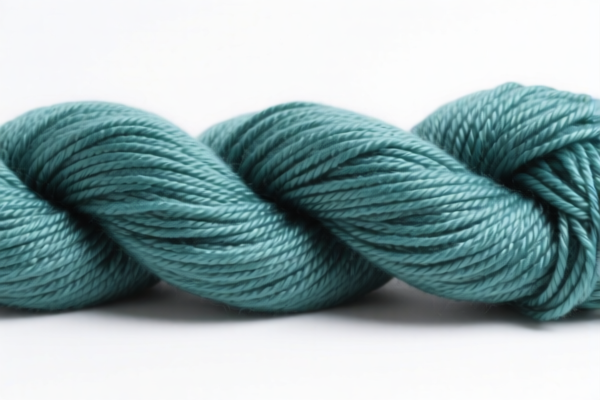
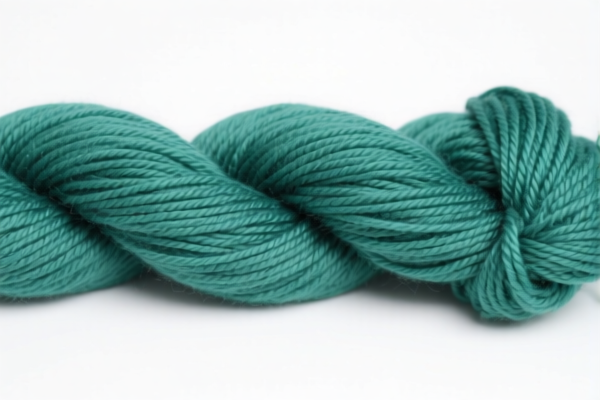
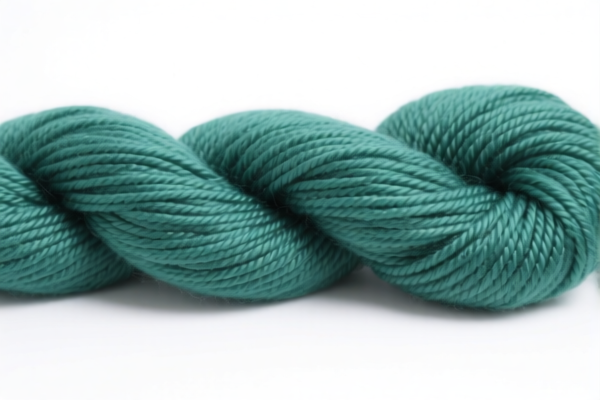
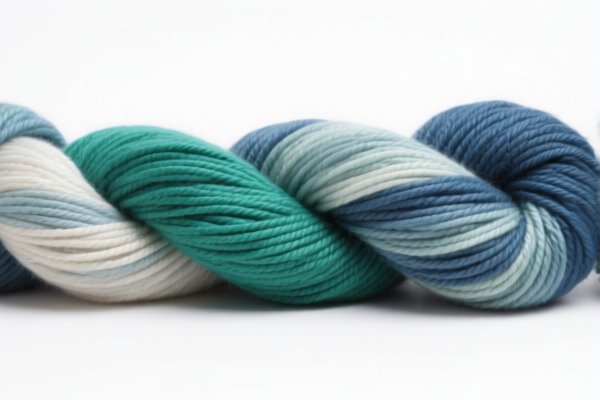
AI Analysis
🧵 Polyamide Multi-Strand Yarn (Synthetic Filament)
🌐 HS Code Reference & Customs Clearance Guide | 2026 Latest Tariff Analysis | Professional Clearance Strategy
📌 I. Product Definition & Classification: What Exactly is "Polyamide Multi-Strand Yarn"?
Polyamide multi-strand yarn refers to synthetic filament yarn (primarily Nylon or other polyamides) that has been twisted, folded, or cabled together. Unlike monofilament (single thread), this yarn consists of multiple filaments combined to increase strength, durability, and texture.
In international trade, the critical distinction lies in the denier weight and retail packaging: * Synthetic Monofilament < 67 decitex: Excluded (treated differently). * Retail Sale Pack: Excluded (sewing thread is a separate category). * Industrial/Wholesale Multi-Filament: This is the core category for "Polyamide Multi-Strand Yarn."
⚠️ Key Distinction:
- If the yarn is Nylon (Polyamide): It falls under subheading 5402.61.
- If the yarn is Other Synthetic Material (e.g., Polyester, Acrylic): It falls under subheading 5402.69.
- Packaging Matters: If sold in small spools for retail sewing, it is not covered here. This guide applies to industrial bulk, cones, or large spools not put up for retail sale.
📦 II. HS Code Classification Details (2026 Latest Tariff Authority Match)
Based on the provided data, there are two possible HS Codes depending on the material composition of the polyamide blend or if it is strictly pure polyamide vs. "other" synthetic classifications. However, the prompt specifies "Polyamide," which strongly points to 5402.61.
| HS Code | Product Description | Applicable Scenario | Material Composition |
|---|---|---|---|
5402.61.00.00 |
Of nylon or other polyamides | Standard Nylon 6, Nylon 6,6, Aramids (if synthetic filament) | ✅ Polyamide (Nylon) |
5402.69.01.00 |
Other | If the yarn is labeled "Synthetic" but not explicitly identified as Nylon/Polyamide in specific contexts, or blends where polyamide is not the primary defining feature under specific national interpretations (Note: Data shows "Other" here). | ⚠️ Non-Polyamide Synthetic |
🔍 Critical Clarification:
- The user input is "Polyamide Multi strand Yarn".
- Therefore,5402.61.00.00is the primary and most accurate classification.
-5402.69.01.00is provided in the data as "Other," which typically covers non-polyamide synthetics (like Polyester). Do not use 5402.69 for pure Polyamide/Nylon yarn unless forced by specific local customs rulings that misclassify it.
- Both codes in the provided data share the same tax rate.
💰 III. 2026 Latest Tariff Rate Breakdown (Detailed Tax Clauses)
✅ Applicable Country: United States (US)
✅ Origin: China (CN) (Note: Tax rates in the data reflect US-China trade relations)
✅ Effective Date: Current rates as per provided data
🎯 1. 5402.61.00.00 — Polyamide Multi-Strand Yarn (Nylon)
| Item | Content |
|---|---|
| Base Tariff (Most Favored Nation) | 0.0% |
| Section 301 / Additional Tariff | 0.0% |
| Total Tax Rate | 0.0% |
| Tax Calculation | CIF Value × 0.0% = $0.00 |
| De Minimis Eligibility | ✅ Yes (If value < $800, entry is exempt from formal entry) |
| Legal Authority Path | HTSUS:5402.61.00.00 → USITC:0.0% |
📌 Explanation:
- Despite the geopolitical tensions and tariffs on many Chinese goods, Textile/Yarn products like Polyamide Multi-Strand Yarn currently enjoy a 0% total tariff under the provided data.
- This is a significant cost advantage compared to electronics or steel.
- No 25% or 10% IEEPA/301 surcharges are listed for this specific HS code in the provided dataset.
🎯 2. 5402.69.01.00 — Other Synthetic Multi-Strand Yarn
| Item | Content |
|---|---|
| Base Tariff | 0.0% |
| Additional Tariff | 0.0% |
| Total Tax Rate | 0.0% |
| Tax Calculation | CIF Value × 0.0% = $0.00 |
| De Minimis Eligibility | ✅ Yes |
📌 Note: Even if misclassified into "Other," the tax rate remains 0.0%, minimizing financial risk from classification errors, though compliance is still required.
🛠️ IV. Customs Clearance Practical Advice (Avoid Pitfalls)
✅ 1. Documentation Checklist (Must-Haves)
| Document | Required? | Description |
|---|---|---|
| ✅ Commercial Invoice | Yes | Must clearly state "Synthetic Filament Yarn, Polyamide/Nylon, Multi-strand, Not for Retail Sale." |
| ✅ Packing List | Yes | List gross/net weight, number of cones/spools, and dimensions. |
| ✅ Certificate of Origin | Optional | Not needed for tariff reduction (0% anyway), but may be required for country-of-origin labeling. |
| ✅ Product Specifications | Recommended | Include denier, filament count, twist direction, and intended use (e.g., "for weaving carpets," "for industrial ropes"). |
| ✅ FDA Declaration | Check | If the yarn is for food contact (e.g., food packaging thread), FDA may require registration. |
✅ 2. Classification Strategy (Key Mantra)
🔥 “Polyamide = 61, Not 69, Retail = No, Denier > 67 = Yes!”
| Scenario | Correct HS Code | Incorrect HS Code | Consequence |
|---|---|---|---|
| Pure Nylon/Polyamide Yarn | 5402.61.00.00 |
5402.69.01.00 |
Misclassification penalty (though tax is same, audit risk exists). |
| Yarn put up for retail (Sewing Thread) | Not Covered | 5402.61.00.00 |
Rejected! Must be 5501-5507 range. Wrong HS leads to detention. |
| Monofilament < 67 decitex | Not Covered | 5402.61.00.00 |
Must use 5402.10-5402.33. Wrong HS leads to misdeclaration. |
| Yarn ≥ 67 decitex, Multi-strand, Polyamide | 5402.61.00.00 |
Any other | Correct! |
✅ 3. Special Case Handling
| Situation | Handling Advice |
|---|---|
| Dyed vs. Undyed | The provided data does not distinguish between dyed and undyed for 5402.61. Both likely fall under 5402.61.00.00. Check if sub-subheadings exist in your specific port’s HTSUS (sometimes 5402.61.00 covers all polyamide multi-filament yarns regardless of dye). |
| Blends (e.g., Nylon + Cotton) | If polyamide is not the principal material by weight, it may NOT be classified as "Of nylon." It could fall under "Other textile materials." Consult customs broker if blend ratio is <50% polyamide. |
| Sample Shipments | Mark as "Sample - Not for Sale." Even if value is low, ensure HS code is correct to build a clean compliance history. |
🌍 V. Global Market Comparison (2026 Update)
| Country/Region | Recommended HS Code | Tariff Rate | Certification Needed | Notes |
|---|---|---|---|---|
| 🇺🇸 USA | 5402.61.00.00 |
0.0% | None (Standard) | Zero Duty Advantage |
| 🇨🇳 China | 5402.61.00.00 |
~1-2% | None | Low import duty for raw yarn |
| 🇪🇺 EU | 5402.61.00.00 |
0-4% | REACH Compliance | Check for chemical restrictions on dyes |
| 🇬🇧 UK | 5402.61.00.00 |
0-3% | UKCA (if finished product) | Post-Brexit rules apply |
| 🇯🇵 Japan | 5402.61.00.00 |
0-3.2% | None | JIS standards for quality |
📌 Conclusion:
- The USA offers 0% duty for this product, making it highly competitive.
- No additional Section 301 tariffs are applied to this specific textile yarn in the provided data, which is rare for Chinese exports.
- Compliance Tip: Ensure the product is NOT in retail-sized spools (e.g., 100m spools for home sewing), as this changes the HS code entirely.
📌 VI. Common Mistakes & Pitfalls (Lessons Learned)
❌ Mistake 1: Calling it "Sewing Thread"
👉 Result: HS Code 5401 is used. Tax may be similar, but import restrictions or labor compliance (e.g., UFLPA) might differ. More importantly, it triggers different regulatory scrutiny.
Fix: Use "Industrial Multi-Strand Filament Yarn."
❌ Mistake 2: Ignoring Denier Weight
👉 Result: If monofilament < 67 dtex is shipped, it falls under 5402.10-5402.33. Misclassification leads to penalties.
Fix: Verify denier. If < 67 dtex and mono, use 5402.10.
❌ Mistake 3: Assuming "Polyamide" = "Nylon" in all jurisdictions
👉 Result: In some contexts, Aramid (Kevlar) is also a polyamide but may have different security controls.
Fix: Specify exact chemical name (e.g., Nylon 6,6) in documentation.
✅ Best Practice:
“Declare as ‘Synthetic Filament Yarn, Polyamide, Multi-Strand, Not for Retail, Denier: XXXX’”
🎯 VII. Conclusion: Zero Duty, High Volume, Zero Risk
🎯 Key Takeaway:
🔹 Tariff = 0.0%
🔹 HS Code = 5402.61.00.00
🔹 Critical Condition = Not for Retail Sale
📌 Pro Tip:
Since the tariff is 0%, the biggest risk is misclassification leading to detention, not cost.
- Ensure your invoice clearly states: "For Industrial Use Only, Not Retail Packaging."
- Provide spec sheets showing the yarn is multi-filament and multi-strand.
- Keep records of denier measurements to prove it is not monofilament < 67 dtex.
📣 Immediate Action:
📦 Pre-Clearance: Submit documents to your customs broker 48 hours before arrival.
📄 Labeling: Ensure outer cartons are marked "Industrial Yarn - Not Sewing Thread."
🚀 Benefit: Enjoy duty-free entry into the US market with minimal compliance friction.
✨ Professional Clearance Starts with Precision!
💼 0% Tax is a Gift — Don’t Mess It Up with Wrong Documentation!
Customer Reviews
About HS Code Classification
The Harmonized System (HS) is an internationally standardized nomenclature developed by the World Customs Organization (WCO) to classify traded products. Over 200 countries use the HS system as the basis for customs tariffs, trade statistics, and import/export regulations.
Each HS code follows a hierarchical structure:
- Chapter (2 digits) — Broad category of goods (e.g., Chapter 84: Machinery and Mechanical Appliances)
- Heading (4 digits) — More specific grouping within the chapter
- Subheading (6 digits) — Internationally standardized breakdown, used by all WCO member countries
- National subdivisions (8-10 digits) — Country-specific extensions for further classification, such as US HTSUS 10-digit codes
Correct HS code classification is essential for smooth customs clearance, accurate duty payment, and compliance with trade regulations. Misclassification can lead to customs delays, overpayment of duties, or penalties.
When importing from CN to US, the applicable tariff rates may include:
- Most-Favored-Nation (MFN) rate — The standard duty rate applied to WTO members
- General rate — Applied to countries without trade agreements
- Trade remedy duties — Additional tariffs such as Section 301 (anti-dumping), Section 232 (national security), or countervailing duties
The information provided on this page is for reference purposes only. For official classification, please consult with your local customs authority or a licensed customs broker.