Polyamide Opaque Sheet
CN → US| HS Code | Tariff Rate | Origin | Destination | Doc |
|---|---|---|---|---|
| 3908907000 | 41.5% | CN | US | Official Doc |
| 3921190090 | 41.5% | CN | US | Official Doc |
| 3908100000 | 41.3% | CN | US | Official Doc |
| 3921905050 | 39.8% | CN | US | Official Doc |
| 3920920000 | 39.2% | CN | US | Official Doc |
| 3920995000 | 40.8% | CN | US | Official Doc |
Product Images
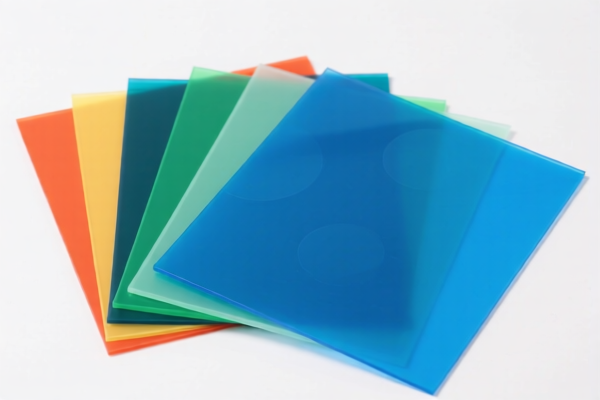
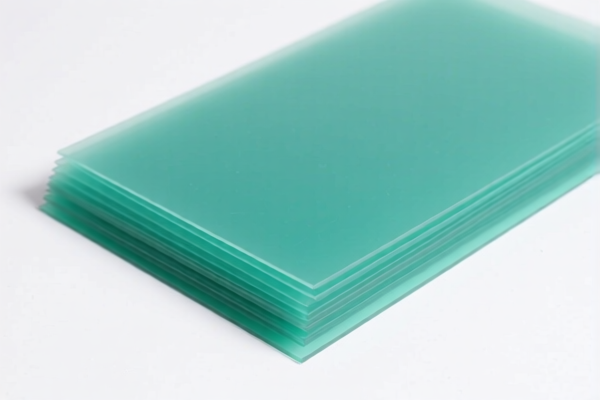
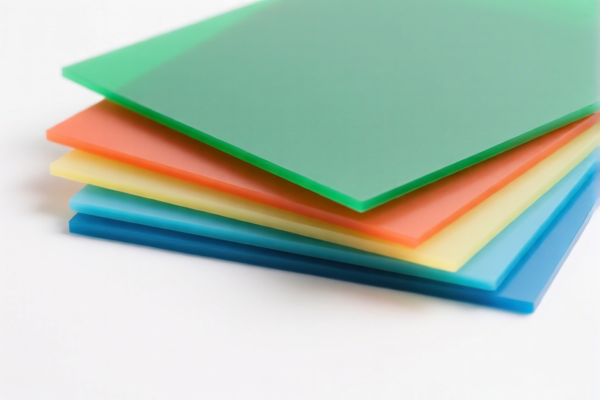
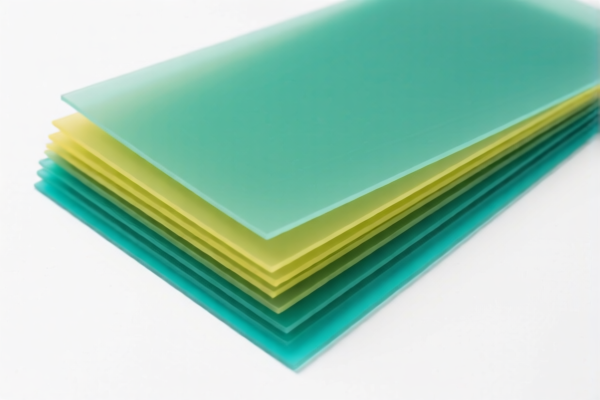
AI Analysis
🏗️ Polyamide Opaque Sheet (Industrial Grade Nylons)
🌐 HS Code Reference & Customs Clearance Guide | 2026 Latest Tariff Analysis | Professional Level Strategy
📌 1. Product Definition & Classification: Do You Really Know "Polyamide"?
Polyamide (PA), commonly known as Nylon, is a versatile synthetic polymer widely used in automotive, aerospace, electrical, and mechanical industries. When classified as an "Opaque Sheet," it falls under Chapter 39 of the Harmonized System (Plastics and Articles Thereof).
However, the exact HS Code depends heavily on the physical form and processing state:
Raw/Intermediate Forms (Chips, Granules, Powders):
Often classified under heading 3908 (Primary Forms).
Finished/Processed Forms (Sheets, Plates, Films):
Classified under headings 3920 or 3921 (Non-cellular plastics, sheets, plates, etc.).
⚠️ Key Distinction Point:
- If the product is in a primary form (e.g., granules, pellets, powders) intended for further molding →归入 3908.xx series.
- If the product is already shaped into opaque sheets/plates (finished or semi-finished) →归入 3920.xx or 3921.xx series.
- "Opaque" implies it is not transparent, which can sometimes affect specific sub-headings but generally remains under general plastic sheet headings unless specified otherwise.
📦 2. HS Code Classification Details (2026 Latest Tariff Authority Comparison)
Based on the provided data for "Polyamide Opaque Sheet", here are the five most relevant HS Codes and their specific tax implications.
| HS Code | Product Description | Applicability & Form | Total Tax Rate (China Origin to US) |
|---|---|---|---|
3908.90.70.00 |
Polyamide, Opaque Sheet, Primary Form Category | Classified as primary form (e.g., molded into sheet but considered intermediate/raw material status in this specific interpretation) | 41.5% |
3921.19.00.90 |
Polyamide Opaque Sheet, fits definition of plastic sheets/plates/films | Classified as finished semi-product (sheet/plate). "Other plastics" sub-category. | 41.5% |
3908.10.00.00 |
Polyamide, Opaque Sheet, Primary/Intermediate Form | Specifically Nylon 6,6 or similar primary forms. Interpreted as raw material state. | 41.3% |
3920.92.00.00 |
Polyamide Opaque Sheet, consistent with material/shape in classification notes | Classified as sheets of other plastics (non-cellular). Often lower base rate. | 39.2% |
3921.90.50.50 |
Polyamide Opaque Sheet, fits "other plastic sheets/plates/films/bands" | Broader "Other" category under 3921. | 39.8% |
3920.99.50.00 |
Polyamide Opaque Sheet, fits plastic sheet/plate/film characteristics | General other plastics sheet category. | 40.8% |
🔍 Critical Insight:
- Primary vs. Processed: Notice the difference between3908(Primary) and3920/3921(Processed). Misdeclaring a sheet as "primary form" (3908) when it is clearly a finished sheet (3920/3921) can lead to customs disputes. Conversely, declaring a sheet as3920might offer a slightly lower base tariff (e.g., 4.2% vs 6.5%). - "Opaque" Impact: The opacity itself does not change the chapter, but it ensures it is not classified as transparent film (3920.3xor3920.5x), keeping it in the general "other" categories.
💰 3. 2026 Latest Tariff Rate Breakdown (Including Additional Taxes)
✅ Applicable Country: United States (US)
✅ Country of Origin: China (CN)
✅ Effective Date: Post-November 2025 (Current Enforcement)
🎯 1. Category A: Primary Form & Certain Sheet Categories (High Base Tariff)
HS Codes: 3908.90.70.00, 3921.19.00.90, 3908.10.00.00
| Item | Details |
|---|---|
| Base Tariff (MFN) | 6.5% (3908.90.70.00) 6.3% ( 3908.10.00.00) 6.5% ( 3921.19.00.90) |
| Section 301 Tariff | +25.0% (Standard rate for most Chinese plastics) |
| Section 122 / IEEPA Tariff | +10.0% (Additional duty under recent executive orders) |
| Total Effective Rate | 41.5% (for 3908.90.70.00 & 3921.19.00.90) 41.3% (for 3908.10.00.00) |
| Calculation Basis | CIF Value (Cost + Insurance + Freight) × Total Rate |
| De Minimis Exemption | ❌ NO (Section 301 and IEEPA tariffs apply regardless of value) |
📌 Explanation:
- The 25% is the longstanding Section 301 tariff on Chinese plastics.
- The 10% is the new/additional layer under Section 122 or similar IEEPA provisions targeting specific material categories.
- Total ~41-41.5% is extremely high. This erodes margin significantly.
🎯 2. Category B: Processed Sheets - "Other Plastics" (Lower Base Tariff)
HS Codes: 3920.92.00.00, 3921.90.50.50, 3920.99.50.00
| Item | Details |
|---|---|
| Base Tariff (MFN) | 4.2% (3920.92.00.00) 5.8% ( 3920.99.50.00) 4.8% ( 3921.90.50.50) |
| Section 301 Tariff | +25.0% |
| Section 122 / IEEPA Tariff | +10.0% |
| Total Effective Rate | 39.2% (3920.92.00.00) 40.8% ( 3920.99.50.00) 39.8% ( 3921.90.50.50) |
| Calculation Basis | CIF Value × Total Rate |
| De Minimis Exemption | ❌ NO |
📌 Strategic Advantage:
- Selecting the right sub-heading (e.g.,3920.92.00.00) can save ~2.3% in total duties compared to primary forms.
- While still high, it is the most cost-effective legal option among the listed codes.
🛠️ 4. Customs Clearance Practical Advice (Pitfall Avoidance Guide)
✅ 1. Documentation Checklist (Mandatory)
| Document | Required | Explanation |
|---|---|---|
| ✅ Product Specification Sheet | ✔️ | Must explicitly state: Material (Polyamide/Nylon), Shape (Opaque Sheet), Thickness, Dimensions, Weight. |
| ✅ Material Safety Data Sheet (MSDS) | ✔️ | Proves chemical composition (Polyamide). |
| ✅ Photos of Product | ✔️ | Clear images showing the "Opaque" nature and sheet format. Avoid confusing with granules. |
| ✅ Commercial Invoice | ✔️ | Description must match HS Code exactly. E.g., "Polyamide 6 Opaque Sheet, 5mm thick." |
| ✅ Certificate of Origin | ✔️ | Essential for applying Section 301 rates (confirming China origin). |
| ✅ Bill of Lading (B/L) | ✔️ | Ensure packaging details match invoice. |
✅ 2. Declaration Strategy (Key Mantra)
🔥 "Correct Form, Correct Code, Save Dollars!"
| Scenario | Recommended HS Code | Risk if Misdeclared |
|---|---|---|
| Nylon Granules/Pellets | 3908.10.00.00 or 3908.90.70.00 |
Misdeclaring as Sheet → May raise suspicion of "processing" discrepancy. |
| Finished Opaque Sheets | 3920.92.00.00 (Best Rate) |
Misdeclaring as Primary Form (3908) → Higher duty (41.5% vs 39.2%). |
| Polyamide Film (Thin, Transparent) | Not in list (Check 3920.39 or 3920.51) |
Misdeclaring as Opaque Sheet → Wrong duty rate, potential penalty. |
| Composite Materials (e.g., PA + Glass Fiber) | Check if 3920 still applies or moves to 3916/3917 |
Misdeclaring pure PA for composite → Classification error, audit risk. |
💡 Pro Tip:
- If your product is filled (e.g., glass-filled nylon), ensure it is still considered "plastic" under Chapter 39. Usually, yes, but check if the fiber content > threshold for different classification. - "Opaque" should be clearly stated. If it is semi-transparent, it might fall under different sub-headings with different base rates.
✅ 3. Special Considerations
| Situation | Advice |
|---|---|
| High-Performance Polyamide (PPA, PPA66) | Still falls under 3908/3920. No special exemption. |
| Recycled Polyamide Sheets | Can still be 3920.xx, but must declare "Recycled" in description. Duty rate remains same. |
| Small Samples (De Minimis) | ❌ No Exemption. Section 301 and IEEPA apply to all values. Even $100 sample pays ~40% duty. |
| Free Trade Agreements (FTA) | ❌ No Benefit. China-US FTA does not exist. No preferential rate. |
🌍 5. Global Market Comparison (2026 Snapshot)
| Market | Recommended HS Code | Base Tariff | Additional Duties | Total Est. Rate | Notes |
|---|---|---|---|---|---|
| 🇺🇸 USA | 3920.92.00.00 |
4.2% | +25% (301) +10% (IEEPA) | 39.2% | Highest cost driver. |
| 🇪🇺 EU | 3920.40.00 (Est.) |
~6.5% | 0% | 6.5% | No Section 301. Much lower. |
| 🇨🇳 China | 3920.40.00 |
~5.5% | 0% | 5.5% | Export destination. |
| 🇬🇧 UK | 3920.40.00 |
~6.5% | 0% | 6.5% | Post-Brexit, similar to EU. |
| 🇯🇵 Japan | 3920.40.00 |
~4.3% | 0% | 4.3% | Low duty, high quality standards. |
📌 Conclusion:
- USA is the most expensive market for Chinese Polyamide sheets due to combined Section 301 and IEEPA tariffs.
- EU/Asia-Pacific markets offer significantly lower duty burdens. Consider supply chain diversification if shipping to USA is not feasible.
📌 6. Common Mistakes & Pitfalls (Blood Tears Guide)
❌ Mistake 1: Declaring "Plastic Sheet" generally without specifying Polyamide.
👉 Consequence: Customs may assign a default higher rate or reject the declaration for lack of specificity.
❌ Mistake 2: Misdeclaring Sheets as Granules (3908) to avoid scrutiny, or vice versa.
👉 Consequence: If the physical form doesn't match the code, goods will be held, inspected, and fined.
❌ Mistake 3: Ignoring the 10% IEEPA/Section 122 add-on.
👉 Consequence: Underpaying duties leads to post-audit bills + interest + penalties. Many importers only account for 25% and get shocked by the total 40%+.
❌ Mistake 4: Assuming De Minimis applies.
👉 Consequence: Every single entry, regardless of value, is subject to full duty. Do not use "gift" or "sample" labels to avoid tax.
✅ Correct Declaration Example:
"POLYAMIDE (NYLON) OPAQUE SHEET, THICKNESS 5MM, WIDTH 1000MM, LENGTH 2000MM, GRADE 6, MADE IN CHINA, HS 3920.92.00.00"
🎯 7. Conclusion: Professional Declaration, Cost Control, Efficiency!
🎯 Remember the Mantra:
🔹 "Form determines Code, Code determines Cost."
🔹 "Base 4.2% + 25% + 10% = 39.2%. Don't pay 41.5% if you can pay 39.2%!"
🔹 "No De Minimis for China. Plan every shipment."
📌 Pro Tip:
If you are importing large volumes, consider:
1. Advance Ruling: Apply to US CBP for a binding ruling on the correct HS Code to avoid future disputes.
2. Supply Chain Shift: If possible, source from non-China origins (e.g., Vietnam, Thailand) to avoid Section 301/IEEPA tariffs, though polyamide manufacturing is concentrated in Asia.
3. Negotiate Pricing: Factor in the ~40% duty into your landed cost calculations.
📣 Immediate Action:
📞 Consult a licensed customs broker
📸 Provide clear product photos and spec sheets
🚀 Calculate Landed Cost BEFORE ordering!
✨ Precision in Classification, Precision in Profit!
💼 Every penny saved in duty is pure profit!
Customer Reviews
About HS Code Classification
The Harmonized System (HS) is an internationally standardized nomenclature developed by the World Customs Organization (WCO) to classify traded products. Over 200 countries use the HS system as the basis for customs tariffs, trade statistics, and import/export regulations.
Each HS code follows a hierarchical structure:
- Chapter (2 digits) — Broad category of goods (e.g., Chapter 84: Machinery and Mechanical Appliances)
- Heading (4 digits) — More specific grouping within the chapter
- Subheading (6 digits) — Internationally standardized breakdown, used by all WCO member countries
- National subdivisions (8-10 digits) — Country-specific extensions for further classification, such as US HTSUS 10-digit codes
Correct HS code classification is essential for smooth customs clearance, accurate duty payment, and compliance with trade regulations. Misclassification can lead to customs delays, overpayment of duties, or penalties.
When importing from CN to US, the applicable tariff rates may include:
- Most-Favored-Nation (MFN) rate — The standard duty rate applied to WTO members
- General rate — Applied to countries without trade agreements
- Trade remedy duties — Additional tariffs such as Section 301 (anti-dumping), Section 232 (national security), or countervailing duties
The information provided on this page is for reference purposes only. For official classification, please consult with your local customs authority or a licensed customs broker.