Polyamide Plastic Film (Non reinforced)
CN → US| HS Code | Tariff Rate | Origin | Destination | Doc |
|---|---|---|---|---|
| 3921904090 | 39.2% | CN | US | Official Doc |
| 3921905050 | 39.8% | CN | US | Official Doc |
| 3920992000 | 39.2% | CN | US | Official Doc |
| 3920991000 | 41.0% | CN | US | Official Doc |
Product Images
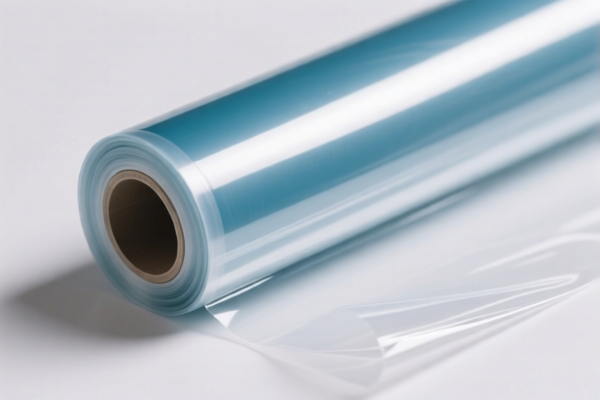
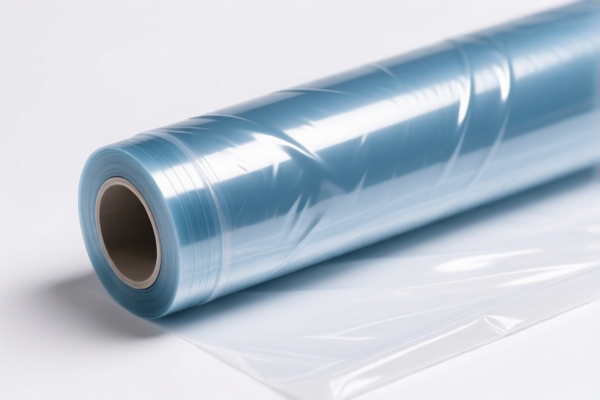
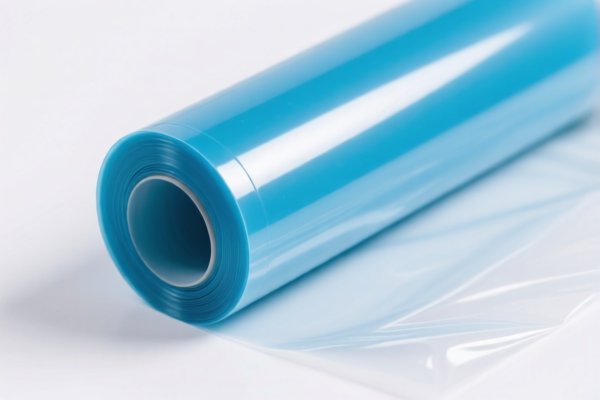
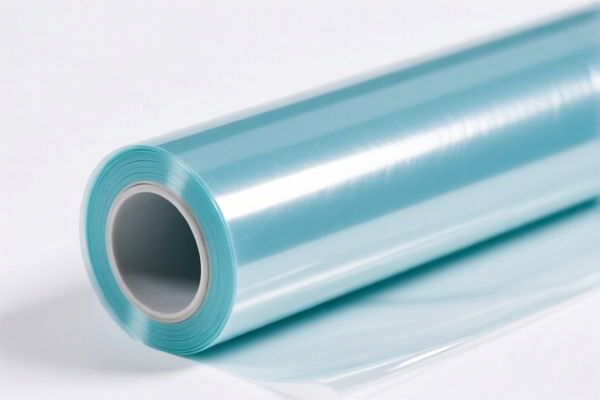
AI Analysis
🧪 Polyamide Plastic Film (Non-Reinforced)
Strategic HS Code Classification & Tariff Optimization Guide for US Customs (2026)
🌐 HS Code Reference & Customs Clearance Strategy | 2026 Latest Tariff Analysis | Professional Clearance Protocol
📌 I. Product Definition & Classification: Do You Truly Understand "Polyamide Film"?
Polyamide (PA) Plastic Film is a high-performance flexible material known for excellent mechanical strength, chemical resistance, and barrier properties. In international trade, it falls under Chapter 39 (Plastics and Articles Thereof).
However, the distinction between Chapter 39.20 (Plates, Sheets, Film...) and Chapter 39.21 (Other Plates, Sheets, Film...) is critical and often misunderstood. The key differentiator is "Reinforcement":
Non-Reinforced Plastic Film (39.20): - No reinforcing materials (paper, glass fiber, metal foil) are used. - Structure is purely polymeric. - Note: If the film is uncellular and not reinforced, it generally falls here.
Polyamide Plastic Film (Non-Reinforced) / Flexible Material (39.21): - Specifically defined as flexible materials not reinforced with paper. - Often used for specific industrial applications where the "film" definition in 39.20 might be too narrow or where specific exclusion clauses apply. - Note: If it does not fit the strict "uncellular" or "non-reinforced" definition of 39.20, or if it is classified under "Other" specific provisions, it may land here.
⚠️ Critical Distinction Point: - If the product is a standard uncellular, non-reinforced plastic film → It should logically fall under 3920. - If the product is classified as "Other" flexible material or specific Polyamide film provisions apply under 3921 → It falls here. - Why two codes? Sometimes, customs rulings or specific product characteristics (e.g., specific thickness, coating, or end-use) force a classification into 3921 despite being "film," or conversely, 3920 is the precise fit for "non-reinforced." The provided data shows both possibilities based on detailed interpretation.
📦 II. HS Code Classification Details (2026 Latest Tariff Authority Alignment)
Based on the provided dataset, here are the four possible HS Code classifications with their corresponding tariff structures.
| HS Code | Product Summary & Classification Logic | Key Tax Rate | Total Effective Tax |
|---|---|---|---|
| 3921.90.40.90 | Polyamide Plastic Film (Non-reinforced). Fits the definition of flexible plastic material not reinforced with paper. Used when specific polyamide film provisions are applied here. | 39.2% | 39.2% |
| 3921.90.50.50 | Polyamide Plastic Film (Other Category). Falls under "Other" subheadings; explicitly not high-pressure paper-reinforced decorative laminates. | 39.8% | 39.8% |
| 3920.99.20.00 | Non-Reinforced Plastic Film. Material and form fully comply with classification explanatory requirements for Chapter 39.20 (Plates, Sheets, Film). | 39.2% | 39.2% |
| 3920.99.10.00 | Non-Reinforced Plastic Film. Fits the description of "Non-cellular structure & not reinforced film." Note: Higher base tariff applies here. | 41.0% | 41.0% |
🔍 Key Insight: - Codes 3921.90.40.90 & 3920.99.20.00 offer the lowest total tax (39.2%). - Code 3921.90.50.50 is slightly higher (39.8%) due to a slightly higher base tariff (4.8%). - Code 3920.99.10.00 is the most expensive (41.0%) due to a 6.0% base tariff. Avoid this unless mandatory.
💰 III. 2026 Latest Tariff Rate Breakdown (Including Surcharges & Policy Add-ons)
✅ Applicable Country: United States (US) ✅ Origin: China (CN) ✅ Effective Time: 2025/2026 (Current enforcement period)
All codes below are subject to a consistent structure of Base Tariff + Section 301 Tariff + Section 122 Tariff.
🎯 1. Group A: 39.2% Total Tax Rate
(Codes: 3921.90.40.90 & 3920.99.20.00)
| Item | Detail |
|---|---|
| Base Tariff (MFN) | 4.2% |
| Section 301 Tariff | +25.0% (Trade Act of 1974, Section 301) |
| Section 122 Tariff | +10.0% (Often associated with specific trade remedies or emergency safeguards) |
| Total Tax Rate | 39.2% |
| Calculation Basis | CIF Value × 39.2% |
| De Minimis Exemption? | ❌ NO (Denied for China-origin goods under current trade policies) |
| Legal Authority Path | HTSUS:3921.90/3920.99 → USITC:301 Footnotes → IEEPA/Section 122 |
📌 Explanation: - The 25% Section 301 tariff is the primary driver of high costs for Chinese-made plastics. - The 10% Section 122 tariff is an additional layer often applied to imports deemed to threaten national security or economic stability. - Total: 4.2 + 25 + 10 = 39.2%.
🎯 2. Group B: 39.8% Total Tax Rate
(Code: 3921.90.50.50)
| Item | Detail |
|---|---|
| Base Tariff (MFN) | 4.8% |
| Section 301 Tariff | +25.0% |
| Section 122 Tariff | +10.0% |
| Total Tax Rate | 39.8% |
| Calculation Basis | CIF Value × 39.8% |
| De Minimis Exemption? | ❌ NO |
| Legal Authority Path | HTSUS:3921.90.50 → USITC:301 Footnotes → IEEPA/Section 122 |
📌 Note: - Only 0.6% higher than Group A. - Difference lies in the base tariff (4.8% vs 4.2%). - Classification as "Other" in Chapter 39.21 incurs a slightly higher base rate.
🎯 3. Group C: 41.0% Total Tax Rate
(Code: 3920.99.10.00)
| Item | Detail |
|---|---|
| Base Tariff (MFN) | 6.0% |
| Section 301 Tariff | +25.0% |
| Section 122 Tariff | +10.0% |
| Total Tax Rate | 41.0% |
| Calculation Basis | CIF Value × 41.0% |
| De Minimis Exemption? | ❌ NO |
| Legal Authority Path | HTSUS:3920.99.10 → USITC:301 Footnotes → IEEPA/Section 122 |
📌 Warning: - This is the highest tax bracket. - The 6.0% base tariff is significantly higher than the 4.2% base for similar products. - Only use if your product strictly meets the "Non-cellular, not reinforced" definition under this specific subheading and cannot be classified under the 39.2% options.
🛠️ IV. Customs Clearance Practical Advice (Battle-Tested Pitfall Avoidance)
✅ 1. Documentation Checklist (Non-Negotiable)
| Document | Required? | Description |
|---|---|---|
| ✅ Product Specification Sheet | ✔️ | Must detail: Material (Polyamide/PA), Thickness, Reinforcement status (Explicitly state "NON-REINFORCED"), Dimensions. |
| ✅ Structure Diagram/Photos | ✔️ | Show cross-section to prove NO paper, NO glass fiber, NO metal foil reinforcement. |
| ✅ Commercial Invoice | ✔️ | Must clearly state: "Polyamide Plastic Film, Non-Reinforced, China Origin." |
| ✅ Certificate of Origin (CO) | ✔️ | Essential for proving Chinese origin (triggers 301/122 tariffs). |
| ✅ Packing List | ✔️ | Detailed weight and dimensions. |
| ✅ Third-Party Test Report | ✔️ | ISO/RoHS/REACH reports to support material composition. |
✅ 2. Declaration Strategy (Key Mantra)
🔥 "Define 'Non-Reinforced' Clearly, Avoid 'Cellular' Ambiguity, Choose Lower Base Tariff!"
| Scenario | Correct Declaration | Wrong Declaration | Consequence |
|---|---|---|---|
| Standard PA Film | 3921.90.40.90 or 3920.99.20.00 (39.2%) |
3920.99.10.00 (41.0%) |
Overpay by 1.8% |
| Film with Paper Layer | NOT Polyamide Film (Incorrect HS) | Classify as PA Film | Penalty + Back Taxes |
| Uncellular PA Film | 3920.99.20.00 |
3921.90.50.50 (39.8%) |
Overpay by 0.6% |
| "Decorative Laminates" | NOT this product | Classify as Decorative Laminate | Different HS, Different Tax |
✅ 3. Special Handling Tips
| Situation | Recommendation |
|---|---|
| OEM Custom Film | Provide design specs to prove it is "film" and not "board" or "sheet" if thickness is unusual. |
| Coated Films | If coated, ensure the coating does not change the fundamental character (still polyamide). |
| Reinforced vs. Non-Reinforced | CRITICAL: If any reinforcement (paper, fiberglass) is present, DO NOT use the above codes. You risk misclassification penalties. |
| Origin Marking | Ensure products are marked "Made in China" to avoid surprise tariff checks at port. |
🌍 V. Global Market Comparison (2026 Update)
| Country/Region | Recommended HS Code | Tariff Rate (China Origin) | Key Certifications | Notes |
|---|---|---|---|---|
| 🇺🇸 USA | 3921.90.40.90 / 3920.99.20.00 |
39.2% (Best Case) | No specific, but provide specs | High tariffs due to 301 + 122. Avoid 3920.99.10.00. |
| 🇨🇳 China | 3920.99.20.00 |
~5-6% | CCC (if applicable) | Standard import duties. |
| 🇪🇺 EU | 3920.99.90 |
~6.5% | REACH, RoHS | No Section 301 equivalent, but high base duty. |
| 🇦🇺 Australia | 3920.99.90 |
~5% | SAA Certification | Moderate duties. |
📌 Conclusion: - USA is the most challenging market due to 39.2% - 41.0% total effective tax. - Cost Optimization hinges on selecting 3921.90.40.90 or 3920.99.20.00 (39.2%) rather than the 41.0% option. - Pre-clearance Ruling is highly recommended to lock in the 39.2% rate.
📌 VI. Common Errors & Pitfall Guide (Lessons Learned)
❌ Error 1: Calling it "Polyamide Plate" instead of "Film" 👉 Consequence: May be classified under a different heading with higher duties or regulatory scrutiny.
❌ Error 2: Failing to declare "Non-Reinforced" 👉 Consequence: Customs may assume reinforcement, leading to misclassification and fines.
❌ Error 3: Using 3920.99.10.00 when 3921.90.40.90 applies
👉 Consequence: Overpayment of 1.8% (1.8% of CIF value is pure profit loss).
❌ Error 4: Ignoring Section 122 Tariff 👉 Consequence: Under-declaring taxes, leading to back taxes + penalties upon audit.
✅ Correct Practice:
"Polyamide (PA) Plastic Film, Non-Reinforced, Un-cellular, 0.2mm Thickness, China Origin, for Industrial Packaging"
🎯 VII. Conclusion: Professional Declaration for Cost Efficiency
🎯 Remember the Mantra:
🔹 "Non-Reinforced is Key, 39.2% is the Target, Avoid 41.0%, Declare Clearly!" 🔹 "HS Code Determines Fate, 1.8% Difference Matters, Precise Declaration Saves Money!"
📌 Pro Tip: - Apply for a Binding Tariff Information (BTI) or Advance Ruling from US Customs (CBP) if importing large volumes. This locks in the 39.2% rate and provides legal certainty. - Ensure your supplier provides material composition certificates to prove "Non-Reinforced" status.
📣 Immediate Action:
📞 Contact a Professional Customs Broker + Provide Product Specs + Apply for Pre-Ruling 🚀 Let Your Polyamide Film Clear Smoothly, Efficiently, and Profitably!
✨ Professional Clearance Starts with Precise Classification! 💼 Every Cent of Your Cost is Worth Being Calculated Exactly!
Customer Reviews
About HS Code Classification
The Harmonized System (HS) is an internationally standardized nomenclature developed by the World Customs Organization (WCO) to classify traded products. Over 200 countries use the HS system as the basis for customs tariffs, trade statistics, and import/export regulations.
Each HS code follows a hierarchical structure:
- Chapter (2 digits) — Broad category of goods (e.g., Chapter 84: Machinery and Mechanical Appliances)
- Heading (4 digits) — More specific grouping within the chapter
- Subheading (6 digits) — Internationally standardized breakdown, used by all WCO member countries
- National subdivisions (8-10 digits) — Country-specific extensions for further classification, such as US HTSUS 10-digit codes
Correct HS code classification is essential for smooth customs clearance, accurate duty payment, and compliance with trade regulations. Misclassification can lead to customs delays, overpayment of duties, or penalties.
When importing from CN to US, the applicable tariff rates may include:
- Most-Favored-Nation (MFN) rate — The standard duty rate applied to WTO members
- General rate — Applied to countries without trade agreements
- Trade remedy duties — Additional tariffs such as Section 301 (anti-dumping), Section 232 (national security), or countervailing duties
The information provided on this page is for reference purposes only. For official classification, please consult with your local customs authority or a licensed customs broker.