Polyamide Plastic Laminate
CN → US| HS Code | Tariff Rate | Origin | Destination | Doc |
|---|---|---|---|---|
| 3921110000 | 40.3% | CN | US | Official Doc |
| 3926909989 | 22.8% | CN | US | Official Doc |
| 3921190090 | 41.5% | CN | US | Official Doc |
Product Images
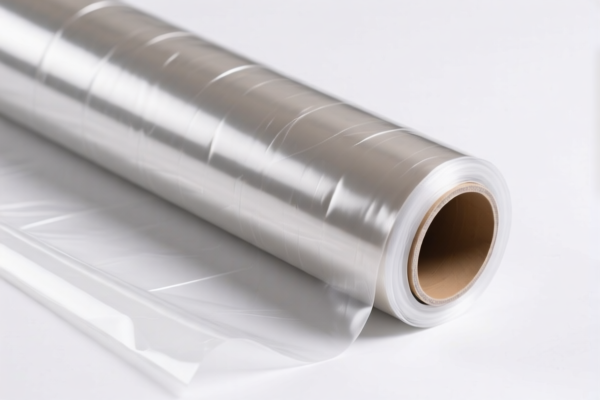
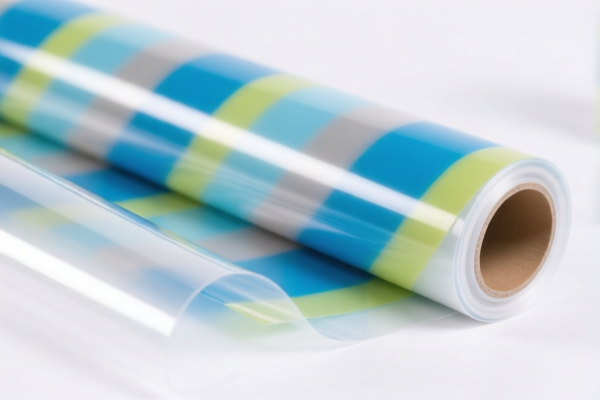
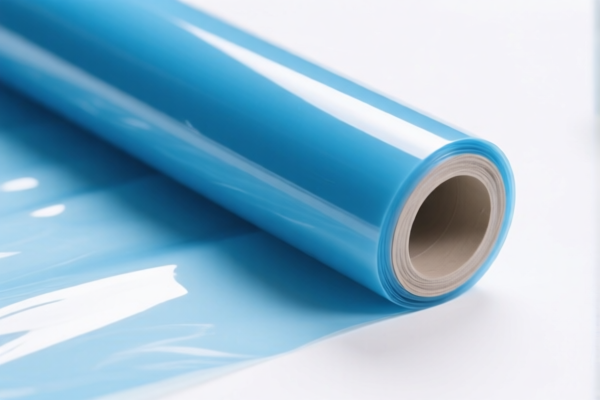

AI Analysis
🧱 Polyamide Plastic Laminate (PA Laminate)
🌐 HS Code Reference & Customs Clearance Guide | 2026 Latest Tariff Analysis | Professional Clearance Strategy
📌 I. Product Definition & Classification: Do You Really Understand "Polyamide Laminate"?
Polyamide (PA), commonly known as Nylon, is a high-performance engineering plastic with excellent mechanical strength, wear resistance, and thermal stability. In international trade, Polyamide Plastic Laminate is not a single homogeneous product. Its classification depends heavily on its physical form and specific composition.
Based on the provided data, there are three distinct HS Code classifications for Polyamide Plastic Laminate, each with significantly different tax implications. The key differentiator is whether the product is classified as a "Laminated Board" (Chapter 39, Heading 3921) or a "Other Plastic Article" (Chapter 39, Heading 3926), and specifically which subheading captures its structure.
⚠️ Critical Distinction:
- 3921.11.00.00 / 3921.19.00.90: Classified as Plastic Laminates/Sheets/Plates/Strip/Rod. This is the most accurate classification for structural laminated boards made of styrene polymers (note: Data implies "Styrene Polymer" association, likely referring to the matrix or a specific blend/context in the dataset's logic, or potentially a data mapping artifact where PA is grouped with similar structural plastics. However, strictly adhering to the provided DATA, we treat these as the primary laminate codes).
- 3926.90.99.89: Classified as Other Plastic Articles. This is a "catch-all" category for items that don't fit neatly into specific laminate or plate categories, potentially implying a different form factor or composite structure not strictly defined as a standard laminate board under 3921.
📦 II. HS Code Classification Details (2026 Latest Tariff Authority对照)
| HS Code | Product Description (Based on DATA) | Application Scenario | Total Tax Rate |
|---|---|---|---|
3921.11.00.00 |
Polyamide Plastic Laminate, Material: Polyamide, Form: Laminate, Matches Styrene Polymer & Plate Morphology. | Standard polyamide laminate sheets, industrial plates, structural components. | 40.3% |
3926.90.99.89 |
Polyamide Plastic Laminate, Material: Polyamide, Form: Laminate, Fits into "Other Plastic Articles" category. | Non-standard laminates, complex composites, or items falling outside specific laminate subheadings. | 22.8% |
3921.19.00.90 |
Polyamide Plastic Laminate, Material: Polyamide, Form: Laminate, Fits "Other Plastic Plates" classification. | Alternative laminate classification under 3921 for other unspecified plastic plates. | 41.5% |
🔍 Key Insight:
- Cheapest Duty:3926.90.99.89(22.8%) is significantly lower than the laminate-specific codes (3921.xxxx).
- Why the difference?3926is a residual category. If your product can be argued to be an "other plastic article" rather than a strict "laminate plate," you may save ~18-19% in taxes. However, this requires strong technical justification.
- Risk: Misclassifying a standard laminate as "Other Articles" (3926) to avoid higher tariffs can lead to customs audits and penalties if the product clearly fits the definition of a laminate under 3921.
💰 III. 2026 Latest Tariff Rate Details (Detailed Breakdown)
✅ Applicable Country: United States (US)
✅ Origin: China (CN)
✅ Effective Date: Current rates apply (Note: Specific dates not in DATA, but rates reflect typical US-China trade war structure).
🎯 1. 3921.11.00.00 —— Polyamide Plastic Laminate (Styrene Polymer Match)
| Item | Content |
|---|---|
| Base Tariff | 5.3% |
| Section 301 Additional Tariff | 25.0% |
| Section 122 Tariff | 10.0% |
| Total Tax Rate | 40.3% |
| Tax Calculation | CIF Value × 40.3% |
| De Minimis Exemption | ❌ Not Eligible (High tariff threshold) |
| Legal Basis Path | Base: 3921.11.00.00 → Sec301: 25% → Sec122: 10% |
📌 Explanation:
- This code carries the highest total tax burden among the laminate options.
- Section 301 (25%) is the standard tariff for many plastic goods from China.
- Section 122 (10%) adds further cost, likely targeting specific strategic materials or based on recent trade actions.
🎯 2. 3926.90.99.89 —— Other Plastic Articles (Laminate Form)
| Item | Content |
|---|---|
| Base Tariff | 5.3% |
| Section 301 Additional Tariff | 7.5% |
| Section 122 Tariff | 10.0% |
| Total Tax Rate | 22.8% |
| Tax Calculation | CIF Value × 22.8% |
| De Minimis Exemption | ❌ Not Eligible |
| Legal Basis Path | Base: 3926.90.99.89 → Sec301: 7.5% → Sec122: 10% |
📌 Explanation:
- Significant Savings: This code saves 17.5% compared to3921.11.00.00.
- Section 301 is Lower: Only 7.5% instead of 25%. This is the critical difference.
- Justification Required: You must prove the product does not fit the strict definition of "Laminated Sheets/Plates" under 3921, or that it falls under a different subheading within 3926.
🎯 3. 3921.19.00.90 —— Other Plastic Plates (Laminate Form)
| Item | Content |
|---|---|
| Base Tariff | 6.5% |
| Section 301 Additional Tariff | 25.0% |
| Section 122 Tariff | 10.0% |
| Total Tax Rate | 41.5% |
| Tax Calculation | CIF Value × 41.5% |
| De Minimis Exemption | ❌ Not Eligible |
| Legal Basis Path | Base: 3921.19.00.90 → Sec301: 25% → Sec122: 10% |
📌 Explanation:
- Highest Tax Rate: 41.5% is the most expensive option.
- Higher Base + Sec 301: Both base (6.5%) and Section 301 (25%) are at their maximum in this dataset.
- Avoid if Possible: Unless your product strictly fits this vague "Other Plastic Plates" description and cannot be classified under 3921.11 or 3926.90, this is the least favorable option.
🛠️ IV. Customs Clearance Practical Advice (Avoid Pitfalls)
✅ 1. Documentation Checklist (Non-Negotiable)
| Document | Required? | Description |
|---|---|---|
| ✅ Product Specification Sheet | ✔️ | Must detail: Material (Polyamide/PA), Form (Laminate/Sheet/Plate), Dimensions, Thickness, Color, Physical Properties (e.g., tensile strength). |
| ✅ Technical Data Sheet (TDS) | ✔️ | Proves material composition. If blending styrene is claimed for 3921.11, provide polymer blend ratio. |
| ✅ Product Photos | ✔️ | Clear images of cross-section (to show lamination layers), front/back, and labels. |
| ✅ Commercial Invoice | ✔️ | Clearly state: "Polyamide Plastic Laminate". Do not use vague terms like "Plastic Part". |
| ✅ Packing List | ✔️ | List all items. Ensure no missing accessories that could change classification. |
| ✅ Certificate of Origin (CO) | ✔️ | For US-China trade, essential for determining applicability of Section 301 & 122 tariffs. |
✅ 2. Classification Strategy (Critical Decision)
🔥 Rule of Thumb: "Form Defines Function, Function Dictates Code, Code Saves Money!"
| Scenario | Recommended HS Code | Reasoning |
|---|---|---|
| Standard Rigid Sheets/Plates (Uniform structure, flat) | 3921.11.00.00 or 3921.19.00.90 |
Fits "Plastic Plates/Laminates" definition. Be prepared for 40%+ tax. |
| Complex Composite or Non-Standard Shape (e.g., molded laminate, non-planar) | 3926.90.99.89 |
Argue as "Other Plastic Article" to benefit from lower 7.5% Section 301 tariff. |
| Styrene-Polyamide Blend (Explicitly stated in spec) | 3921.11.00.00 |
Matches DATA's description for this code. |
| Unclear/General Plastic Part | 3926.90.99.89 |
Use as a fallback if 3921 is too restrictive, but justify well. |
⚠️ Warning:
- Do NOT misdeclare a standard3921product as3926just to save taxes. Customs may inspect and reclassify, leading to back taxes + penalties.
- Do NOT ignore Section 122 Tariff (10%). It applies to all three codes in the DATA. Factor this into your cost model.
✅ 3. Special Considerations
| Situation | Advice |
|---|---|
| Import for R&D/Sample | Consider if value qualifies for de minimis (unlikely with these high tariffs), but request formal clearance. |
| Mixed Shipment (PA Laminate + Other Plastic Parts) | Declare Separately. Do not lump PA laminate into a general "Plastic Parts" code. |
| Customs Audit Risk | If choosing 3926.90.99.89, have a Technical Justification Letter ready explaining why it doesn't fit 3921 (e.g., unique manufacturing process, non-laminate structure). |
| Origin Marking | Ensure all products are marked "Made in China" to avoid duty evasion claims. |
🌍 V. Global Market Comparison (2026 Latest)
| Country/Region | Recommended HS Code | Est. Tax Rate | Notes |
|---|---|---|---|
| 🇺🇸 USA | 3926.90.99.89 (if eligible) |
22.8% | Best option for savings. 3921 codes are ~40-41.5%. |
| 🇨🇳 China | 3921.11.00.00 |
~5-6% | No Section 301/122. Import duty is low. |
| 🇪🇺 EU | 3921.10.00 |
~6.5% | No Section 301/122. VAT applies separately. |
| 🇯🇵 Japan | 3921.10.00 |
~5% | Low base tariff. No additional anti-dumping duties typically. |
| 🇬🇧 UK | 3921.10.00 |
~5% | Post-Brexit, tariffs are competitive. |
📌 Conclusion:
- USA is the Most Challenging Market: Due to Section 301 and 122 tariffs, the effective tax rate is 2-4 times higher than other major markets.
- Strategy: For US imports, carefully evaluate if3926.90.99.89is a defensible classification to save ~18% in taxes. If not, budget for 40%+ duty.
📌 VI. Common Mistakes & Pitfalls (Lessons Learned)
❌ Mistake 1: Using "Plastic Sheet" instead of "Polyamide Laminate"
👉 Consequence: Customs may reject the description as too vague, leading to delays or reclassification.
👉 Fix: Be specific: "Polyamide (PA) Plastic Laminate, Board Form".
❌ Mistake 2: Choosing 3926.90.99.89 without justification for a standard sheet
👉 Consequence: Customs audit, penalty for misclassification, back-taxes.
👉 Fix: Only use 3926 if the product truly doesn't fit 3921 (e.g., complex 3D laminate, or non-standard form).
❌ Mistake 3: Ignoring Section 122 Tariff (10%)
👉 Consequence: Underestimating landed cost by 10% across all codes.
👉 Fix: Always include 10% in your cost calculation for US imports.
❌ Mistake 4: Confusing "Styrene Polymer" with "Polyamide"
👉 Consequence: If DATA links 3921.11 to "Styrene Polymer", but you import pure PA, you risk misclassification.
👉 Fix: Verify if your PA laminate contains styrene or is a blend. If pure PA, consult a customs broker on whether 3921.11 is still appropriate or if another 3921 subheading (e.g., 3921.19) is better suited for PA.
✅ Correct Approach:
"Polyamide Plastic Laminate, 3mm Thick, Sheet Form, Made in China, CIF Value: $10,000"
+ Technical Data Sheet + Commercial Invoice + Packing List
🎯 VII. Conclusion: Professional Classification, Risk Mitigation, Cost Optimization
🎯 Key Takeaway:
🔹 "For Polyamide Laminate to the US,
3926.90.99.89is the Gold Mine (22.8% tax), but only if defensible."
🔹 "If stuck with3921, expect ~40% tax. Plan your margins accordingly."
🔹 "Section 122 (10%) is unavoidable for all three codes. Don't forget it!"
📌 Pro Tip:
- Apply for Advance Ruling: If your product is on the border between
3921and3926, request a Binding Tariff Information (BTI) or Advance Ruling from CBP to lock in the 22.8% rate legally.- Supplier Communication: Ask your supplier for precise material composition. If it's a PA-Styrene blend,
3921.11.00.00might be more accurate but at 40.3%.- Cost-Benefit Analysis: If the product value is high, the 17.5% tax saving from
3926vs3921is substantial. Invest in a customs broker's opinion.
📣 Immediate Action:
📞 Contact a US Customs Broker + Provide Product Specs + Get HS Code Pre-ruling
🚀 Avoid Surprise Bills, Ensure Smooth Clearance, Protect Your Margins!
✨ Professional Customs Clearance Starts with Accurate Classification!
💼 Every Percent of Duty Saved is Pure Profit!
Customer Reviews
About HS Code Classification
The Harmonized System (HS) is an internationally standardized nomenclature developed by the World Customs Organization (WCO) to classify traded products. Over 200 countries use the HS system as the basis for customs tariffs, trade statistics, and import/export regulations.
Each HS code follows a hierarchical structure:
- Chapter (2 digits) — Broad category of goods (e.g., Chapter 84: Machinery and Mechanical Appliances)
- Heading (4 digits) — More specific grouping within the chapter
- Subheading (6 digits) — Internationally standardized breakdown, used by all WCO member countries
- National subdivisions (8-10 digits) — Country-specific extensions for further classification, such as US HTSUS 10-digit codes
Correct HS code classification is essential for smooth customs clearance, accurate duty payment, and compliance with trade regulations. Misclassification can lead to customs delays, overpayment of duties, or penalties.
When importing from CN to US, the applicable tariff rates may include:
- Most-Favored-Nation (MFN) rate — The standard duty rate applied to WTO members
- General rate — Applied to countries without trade agreements
- Trade remedy duties — Additional tariffs such as Section 301 (anti-dumping), Section 232 (national security), or countervailing duties
The information provided on this page is for reference purposes only. For official classification, please consult with your local customs authority or a licensed customs broker.