Polyamide Plastic Laminated Sheets
CN → US| HS Code | Tariff Rate | Origin | Destination | Doc |
|---|---|---|---|---|
| 3921110000 | 40.3% | CN | US | Official Doc |
| 3926909989 | 22.8% | CN | US | Official Doc |
| 3921190090 | 41.5% | CN | US | Official Doc |
Product Images
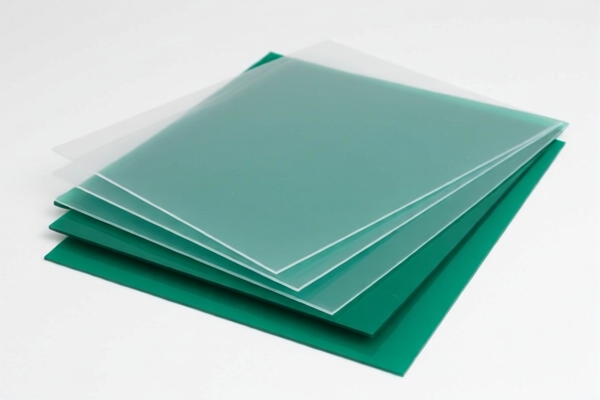
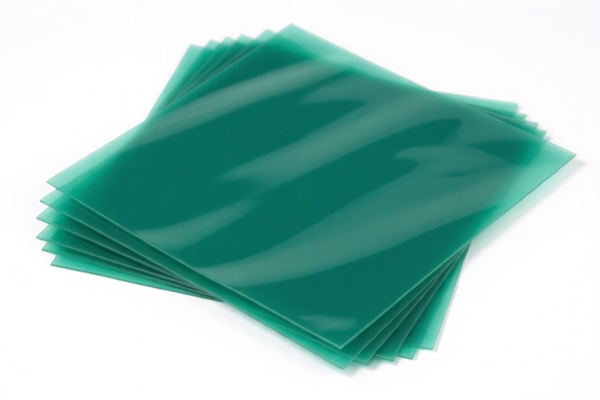
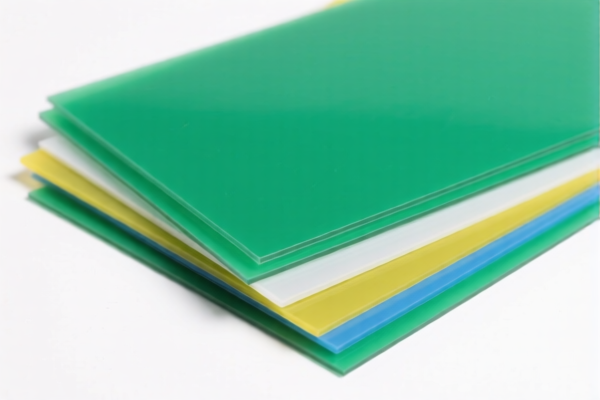
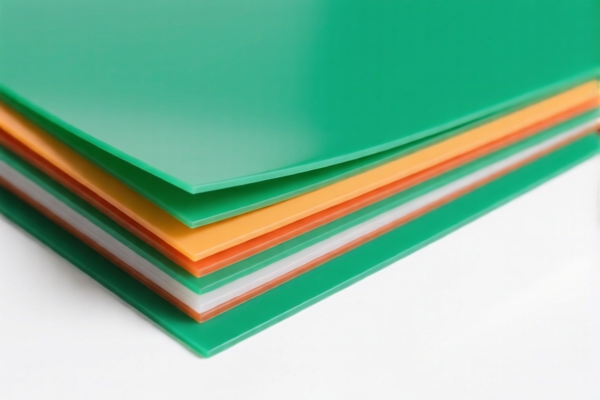
AI Analysis
🧱 Polyamide Plastic Laminated Sheets (Nylon Laminate Boards)
🌐 HS Code Reference & Customs Clearance Guide | 2026 Latest Tariff Analysis | Professional-Level Clearance Strategy
📌 I. Product Definition & Classification: Do You Really Understand "Polyamide Laminates"?
Polyamide (commonly known as Nylon) plastic laminated sheets are high-performance engineering materials known for their excellent mechanical strength, wear resistance, and thermal stability. In international trade, they are often categorized based on their specific form and manufacturing process.
Depending on the exact nature of the lamination (e.g., cross-laid, continuous layup, or other forms) and the specific application, these sheets fall under different HS Code chapters. The key distinction lies in whether they are considered "pressed plates" under Chapter 39 (Plastics) or potentially other specialized categories if mixed with other materials (though this data focuses on Polyamide).
⚠️ Key Distinction Point:
- Cross-laid sheets: Layers oriented at right angles to each other.
- Continuous layup sheets: Layers oriented in the same direction.
- Other laminate forms: Different weaving or stacking patterns.
📦 II. HS Code Classification Details (2026 Latest Tariff Authority Comparison)
Based on the provided data, here are the specific HS Codes applicable to Polyamide Plastic Laminated Sheets:
| HS Code | Product Description | Application Scenario | Lamination Form |
|---|---|---|---|
3921.11.00.00 |
Polyamide Plastic Laminated Sheets, Material: Polyamide, Form: Laminated Sheet | High-strength structural parts, electrical insulation | Specific lamination type (likely cross-laid) |
3926.90.99.89 |
Polyamide Plastic Laminated Sheets, Material: Polyamide, Form: Laminated Sheet, Classified as "Other Plastic Articles" | General industrial use, non-specific classification | Other/General |
3921.19.00.90 |
Polyamide Plastic Laminated Sheets, Material: Polyamide, Form: Laminated Sheet, Classified as "Other Plastic Plates" | Specialized engineering applications | Other forms |
🔍 Important Note:
- All three codes refer to the same material (Polyamide/Nylon) and same form (Laminated Sheet).
- The differentiation is primarily based on specific sub-classifications within Chapter 39 and how customs authorities interpret the specific lamination technique or end-use.
- Misclassification Risk: Declaring a "cross-laid" sheet as "other" can lead to significant tariff differences.
💰 III. 2026 Latest Tariff Rate Breakdown (Including Surtaxes & Policy Add-ons)
✅ Applicable Country: United States (US)
✅ Country of Origin: China (CN)
✅ Effective Date: From 2025-11-10 onwards (including subsequent imports)
🎯 1. 3921.11.00.00 —— Polyamide Plastic Laminated Sheets
| Item | Content |
|---|---|
| Base Tariff | 5.3% (ad valorem) |
| Section 301 Surtax | +25.0% |
| 122 Clause Tariff | +10% |
| Total Tariff | 40.3% |
| Tax Calculation | CIF Value × 40.3% |
| De Minimis Eligibility | ❌ Not Eligible |
| Legal Basis Path | Base Tariff → Section 301 → 122 Clause |
📌 Explanation:
- Base Tariff (5.3%): Standard MFN rate for plastic plates/sheets/laminates.
- Section 301 (25%): Additional tariff imposed under U.S. Trade Act Section 301 on Chinese goods.
- 122 Clause (10%): Additional duty under Section 122 of the Trade Act of 1974 (if applicable to specific strategic goods).
- Total: 40.3% – This is a high-cost entry, requiring careful cost-benefit analysis.
🎯 2. 3926.90.99.89 —— Polyamide Plastic Laminated Sheets (Other Plastic Articles)
| Item | Content |
|---|---|
| Base Tariff | 5.3% (ad valorem) |
| Section 301 Surtax | +7.5% |
| 122 Clause Tariff | +10% |
| Total Tariff | 22.8% |
| Tax Calculation | CIF Value × 22.8% |
| De Minimis Eligibility | ❌ Not Eligible |
| Legal Basis Path | Base Tariff → Section 301 → 122 Clause |
📌 Note:
- This code falls under Chapter 39.26 ("Other articles of plastics"), which may have lower Section 301 applicability in some interpretations or specific product lists compared to Chapter 39.21.
- Total: 22.8% – Significantly lower than 40.3%, making this a cost-effective alternative if the product can be legally classified here.
- Caution: Ensure the product genuinely fits the "Other Plastic Articles" description. Misclassification can lead to penalties.
🎯 3. 3921.19.00.90 —— Polyamide Plastic Laminated Sheets (Other Plastic Plates)
| Item | Content |
|---|---|
| Base Tariff | 6.5% (ad valorem) |
| Section 301 Surtax | +25.0% |
| 122 Clause Tariff | +10% |
| Total Tariff | 41.5% |
| Tax Calculation | CIF Value × 41.5% |
| De Minimis Eligibility | ❌ Not Eligible |
| Legal Basis Path | Base Tariff → Section 301 → 122 Clause |
📌 Explanation:
- Base Tariff (6.5%): Slightly higher than3921.11due to being "other" plates.
- Section 301 (25%): Full additional tariff applies.
- 122 Clause (10%): Additional duty applies.
- Total: 41.5% – The highest tariff among the three options.
- Recommendation: Avoid this classification unless strictly required by product characteristics.
🛠️ IV. Customs Clearance Practical Advice (Real-World Pitfall Avoidance Guide)
✅ 1. Documentation Checklist (Mandatory)
| Document | Required | Notes |
|---|---|---|
| ✅ Product Specification Sheet | ✔️ | Must include material composition (100% Polyamide/Nylon), lamination method, thickness, tensile strength. |
| ✅ Cross-Sectional Images | ✔️ | Visual proof of lamination structure (e.g., cross-laid vs. continuous). Crucial for HS Code determination. |
| ✅ Commercial Invoice | ✔️ | Clearly state "Polyamide Plastic Laminated Sheets" and HS Code. |
| ✅ Packing List | ✔️ | Detailed weight and dimensions. |
| ✅ Certificate of Origin | ✔️ | Essential for determining Section 301 and 122 Clause applicability. |
| ✅ Technical Data Sheet | ✔️ | To prove end-use and material properties. |
✅ 2. Declaration Tips (Key Mantras)
🔥 "Material Matters, Lamination Defines, Code Choose Wisely!"
| Situation | Correct Declaration | Incorrect Action |
|---|---|---|
| Standard Polyamide Laminate | 3921.11.00.00 or 3921.19.00.90 |
Misdeclare as 3926.90.99.89 to save tax → High Risk of Audit/Penalty |
| Non-Standard/Other Plastic Item | 3926.90.99.89 |
Declare as "Plate" if it doesn't fit Chapter 39.21 definitions → Overpayment of Tax |
| Mixed Material Laminate | Check Composition | If not 100% Polyamide, may fall outside these codes entirely. |
📌 Critical Reminder:
- The difference between3921.11(40.3%) and3926.90(22.8%) is 17.5%.
- Justification is Key: You must provide technical evidence to support your chosen HS Code. If customs determines the product is a "plate" under Chapter 39.21, you will be liable for the higher tax plus penalties.
✅ 3. Special Case Handling
| Situation | Handling Advice |
|---|---|
| OEM Custom Shapes | Provide drawings and specify that the base form is a "sheet/plate" before cutting. |
| Filled Polyamide (e.g., Glass Fiber) | Check if the base polymer is still Polyamide. If yes, it may still fall under 3921/3926, but verify with customs. |
| Pre-cut Components | If sold as "gears" or "bearings," HS Code may shift to Chapter 84 or 85. Ensure classification matches the finished state at import. |
| Samples | Clearly mark "Samples – No Commercial Value" but still declare correct HS Code for risk management. |
🌍 V. Global Market Comparison (2026 Latest)
| Country/Region | Recommended HS Code | Tariff (China Origin) | Certification Requirements | Notes |
|---|---|---|---|---|
| 🇺🇸 USA | 3921.11.00.00 |
40.3% | No specific CE/FCC needed | High tariffs due to Section 301 & 122. |
| 🇺🇸 USA | 3926.90.99.89 |
22.8% | No specific CE/FCC needed | Lower tax option if product qualifies. |
| 🇨🇳 China | 3921.11.00.00 |
6.5% | CCC (if applicable) | Lower import duty. |
| 🇪🇺 EU | 3921.10.00 |
0% (if GSP/FTA) | REACH, RoHS | No Section 301 equivalent. |
| 🇯🇵 Japan | 3921.11.00 |
0% | PSE (if electrical) | No additional surtaxes. |
📌 Conclusion:
- USA: Tariff burden is extreme due to trade policies. Choosing the right HS Code between3921.11and3926.90can save ~17.5% in taxes.
- EU/Japan/China: Much more favorable, with 0%–6.5% tariffs.
📌 VI. Common Errors & Pitfalls (Lessons Learned)
❌ Error 1: Declaring all polyamide sheets as 3926.90.99.89 to save tax.
👉 Consequence: If customs proves it's a "plate" under 3921, you’ll pay 17.5% more + penalties.
❌ Error 2: Not providing cross-sectional images.
👉 Consequence: Customs cannot verify lamination type → Delays, additional fees, or reclassification.
❌ Error 3: Confusing "Laminated Sheet" with "Molded Part".
👉 Consequence: Molded parts (e.g., gears) may have different HS Codes and tax rates. Declare based on finished product.
❌ Error 4: Ignoring the "122 Clause".
👉 Consequence: Missing the 10% additional duty can result in underpayment and interest charges.
✅ Correct Approach:
"Polyamide (Nylon) Laminated Sheets, 100% Polyamide, Cross-Laid, Thickness 10mm, For Electrical Insulation, Model XYZ, HS Code: 3921.11.00.00"
🎯 VII. Conclusion: Professional Declaration Saves Money!
🎯 Remember the Mantra:
🔹 "Material is Polyamide, Lamination Defines the Code, 3921 is High, 3926 is Lower, Choose Wisely!"
🔹 "HS Code Determines Tax, 17.5% Difference is Huge, Wrong Code Means Big Loss!"
📌 Pro Tip:
If you have flexibility in product design or classification, consult a customs broker before shipping. Consider applying for an Advance Ruling from U.S. Customs and Border Protection (CBP) to lock in a favorable HS Code and tariff rate.
📣 Take Action Now:
📞 Contact a Licensed Customs Broker + Provide Technical Specs + Request HS Code Pre-Ruling
🚀 Ensure Smooth Clearance, Maximize Profit, and Minimize Risk!
✨ Professional Clearance Starts with Accurate Classification!
💼 Every Dollar Saved on Tariffs is Pure Profit!
Customer Reviews
About HS Code Classification
The Harmonized System (HS) is an internationally standardized nomenclature developed by the World Customs Organization (WCO) to classify traded products. Over 200 countries use the HS system as the basis for customs tariffs, trade statistics, and import/export regulations.
Each HS code follows a hierarchical structure:
- Chapter (2 digits) — Broad category of goods (e.g., Chapter 84: Machinery and Mechanical Appliances)
- Heading (4 digits) — More specific grouping within the chapter
- Subheading (6 digits) — Internationally standardized breakdown, used by all WCO member countries
- National subdivisions (8-10 digits) — Country-specific extensions for further classification, such as US HTSUS 10-digit codes
Correct HS code classification is essential for smooth customs clearance, accurate duty payment, and compliance with trade regulations. Misclassification can lead to customs delays, overpayment of duties, or penalties.
When importing from CN to US, the applicable tariff rates may include:
- Most-Favored-Nation (MFN) rate — The standard duty rate applied to WTO members
- General rate — Applied to countries without trade agreements
- Trade remedy duties — Additional tariffs such as Section 301 (anti-dumping), Section 232 (national security), or countervailing duties
The information provided on this page is for reference purposes only. For official classification, please consult with your local customs authority or a licensed customs broker.