Polyamide Plastic Sheet (Non reinforced)
CN → US| HS Code | Tariff Rate | Origin | Destination | Doc |
|---|---|---|---|---|
| 3921904090 | 39.2% | CN | US | Official Doc |
| 3921905050 | 39.8% | CN | US | Official Doc |
| 3920991000 | 41.0% | CN | US | Official Doc |
| 3920920000 | 39.2% | CN | US | Official Doc |
| 3920991000 | 41.0% | CN | US | Official Doc |
Product Images
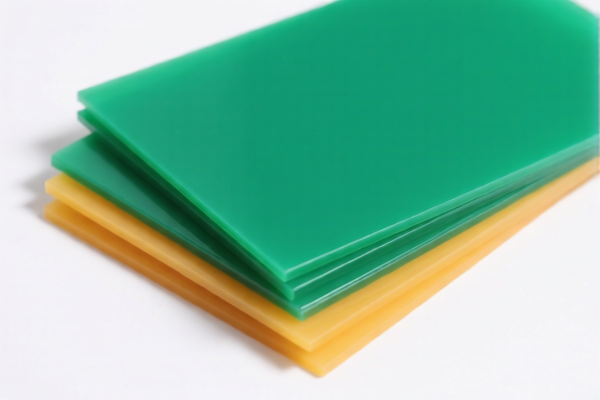
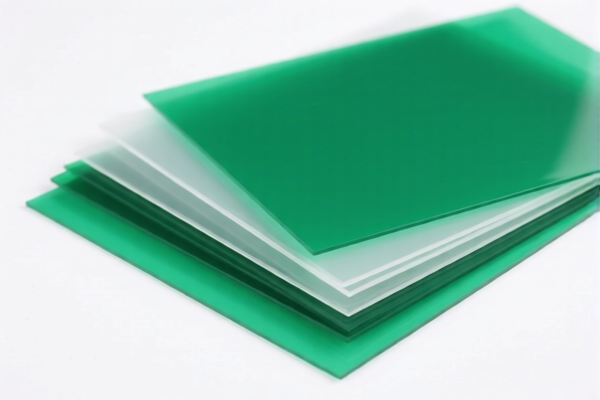
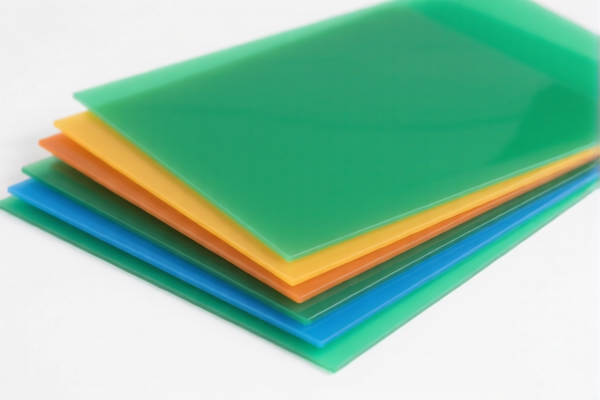
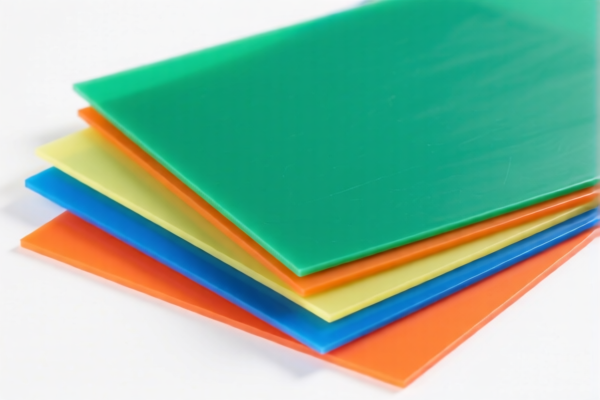
AI Analysis
🧪 Polyamide Plastic Sheet (Non-reinforced / Non-paper-backed)
🌐 HS Code Reference & Customs Clearance Guide | 2026 Latest Tariff Analysis | Professional Strategy for US Importers
📌 I. Product Definition & Classification: Do You Know Your "Polyamide Sheet"?
Polyamide (commonly known as Nylon) plastic sheets and films are widely used in industrial machinery, electrical insulation, automotive components, and food packaging. In international trade, precise classification depends on physical form (film vs. sheet), reinforcement status, and structural properties.
The term "Non-reinforced" typically implies that the material is not backed or strengthened by paper (which would push it into composite/layered categories). However, customs authorities carefully distinguish between "Film" (flexible, thin) and "Sheet" (rigid, thicker), and whether the material is "Cellular" (foam) or "Solid".
⚠️ Key Distinction Point:
- If it is thin, flexible, and non-paper-backed → Likely HS 3921 (Plastic Films, Not Reinforced).
- If it is thicker, rigid, solid (non-foam) → Likely HS 3920 (Plastic Sheets, Non-cellular).
- Crucial: All the following HS codes are subject to Section 301 Tariffs (25%) and Section 122 Tariffs (10%) on Chinese-origin goods, resulting in high total duties.
📦 II. HS Code Classification Details (2026 Latest Tariff Authority Comparison)
Below are the specific HS codes derived from the provided dataset, mapped to product descriptions and tax implications.
| HS Code | Product Description & Summary | Key Characteristics | Total Tax Rate (China Origin) |
|---|---|---|---|
3921.90.40.90 |
Polyamide Plastic Film (Non-reinforced). Fits the definition of flexible plastic material not backed by paper. | Flexible, thin, no paper backing. | 39.2% |
3921.90.50.50 |
Polyamide Plastic Film. Belongs to "other" categories under this heading; not a high-pressure paper-reinforced decorative laminate. | Flexible, specific "other" subcategory, no decorative paper layer. | 39.8% |
3920.99.10.00 |
Polyamide Plastic Sheet (Non-cellular). Fits the definition of other plastic plates, sheets, or film. | Solid, non-foamed, likely thicker than film. | 41.0% |
3920.92.00.00 |
Polyamide Plastic Sheet (Non-foam). Material and form are fully consistent with this code. | Standard solid polyamide sheet, no foam structure. | 39.2% |
3920.99.10.00 |
Polyamide Plastic Sheet. Judged as potentially compliant based on consistent material and form. | Alternative classification for solid sheets; note: same rate as above. | 41.0% |
🔍 Important Note:
- HS 3921 generally covers films (often <1mm thick, flexible).
- HS 3920 generally covers sheets/plates (often >1mm thick, rigid or semi-rigid).
- Misclassification Risk: Declaring a rigid sheet as a "film" (or vice versa) can lead to customs delays or additional scrutiny. Ensure your thickness, flexibility, and end-use documentation matches the selected HS code.
💰 III. 2026 Latest Tariff Rate Breakdown (Including Surtaxes & Policy Add-ons)
✅ Applicable Country: United States (US)
✅ Origin: China (CN)
✅ Effective Time: Current rates apply as per 2025-2026 trade policies.
🎯 1. 3921.90.40.90 — Polyamide Plastic Film (Non-reinforced)
| Item | Details |
|---|---|
| Base Tariff | 4.2% |
| Section 301 Surcharge | +25.0% |
| Section 122 Tariff | +10.0% |
| Total Tax Rate | 39.2% |
| Tax Calculation | CIF Value × 39.2% |
| De Minimis Exemption | ❌ Not Eligible (High risk for Section 301 goods) |
| Legal Basis | Standard HTUS for 3921.90.40 + 301/122 Footnotes |
📌 Explanation:
- The 4.2% is the standard Most Favored Nation (MFN) duty for non-cellular plastic films.
- The 25% is the Section 301 tariff imposed on Chinese goods under Trade Promotion Authority.
- The 10% is the Section 122 tariff (often applied to specific strategic materials or under specific trade remedies).
- Total: 39.2%. This is a significant cost factor that must be built into your pricing model.
🎯 2. 3921.90.50.50 — Polyamide Plastic Film (Other Category)
| Item | Details |
|---|---|
| Base Tariff | 4.8% |
| Section 301 Surcharge | +25.0% |
| Section 122 Tariff | +10.0% |
| Total Tax Rate | 39.8% |
| Tax Calculation | CIF Value × 39.8% |
| De Minimis Exemption | ❌ Not Eligible |
| Legal Basis | Standard HTUS for 3921.90.50 + 301/122 Footnotes |
📌 Note:
- Slightly higher base rate (4.8%) due to being classified under a broader "other" subcategory.
- Same surcharges apply. Total: 39.8%.
- This code is used when the film does not fit more specific sub-headings (like 3921.90.40) and is not a decorative laminate.
🎯 3. 3920.99.10.00 — Polyamide Plastic Sheet (Non-cellular, Other)
| Item | Details |
|---|---|
| Base Tariff | 6.0% |
| Section 301 Surcharge | +25.0% |
| Section 122 Tariff | +10.0% |
| Total Tax Rate | 41.0% |
| Tax Calculation | CIF Value × 41.0% |
| De Minimis Exemption | ❌ Not Eligible |
| Legal Basis | Standard HTUS for 3920.99.10 + 301/122 Footnotes |
📌 Explanation:
- Base rate is higher (6.0%) because "other" plastic sheets often attract a slightly higher MFN duty.
- Total: 41.0%. This is the highest rate in the provided dataset.
- Use this only if the product is definitively a non-cellular sheet (not film) and not covered by the more specific3920.92.
🎯 4. 3920.92.00.00 — Polyamide Plastic Sheet (Non-foam)
| Item | Details |
|---|---|
| Base Tariff | 4.2% |
| Section 301 Surcharge | +25.0% |
| Section 122 Tariff | +10.0% |
| Total Tax Rate | 39.2% |
| Tax Calculation | CIF Value × 39.2% |
| De Minimis Exemption | ❌ Not Eligible |
| Legal Basis | Standard HTUS for 3920.92 + 301/122 Footnotes |
📌 Note:
- This is the preferred code for standard solid polyamide sheets.
- Matches the 39.2% total rate of the film category (3921.90.40.90).
- Ensure the product is non-foam (solid structure). If it has any cellular/foam structure, it would fall under different headings (e.g., 3921.12 or 3920.12), which are not in this dataset.
🛠️ IV. Customs Clearance Practical Advice (Pitfall Avoidance Guide)
✅ 1. Required Documentation Checklist (All or Nothing)
| Document | Required? | Purpose |
|---|---|---|
| ✅ Product Specification Sheet | ✔️ | Must explicitly state: Material (Polyamide/Nylon), Form (Film vs. Sheet), Thickness, Reinforcement Status (Non-paper-backed). |
| ✅ Material Safety Data Sheet (MSDS) | ✔️ | Confirms chemical composition (Polyamide). |
| ✅ Product Photos (Clear) | ✔️ | Show flexibility (for film) or rigidity (for sheet). Include ruler/scale for thickness. |
| ✅ Commercial Invoice | ✔️ | Clearly describe as "Polyamide Plastic Sheet/Film, Non-reinforced, No Paper Backing". |
| ✅ Bill of Lading/Air Waybill | ✔️ | Standard shipping documents. |
| ✅ Origin Certificate | ✔️ | Critical for determining Section 301 applicability. |
✅ 2. Declaration Tips (Key Rules)
🔥 "Shape Determines Code: Film vs. Sheet, Non-Reinforced is Key!"
| Scenario | Correct Declaration | Error to Avoid |
|---|---|---|
| Thin, Flexible, No Paper | Use HS 3921.xxxxxx (e.g., 3921.90.40.90) |
Declaring as "Sheet" → Higher duty (41%) or audit |
| Thick, Rigid, Solid | Use HS 3920.92.00.00 | Declaring as "Film" → Misclassification risk |
| With Paper Backing | NOT Covered in Dataset | Attempting to use these codes → Severe penalties |
| Foamed/Cellular | NOT Covered in Dataset | Using solid sheet codes → Audit & back-taxes |
📌 Critical Advice:
- Do not use "De Minimis" (Section 321) for these goods. Section 301 and Section 122 tariffs are explicitly not exempted under the de minimis rule for Chinese-origin goods. Ensure your value is declared correctly at the border, not via small parcel loopholes.
- Thickness is Key: If you are unsure whether it's a "film" or "sheet," consult the HTUS general notes. Generally, films are flexible and thin; sheets are rigid or semi-rigid. When in doubt, 3920.92.00.00 is often a safer bet for solid polyamide materials.
✅ 3. Special Cases
| Case | Handling Suggestion |
|---|---|
| OEM Custom Thickness | Provide exact thickness in microns/mm. If <1mm, lean towards 3921. If >1mm, lean towards 3920. |
| Colored/Printed Polyamide | Still falls under 3920/3921 if non-reinforced. Add "Colored" to description. |
| Recycled Polyamide | Same HS codes apply, but may require additional environmental compliance docs. |
| Mixed Shipments | If you have both films and sheets, separate line items in the commercial invoice. Do not lump them together. |
🌍 V. Global Market Comparison (2026 Latest)
| Country/Region | Recommended HS Code | Base Tariff | Section 301/122? | Total Est. Tax (China Origin) |
|---|---|---|---|---|
| 🇺🇸 USA | 3921.90.40.90 or 3920.92.00.00 |
4.2%-6.0% | ✅ Yes (25%+10%) | 39.2% - 41.0% |
| 🇨🇳 China | 3921.90.40.90 or 3920.92.00.00 |
4.2%-6.0% | ❌ No | 4.2% - 6.0% |
| 🇪🇺 EU | 3920.92.00 or 3921.90.99 |
5.5%-6.5% | ❌ No (but Anti-Dumping may apply) | ~5.5% - 6.5% |
| 🇬🇧 UK | 3920.92.00 or 3921.90.99 |
5.0% | ❌ No | ~5.0% |
| 🇯🇵 Japan | 3920.92.00 or 3921.90.99 |
6.0% | ❌ No | ~6.0% |
📌 Conclusion:
- The USA is the most expensive market for these goods due to the 35% combined surcharge (25% + 10%).
- China, EU, UK, and Japan have significantly lower tariffs, but may require different certifications (CE, RoHS, JIS).
- Strategy: If selling to the US, consider price absorption or supply chain diversification (e.g., manufacturing in Vietnam/Thailand) to avoid Section 301/122 tariffs.
📌 VI. Common Errors & Pitfall Guide (Lessons Learned)
❌ Error 1: Declaring "Polyamide Film" when it is actually a rigid sheet
👉 Consequence: Customs may reclassify to 3920.99.10.00 (41.0%) → Back-taxes + Penalties.
❌ Error 2: Ignoring the "Non-Reinforced" clause
👉 Consequence: If the product has any paper backing (even thin), it may be classified as a composite material, leading to different HS codes and potentially higher duties or anti-dumping investigations.
❌ Error 3: Assuming De Minimis (Section 321) applies to small shipments
👉 Consequence: Incorrect! Section 301 and 122 tariffs apply regardless of value. Small parcels from China will still be taxed at 39-41%.
❌ Error 4: Using vague descriptions like "Plastic Material"
👉 Consequence: Customs will guess the HS code, likely picking the highest duty rate or requiring a port entry audit.
✅ Correct Approach:
"Polyamide (Nylon) Plastic Sheet, Non-Cellular, Non-Reinforced, No Paper Backing, Solid, [Thickness] mm, Model XYZ"
🎯 VII. Conclusion: Professional Declaration, Time-Saving, Cost-Efficiency!
🎯 Remember the Mantra:
🔹 "Film or Sheet? Check Thickness! Non-Reinforced? Check Paper! Section 301? Check Origin!"
🔹 "HS Code Saves Money, Misclassification Costs Thousands!"
📌 Pro Tip:
If your polyamide sheets/films are sourced from non-China countries (e.g., Vietnam, Taiwan, Germany), you may be exempt from Section 301/122 tariffs, reducing the total duty to just the base rate (4.2%-6.0%).
Recommendation: Obtain a Certificate of Origin from a non-China source if possible, or apply for an Advance Ruling from US Customs (CBP) to confirm the correct HS code before shipment.
📣 Immediate Action:
📞 Contact a Licensed Customs Broker + Provide Product Specs + Apply for HS Code Advance Ruling
🚀 Let your Polyamide Products Clear Customs Smoothly, Maximize Profits, and Expand Globally!
✨ Professional Customs Clearance Starts with Accurate Classification!
💼 Every Cent of Duty Should Be Calculated Precisely!
Customer Reviews
About HS Code Classification
The Harmonized System (HS) is an internationally standardized nomenclature developed by the World Customs Organization (WCO) to classify traded products. Over 200 countries use the HS system as the basis for customs tariffs, trade statistics, and import/export regulations.
Each HS code follows a hierarchical structure:
- Chapter (2 digits) — Broad category of goods (e.g., Chapter 84: Machinery and Mechanical Appliances)
- Heading (4 digits) — More specific grouping within the chapter
- Subheading (6 digits) — Internationally standardized breakdown, used by all WCO member countries
- National subdivisions (8-10 digits) — Country-specific extensions for further classification, such as US HTSUS 10-digit codes
Correct HS code classification is essential for smooth customs clearance, accurate duty payment, and compliance with trade regulations. Misclassification can lead to customs delays, overpayment of duties, or penalties.
When importing from CN to US, the applicable tariff rates may include:
- Most-Favored-Nation (MFN) rate — The standard duty rate applied to WTO members
- General rate — Applied to countries without trade agreements
- Trade remedy duties — Additional tariffs such as Section 301 (anti-dumping), Section 232 (national security), or countervailing duties
The information provided on this page is for reference purposes only. For official classification, please consult with your local customs authority or a licensed customs broker.