Polyamide Raw Material for Piping
CN → USProduct Images

AI Analysis
🧪 Polyamide Raw Material for Piping (PA / Nylon Pellets or Powder)
🌐 HS Code Reference & Customs Clearance Guide | 2026 Latest Tariff Analysis | Professional Strategy for Raw Polymer Inputs
📌 I. Product Definition & Classification: Is it "Plastic" or "Chemical"?
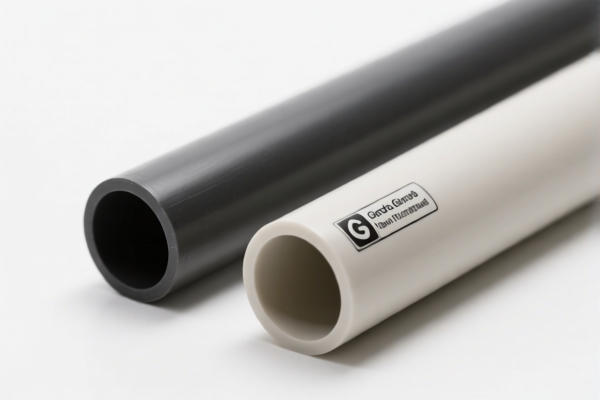
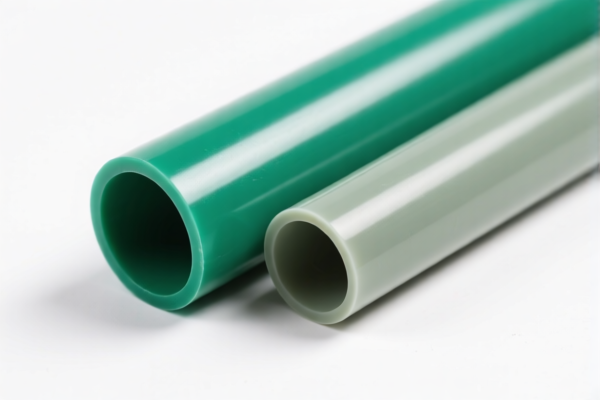
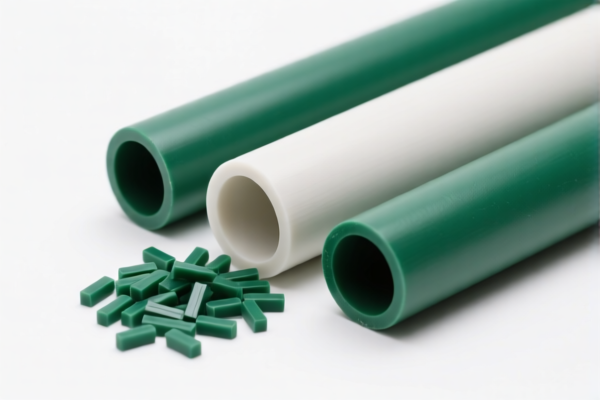
"Polyamide Raw Material for Piping" typically refers to thermoplastic polyamide resins (commonly known as Nylon 6, Nylon 66, or Nylon 11/12) supplied in the form of pellets, granules, or powder. These are the base ingredients used for extrusion or injection molding to create pipes, tubes, and fittings for industrial, automotive, or plumbing applications.
In international trade, the classification hinges on two critical factors: 1. Form: Is it in primary forms (pellets/powder) or ready-made pipes? 2. Composition: Is it pure homopolymer or a blend with additives?
⚠️ Key Distinction:
- If the material is in primary forms (pellets, granules, powder) → It is classified as a Plastic in Primary Forms under Chapter 39.
- If the material is already formed into pipes/tubes → It is classified as Articles of Plastic under Chapter 39 but a different heading (3917).
- If it is a copolymer with specific properties, it may fall under different sub-headings within Chapter 39.
📦 II. HS Code Classification Details (2026 Latest Tariff Alignment)
| HS Code | Product Description | Application Scenario | Form Factor |
|---|---|---|---|
3908.10.00 |
Polyamides in primary forms; Nylon 6 (PA6) | Most common raw material for piping extrusion | ✅ Pellets/Granules |
3908.10.90 |
Polyamides in primary forms; Other (e.g., PA66, PA11, PA12, PA6/12 blends) | High-performance piping, automotive fuel lines, hydraulic hoses | ✅ Pellets/Granules |
3908.90.00 |
Copolymers of polyamides in primary forms | Specialized engineering plastics with mixed monomer structures | ✅ Pellets/Granules |
3917.23.00 |
Tubes, pipes and hoses, flexible, of plastics | Finished flexible pipes (not raw material) | ❌ Finished Good |
3917.29.00 |
Other tubes, pipes, and hoses, of plastics | Finished rigid or semi-rigid pipes | ❌ Finished Good |
🔍 Critical Note:
- Raw Material = Chapter 39, Heading 3908. Do NOT classify raw pellets as finished pipes (3917).
- Nylon 6 (PA6) is specifically listed under3908.10.00.
- Other Polyamides (like PA66, PA11, PA12) fall under3908.10.90or3908.90.00depending on whether they are homo- or copolymers.
- If the product is already extruded into pipe shape, it moves to3917. Misclassification leads to significant duty differences.
💰 III. 2026 Latest Tariff Rate Breakdown (Including Surcharges)
✅ Applicable Country: United States (US)
✅ Origin: China (CN)
✅ Effective Date: November 10, 2025 (and subsequent imports)
🎯 1. 3908.10.00 – Nylon 6 (PA6) in Primary Forms
| Item | Content |
|---|---|
| Base Duty Rate | 5.3% (ad valorem) |
| USITC Surcharge (Section 301) | +7.5% (Footnote 9903.88.01) |
| IEEPA Surcharge | +10% (For products originating in China/HK, effective Nov 10, 2025) |
| Total Duty Rate | 22.8% |
| Tax Calculation | CIF Value × 22.8% |
| De Minimis Exemption | ❌ Not Applicable (Deny De Minimis) |
| Legal Reference Path | IEEPA:9903.01.25 → IEEPA:9903.01.24 → USITC:3908.10.00 → FOOTNOTE:9903.88.01 |
📌 Explanation:
- Nylon 6 is a commodity plastic. While the base rate is moderate, the 2025 IEEPA surcharge (+10%) significantly increases the landed cost.
- The Section 301 surcharge (+7.5%) applies because PA6 is often classified under specific exclusions that remain active for raw materials.
- Total Cost Impact: Importers must budget for nearly 23% duty on top of the CIF value.
🎯 2. 3908.10.90 – Other Polyamides (PA66, PA11, PA12, etc.) in Primary Forms
| Item | Content |
|---|---|
| Base Duty Rate | 5.3% (ad valorem) |
| USITC Surcharge (Section 301) | +7.5% |
| IEEPA Surcharge | +10% |
| Total Duty Rate | 22.8% |
| Tax Calculation | CIF Value × 22.8% |
| De Minimis Exemption | ❌ Not Applicable |
| Legal Reference Path | IEEPA:9903.01.25 → IEEPA:9903.01.24 → USITC:3908.10.90 → FOOTNOTE:9903.88.01 |
📌 Note:
- Despite being "specialty" engineering plastics, PA66, PA11, and PA12 still attract the same surcharge structure as PA6.
- No exemption is available for high-performance polyamides unless specifically excluded (check for active exclusion numbers).
🎯 3. 3908.90.00 – Copolymers of Polyamides in Primary Forms
| Item | Content |
|---|---|
| Base Duty Rate | 5.3% |
| USITC Surcharge | +7.5% |
| IEEPA Surcharge | +10% |
| Total Duty Rate | 22.8% |
| De Minimis Exemption | ❌ Not Applicable |
📌 Note:
- Copolymers (e.g., Nylon 6/66 blends) are treated similarly. Ensure the chemical composition matches the HS description to avoid misclassification disputes.
🛠️ IV. Customs Clearance Practical Advice (Avoid Pitfalls)
✅ 1. Required Documentation Checklist
| Document | Required | Description |
|---|---|---|
| ✅ Technical Data Sheet (TDS) | ✔️ | Must specify polymer type (PA6, PA66, etc.), molecular weight, and moisture content. |
| ✅ Material Safety Data Sheet (MSDS) | ✔️ | Required for safety handling and DOT/FDA compliance. |
| ✅ Certificate of Origin (CO) | ✔️ | To prove origin (China) and apply correct surcharges. |
| ✅ Commercial Invoice | ✔️ | Clearly state "Polyamide Resin in Primary Forms" and HS Code. |
| ✅ Bill of Lading (B/L) | ✔️ | Ensure packaging type (bags, drums, totes) is accurately described. |
| ✅ FDA Pre-Notification | ✔️ | If intended for food/water contact piping, FDA registration is mandatory. |
✅ 2. Declaration Tips (Key Mnemonic)
🔥 "Pellets are Primary, Pipes are Finished. Name the Polymer, Avoid the Surprise!"
| Scenario | Correct Declaration | Incorrect Practice |
|---|---|---|
| Raw Pellets for Extrusion | 3908.10.00 – "Nylon 6 Pellets" |
Mislabeling as "Plastic Parts" → Higher Duty |
| Pre-extruded Pipe Sections | 3917.23.00 – "Flexible Plastic Pipes" |
Declaring as "Raw Material" → Rejection |
| Additive-Blended Pellets | 3908.10.90 – "PA66 Copolymer Pellets" |
Omitting "Copolymer" → Misclassification Risk |
| Industrial Piping System | 3917.29.00 – "Rigid Plastic Pipes" |
Mixing raw materials and finished goods in one line item |
✅ 3. Special Cases & Exemptions
| Case | Handling Advice |
|---|---|
| Food/Water Contact | Ensure FDA compliance. Declare "Food Grade Polyamide" to meet US standards. |
| High-Performance Piping (PA11/PA12) | These are often used in automotive/aviation. Ensure HS code matches exact polymer type. |
| Recycled Polyamide | If recycled, classify under 3915 (Waste/Scrap) or 3908 depending on purity. Recycled may have different tariffs. |
| Exclusions | Check if your specific product has an active Section 301 exclusion (Exclusion Number). If yes, the +7.5% may be waived. |
🌍 V. Global Market Comparison (2026 Latest)
| Country/Region | Recommended HS Code | Duty Rate | Certification | Notes |
|---|---|---|---|---|
| 🇺🇸 USA | 3908.10.00 / 3908.10.90 |
22.8% | FDA + ASTM | High surcharge due to trade policies. |
| 🇨🇳 China | 3908.10.00 |
0%~5% | GB Standards | Low duty for imported raw materials. |
| 🇪🇺 EU | 3908.10.00 |
6.5% | REACH + RoHS | No surcharges, but strict environmental compliance. |
| 🇬🇧 UK | 3908.10.00 |
6.5% | UKCA + REACH | Post-Brexit rules align with EU for chemicals. |
| 🇨🇦 Canada | 3908.10.00 |
0% (If CUSMA) | Health Canada | Free trade if originating in US/Mexico. |
📌 Conclusion:
- The US is the most expensive market for importing polyamide raw materials from China due to the IEEPA and Section 301 surcharges.
- EU and UK have lower base duties but strict REACH compliance requirements for chemical substances.
- Canada offers duty-free access under CUSMA if the material meets rules of origin.
📌 VI. Common Errors & Pitfall Prevention (Lessons Learned)
❌ Error 1: Classifying finished pipes under 3908 (Raw Material)
👉 Consequence: Customs may detain shipment for misdeclaration. Duty difference can be significant.
❌ Error 2: Ignoring Moisture Content in declaration
👉 Consequence: Polyamide is hygroscopic. If moisture >1%, it may be rejected by FDA or require special handling declarations.
❌ Error 3: Using generic term "Nylon Plastic"
👉 Consequence: Customs cannot determine the exact polymer type. Request for additional documentation and delay.
❌ Error 4: Failing to check Section 301 Exclusions
👉 Consequence: Paying +7.5% when an exclusion might have been available for your specific product type.
✅ Correct Practice:
"Polyamide 6 (Nylon 6) Resin, Pellets, Virgin, Food Grade, ASTM D4020 Compliant, HS Code 3908.10.00, Origin: China"
🎯 VII. Conclusion: Precision in Classification Saves Money
🎯 Remember the Mnemonic:
🔹 "Pellets = Primary = 3908. Pipes = Finished = 3917."
🔹 "US Surcharge 22.8%, Check Exclusions, Save Big."
🔹 "FDA for Water, REACH for EU, Compliance is Key."
📌 Pro Tip:
If your polyamide is sourced from Vietnam, Thailand, or Malaysia, it may be exempt from US surcharges.
Action: Apply for a Certificate of Origin and verify Substantial Transformation rules to avoid the 22.8% burden.
📣 Immediate Action:
📞 Consult with a licensed customs broker
📄 Verify FDA/EPA compliance for piping applications
🚀 Optimize supply chain to reduce landed cost
✨ Professional Clearance Starts with Accurate Classification!
💼 Your Margins Depend on Correct HS Codes!
Customer Reviews
About HS Code Classification
The Harmonized System (HS) is an internationally standardized nomenclature developed by the World Customs Organization (WCO) to classify traded products. Over 200 countries use the HS system as the basis for customs tariffs, trade statistics, and import/export regulations.
Each HS code follows a hierarchical structure:
- Chapter (2 digits) — Broad category of goods (e.g., Chapter 84: Machinery and Mechanical Appliances)
- Heading (4 digits) — More specific grouping within the chapter
- Subheading (6 digits) — Internationally standardized breakdown, used by all WCO member countries
- National subdivisions (8-10 digits) — Country-specific extensions for further classification, such as US HTSUS 10-digit codes
Correct HS code classification is essential for smooth customs clearance, accurate duty payment, and compliance with trade regulations. Misclassification can lead to customs delays, overpayment of duties, or penalties.
When importing from CN to US, the applicable tariff rates may include:
- Most-Favored-Nation (MFN) rate — The standard duty rate applied to WTO members
- General rate — Applied to countries without trade agreements
- Trade remedy duties — Additional tariffs such as Section 301 (anti-dumping), Section 232 (national security), or countervailing duties
The information provided on this page is for reference purposes only. For official classification, please consult with your local customs authority or a licensed customs broker.