Polybutene Residue Extrusion Profile Raw Material
CN → USProduct Images
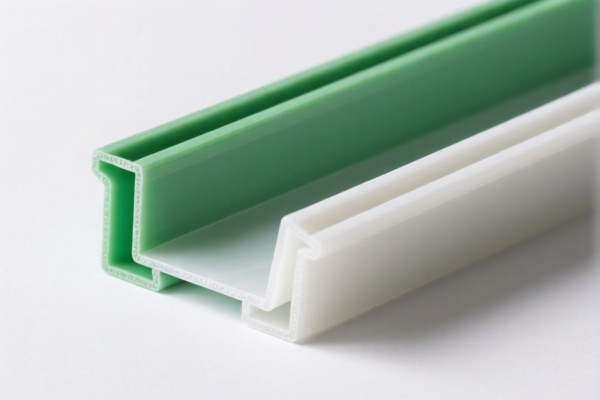
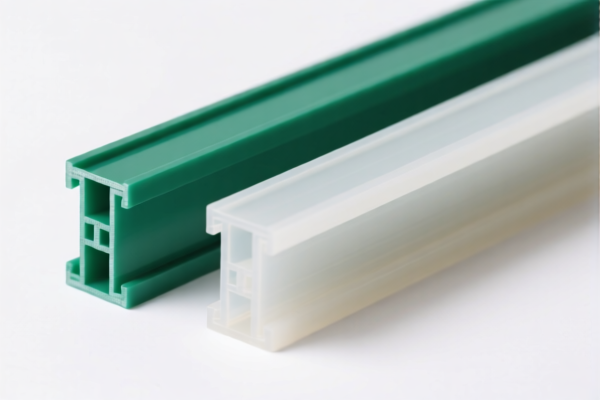

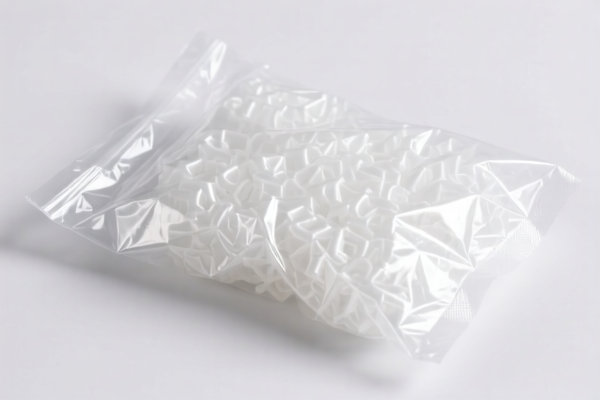
AI Analysis
🧪 Polybutene Residue Extrusion Profile Raw Material
🌐 HS Code Reference & Clearance Guide | 2026 Latest Tariff Analysis | Professional Clearance Strategy
📌 1. Product Definition and Classification: Do You Truly Understand "Polybutene"?
Polybutene is a low-molecular-weight linear alkene polymer, primarily used as a plasticizer, adhesive, sealant, or raw material for extrusion profiles in the cosmetic, pharmaceutical, and construction industries. In international trade, it is classified based on its physical state, molecular weight, and specific chemical composition.
Key Distinction: * Raw Material (Residue/Off-spec/Recycled): If the material is considered waste, scrap, or off-spec product intended for reprocessing or lower-grade use, it may be classified under Chapter 39 (Plastics) but with specific notes, or potentially under Chapter 38 (Miscellaneous Chemical Products) if deemed waste/residue of a chemical origin. However, most industrial-grade polybutene, even if "residue" from production (meaning by-product or unrefined batch), is still considered a plastic material if it retains its polymeric characteristics. * Standard Grade: High-purity polybutene is strictly classified as a polymer. * "Residue" Clarification: In customs terminology, "residue" often refers to by-products or waste. If it is waste/scrap of plastics, it falls under 3915. If it is unrefined polybutene (still usable as a raw material), it falls under 3901-3914 depending on polymer type. Polybutene is typically a co-polymer of butene.
⚠️ Critical Classification Point:
- If the "residue" is solid waste/scrap of polybutene: → 3915.90
- If the "residue" is liquid/paste polybutene used as a raw material (e.g., for sealants): → 3906.90 (if acrylic) or more likely 3901/3902/3903/3904 depending on monomer. Polybutene is often classified under 3901.20 or 3902.10 (if ethylene-butene copolymer) or 3914.00 (if other polymers).
- Most Common for Polybutene (Liquid/Paste/Residue Grade): 3906.90 or 3914.00 or 3901.20. Let's look at the specific chemical structure. Polybutene is a polymer of 1-butene. 1-butene polymers are generally under 3901.20.🔍 Important Note:
- 3915.90 is for WASTE AND SCRAPS of plastics. If your "residue" is truly waste/scrap, use this.
- 3901.20.00.00 is for Ethylene polymers, primary forms, with specific gravity < 0.94. Butene polymers are often grouped here or under 3902.
- 3914.00.00.00 is for Other polymers, in primary forms. This is a common catch-all for specialized polymers like polybutene if not explicitly listed elsewhere.
For the purpose of this guide, we will analyze both scenarios: Raw Material (Usable) and Scrap/Residue (Non-usable).
📦 2. HS Code Classification Details (2026 Latest Tariff Authority Comparison)
| HS Code | Product Description | Applicable Scenario | State/Form |
|---|---|---|---|
3915.90.10.00 |
Waste and scrap of plastics other than polymers of heading 3901 to 3906 | Scrap/Off-spec Polybutene intended for recycling/disposal | Solid/Liquid Waste |
3901.20.00.00 |
Ethylene polymers, primary forms, specific gravity < 0.94 | Polybutene Resin (if classified as butene copolymer) | Granules/Powder |
3914.00.00.00 |
Other polymers, in primary forms | Polybutene Liquid/Paste (Residue Grade) used as raw material | Liquid/Paste |
3825.49.00.00 |
Residues from the biological treatment of waste water | NOT APPLICABLE | N/A |
3825.90.00.00 |
Other waste products | Industrial Residue (Non-plastic waste) | Liquid/Solid |
🔍 Key Reminder:
- If the material is usable as a raw material for extrusion profiles (even if "residue" from production), it should be declared as Polybutene under Chapter 39.
- If it is non-usable waste, it must be declared as Waste/Scrap (3915.90) or Other Waste (3825.90).
- Misclassification Risk: Declaring usable polybutene as "waste" may lead to lower duties but higher scrutiny for environmental compliance. Declaring waste as "raw material" is fraud.
💰 3. 2026 Latest Tariff Rate Details (Including Surcharges, Policy Add-ons)
✅ Applicable Country: United States (US)
✅ Origin: China (CN)
✅ Effective Date: November 10, 2025 onwards (including subsequent imports)
🎯 1. 3915.90.10.00 – Waste and Scrap of Plastics (If Classified as Waste)
| Item | Content |
|---|---|
| Basic Rate | 0% (ad valorem) |
| USITC Surcharge | +25% (from USITC Footnote 9903.88.01) |
| IEEPA Surcharge | +10% (For China/HK products, from Nov 10, 2025) |
| Total Rate | 45% |
| Tax Calculation | CIF Value × 45% |
| De Minimis Eligibility | ❌ No (deny_de_minimis) |
| Legal Basis Path | IEEPA:9903.01.25 → IEEPA:9903.01.24 → USITC:3915.90.10.00 → FOOTNOTE:9903.88.01 |
📌 Explanation:
- Waste/scrap of plastics from China faces 45% total duty.
- Environmental regulations are strict; imports may require EPA approval.
🎯 2. 3914.00.00.00 – Other Polymers, in Primary Forms (If Classified as Usable Residue/Raw Material)
| Item | Content |
|---|---|
| Basic Rate | 5.3% (Standard MFN) |
| USITC Surcharge | +25% (from USITC Footnote 9903.88.01) |
| IEEPA Surcharge | +10% (For China/HK products, from Nov 10, 2025) |
| Total Rate | 40.3% |
| Tax Calculation | CIF Value × 40.3% |
| De Minimis Eligibility | ❌ No (deny_de_minimis) |
| Legal Basis Path | IEEPA:9903.01.25 → IEEPA:9903.01.24 → USITC:3914.00.00.00 → FOOTNOTE:9903.88.01 |
📌 Note:
- "Other polymers" is a broader category. If polybutene is not explicitly listed under 3901-3906, it falls here.
- Total 40.3% is still very high.
🎯 3. 3901.20.00.00 – If Classified as Butene Copolymer (Less Common for "Residue")
| Item | Content |
|---|---|
| Basic Rate | 5.7% |
| USITC Surcharge | +25% |
| IEEPA Surcharge | +10% |
| Total Rate | 40.7% |
| De Minimis Eligibility | ❌ No |
🛠️ 4. Clearance Practical Advice (Real-World Pitfall Avoidance Guide)
✅ 1. Documentation Checklist (All Required)
| Document | Mandatory | Description |
|---|---|---|
| ✅ Product Specification Sheet | ✔️ | Must state: Polybutene content, viscosity, molecular weight, usage (raw material vs. waste) |
| ✅ Certificate of Origin (CO) | ✔️ | Required for tariff calculation and trade agreement checks |
| ✅ Commercial Invoice | ✔️ | Clearly describe as "Polybutene Raw Material" or "Plastic Scrap" |
| ✅ Material Safety Data Sheet (MSDS/SDS) | ✔️ | Required for chemical classification and safety |
| ✅ Proof of Non-Waste Status | ✔️ | If claiming "Raw Material," provide lab tests showing usable quality |
| ✅ EPA Form 3540-1 | ✔️ | If classified as waste, EPA import notification is required |
| ✅ Packing List | ✔️ | Detail net/gross weight, packaging type |
✅ 2. Declaration Tips (Key Mantra)
🔥 "Define State, Define Use, Avoid 'Waste' Trap!"
| Scenario | Correct Declaration | Wrong Action |
|---|---|---|
| Usable Polybutene (Liquid/Paste) | 3914.00.00.00 - Polybutene Raw Material |
Misdeclare as "Waste" → EPA Issues |
| Usable Polybutene (Solid) | 3901.20.00.00 or 3902 |
Misdeclare as "Scrap" → Higher Duty + Scrutiny |
| Non-Usable Scrap/Waste | 3915.90.10.00 |
Misdeclare as "Raw Material" → Fraud |
| Mixed Chemical Residue | 3825.90.00.00 |
Misdeclare as Plastic → Classification Error |
✅ 3. Special Situation Handling
| Situation | Handling Advice |
|---|---|
| OEM Custom Polybutene | Provide formula/recipe to prove polymer type |
| Mixed with Solvents | If >50% solvent, may fall under 3824 (Chemical Products) |
| For Medical Use | Requires FDA pre-market notification if intended for medical devices |
| Export to EU/Asia | Check if polybutene is banned or restricted (e.g., REACH in EU) |
🌍 5. Global Main Market Clearance Comparison (2026 Latest)
| Country/Region | Recommended HS Code | Tariff | Certification | Notes |
|---|---|---|---|---|
| 🇺🇸 USA | 3914.00.00.00 |
40.3% (China) | None (General) | High duty due to IEEPA/USITC |
| 🇨🇳 China | 3914.00.00.00 |
6.5% | None | Low duty |
| 🇪🇺 EU | 3914.00.00 |
6.5% | REACH Registration | Strict environmental rules |
| 🇬🇧 UK | 3914.00.00 |
6.5% | UK REACH | Post-Brexit rules |
| 🇯🇵 Japan | 3914.00.00 |
5.3% | JIS | Moderate duty |
📌 Conclusion:
- USA has the highest tariff for polybutene from China due to trade war surcharges.
- EU/UK/Japan have standard MFN rates (~5-6.5%) but strict chemical registration (REACH/JIS).
📌 6. Common Mistakes & Pitfall Guide (Blood-Lessons)
❌ Mistake 1: Declaring usable polybutene as "Waste" to avoid duties
👉 Consequence: EPA violations, fines, shipment seizure
❌ Mistake 2: Declaring waste as "Raw Material"
👉 Consequence: Customs audit, back-taxes, potential criminal charges
❌ Mistake 3: Ignoring MSDS/SDS requirements
👉 Consequence: Shipment held at port, delay, disposal fees
❌ Mistake 4: Misidentifying polymer type (e.g., confusing with polyethylene)
👉 Consequence: Incorrect HS code → Wrong duty rate → Back-taxes
✅ Correct Practice:
"Polybutene, Liquid, Viscosity 1000-2000 cP, for Sealant Manufacturing, Not Waste, HS 3914.00.00.00"
🎯 7. Conclusion: Professional Declaration, Save Time and Money
🎯 Remember the Mantra:
🔹 "Define State, Define Use, Avoid 'Waste' Trap!"
🔹 "HS Code Determines Duty, Misclassification Costs Thousands!"
📌 Tips:
- If your polybutene is high-purity and usable, ensure it is declared as Raw Material with proper specs.
- If it is scrap/waste, ensure EPA compliance and declare as Waste.
- Pre-ruling is recommended for large shipments to avoid clearance delays.
📣 Immediate Action:
📞 Contact a licensed customs broker + Provide SDS + Apply for HS Code Advance Ruling
🚀 Ensure smooth clearance, avoid penalties, and optimize costs!
✨ Professional Clearance Starts with Accurate Classification!
💼 Every dollar saved is a dollar earned!
Customer Reviews
About HS Code Classification
The Harmonized System (HS) is an internationally standardized nomenclature developed by the World Customs Organization (WCO) to classify traded products. Over 200 countries use the HS system as the basis for customs tariffs, trade statistics, and import/export regulations.
Each HS code follows a hierarchical structure:
- Chapter (2 digits) — Broad category of goods (e.g., Chapter 84: Machinery and Mechanical Appliances)
- Heading (4 digits) — More specific grouping within the chapter
- Subheading (6 digits) — Internationally standardized breakdown, used by all WCO member countries
- National subdivisions (8-10 digits) — Country-specific extensions for further classification, such as US HTSUS 10-digit codes
Correct HS code classification is essential for smooth customs clearance, accurate duty payment, and compliance with trade regulations. Misclassification can lead to customs delays, overpayment of duties, or penalties.
When importing from CN to US, the applicable tariff rates may include:
- Most-Favored-Nation (MFN) rate — The standard duty rate applied to WTO members
- General rate — Applied to countries without trade agreements
- Trade remedy duties — Additional tariffs such as Section 301 (anti-dumping), Section 232 (national security), or countervailing duties
The information provided on this page is for reference purposes only. For official classification, please consult with your local customs authority or a licensed customs broker.