Polybutene Resin Adhesive
CN → US| HS Code | Tariff Rate | Origin | Destination | Doc |
|---|---|---|---|---|
| 3901909000 | 41.5% | CN | US | Official Doc |
| 3901905501 | 41.5% | CN | US | Official Doc |
| 3921905050 | 39.8% | CN | US | Official Doc |
| 3920992000 | 39.2% | CN | US | Official Doc |
| 3921190090 | 41.5% | CN | US | Official Doc |
Product Images
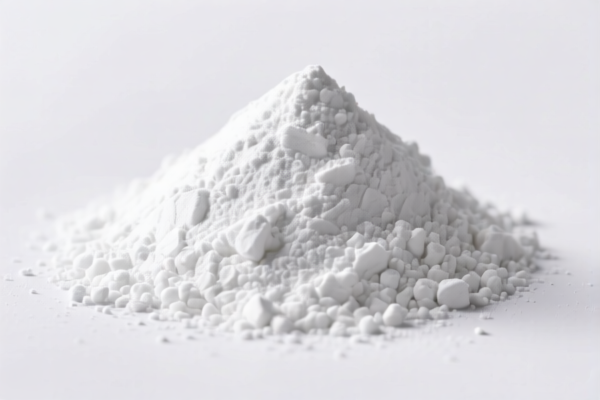
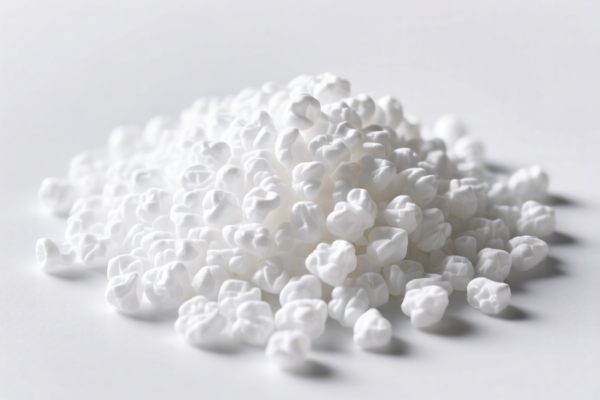
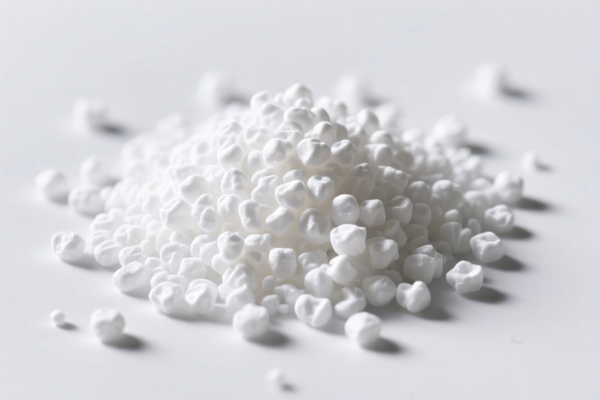
AI Analysis
🧪 Polybutene Resin Adhesive Film (Chemical Adhesives)
🌐 HS Code Reference & Customs Clearance Guide | 2026 Latest Tariff Analysis | Professional Entry Strategy
📌 Part 1: Product Definition & Classification: Do You Really Understand "Polybutene"?
Polybutene resin adhesive films are versatile chemical products primarily made from polybutene (a type of olefin polymer). In international trade, the classification depends heavily on the state of processing (primary shape vs. manufactured article) and the specific nature of the film.
Primary Shape (Raw Materials): If the polybutene is in its basic, unprocessed form (e.g., pellets, blocks, or sheets not yet shaped into a final functional item), it falls under Chapter 39, Heading 3901. Manufactured Articles (Finished Goods): If the material has been processed into specific films, tapes, or adhesive layers, it may be classified under Chapter 39, Headings 3920 or 3921 (Plastics and articles thereof).
⚠️ Key Distinction Point:
- If it is a raw polymer in film form intended for further industrial processing → Likely 3901.90.90.00 or 3901.90.55.01.
- If it is a finished adhesive film or plastic sheet used directly for bonding/sealing → Likely 3921.90.50.50, 3920.99.20.00, or 3921.19.00.90.
📦 Part 2: HS Code Classification Details (2026 Latest Tariff Authority Comparison)
Based on the provided data for Polybutene Resin Adhesive Film, here are the valid HS Code options and their specific logical justifications:
| HS Code | Product Description | Logic & Application | Material Category |
|---|---|---|---|
3901.90.90.00 |
Polybutene resin film, primary shape processing | Raw polybutene (olefin polymer) processed into film form; considered "primary shape" processing. | Polybutene (Olefin Polymer) |
3901.90.55.01 |
Polybutene resin film, olefin class, primary extension | Polyolefin category; film form fits "primary shape extension" applications. | Polyolefins |
3921.90.50.50 |
Polybutene resin adhesive film, plastic type | Classified as "other plastic films" (Chapter 39, Heading 3921); material is polybutene resin. | Plastic (Polybutene Resin) |
3920.99.20.00 |
Polybutene resin adhesive film, non-cellular/non-reinforced | Fits "other plastic flexible film, strip, and sheet"; non-cellular and non-reinforced plastic. | Non-cellular Plastic |
3921.19.00.90 |
Polybutene resin adhesive film, other plastic film | Fits "other plastic films" logic; general category for plastic-based adhesive films. | Other Plastic |
🔍 Key Reminder:
- The total tax rate varies slightly depending on the base duty rate of the chosen HS code, though all options above include the same additional tariffs.
- Choose3901.x.xif the product is essentially a raw material in film form.
- Choose3920.x.xor3921.x.xif the product is a finished plastic film/adhesive ready for use.
💰 Part 3: 2026 Latest Tariff Rate Breakdown (Including Additional Taxes & Policy Surcharges)
✅ Applicable Country: USA (US)
✅ Country of Origin: China (CN)
✅ Effective Time: Current tariffs apply (Section 301 & IEEPA)
For ALL listed HS Codes (3901.90.90.00, 3901.90.55.01, 3921.90.50.50, 3920.99.20.00, 3921.19.00.90), the tariff structure is composed of three parts:
🎯 1. General Tariff Structure for Polybutene Adhesive Films
| Tax Component | Rate | Legal Basis / Description |
|---|---|---|
| Base Duty | 4.2% - 6.5% | Depends on the specific HS Code subheading (see below). |
| Section 301 Additional Duty | +25.0% | "Trade Relations with China" – Section 301 Tariffs. |
| Section 122 Tariff (IEEPA) | +10.0% | Specific surcharge for certain Chinese goods (often grouped with Section 301 impacts in data). |
| TOTAL EFFECTIVE RATE | 39.2% - 41.5% | Sum of Base + 25% + 10% |
📊 Detailed Base Duty Breakdown by HS Code
| HS Code | Base Duty | Total Tax Rate | Calculation Logic |
|---|---|---|---|
3901.90.90.00 |
6.5% | 41.5% | 6.5% + 25% + 10% |
3901.90.55.01 |
6.5% | 41.5% | 6.5% + 25% + 10% |
3921.90.50.50 |
4.8% | 39.8% | 4.8% + 25% + 10% |
3920.99.20.00 |
4.2% | 39.2% | 4.2% + 25% + 10% |
3921.19.00.90 |
6.5% | 41.5% | 6.5% + 25% + 10% |
📌 Explanation of "122 Tariff":
- The data explicitly lists "122条款关税10%" (Section 122 Tariff 10%). This typically refers to specific US customs notes or recent administrative adjustments affecting Chinese imports.
- Combined Impact: The 25% Section 301 tariff is the dominant additional cost, applied to almost all Chinese-made chemical plastic products.
- No De Minimis Exemption: These items do NOT qualify for de minimis exemptions due to the high value and strategic nature of chemical imports.
🛠️ Part 4: Customs Clearance Practical Advice (Combat Pitfall Guide)
✅ 1. Essential Documentation Checklist (Do Not Miss)
| Document | Required? | Purpose |
|---|---|---|
| ✅ Product Specification Sheet | ✔️ | Must state: "Polybutene Resin", "Adhesive Film", "Primary Shape/Finished Film". |
| ✅ Material Safety Data Sheet (MSDS) | ✔️ | Required for chemical products to verify composition and handling. |
| ✅ Commercial Invoice | ✔️ | Must clearly describe the product as "Polybutene Resin Adhesive Film". |
| ✅ Packing List | ✔️ | Details weight, dimensions, and number of rolls/sheets. |
| ✅ Country of Origin Certificate | ✔️ | Crucial for proving Chinese origin to apply (or dispute) Section 301 tariffs. |
| ✅ HTS Classification Statement | ✔️ | Provide the specific 10-digit HS code chosen and the rationale. |
✅ 2. Declaration Tips (Key Mnemonics)
🔥 "Resin vs. Film: Know Your State! Base Rate Dictates the Cost!"
| Scenario | Correct HS Code Choice | Consequence of Error |
|---|---|---|
| Raw Polybutene in Film Form | 3901.90.90.00 or 3901.90.55.01 |
Misclassifying as finished article may lead to audits, but tax difference is small (41.5% vs 39.2%). |
| Finished Adhesive/Plastic Film | 3921.90.50.50 or 3920.99.20.00 |
Using 3901 for finished goods may be seen as "under-declaring" if the product has additional processing. |
| Non-Cellular Plastic | 3920.99.20.00 (Lowest Base Rate) |
Best for Cost Savings: 4.2% base → 39.2% total. |
| General Plastic Film | 3921.19.00.90 |
Higher base rate (6.5%) → 41.5% total. |
📌 Cost-Saving Insight:
- If the product can be legally classified under3920.99.20.00(Non-cellular, non-reinforced plastic film), you save 2.3% on the total duty rate compared to the 41.5% brackets.
- 4.2% Base vs 6.5% Base = 2.3% savings on CIF value.
✅ 3. Special Handling
| Situation | Handling Advice |
|---|---|
| Chemical Composition Dispute | Provide a detailed MSDS proving it is primarily polybutene (C4-C8 olefin polymer). |
| Section 301 Exclusion | Check if your specific HS code currently has an exclusion list. Note: Most chemical plastics are NOT excluded. |
| Dual-Use Items | If the adhesive is used in electronics or military applications, additional BIS/ITAR checks may apply. |
🌍 Part 5: Global Market Comparison (2026 Latest)
| Country/Region | Recommended HS Code | Est. Tariff (China Origin) | Notes |
|---|---|---|---|
| 🇺🇸 USA | 3920.99.20.00 (Best Rate) |
39.2% | Includes 25% Sec 301 + 10% IEEPA. |
| 🇨🇳 China | 3920.99.20.00 |
5.3% - 7.0% | No additional tariffs. Import duty + VAT. |
| 🇪🇺 EU | 3920.99.00 |
6.5% | No Section 301 equivalents. Standard EU duty. |
| 🇦🇺 Australia | 3920.99.00 |
5.0% | Lower base rates, no punitive tariffs. |
| 🇯🇵 Japan | 3920.99.00 |
6.0% | Stable tariff, no additional surcharges. |
📌 Conclusion:
- The USA is the highest-cost market due to Section 301 and IEEPA tariffs.
- Canadian/Mexican (USMCA) origin may avoid these tariffs if the polybutene is processed sufficiently in those countries.
📌 Part 6: Common Mistakes & Pitfalls (Blood Lessons)
❌ Mistake 1: Assuming all "Plastic Films" have the same tax rate.
👉 Result: Paying 41.5% when 39.2% is possible. Always choose the lowest base-rate HS code that accurately describes the product.
❌ Mistake 2: Ignoring the "122 Clause" (IEEPA 10%).
👉 Result: Budgeting only for 25% tariff, leading to unexpected cash flow issues. Total burden is ~40%.
❌ Mistake 3: Confusing "Polybutene" with "Polyethylene" (PE) or "Polypropylene" (PP).
👉 Result: Incorrect HS Code under Chapter 3901/3902. While PE/PP have similar tariffs, misdeclaration can lead to customs penalties.
❌ Mistake 4: Failing to provide MSDS.
👉 Result: Customs holds the shipment for chemical safety review, causing delays and storage fees.
✅ Correct Approach:
"Polybutene Resin Adhesive Film, Non-Cellular, Plastic, for Industrial Bonding, Model XYZ, MSDS Provided, Origin China."
🎯 Part 7: Conclusion: Precise Classification Saves Money!
🎯 Key Takeaway:
🔹 Base Rate Matters:
3920.99.20.00(4.2% base) is cheaper than3901.90.90.00(6.5% base).
🔹 Total Burden is High: Expect ~40% total landed duty cost for Chinese origin.
🔹 Documentation is Key: MSDS and precise product description prevent delays.🔹 "HS Code is King, Base Rate is Queen! Don't pay 41.5% if you can pay 39.2%!"
📌 Pro Tip:
If you are importing large volumes, consider Advance Ruling (Pre-Ruling) from US Customs to lock in the correct HS code and avoid retroactive penalties.
Explore supply chain diversification to Vietnam or Thailand to potentially avoid Section 301 tariffs (if rules of origin are met).
📣 Immediate Action:
📞 Consult a licensed customs broker.
📄 Prepare MSDS and detailed product specs.
🧮 Calculate landed cost with 39.2%-41.5% duty included in your pricing model.
✨ Professional clearance starts with accurate classification!
💼 Every percentage point saved is pure profit!
Customer Reviews
About HS Code Classification
The Harmonized System (HS) is an internationally standardized nomenclature developed by the World Customs Organization (WCO) to classify traded products. Over 200 countries use the HS system as the basis for customs tariffs, trade statistics, and import/export regulations.
Each HS code follows a hierarchical structure:
- Chapter (2 digits) — Broad category of goods (e.g., Chapter 84: Machinery and Mechanical Appliances)
- Heading (4 digits) — More specific grouping within the chapter
- Subheading (6 digits) — Internationally standardized breakdown, used by all WCO member countries
- National subdivisions (8-10 digits) — Country-specific extensions for further classification, such as US HTSUS 10-digit codes
Correct HS code classification is essential for smooth customs clearance, accurate duty payment, and compliance with trade regulations. Misclassification can lead to customs delays, overpayment of duties, or penalties.
When importing from CN to US, the applicable tariff rates may include:
- Most-Favored-Nation (MFN) rate — The standard duty rate applied to WTO members
- General rate — Applied to countries without trade agreements
- Trade remedy duties — Additional tariffs such as Section 301 (anti-dumping), Section 232 (national security), or countervailing duties
The information provided on this page is for reference purposes only. For official classification, please consult with your local customs authority or a licensed customs broker.