Polybutene Resin Extruded Profile Raw Material
CN → US| HS Code | Tariff Rate | Origin | Destination | Doc |
|---|---|---|---|---|
| 3901101000 | 41.5% | CN | US | Official Doc |
| 3901105010 | 41.5% | CN | US | Official Doc |
| 3921110000 | 40.3% | CN | US | Official Doc |
| 3916903000 | 41.5% | CN | US | Official Doc |
| 3921905050 | 39.8% | CN | US | Official Doc |
Product Images
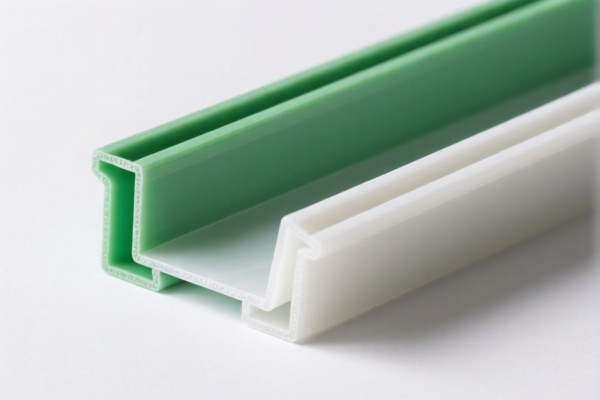

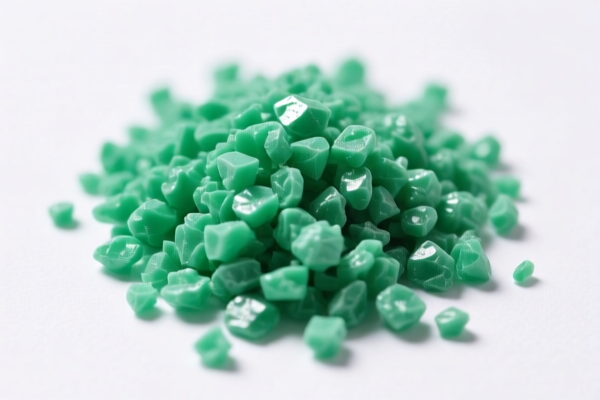
AI Analysis
🏗️ Polybutene Resin Extruded Profile Raw Material (Polyethylene/Polystyrene Context)
🌐 HS Code Reference & Customs Clearance Guide | 2026 Latest Tariff Analysis | Professional Clearance Strategy
📌 I. Product Definition & Classification: What is "Polybutene Resin" in Tariff Terms?
Note: In international trade and customs classification, "Polybutene" (a liquid or low-molecular-weight polymer often used as an adhesive or sealant base) is frequently confused with or grouped under broader polyolefin categories like Polyethylene (PE) or technical extruded profiles of Polystyrene (PS) depending on the specific physical state (pellets vs. finished profile) and chemical structure. The provided data focuses on Polyethylene (PE) raw materials and Polystyrene (PS) extruded profiles.
In the context of extruded profile raw materials, these are typically granules, pellets, or sheets used in the manufacturing process to create rigid or semi-rigid profiles. The classification depends heavily on whether the item is an unprocessed resin (raw material) or a semi-finished profile.
⚠️ Critical Distinction:
- If it is granules/powder (raw resin) → It falls under Chapter 39, Heading 3901 (Polyethylene in Primary Forms).
- If it is an extruded shape/bar/profile (semi-finished) → It falls under Chapter 39, Heading 3916 or 3921 (Plastics in Primary Forms, Bars, Rods, Profiles, or Plates).
📦 II. HS Code Classification Details (2026 Latest Tariff Authority Comparison)
Based on the provided data, the material is classified under three potential HS Codes depending on its specific form (Pellet vs. Extruded Profile) and chemical subtype (PE vs. PS).
| HS Code | Product Description | Application Scenario | Material State |
|---|---|---|---|
3901.10.10.00 |
Polyethylene, linear, low density, in primary form (Raw Resin) | Raw material for extrusion, film, or molding. Fits "Extruded Raw Material" definition as input. | ✅ Granules/Pellets (Raw) |
3901.10.50.10 |
Other Polyethylene, low density, in primary form | Specific low-density polyethylene classification for raw inputs. | ✅ Granules/Pellets (Raw) |
3921.11.00.00 |
Plates, sheets, film, foil and strip, of polymerized styrene | Matches "Extruded Polystyrene Profile" if pre-formed into sheets/foams before final shaping. | ⚠️ Semi-finished Sheet/Foam |
3916.90.30.00 |
Other plastics, in the forms of rods, tubes, etc. | Matches "Extruded Profiles" (bars, rods, structural shapes) made of plastics other than PVC or PE/PP specific categories. | ✅ Extruded Profile/Rod |
3921.90.50.50 |
Other plates, sheets, film, foil and strip, of plastics | Broad category for plastic profiles/sheets that don't fit specific styrene or PE categories. | ✅ Extruded Sheet/Profile |
🔍 Key Insight:
- Raw Material (Pellets): Typically falls under3901.10.10.00or3901.10.50.10. These are the inputs for extrusion.
- Extruded Profile (Semi-Finished): If the "Polybutene" is already extruded into bars/rods, it may fall under3916.90.30.00or3921.90.50.50.
- Polystyrene Context: The data explicitly mentions "Extruded Polystyrene Profile" for codes3921.11.00.00and3916.90.30.00. Ensure your material is not mistakenly classified as Polystyrene if it is truly Polyethylene.
💰 III. 2026 Latest Tariff Rate Breakdown (Including Surcharges & Policy Add-ons)
✅ Applicable Country: United States (US)
✅ Origin: China (CN)
✅ Effective Date: Post-2025 Tariff Structure (High Tariff Regime)
🎯 1. 3901.10.10.00 & 3901.10.50.10 —— Polyethylene Raw Material (Primary Form)
| Item | Detail |
|---|---|
| Base Tariff | 6.5% |
| Section 301 Surcharge | +25.0% (From USITC Footnote) |
| Section 122 Surcharge | +10.0% (Specific provision cited in data) |
| Total Tariff Rate | 41.5% |
| Tax Calculation | CIF Value × 41.5% |
| De Minimis Exemption | ❌ Not Applicable |
| Legal Basis Path | Base: 3901.10 → 301: +25% → 122: +10% |
📌 Explanation:
- Polyethylene resin is subject to high tariffs due to its status as a major industrial raw material imported from China.
- The 41.5% total rate is punitive and significantly impacts profit margins.
- Section 122 (often related to national security or specific trade remedies) adds an additional 10%.
- Section 301 adds the standard 25% on Chinese plastics.
🎯 2. 3921.11.00.00 —— Extruded Polystyrene Profile (Foam/Sheet Structure)
| Item | Detail |
|---|---|
| Base Tariff | 5.3% |
| Section 301 Surcharge | +25.0% |
| Section 122 Surcharge | +10.0% |
| Total Tariff Rate | 40.3% |
| Tax Calculation | CIF Value × 40.3% |
📌 Explanation:
- Slightly lower base rate (5.3%) than PE resin, but total impact is similar (40.3%).
- Applies to "Extruded Polystyrene" with foam-like structures. If your "Polybutene" is actually a styrene-based copolymer or extruded foam profile, this code may apply.
🎯 3. 3916.90.30.00 —— Plastic Extruded Profiles (Rods/Bars)
| Item | Detail |
|---|---|
| Base Tariff | 6.5% |
| Section 301 Surcharge | +25.0% |
| Section 122 Surcharge | +10.0% |
| Total Tariff Rate | 41.5% |
| Tax Calculation | CIF Value × 41.5% |
📌 Explanation:
- This code captures "Bars, Rods, and Profiles" of plastics.
- If your raw material is already extruded into solid bars/profiles (semi-finished), it falls here.
- Same high tariff as raw PE resin (41.5%).
🎯 4. 3921.90.50.50 —— Other Plastic Profiles/Sheets
| Item | Detail |
|---|---|
| Base Tariff | 4.8% |
| Section 301 Surcharge | +25.0% |
| Section 122 Surcharge | +10.0% |
| Total Tariff Rate | 39.8% |
| Tax Calculation | CIF Value × 39.8% |
📌 Explanation:
- The lowest total tariff (39.8%) among the options, due to a lower base rate (4.8%).
- Applies to plastic plates, sheets, or strips that do not fit specific categories like PS foam or PE primary forms.
- Strategy: If your product is a generic plastic profile/sheet and not strictly "Primary Form PE," this code might offer a slight cost advantage (1.7% savings compared to 41.5%).
🛠️ IV. Customs Clearance Operational Advice (Practical Pitfall Avoidance)
✅ 1. Essential Documentation Checklist
| Document | Required? | Description |
|---|---|---|
| ✅ Product Specification Sheet | ✔️ | Must detail: Chemical composition (PE/PS ratio), density, melt flow index, extrusion temperature range. |
| ✅ Physical State Declaration | ✔️ | Clearly state: "Granules/Pellets" (for 3901) vs. "Extruded Rods/Profiles" (for 3916/3921). |
| ✅ Commercial Invoice | ✔️ | Must accurately describe the product as "Polyethylene/Polystyrene Resin" or "Extruded Plastic Profiles." Avoid vague terms like "Plastic Material." |
| ✅ Certificate of Origin (CO) | ✔️ | Essential for determining origin-based surcharges. |
| ✅ Third-Party Test Report | ✔️ | ASTM/ISO tests confirming polymer type (PE vs. PS) to prevent misclassification. |
| ✅ Packaging List | ✔️ | Show net weight/gross weight clearly. |
✅ 2. Classification Strategy & Naming Tips
🔥 "State Form, Declare Exact Polymer, Avoid Generic Terms!"
| Scenario | Correct Declaration | Wrong Declaration | Risk |
|---|---|---|---|
| Raw Pellets | "Polyethylene Resin, Low Density, Granular, for Extrusion" | "Plastic Pellets" | Risk of being classified as "Other Plastics" (higher base rate or audit) |
| Extruded Bars | "Polystyrene Extruded Profile, Solid Rods, Industrial Grade" | "Plastic Shapes" | Risk of being classified as "Plastic Articles" (Chapter 3911/3926, potentially higher duty or different rules) |
| Mixed Shipment | Separate invoices for PE Resin and PS Profiles | One invoice for "Plastic Raw Materials" | Customs may penalize for unclear description |
✅ 3. Special Case Handling
| Situation | Handling Advice |
|---|---|
| Polybutene vs. Polyethylene | Ensure technical documents confirm if the resin is truly Polybutene (often a liquid/adhesive base) or Polyethylene. If it's a liquid, it might fall under 3907 or 3910, which have different duties. The provided data assumes PE/PS. If it is strictly Polybutene, verify if it fits 3901 or 3907. |
| Extruded Profile Raw Material | If the material is sold as "pre-extruded sheets/rods" but intended for further processing, classify under 3916 or 3921. If sold as "raw resin" to be extruded by the buyer, classify under 3901. |
| High Tariff Mitigation | Given the ~40-41% tariff, consider: 1. Advance Ruling: Apply for an official HS Code determination from CBP. 2. Supply Chain Diversification: Check if material can be sourced from non-China origins (e.g., Vietnam, Thailand) to avoid Section 301/122. 3. Tariff Engineering: If possible, modify the form (e.g., raw resin vs. finished profile) to fit the lowest base rate code ( 3921.90.50.50 at 4.8% base). |
🌍 V. Global Market Comparison (2026 Update)
| Market | Recommended HS Code | Est. Total Duty (CN Origin) | Key Notes |
|---|---|---|---|
| 🇺🇸 USA | 3901.10.10.00 / 3916.90.30.00 |
~40-41.5% | High Section 301 & 122 surcharges. |
| 🇨🇳 China | 3901.10.10.00 |
~5-6.5% | Low base duty, no US surcharges. |
| 🇪🇺 EU | 3901.10.10 |
~6.5% | No Section 301/122. CE compliance required. |
| 🇦🇺 Australia | 3901.10.10 |
~5% | No major surcharges. |
📌 Conclusion:
- The US market is exceptionally costly for Chinese polyethylene/polystyrene products due to layered surcharges.
- Clear distinction between Raw Resin (3901) and Semi-Finished Profile (3916/3921) is critical for accurate duty calculation.
- Recommendation: If your product is "Polybutene Resin," verify if it is chemically classified as Polyethylene. If it is a distinct Polybutene, it may not fit these codes exactly, and a Pre-Ruling is strongly advised to avoid misclassification penalties.
📌 VI. Common Errors & Pitfalls (Lessons Learned)
❌ Error 1: Classifying "Extruded Profiles" as "Raw Resin" to avoid higher duties.
👉 Consequence: Customs inspection finds solid profiles, leading to reclassification, back-taxes, and fines.
Fix: Declare physical form accurately.
❌ Error 2: Using "Plastic Raw Material" as a generic description.
👉 Consequence: Customs may assign a default higher duty or require extensive documentation, delaying clearance.
Fix: Use specific polymer names (Polyethylene, Polystyrene) and form (Granules, Rods).
❌ Error 3: Ignoring Section 122 Tariffs.
👉 Consequence: Underpayment of 10% additional duty.
Fix: Always include Section 122 in cost calculations for Chinese plastics.
✅ Correct Practice:
"Polyethylene Resin, Low Density, Granular Form, ASTM D1158 Compliant, for Extrusion Processing, HS Code: 3901.10.10.00"
🎯 VII. Conclusion: Precision in Classification Saves Cost!
🎯 Key Takeaway:
🔹 "Raw Pellets vs. Extruded Profiles: Know the Form, Know the Tariff!"
🔹 "Section 301 + 122 = ~35% Surcharge on Plastics from China!"
🔹 "Lowest Base Rate Code:3921.90.50.50(39.8% Total) if Applicable!"
📌 Action Item:
📞 Contact Customs Broker: Submit product samples and technical data sheets.
📝 Apply for Advance Ruling: Get official confirmation on3901vs.3916vs.3921.
🚀 Optimize Supply Chain: Evaluate non-China sourcing if possible to bypass ~35% in surcharges.
✨ Professional Clearance, Start with Accurate Classification!
💼 Every Percent of Tariff Saved is Pure Profit!
Customer Reviews
About HS Code Classification
The Harmonized System (HS) is an internationally standardized nomenclature developed by the World Customs Organization (WCO) to classify traded products. Over 200 countries use the HS system as the basis for customs tariffs, trade statistics, and import/export regulations.
Each HS code follows a hierarchical structure:
- Chapter (2 digits) — Broad category of goods (e.g., Chapter 84: Machinery and Mechanical Appliances)
- Heading (4 digits) — More specific grouping within the chapter
- Subheading (6 digits) — Internationally standardized breakdown, used by all WCO member countries
- National subdivisions (8-10 digits) — Country-specific extensions for further classification, such as US HTSUS 10-digit codes
Correct HS code classification is essential for smooth customs clearance, accurate duty payment, and compliance with trade regulations. Misclassification can lead to customs delays, overpayment of duties, or penalties.
When importing from CN to US, the applicable tariff rates may include:
- Most-Favored-Nation (MFN) rate — The standard duty rate applied to WTO members
- General rate — Applied to countries without trade agreements
- Trade remedy duties — Additional tariffs such as Section 301 (anti-dumping), Section 232 (national security), or countervailing duties
The information provided on this page is for reference purposes only. For official classification, please consult with your local customs authority or a licensed customs broker.