Polybutene Resin Stabilizer
CN → US| HS Code | Tariff Rate | Origin | Destination | Doc |
|---|---|---|---|---|
| 3812393000 | 35.0% | CN | US | Official Doc |
| 3909501000 | 35.0% | CN | US | Official Doc |
| 3909505000 | 41.3% | CN | US | Official Doc |
| 3812396000 | 41.5% | CN | US | Official Doc |
Product Images
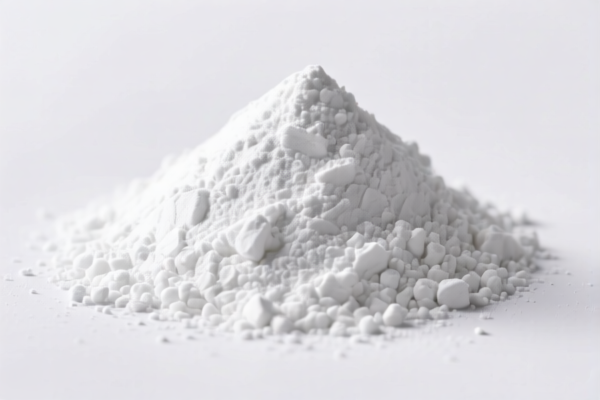
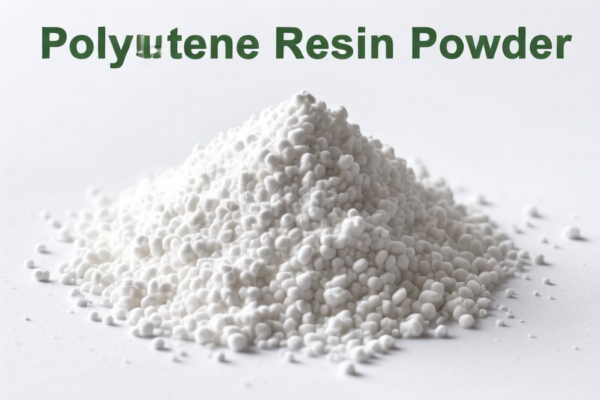
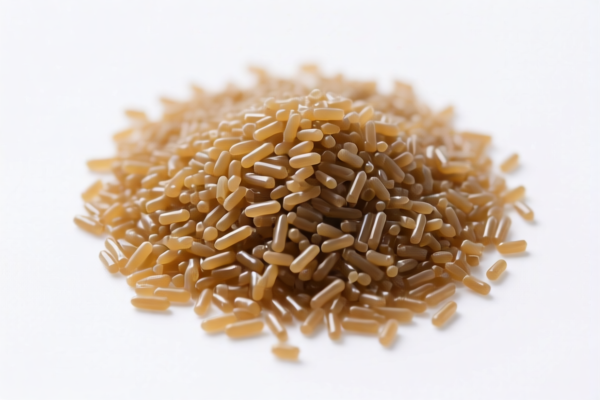
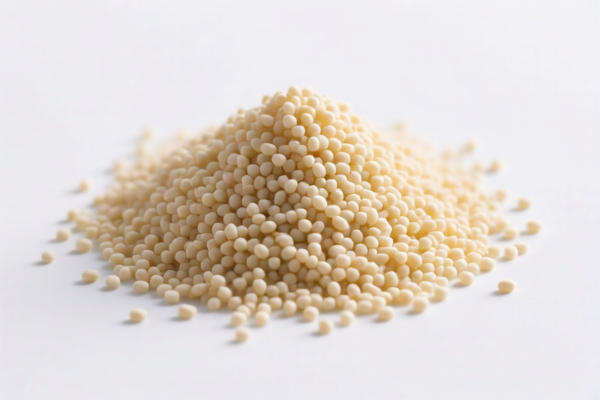
AI Analysis
🧪 Polybutene Resin Stabilizer (Chemical Additive)
🌐 HS Code Reference & Customs Clearance Guide | 2026 Latest Tariff Analysis | Professional Entry Strategy
📌 I. Product Definition & Classification: Do You Really Understand "Polybutene Resin Stabilizer"?
Polybutene Resin Stabilizer is a specialized chemical auxiliary agent used primarily in the polymer industry. Its core function is to enhance the stability, durability, and performance of polybutene-based resins and related polyurethane (PU) products. In international trade, its classification depends heavily on two factors:
1. Material Composition: Specifically whether it contains polybutene or polyurethane binders.
2. Function: Whether it acts as an antioxidant,复合稳定剂 (complex stabilizer), or other chemical助剂 (auxiliary).
⚠️ Key Distinction Point:
- If the product is defined as a complex stabilizer for rubber/plastics containing polyurethane/polybutene compounds → Classify under 3812.
- If the product is broadly classified as a polyurethane raw material or intermediate without specific stabilizer function details → Classify under 3909.
📦 II. HS Code Classification Details (2026 Latest Tariff Authority Comparison)
| HS Code | Product Description | Matching Basis | Total Tax Rate | Tax Detail Breakdown |
|---|---|---|---|---|
3812.39.30.00 |
Other complex stabilizers for rubber or plastics, containing polyurethane binders | Material: Polyurethane; Function: Stabilizer. Matches the definition of "complex stabilizers containing polyurethane binders" in the classification explanation. Form falls under chemical auxiliaries. | 35.0% | Base: 0.0% Additional (Section 301): 25.0% Section 122: 10% |
3909.50.10.00 |
Other primary forms of polyurethanes | Material: Polyurethane. Although the form is not explicitly defined, common sense infers it as a chemical auxiliary related to the polyurethane industry chain, with no material conflict with polyurethane categories. | 35.0% | Base: 0.0% Additional (Section 301): 25.0% Section 122: 10% |
3909.50.50.00 |
Other polyurethanes (Other than primary forms) | Material: Explicitly contains keyword "Polyurethane". Fits the classification for polyurethane products under this code, with no obvious conflict in form or use. | 41.3% | Base: 6.3% Additional (Section 301): 25.0% Section 122: 10% |
3812.39.60.00 |
Other antioxidants and other complex stabilizers for rubber or plastics | Material & Function: Polybutene belongs to the plastic/synthetic resin category, meeting the "for rubber or plastics" material requirement. "Stabilizer" meets the "antioxidants and other complex stabilizers" function requirement. Since "other" is used and there is no material conflict, it is deemed compliant. | 41.5% | Base: 6.5% Additional (Section 301): 25.0% Section 122: 10% |
🔍 Key Reminder:
- 3812 Series: Focuses on function (Stabilizer/Antioxidant). Best if the product is explicitly sold as a chemical additive to improve resin stability.
- 3909 Series: Focuses on material (Polyurethane/Polybutene). Best if the product is sold as a raw chemical intermediate or resin component.
- Tax Impact: The choice between 3812 and 3909 can change the Base Tax Rate from 0% to 6.5%, significantly affecting the total landed cost.
💰 III. 2026 Latest Tariff Rate Details (Including Surcharges, Policy Surcharges)
✅ Applicable Country: United States (US)
✅ Country of Origin: China (CN)
✅ Effective Date: From November 10, 2025 (including subsequent imports)
🎯 1. 3812.39.30.00 —— Complex Stabilizers for Rubber/Plastics (Polyurethane Binder)
| Item | Content |
|---|---|
| Base Tax Rate | 0% (ad valorem) |
| USITC Additional Tax | +25% (Under USITC Footnote 9903.88.01 / Section 301) |
| IEEPA Additional Tax | +10% (Against Chinese/Hong Kong products, from Nov 10, 2025) |
| Total Tax Rate | 35.0% |
| Tax Calculation | CIF Value × 35% |
| De Minimis Exemption | ❌ Not Eligible (deny_de_minimis) |
| Legal Basis Path | IEEPA:9903.01.25 → IEEPA:9903.01.24 → USITC:3812.39.30.00 → FOOTNOTE:9903.88.01 |
📌 Explanation:
- The 25% surcharge is due to Section 301 tariffs on Chinese chemical products.
- The 10% is a separate IEEPA surcharge.
- Base rate is 0%, making the total 35%. This is a moderate-high tariff for chemical auxiliaries.
🎯 2. 3909.50.10.00 —— Other Primary Forms of Polyurethanes
| Item | Content |
|---|---|
| Base Tax Rate | 0% |
| USITC Additional Tax | +25% |
| IEEPA Additional Tax | +10% |
| Total Tax Rate | 35.0% |
| Tax Calculation | CIF × 35% |
| De Minimis Exemption | ❌ Not Eligible |
| Legal Basis Path | IEEPA:9901.25 → IEEPA:9903.01.24 → USITC:3909.50.10.00 → FOOTNOTE:9903.88.01 |
📌 Note:
- Same tax structure as 3812.39.30.00.
- Suitable if the product is marketed more as a polyurethane intermediate than a specific "stabilizer additive."
🎯 3. 3909.50.50.00 —— Other Polyurethanes
| Item | Content |
|---|---|
| Base Tax Rate | 6.3% |
| USITC Additional Tax | +25% |
| IEEPA Additional Tax | +10% |
| Total Tax Rate | 41.3% |
| Tax Calculation | CIF × 41.3% |
| De Minimis Exemption | ❌ Not Eligible |
| Legal Basis Path | IEEPA:9903.01.25 → IEEPA:9903.01.24 → USITC:3909.50.50.00 → FOOTNOTE:9903.88.01 |
📌 Warning:
- Base rate is 6.3%, leading to a higher total tariff of 41.3%.
- Only use this code if the product clearly fits "Other Polyurethanes" and cannot be classified as a "primary form" or "stabilizer."
🎯 4. 3812.39.60.00 —— Other Complex Stabilizers (Other Than Antioxidants)
| Item | Content |
|---|---|
| Base Tax Rate | 6.5% |
| USITC Additional Tax | +25% |
| IEEPA Additional Tax | +10% |
| Total Tax Rate | 41.5% |
| Tax Calculation | CIF × 41.5% |
| De Minimis Exemption | ❌ Not Eligible |
| Legal Basis Path | IEEPA:9903.01.25 → IEEPA:9903.01.24 → USITC:3812.39.60.00 → FOOTNOTE:9903.88.01 |
📌 Warning:
- This is the highest tax bracket among the options at 41.5%.
- Use only if the product is a complex stabilizer but does not fit the "polyurethane binder" specific definition of 3812.39.30.00.
🛠️ IV. Customs Clearance Practical Advice (Real-World Pitfall Avoidance Guide)
✅ 1. Required Documentation Checklist (None Missing)
| Document | Must Provide | Description |
|---|---|---|
| ✅ Product Specification Sheet | ✔️ | Include chemical composition, % of polyurethane/polybutene, CAS numbers, function (stabilizer). |
| ✅ Safety Data Sheet (SDS) | ✔️ | Crucial for chemical classification. Must list hazardous components if any. |
| ✅ Product Photo (Label/Packaging) | ✔️ | Clear view of product name, brand, net weight, and "Made in China". |
| ✅ Certificate of Origin (CO) | ✔️ | If not Chinese origin, may qualify for preferential rates (but polybutene stabilizers are mostly CN-made). |
| ✅ Commercial Invoice | ✔️ | Must clearly state: "Chemical Stabilizer for Polybutene Resin, Containing Polyurethane." Avoid vague terms like "Chemical Mix." |
| ✅ Packing List | ✔️ | Detail packaging structure to avoid partial shipment disputes. |
✅ 2. Declaration Tips (Key Mnemonics)
🔥 "Clarify Function, Declare Material, Avoid Vague Names!"
| Scenario | Correct Declaration | Wrong Practice |
|---|---|---|
| Product is a Stabilizer Additive | 3812.39.30.00 (0% Base) |
Misdeclare as "Polyurethane Resin" → 35%+ |
| Product is a Polyurethane Intermediate | 3909.50.10.00 (0% Base) |
Misdeclare as "Complex Stabilizer" → 41.5% |
| Product is Unclear Composition | Risk of 3812.39.60.00 or 3909.50.50.00 |
Vague description "Chemical Aid" → High audit risk |
| OEM Private Label | Provide client order + formula summary | No documentation → Customs reclassification |
✅ 3. Special Case Handling
| Scenario | Handling Advice |
|---|---|
| Product contains >10% Polyurethane | Strongly consider 3812.39.30.00 or 3909.50.10.00 to benefit from 0% base rate. |
| Product is a Mixture with Unknown Ratio | Customs may default to the highest applicable rate (3812.39.60.00 or 3909.50.50.00). Provide a detailed composition list. |
| Used in Medical Devices | If for medical use, ensure no FDA classification conflicts. May require additional documentation. |
| Used in Automotive Parts | Common use case. Ensure product description mentions "for automotive resin stabilization" to support 3812 classification. |
🌍 V. Global Market Comparison (2026 Latest)
| Country/Region | Recommended HS Code | Total Tax (China Origin) | Certification Required | Notes |
|---|---|---|---|---|
| 🇺🇸 USA | 3812.39.30.00 or 3909.50.10.00 |
35.0% | SDS, TSCA Compliance | High tariff risk. Avoid 3812.39.60.00 if possible. |
| 🇨🇳 China | 3812.39.30.00 |
0% (Import Duty) | REACH-like compliance | No Section 301. Lower cost. |
| 🇪🇺 EU | 3812.39.30.00 |
0-6% (Duty) | REACH Registration | No US-style punitive tariffs. |
| 🇯🇵 Japan | 3812.39.30.00 |
0-6% | FSCA Compliance | Moderate tariffs. |
| 🇰🇷 South Korea | 3812.39.30.00 |
0-6% | KC Mark | Free Trade Agreement may apply. |
📌 Conclusion:
- The US is the only market with significant punitive tariffs (35-41.5%).
- Correct HS Code selection can save 6-6.5% on the base tax, which is critical for profit margins.
- Chinese products face additional 35% total tax in the US. Consider supply chain diversification if margins are thin.
📌 VI. Common Mistakes & Pitfalls (Blood & Tears Lessons)
❌ Mistake 1: Declaring as "Polyurethane" when it's a "Stabilizer Additive"
👉 Consequence: If Customs disagrees, they may classify under 3812.39.60.00 (41.5%) instead of 3909.50.10.00 (35%). Overpayment!
❌ Mistake 2: Vague Description "Chemical Stabilizer" without composition
👉 Consequence: Customs will inspect the SDS. If polyurethane is detected, they will reclassify. Delay + Potential Penalty!
❌ Mistake 3: Ignoring Section 122 Tariff (10%)
👉 Consequence: Many forget that IEEPA 10% is added on top of the 25% Section 301. Total is NOT 25%, it's 35%+!
✅ Correct Practice:
"Polybutene Resin Stabilizer, Containing Polyurethane Binder, Chemical Auxiliary Agent, CAS No. [Insert], Used in Automotive Plastics, Model XYZ, SDS Available."
🎯 VII. Conclusion: Professional Declaration, Save Time, Reduce Costs!
🎯 Remember the Mnemonic:
🔹 "Stabilizer Function → 3812 (0% Base), Polyurethane Material → 3909 (0% Base), Other → 41.5%!"
🔹 "HS Code Determines Tax, 6.5% Difference, Declaration One Step, Savings Thousands!"
📌 Pro Tip:
If your stabilizer originates from Vietnam, Mexico, or Thailand, you may apply for IEEPA Exemption or lower tariffs under FTA agreements.
Recommendation: Apply for an Advance Ruling before shipment to avoid post-entry audits and retroactive duties.
📣 Immediate Action:
📞 Contact a licensed US Customs Broker + Provide Product SDS + Apply for HS Code Advance Ruling
🚀 Let your Polybutene Stabilizer, Clear Customs Smoothly, Export Efficiently, Maximize Profit!
✨ Professional Customs Clearance Starts with Precise Classification!
💼 Every cent of your cost deserves precise calculation!
Customer Reviews
About HS Code Classification
The Harmonized System (HS) is an internationally standardized nomenclature developed by the World Customs Organization (WCO) to classify traded products. Over 200 countries use the HS system as the basis for customs tariffs, trade statistics, and import/export regulations.
Each HS code follows a hierarchical structure:
- Chapter (2 digits) — Broad category of goods (e.g., Chapter 84: Machinery and Mechanical Appliances)
- Heading (4 digits) — More specific grouping within the chapter
- Subheading (6 digits) — Internationally standardized breakdown, used by all WCO member countries
- National subdivisions (8-10 digits) — Country-specific extensions for further classification, such as US HTSUS 10-digit codes
Correct HS code classification is essential for smooth customs clearance, accurate duty payment, and compliance with trade regulations. Misclassification can lead to customs delays, overpayment of duties, or penalties.
When importing from CN to US, the applicable tariff rates may include:
- Most-Favored-Nation (MFN) rate — The standard duty rate applied to WTO members
- General rate — Applied to countries without trade agreements
- Trade remedy duties — Additional tariffs such as Section 301 (anti-dumping), Section 232 (national security), or countervailing duties
The information provided on this page is for reference purposes only. For official classification, please consult with your local customs authority or a licensed customs broker.