Polybutylene Film Raw Material
CN → US| HS Code | Tariff Rate | Origin | Destination | Doc |
|---|---|---|---|---|
| 3921905050 | 39.8% | CN | US | Official Doc |
| 3901105010 | 41.5% | CN | US | Official Doc |
| 3921190010 | 41.5% | CN | US | Official Doc |
| 3901105020 | 41.5% | CN | US | Official Doc |
| 3920100000 | 39.2% | CN | US | Official Doc |
Product Images
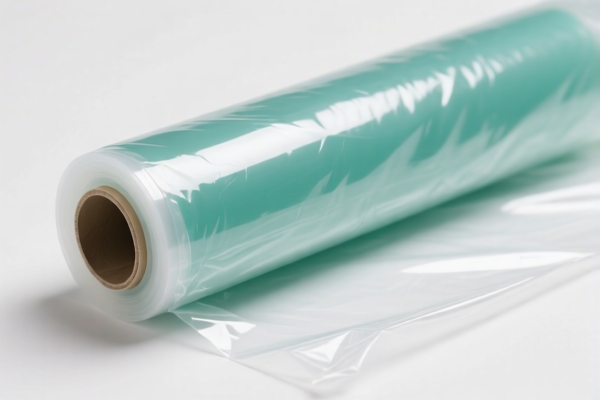



AI Analysis
🎞️ Polybutylene Film Raw Material (Polyethylene Films)
🌐 HS Code Reference & Customs Clearance Guide | 2026 Latest Tariff Analysis | Professional Clearance Strategy
📌 I. Product Definition: What is "Polybutylene Film Raw Material"?
Note: In the context of the provided data, "Polybutylene" is technically classified under Polyethylene (PE) categories. Polyethylene is the most common plastic used for films. The term "Raw Material" in this context refers to either: 1. Unprocessed Polymer: Polyethylene in primary forms (granules, flakes) intended for film blowing. 2. Processed Film: Polyethylene already formed into sheets, films, or foils.
In international trade, the distinction between "Primary Form" (Chips/Granules) and "Finished Article" (Films/Sheets) is critical for HS Code classification and tax rates.
📦 II. HS Code Classification Details (2026 Latest Tariff Data)
Based on the provided data, there are five potential HS Codes depending on the specific physical state (granules vs. film) and manufacturing stage.
| HS Code | Product Description | Classification Logic | Tax Rate |
|---|---|---|---|
| 3901.10.50.10 | Polyethylene in Primary Forms (Granules/Chips) | Material: Polyethylene. Form: Primary form/semi-finished (not yet a film). Logic: Matches the description of polymer aggregates before final shaping. |
41.5% |
| 3901.10.50.20 | Other Polyethylene in Primary Forms | Material: Polyethylene. Form: Primary form/semi-finished. Logic: Another sub-category for primary PE polymers. |
41.5% |
| 3921.90.50.50 | Polyethylene Film (Plastic Film, Other) | Material: Polyethylene (Plastic). Form: Film. Logic: The product is already formed into a "film" shape. |
39.8% |
| 3921.19.00.10 | Polyethylene Sheets/Films/Foils | Material: Polyethylene. Form: Plates, sheets, film, foil. Logic: Explicitly covers plastic films made of polyethylene. |
41.5% |
| 3920.10.00.00 | Polyethylene Plates, Sheets, Film, Foil (Non-cellular) | Material: Ethylene polymers (PE). Form: Plates, sheets, film, foil. Logic: A standard classification for non-cellular PE films. |
39.2% |
🔍 Key Distinction:
- 3901.xxxx codes apply if the "raw material" is still in granule/pellet form (primary shape).
- 3920.xxxx / 3921.xxxx codes apply if the "raw material" is already in film/sheet form (processed article).
💰 III. 2026 Latest Tariff Rate Breakdown (Including Additional Duties)
✅ Applicable Country: United States (US)
✅ Origin: China (CN)
✅ Effective Time: 2025/2026 (Post-Trade War Adjustments)
🎯 1. Primary Form: 3901.10.50.10 & 3901.10.50.20 (Polyethylene Granules)
For PE granules/chips used to blow into film.
| Item | Detail |
|---|---|
| Base Tariff | 6.5% |
| Section 301 Tariff | +25.0% (25% additional duty on Chinese goods) |
| Section 122 Tariff | +10.0% (Specific duty on certain Chinese imports) |
| Total Effective Rate | 41.5% |
| Calculation Base | CIF Value × 41.5% |
| De Minimis Exemption | ❌ Not Eligible (High tariff codes usually deny de minimis) |
📌 Explanation:
- The 6.5% is the standard Most Favored Nation (MFN) duty.
- The 25% is the famous "Section 301" tariff, heavily impacting Chinese plastics.
- The 10% is an additional punitive tariff (Section 122).
- Total: 41.5% is a significant cost factor for raw resin importers.
🎯 2. Processed Film: 3921.90.50.50 (Other Plastic Films)
For PE films that are finished or semi-finished.
| Item | Detail |
|---|---|
| Base Tariff | 4.8% |
| Section 301 Tariff | +25.0% |
| Section 122 Tariff | +10.0% |
| Total Effective Rate | 39.8% |
| Calculation Base | CIF Value × 39.8% |
📌 Explanation:
- Slightly lower base rate (4.8%) compared to primary forms (6.5%), but still subject to the same 35% in additional duties (25% + 10%).
- Total: 39.8%.
🎯 3. Standard Film: 3921.19.00.10 & 3920.10.00.00
For specific PE sheet/film types.
| Item | Detail |
|---|---|
| Base Tariff | 6.5% (for 3921) / 4.2% (for 3920) |
| Section 301 Tariff | +25.0% |
| Section 122 Tariff | +10.0% |
| Total Effective Rate | 41.5% (for 3921) / 39.2% (for 3920) |
📌 Explanation:
- 3920.10.00.00 offers the lowest total tax at 39.2%, making it the most cost-effective if the product strictly fits "Non-cellular PE plates, sheets, film, foil."
- 3921.19.00.10 is taxed at 41.5%, similar to primary forms.
🛠️ IV. Customs Clearance Practical Advice
✅ 1. Documentation Checklist (Must-Have)
| Document | Requirement | Purpose |
|---|---|---|
| Commercial Invoice | Clearly state: "Polyethylene [Granules/Film]", Weight, Value | Basis for duty calculation |
| Packing List | Detail net/gross weight, number of pallets/bags | Verify quantity vs. invoice |
| Product Specification | Must specify: Chemical Composition (e.g., "100% Linear Low-Density Polyethylene (LLDPE)"), Melt Flow Index, Form (Flakes, Granules, or Rolls) | Critical for HS Code determination |
| Material Safety Data Sheet (MSDS) | Required for chemical/plastic products | Safety compliance |
| Certificate of Origin (CO) | If claiming preferential treatment (though unlikely for China-US) | Proof of origin |
| Photo of Product | Show granules or film rolls clearly | Prove form (primary vs. processed) |
✅ 2. Declaration Tips (Key Mantras)
🔥 "Granules = 3901 (41.5%) | Film = 3920/3921 (39.2%-41.5%) | Be Specific!"
| Scenario | Correct Declaration | Risk of Misclassification |
|---|---|---|
| PE Granules/Pellets | HS: 3901.10.50.10 |
If declared as "Film", customs may reject due to physical mismatch |
| PE Film Rolls | HS: 3920.10.00.00 (Preferred for lower tax) |
If declared as "Granules", customs may inspect and reclassify, causing delays |
| Mixed Shipment | Split declaration: Granules vs. Film | Combining them causes valuation confusion |
✅ 3. Special Considerations
| Situation | Advice |
|---|---|
| "Raw Material" Ambiguity | If the product is "Pre-blow film" (already formed but not cut), it is likely HS 3920/3921, not 3901. |
| Section 301 Exemptions | Check if the specific HS Code has an exclusion list. Some PE types may have temporary exclusions. |
| Valuation | Ensure CIF (Cost, Insurance, Freight) is correctly calculated. Duties are based on CIF, not FOB. |
| Labeling | Mark packaging as "Polyethylene Film" or "Polyethylene Resin" to avoid "Unknown Plastic" flags. |
🌍 V. Global Market Comparison (2026)
| Region | Recommended HS Code | Estimated Duty (China Origin) | Notes |
|---|---|---|---|
| 🇺🇸 USA | 3920.10.00.00 or 3901.10.50.10 |
39.2% - 41.5% | High due to Section 301 + 122 tariffs. |
| 🇨🇳 China | 3901.10 or 3920.10 |
~2.5% - 6% | Low import duty; no additional punitive tariffs. |
| 🇪🇺 EU | 3901.10 or 3920.10 |
~6.5% | No Section 301/122 equivalents; lower total tax. |
| 🇯🇵 Japan | 3901.10 or 3920.10 |
~6.0% - 8.0% | Moderate tariff; stable trade relations. |
📌 Conclusion:
- The USA imposes the highest barrier due to 35% in additional duties (25% + 10%).
- For US imports, HS 3920.10.00.00 (39.2%) is slightly more favorable than primary forms (41.5%).
- Consider supply chain diversification (e.g., sourcing from Vietnam/Mexico) if duty costs exceed 10% of product value.
📌 VI. Common Errors & Pitfalls (Learn from Mistakes)
❌ Error 1: Declaring "Film" when it is "Granules"
👉 Consequence: Customs inspection delay, potential penalty for misdeclaration.
❌ Error 2: Not specifying "Polyethylene" in the description
👉 Consequence: Customs may classify under generic "Plastic Waste" or "Other Plastics" with higher uncertainty or different rates.
❌ Error 3: Ignoring Section 122 Tariff
👉 Consequence: Unexpected 10% charge at customs. Always budget for the Total 35% additional duty.
❌ Error 4: Confusing "Polybutylene" with "Polyethylene"
👉 Consequence: While data maps "Polybutylene" to Polyethylene codes, technically they are different polymers. Ensure Chemical Composition is accurate. If it is truly Polybutylene (PB), it may fall under different subheadings. However, based on the provided data, we proceed with PE classification.
✅ Correct Practice:
"Polyethylene Film, LLDPE, 100% Virgin, Rolls, Width 1m, Thickness 0.05mm, Made in China, HS 3920.10.00.00"
🎯 VII. Conclusion: Professional Clearance, Cost Optimization!
🎯 Key Takeaways:
🔹 "Granules = 3901 (41.5%) | Film = 3920 (39.2%) | Choose Wisely!"
🔹 "Total Duty = Base + 25% (301) + 10% (122) = ~35-36% Additional"
🔹 "Verify Material Form: Primary (Granules) vs. Processed (Film)"
📌 Pro Tip:
If you are importing large volumes, consider applying for a Customs Ruling (Pre-classification) from US CBP to confirm the exact HS Code (e.g., 3920 vs. 3921) to ensure you get the lowest possible duty (39.2% vs. 41.5%).
📣 Immediate Action:
📞 Contact Customs Broker + Provide MSDS + Confirm Physical Form (Granule/Film)
🚀 Optimize Your Supply Chain, Minimize Tariff Impact!
✨ Professional Clearance Starts with Accurate Classification!
💼 Every Percentage Point in Tariff Matters!
Customer Reviews
About HS Code Classification
The Harmonized System (HS) is an internationally standardized nomenclature developed by the World Customs Organization (WCO) to classify traded products. Over 200 countries use the HS system as the basis for customs tariffs, trade statistics, and import/export regulations.
Each HS code follows a hierarchical structure:
- Chapter (2 digits) — Broad category of goods (e.g., Chapter 84: Machinery and Mechanical Appliances)
- Heading (4 digits) — More specific grouping within the chapter
- Subheading (6 digits) — Internationally standardized breakdown, used by all WCO member countries
- National subdivisions (8-10 digits) — Country-specific extensions for further classification, such as US HTSUS 10-digit codes
Correct HS code classification is essential for smooth customs clearance, accurate duty payment, and compliance with trade regulations. Misclassification can lead to customs delays, overpayment of duties, or penalties.
When importing from CN to US, the applicable tariff rates may include:
- Most-Favored-Nation (MFN) rate — The standard duty rate applied to WTO members
- General rate — Applied to countries without trade agreements
- Trade remedy duties — Additional tariffs such as Section 301 (anti-dumping), Section 232 (national security), or countervailing duties
The information provided on this page is for reference purposes only. For official classification, please consult with your local customs authority or a licensed customs broker.