Polybutylene Plastic Granules
CN → US| HS Code | Tariff Rate | Origin | Destination | Doc |
|---|---|---|---|---|
| 3915900090 | 35.0% | CN | US | Official Doc |
| 3902900010 | 41.5% | CN | US | Official Doc |
| 3901909000 | 41.5% | CN | US | Official Doc |
| 3911901000 | 35.0% | CN | US | Official Doc |
Product Images
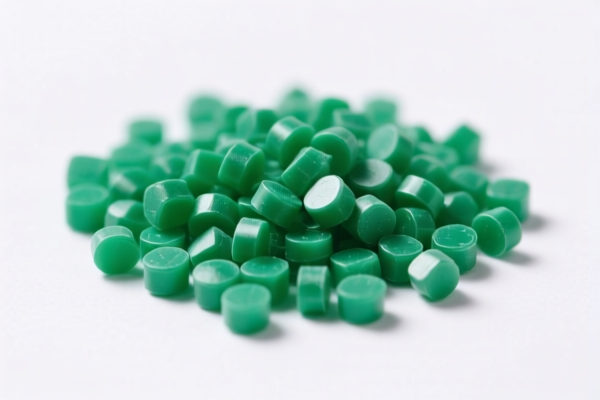
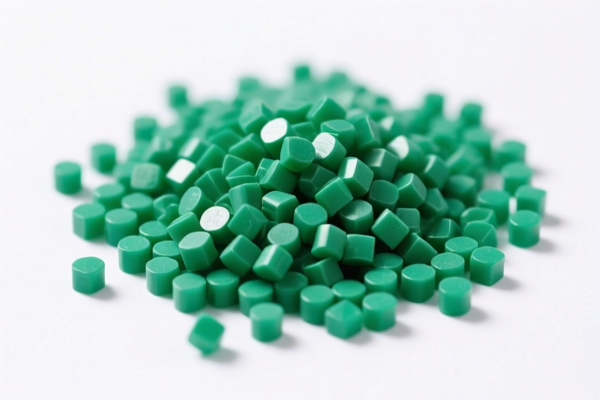


AI Analysis
🏭 Polybutylene Plastic Granules (PB-1)
🌐 HS Code Reference & Customs Clearance Guide | 2026 Latest Tariff Analysis | Professional Strategy for US Imports
📌 1. Product Definition & Classification: What Exactly is "Polybutylene"?
Polybutylene (Polybutylene-1 or PB-1) is a semi-crystalline thermoplastic polymer known for its high flexibility, chemical resistance, and heat resistance. In international trade, it is primarily imported as granules (primary form).
Crucially, the classification depends on how the Customs authority views the chemical nature and physical state: * Primary Polymer (Resin): If the granules are the base raw material for manufacturing pipes, films, or profiles. * Plastic Waste/Scrap: If the granules are derived from recycling or are considered "fragments/offcuts" of non-PET plastics.
⚠️ Key Distinction Point:
- If imported as virgin resin for manufacturing → Classified under Chapter 39 (Articles of Plastics), specifically as primary polymers (e.g., 3902.90.00.10 or 3901.90.90.00).
- If imported as recycled material/scraps → Classified under 3915.90.00.90.
📦 2. HS Code Classification Matrix (2026 Latest Tariff Data)
Based on the provided data, here are the four potential classifications for Polybutylene Granules:
| HS Code | Product Description | Classification Logic | Tax Category |
|---|---|---|---|
3915.90.00.90 |
Polybutylene Granules as Non-PET Plastic Waste/Shavings/Offcuts (Primary Form) | Classified as "Plastic Waste, Scrap, and Offcuts" of other plastics (excluding PET). Assumes the material is recycled or secondary raw material. | 📉 Lower Base Duty |
3902.90.00.10 |
Polybutylene Granules as Primary Polymer | Specifically classified under "Polyalphaolefins" or other olefins. Fits the exact chemical definition of Polybutylene as a primary polymer. | 📈 Higher Base Duty |
3901.90.90.00 |
Polybutylene as Polyolefin (Ethylene-like Properties) | Classified under "Polymers of Ethylene." Argues that Polybutylene is a polyolefin with similar properties to ethylene polymers in primary granular form. | 📈 Higher Base Duty |
3911.90.10.00 |
Polybutylene-1 Granules as Polyolefin Elastomer | Classified under "Other Polymers in Primary Forms." Argues that PB-1 acts as an elastomer (rubber-like) due to its flexibility, fitting the "Elastomer" subheading. | 📉 Lower Base Duty |
🔍 Critical Analysis:
-3902.90.00.10is often the most technically accurate for virgin Polybutylene resin, as PB-1 is a polyalphaolefin.
-3915.90.00.90applies only if the goods are recycled scrap/waste. Using this for virgin material is high-risk and considered misclassification.
-3911.90.10.00is a strategic alternative if PB-1 is used specifically as an elastomeric additive rather than a structural plastic.
💰 3. 2026 US Tariff Rate Breakdown (China Origin)
✅ Applicable Country: United States (US)
✅ Origin: China (CN)
✅ Effective Date: Includes Section 301 (25%) and Section 122 (10%) tariffs.
🎯 1. 3915.90.00.90 — Plastic Waste/Scrap (Non-PET)
| Item | Content |
|---|---|
| Base Duty Rate | 0.0% (ad valorem) |
| Section 301 Additional Duty | +25.0% |
| Section 122 Duty | +10.0% |
| Total Effective Rate | 35.0% |
| Tax Calculation | CIF Value × 35% |
| De Minimis Exemption | ❌ Not Applicable (Goods subject to 301/122 tariffs are excluded) |
| Legal Basis Path | USITC:3915.90.00.90 → FOOTNOTE:301 → EXEC_ORDER:122 |
📌 Explanation:
- Although the base duty is 0%, the 35% total burden is significant.
- This code is only for waste/scrap. If you import virgin granules, this is illegal misclassification.
🎯 2. 3902.90.00.10 — Primary Polymer (Polyalphaolefins)
| Item | Content |
|---|---|
| Base Duty Rate | 6.5% (ad valorem) |
| Section 301 Additional Duty | +25.0% |
| Section 122 Duty | +10.0% |
| Total Effective Rate | 41.5% |
| Tax Calculation | CIF Value × 41.5% |
| De Minimis Exemption | ❌ Not Applicable |
| Legal Basis Path | USITC:3902.90.00.10 → FOOTNOTE:301 → EXEC_ORDER:122 |
📌 Explanation:
- This is the standard classification for virgin Polybutylene resin.
- The higher base rate (6.5%) reflects its status as a high-performance engineering plastic.
🎯 3. 3901.90.90.00 — Polymers of Ethylene (Polyolefin)
| Item | Content |
|---|---|
| Base Duty Rate | 6.5% (ad valorem) |
| Section 301 Additional Duty | +25.0% |
| Section 122 Duty | +10.0% |
| Total Effective Rate | 41.5% |
| Tax Calculation | CIF Value × 41.5% |
| De Minimis Exemption | ❌ Not Applicable |
| Legal Basis Path | USITC:3901.90.90.00 → FOOTNOTE:301 → EXEC_ORDER:122 |
📌 Explanation:
- An alternative classification if the importer argues PB-1 is chemically closer to ethylene-based polyolefins.
- Same tax burden as3902.90.00.10.
🎯 4. 3911.90.10.00 — Other Polymers (Elastomers)
| Item | Content |
|---|---|
| Base Duty Rate | 0.0% (ad valorem) |
| Section 301 Additional Duty | +25.0% |
| Section 122 Duty | +10.0% |
| Total Effective Rate | 35.0% |
| Tax Calculation | CIF Value × 35% |
| De Minimis Exemption | ❌ Not Applicable |
| Legal Basis Path | USITC:3911.90.10.00 → FOOTNOTE:301 → EXEC_ORDER:122 |
📌 Explanation:
- A strategic classification if PB-1 is used as an elastomeric additive or plasticizer.
- Requires strong technical justification that the material behaves as an elastomer.
🛠️ 4. Customs Clearance Practical Advice (Avoiding Pitfalls)
✅ 1. Preparation Checklist (Mandatory Documents)
| Document | Required? | Purpose |
|---|---|---|
| ✅ Technical Data Sheet (TDS) | ✔️ | Proves chemical composition (PB-1 vs. PE/PP). |
| ✅ MSDS (Material Safety Data Sheet) | ✔️ | Confirms physical state (granules) and hazards. |
| ✅ Certificate of Analysis (COA) | ✔️ | Verifies purity, melt flow index, and density. |
| ✅ Product Photos (Clear Granules) | ✔️ | Shows no signs of being "waste" or "contaminated scrap". |
| ✅ Bill of Lading / Invoice | ✔️ | Must clearly state "Virgin Polybutylene-1 Granules" or "Recycled PB Granules". |
| ✅ Origin Certificate | ✔️ | For US-China trade, crucial for determining Section 301 liability. |
✅ 2. Declaration Strategy (Key Rules)
🔥 "Correct Code, Correct Tax. Wrong Code, Heavy Penalty!"
| Scenario | Correct HS Code | Reason |
|---|---|---|
| Virgin PB-1 Resin (for pipe/film manufacturing) | 3902.90.00.10 or 3901.90.90.00 |
Primary polymer, high purity. |
| Recycled PB Granules (from post-industrial waste) | 3915.90.00.90 |
Defined as plastic waste/offcuts. |
| PB-1 Used as Elastomer Additive | 3911.90.10.00 |
If technical specs show elastomeric behavior. |
| Mixed Plastic Scraps (incl. PB) | 3915.90.00.90 |
Mixed waste requires waste classification. |
✅ 3. Special Handling Tips
| Situation | Recommendation |
|---|---|
| Section 301 Impact | Both 25% (Sec 301) and 10% (Sec 122) apply. Budget for 35%-41.5% total tax. |
| De Minimis (Section 321) | NO. Goods subject to 301/122 tariffs cannot enter under $800 de minimis. Full entry required. |
| Misclassification Risk | Declaring virgin PB as 3915.90.00.90 (waste) is fraud. Penalties include seizure + fines. |
| Advance Ruling | Highly Recommended. Apply for an Advance Ruling from CBP to confirm 3902.90.00.10 vs 3911.90.10.00. |
🌍 5. Global Market Comparison (2026)
| Country/Region | Recommended HS Code | Est. Total Duty (China Origin) | Notes |
|---|---|---|---|
| 🇺🇸 USA | 3902.90.00.10 |
41.5% | High due to 301 + 122. |
| 🇺🇸 USA (Waste) | 3915.90.00.90 |
35.0% | Lower, but only for recycled. |
| 🇪🇺 EU | 3902.90.00 |
~6.5% (MFN) + 0% (if FTA) | No Section 301/122 equivalent. |
| 🇨🇳 China | 3902.90.00 |
~6.5% | Import duty for raw materials. |
📌 Conclusion:
- USA is the most expensive market for Polybutylene imports from China due to Section 301 & 122.
- Accurate classification is critical: Virgin resin (41.5%) vs. Recycled (35%).
- Do not use waste codes for virgin material to save 6.5%. The risk of audit and penalty is too high.
📌 6. Common Errors & Pitfalls (Lessons Learned)
❌ Error 1: Classifying Virgin PB-1 as 3915.90.00.90 (Waste)
👉 Consequence: CBP rejects entry, imposes fraud penalties, and demands back taxes + interest.
❌ Error 2: Ignoring Section 122 (10%)
👉 Consequence: Underpayment. The 10% is in addition to the 25% Sec 301. Total is not just 25%.
❌ Error 3: Assuming De Minimis applies ($800 rule)
👉 Consequence: Shipment detained. Sec 301 goods are excluded from de minimis entry.
✅ Correct Approach:
"Virgin Resin? Use
3902.90.00.10. Recycled Scrap? Use3915.90.00.90. Always include TDS and MSds. Budget for 35-41.5% total tax."
🎯 7. Conclusion: Strategic Importing for Polybutylene
🎯 Key Takeaway:
🔹 Virgin PB-1 is taxed at 41.5% (
3902.90.00.10).
🔹 Recycled PB is taxed at 35.0% (3915.90.00.90).
🔹 No De Minimis exemption for China-origin goods.
🔹 Get an Advance Ruling to lock in your HS Code and avoid disputes.
📌 Pro Tip:
If you are importing large volumes, consider supply chain diversification to non-China origins (e.g., South Korea, Japan) to avoid Section 301/122 tariffs entirely, reducing tax burden from ~41.5% to ~6.5%.
📣 Immediate Action:
📞 Consult a Customs Broker + Request Advance Ruling from CBP + Verify Product Origin.
🚀 Optimize your HS Code to save thousands in duties!
✨ Professional Classification Saves Money!
💼 Precision in Customs is Profitability in Trade.
Customer Reviews
About HS Code Classification
The Harmonized System (HS) is an internationally standardized nomenclature developed by the World Customs Organization (WCO) to classify traded products. Over 200 countries use the HS system as the basis for customs tariffs, trade statistics, and import/export regulations.
Each HS code follows a hierarchical structure:
- Chapter (2 digits) — Broad category of goods (e.g., Chapter 84: Machinery and Mechanical Appliances)
- Heading (4 digits) — More specific grouping within the chapter
- Subheading (6 digits) — Internationally standardized breakdown, used by all WCO member countries
- National subdivisions (8-10 digits) — Country-specific extensions for further classification, such as US HTSUS 10-digit codes
Correct HS code classification is essential for smooth customs clearance, accurate duty payment, and compliance with trade regulations. Misclassification can lead to customs delays, overpayment of duties, or penalties.
When importing from CN to US, the applicable tariff rates may include:
- Most-Favored-Nation (MFN) rate — The standard duty rate applied to WTO members
- General rate — Applied to countries without trade agreements
- Trade remedy duties — Additional tariffs such as Section 301 (anti-dumping), Section 232 (national security), or countervailing duties
The information provided on this page is for reference purposes only. For official classification, please consult with your local customs authority or a licensed customs broker.