Polybutylene Plastic Pellets
CN → US| HS Code | Tariff Rate | Origin | Destination | Doc |
|---|---|---|---|---|
| 3915900090 | 35.0% | CN | US | Official Doc |
| 3902900010 | 41.5% | CN | US | Official Doc |
| 3901909000 | 41.5% | CN | US | Official Doc |
| 3911901000 | 35.0% | CN | US | Official Doc |
Product Images
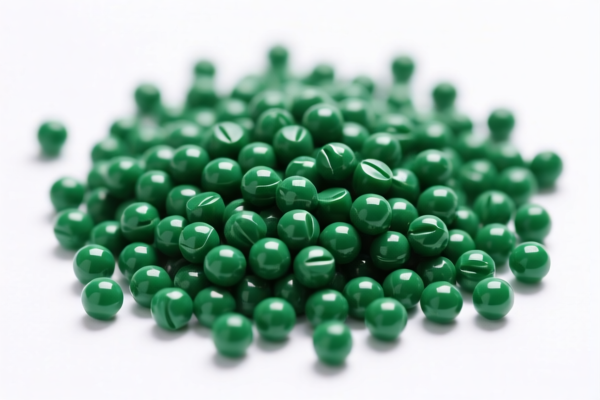


AI Analysis
🧪 Polybutylene Plastic Pellets (PB Resin)
🌐 HS Code Classification & Clearance Guide | 2026 Customs Strategy | Professional Classification Analysis
📌 I. Product Definition: What Exactly Are Polybutylene (PB) Pellets?
Polybutylene (PB) refers to polymers primarily composed of butene-1 monomers. In international trade, PB pellets are classified under Chapter 39 (Plastics and Articles Thereof). However, the specific HS Code depends heavily on whether the product is classified as a primary shape (virgin/resin) or waste/scraps, and its specific polymer family (Polyolefin vs. Other).
⚠️ Critical Distinction:
- Virgin Resin/Pellets: Classified under Heading 3902 (Polymers of olefins) or 3911/3915 (depending on physical form and origin status).
- Waste/Scrap: Classified under Heading 3915 (Wastes, parings, and scrap).
- Specific Type: PB-1 (Polybutylene-1) has specific elastomeric properties that may influence classification under Heading 3911 or 3902.
📦 II. HS Code Classification Matrix (2026 Latest Tariff Schedule)
Based on the provided data, here are the four most likely HS Codes for Polybutylene Plastic Pellets, along with their rationale and tax implications.
| HS Code | Product Description & Rationale | Total Tax Rate (China → US) | Tax Breakdown |
|---|---|---|---|
| 3915.90.00.90 | Non-PET Plastic Waste/Scrap/Parings in Primary Shape Rationale: Classified as waste, parings, or scrap of plastics other than PET, even if in primary shape. Often used for lower-value recycled or off-spec material. |
35.0% | • Base: 0.0% • Sec. 301: 25.0% • IEEPA (122): 10.0% |
| 3902.90.00.10 | Polybutylene Pellets – Primary Polymer (Specific) Rationale: The most accurate classification for virgin Polybutylene pellets, as PB is a polymer of olefins (butene). Fits "Other polymers of olefins" under 3902. |
41.5% | • Base: 6.5% • Sec. 301: 25.0% • IEEPA (122): 10.0% |
| 3901.90.90.00 | Polybutylene Pellets – Polyolefin Fallback Rationale: If not specifically covered under 3902, PB may be classified as a "Polyolefin" similar to ethylene polymers, serving as a "fallback" category under 3901 (Polymers of ethylene). |
41.5% | • Base: 6.5% • Sec. 301: 25.0% • IEEPA (122): 10.0% |
| 3911.90.10.00 | Polybutylene-1 (PB-1) Pellets – Polyolefin Elastomer Rationale: PB-1 is often categorized as a polyolefin elastomer or resin. If classified as a "polymer" in primary shape under Chapter 39 but outside 3901/3902, it may fall here. Note: Some experts argue PB-1 is a polyolefin, but this code captures specific "other polymers" in primary form. |
35.0% | • Base: 0.0% • Sec. 301: 25.0% • IEEPA (122): 10.0% |
🔍 Key Insight:
- 3902.90.00.10 and 3901.90.90.00 carry the highest tax burden (41.5%) due to the 6.5% Base Duty + 25% Section 301 + 10% IEEPA. - 3915.90.00.90 and 3911.90.10.00 have a lower base duty (0%) but still face the full 35% additional tariffs. - Misclassification Risk: Classifying virgin resin as "waste" (3915) can lead to penalties if proven to be usable primary material. Conversely, classifying waste as virgin (3902) may invite scrutiny over environmental compliance.
💰 III. 2026 Tariff Rate Detailed Breakdown
✅ Applicable Country: United States (US)
✅ Origin: China (CN)
✅ Effective Date: November 10, 2025 (for subsequent imports)
🎯 1. 3902.90.00.10 & 3901.90.90.00 – Virgin Polybutylene Pellets
(Highest Tax Bracket)
| Item | Detail |
|---|---|
| Base Tariff (MFN) | 6.5% (ad valorem) |
| Section 301 Tariff | +25% (Footnote 9903.88.01) |
| IEEPA (122) Tariff | +10% (China-specific, IEEPA:9903.01.25/24) |
| Total Effective Rate | 41.5% |
| Tax Calculation | CIF Value × 41.5% |
| De Minimis Exemption? | ❌ No (Denied for Chinese plastics under these codes) |
| Legal Path | IEEPA:9903.01.25 → USITC:3902.90.00.10 → FOOTNOTE:9903.88.01 |
📌 Explanation:
- These codes represent high-value virgin resin. The 6.5% base duty reflects standard global trade rates, but the 35% combined surcharge makes Chinese PB resin expensive in the US market.
- Strategic Note: If PB is imported from a non-China origin (e.g., Thailand, Korea), the 25% Section 301 and 10% IEEPA may not apply, potentially reducing the total tax to 6.5% or 0% depending on FTAs.
🎯 2. 3915.90.00.90 & 3911.90.10.00 – Waste, Scrap, or Specialized Elastomers
(Lower Base Duty, High Surcharge)
| Item | Detail |
|---|---|
| Base Tariff (MFN) | 0.0% (ad valorem) |
| Section 301 Tariff | +25% (Footnote 9903.88.01) |
| IEEPA (122) Tariff | +10% (China-specific) |
| Total Effective Rate | 35.0% |
| Tax Calculation | CIF Value × 35.0% |
| De Minimis Exemption? | ❌ No |
| Legal Path | IEEPA:9903.01.24 → USITC:3915.90.00.90 / 3911.90.10.00 → FOOTNOTE:9903.88.01 |
📌 Explanation:
- 3915.90.00.90: Applies if the material is considered waste/scraps (e.g., off-spec pellets, regrind). The 0% base duty is offset by the full 35% surcharge.
- 3911.90.10.00: Applies to PB-1 if classified as a specialized polymer/elastomer not covered under 3902. The 0% base duty makes this slightly more favorable than 3902/3901, but still highly taxed.
🛠️ IV. Customs Clearance Practical Advice
✅ 1. Required Documentation Checklist
| Document | Mandatory? | Purpose |
|---|---|---|
| ✅ Commercial Invoice | ✔️ | Must clearly state "Polybutylene (PB) Pellets," HS Code, and Country of Origin. |
| ✅ Packing List | ✔️ | Detail weight, volume, and packaging type. |
| ✅ Product Specification Sheet | ✔️ | Must include: Polymer type (PB-1, PB-N?), MFI (Melt Flow Index), density, intended use (piping, film, etc.). |
| ✅ Certificate of Origin (CO) | ✔️ | Essential for verifying if Section 301/IEEPA tariffs apply. If from Vietnam/Malaysia, submit to claim exemption. |
| ✅ Test Report / MSDS | ✔️ | Proof of chemical composition; distinguishes virgin resin from waste/recycled material. |
| ✅ Bill of Lading (B/L) | ✔️ | Consistent with invoice details. |
✅ 2. Classification Strategy & Pitfalls
🔥 Golden Rule: "Define by Chemistry, Not Just by Form!"
| Scenario | Recommended HS Code | Risk if Misclassified |
|---|---|---|
| Virgin PB Pellets (High purity, intended for manufacturing) | 3902.90.00.10 |
⚠️ High Risk: If classified as waste (3915), CBP may assess penalties for underpayment of base duty. If classified as fallback (3901), 41.5% still applies, but documentation must support "polyolefin" argument. |
| Recycled/Regrind PB Pellets (Off-spec, reused) | 3915.90.00.90 |
⚠️ Moderate Risk: Must prove material is "waste/scrap." If it meets virgin specs, CBP may reclassify to 3902 (41.5%). |
| PB-1 Elastomer Pellets (Specialized, low temp resistance) | 3911.90.10.00 |
⚠️ Low-Moderate Risk: Requires strong technical data to justify "polyolefin elastomer" classification over general polyolefin (3902). |
✅ 3. Cost Optimization Strategies
- Supply Chain Diversification:
- Import PB pellets from Vietnam, Malaysia, or Thailand.
- Benefit: Avoid 25% Section 301 + 10% IEEPA tariffs.
-
Result: Total tax may drop to 6.5% (base only) or 0% if FTA applies.
-
Pre-Import Ruling:
- Apply for an Advance Ruling (CBP Ruling) from U.S. Customs and Border Protection.
- Submit technical specs and propose HS Code.
-
Benefit: Legal certainty on classification (e.g., confirming PB-1 is 3911.90.10.00 vs. 3902.90.00.10).
-
Accurate Description:
- Use precise terms: "Virgin Polybutylene (PB-1) Homopolymer Pellets, MFI X, Density Y" instead of generic "Plastic Pellets."
- Avoid terms like "Waste," "Scrap," or "Recycled" unless actually true.
🌍 V. Global Market Comparison (2026)
| Market | Recommended HS Code | Approx. Total Tax (China Origin) | Key Requirement |
|---|---|---|---|
| 🇺🇸 USA | 3902.90.00.10 / 3915.90.00.90 |
35% – 41.5% | IEEPA & Sec 301 apply. Strict origin verification. |
| 🇨🇳 China | 3902.90.00.10 |
~6.5% | No additional surcharges. Standard import VAT (13%). |
| 🇪🇺 EU | 3902.90.90 |
~6.5% | No Section 301. CE/RoHS compliance may be needed. |
| 🇯🇵 Japan | 3902.90.90 |
~6.5% | No additional surcharges. PSE certification if applicable. |
📌 Conclusion:
- The US market is the most expensive for Chinese-made Polybutylene due to layered tariffs.
- Cost Saving: Shifting supply chain to ASEAN countries can reduce tax liability by 25-35%.
- Compliance: Always provide technical data sheets to justify classification as virgin resin vs. waste.
📌 VI. Common Mistakes & How to Avoid Them
❌ Mistake 1: Classifying Virgin PB as "Plastic Waste" (3915) to avoid base duty.
👉 Consequence: CBP may audit and reclassify to 3902, charging 41.5% + penalties + interest.
❌ Mistake 2: Ignoring IEEPA 122 Tariff.
👉 Consequence: Underpayment of 10% of CIF value. CBP will collect back taxes + interest.
❌ Mistake 3: Vague Description ("Plastic Pellets").
👉 Consequence: CBP may assign a generic HS Code with higher duty or detain shipment for inspection.
❌ Mistake 4: Not using Certificate of Origin.
👉 Consequence: Cannot prove non-Chinese origin, thus liable for full 35-41.5% surcharge.
✅ Correct Approach:
"Use precise technical names, submit CO for origin verification, and apply for pre-rulings if unsure."
🎯 VII. Final Recommendation
🎯 Action Plan for Importers:
- Verify Origin: If PB is from China, budget for 35-41.5% total tax.
- Optimize Classification:
- If Virgin: Target
3902.90.00.10(41.5%) or3911.90.10.00(35%) if PB-1 qualifies. - If Recycled: Target
3915.90.00.90(35%). - Consider Re-Sourcing: Import from Vietnam/Malaysia to eliminate Section 301 & IEEPA tariffs, saving 25-35%.
- Document Everything: Keep MSDS, Spec Sheets, and Invoices aligned.
🔹 Remember:
"HS Code determines cost, Origin determines tariff, Documentation determines speed."
"Don’t let PB pellets get stuck in customs – classify right, pay smart!"
📣 Immediate Next Steps:
📞 Contact a licensed customs broker.
📄 Gather technical data sheets for PB pellets.
🌍 Evaluate supply chain options for non-China origin.
🚀 Ensure smooth, compliant, and cost-effective clearance.
✨ Professional Customs Clearance Starts with Accurate Classification!
💼 Optimize Your Landed Cost – Don’t Overpay on Tariffs!
Customer Reviews
About HS Code Classification
The Harmonized System (HS) is an internationally standardized nomenclature developed by the World Customs Organization (WCO) to classify traded products. Over 200 countries use the HS system as the basis for customs tariffs, trade statistics, and import/export regulations.
Each HS code follows a hierarchical structure:
- Chapter (2 digits) — Broad category of goods (e.g., Chapter 84: Machinery and Mechanical Appliances)
- Heading (4 digits) — More specific grouping within the chapter
- Subheading (6 digits) — Internationally standardized breakdown, used by all WCO member countries
- National subdivisions (8-10 digits) — Country-specific extensions for further classification, such as US HTSUS 10-digit codes
Correct HS code classification is essential for smooth customs clearance, accurate duty payment, and compliance with trade regulations. Misclassification can lead to customs delays, overpayment of duties, or penalties.
When importing from CN to US, the applicable tariff rates may include:
- Most-Favored-Nation (MFN) rate — The standard duty rate applied to WTO members
- General rate — Applied to countries without trade agreements
- Trade remedy duties — Additional tariffs such as Section 301 (anti-dumping), Section 232 (national security), or countervailing duties
The information provided on this page is for reference purposes only. For official classification, please consult with your local customs authority or a licensed customs broker.