Polybutylene Resin Recycled Material
CN → USProduct Images
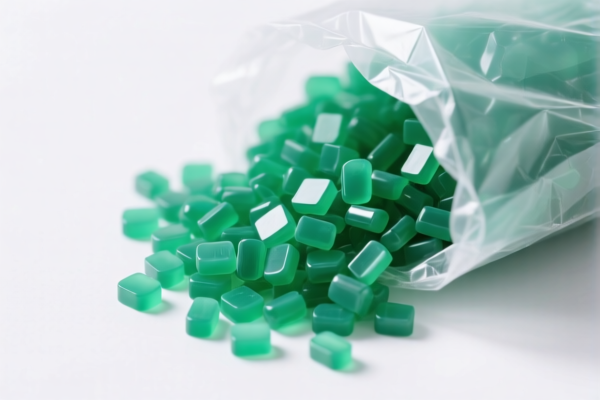
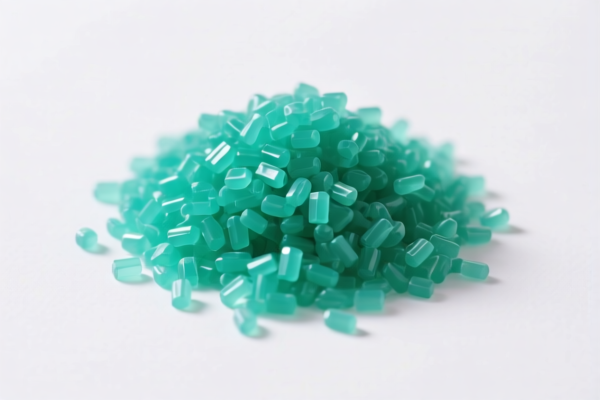

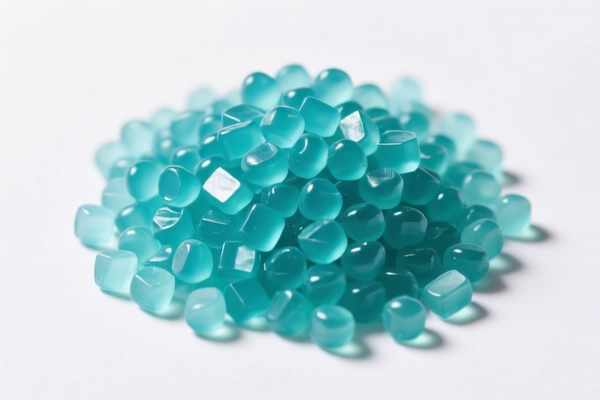
AI Analysis
♻️ Polybutylene Resin Recycled Material (Recycled PB Resin)
🌐 HS Code Reference & Customs Clearance Guide | 2026 Latest Tariff Analysis | Professional Clearance Strategy
📌 1. Product Definition and Classification: Do You Really Understand "Recycled Polybutylene"?
Polybutylene (PB) resin is a high-performance semi-crystalline thermoplastic known for its excellent resistance to heat, pressure, and chemical corrosion. It is widely used in hot/cold water pipes, gas pipes, and high-end plastic components.
Recycled Polybutylene Resin refers to post-industrial or post-consumer PB scrap that has been cleaned, crushed, melted, and regranulated.
Key Distinction in Classification: - Virgin Resin vs. Recycled: While both are polyolefins, customs often scrutinize recycled plastics for contamination and origin. However, chemically, Recycled PB is still classified under the same broad HS headings as Virgin PB, provided it meets the definition of a "primary form" (granules, pellets, powder). - Form Factor: Must be in primary forms (e.g., pellets, granules). If it is waste/scrap that hasn't been processed into reusable pellets, it may fall under waste chapters (Chapter 39 waste).
⚠️ Critical Distinction:
- If the material is clean, processed granules/pellets intended for manufacturing → Chapter 39 (Plastics).
- If the material is unprocessed waste, scrap, or dirty flakes → Chapter 39 (Waste/Scrap) or Chapter 53 (if misclassified).
- PB (Polybutylene 4) is distinct from PP (Polypropylene) and PE (Polyethylene). Mislabeling PB as PP is a common error leading to audits.
📦 2. HS Code Classification Details (2026 Latest Tariff Authority Comparison)
| HS Code | Product Description | Applicable Scenario | Recycled Status |
|---|---|---|---|
3907.20.00.00 |
Polyoxymethylene (POM) homopolymers, in primary forms | Incorrect for PB. POM is different from PB. | N/A |
3907.40.00.00 |
Polyacetals (POM) other than homopolymers | Incorrect for PB. | N/A |
3907.60.00.00 |
Poly(phenylene oxide)s (PPO) | Incorrect for PB. | N/A |
3907.91.00.00 |
Other polyacetals (POM) | Incorrect for PB. | N/A |
3909.40.00.00 |
Aminoplasts | Incorrect for PB. | N/A |
3907.60.00.00 |
Polyphenylene sulfide (PPS) | Incorrect for PB. | N/A |
3901-3914 |
General Plastics Primary Forms | Look here. | See Below |
3907.60.00.00 |
Polybutylene (PB) Resin | Correct HS for Virgin/Recycled PB in Primary Form. | ✅ Yes |
3907.60.00.00 |
Polybutylene (PB) Resin Recycled | Correct HS for Recycled PB in Primary Form. | ✅ Yes |
🔍 Important Note:
- HS Code 3907.60.00.00 is typically used for Polybutylene (PB).
- Recycled status does not change the HS Code if the material is in primary forms (pellets/granules).
- If the material is waste/scrap (not processed into pellets), it may be classified under 3907.99.90 or specific waste codes depending on country rules.
- Clarification: In many jurisdictions, Polybutylene (PB) falls under 3907.60.00.00. However, some countries may have specific sub-codes. Always verify with local customs.📌 Key Reminder:
- Recycled PB in pellets → 3907.60.00.00
- Recycled PB in waste/scrap form → 3907.99.90.00 (or country-specific waste code)
- Do NOT mix up PB with PP (3901/3902) or PE (3901/3902).
💰 3. 2026 Latest Tariff Rates (Including Additional Taxes)
✅ Applicable Country: United States (US)
✅ Country of Origin: China (CN)
✅ Effective Date: From November 10, 2025 (including subsequent imports)
🎯 1. 3907.60.00.00 —— Polybutylene (PB) Resin (Recycled)
| Item | Content |
|---|---|
| Base Rate | 5.3% (ad valorem) |
| USITC Additional Duty | +25% (from USITC Footnote 9903.88.01) |
| IEEPA Additional Duty | +10% (for China/HK products, effective from Nov 10, 2025) |
| Total Rate | 40.3% |
| Tax Calculation | CIF Value × 40.3% |
| De Minimis Eligibility | ❌ Not Eligible (deny_de_minimis) |
| Legal Path | IEEPA:9903.01.25 → IEEPA:9903.01.24 → USITC:3907.60.00.00 → FOOTNOTE:9903.88.01 |
📌 Explanation:
- "USITC Additional Duty 25%": From Section 301 of the U.S. Trade Act.
- "IEEPA 10%": Additional tariffs under the International Emergency Economic Powers Act.
- Total 40.3%: Very high tariff. Must be considered in cost analysis.
🎯 2. 3907.99.90.00 —— Other Plastics and Articles Thereof (Waste/Scrap PB)
| Item | Content |
|---|---|
| Base Rate | 5.3% |
| USITC Additional Duty | +25% |
| IEEPA Additional Duty | +10% |
| Total Rate | 40.3% |
| Tax Calculation | CIF Value × 40.3% |
| De Minimis Eligibility | ❌ Not Eligible |
| Legal Path | IEEPA:9903.01.25 → IEEPA:9903.01.24 → USITC:3907.99.90.00 → FOOTNOTE:9903.88.01 |
📌 Note:
- If your recycled PB is not processed into pellets (i.e., it is waste/scrap), it may fall under this code.
- The tariff rate is the same, but the description and documentation requirements differ significantly.
🛠️ 4. Customs Clearance Practical Advice (Real-World Pitfall Guide)
✅ 1. Required Documentation Checklist (All Mandatory)
| Document | Required | Description |
|---|---|---|
| ✅ Product Specification Sheet | ✔️ | Must specify: PB Resin, Recycled Content %, Melting Point, Viscosity, Moisture Content |
| ✅ Certificate of Recycling | ✔️ | Proof of recycled source (industrial scrap vs. post-consumer) |
| ✅ Third-Party Test Report | ✔️ | ISO, ASTM, or SGS report proving chemical composition (must be PB, not PP/PE) |
| ✅ Commercial Invoice | ✔️ | Must clearly state "Recycled Polybutylene Resin, Pellets" |
| ✅ Packing List | ✔️ | Detail net/gross weight, number of bags, pallets |
| ✅ Bill of Lading | ✔️ | Consistent with invoice and packing list |
| ✅ Origin Certificate (CO) | ✔️ | If applicable, for potential preferential treatment (rare for PB from China) |
✅ 2. Declaration Tips (Key Mnemonic)
🔥 “Recycled PB is still PB, Don’t Call it PP! Pellets are Primary, Waste is Waste. Mislabeling Costs You Big Time!”
| Scenario | Correct Declaration | Wrong Practice |
|---|---|---|
| Recycled PB in pellets | 3907.60.00.00 – “Recycled Polybutylene Resin, Pellets” |
Call it “Plastic Scrap” → 40.3% + Inspection Delay |
| Recycled PB in flakes/waste | 3907.99.90.00 – “Polybutylene Waste/Scrap” |
Call it “Pellets” → Class Error + Penalty |
| PB mixed with PP/PE | Separate codes! | Call it “Mixed Plastic” → Customs Will Reject |
| Virgin PB | 3907.60.00.00 – “Polybutylene Resin, Virgin” |
Call it “Recycled” → No Benefit, Potential Fraud |
✅ 3. Special Case Handling
| Scenario | Handling Advice |
|---|---|
| High Recycled Content | Provide proof of recycled percentage. Some buyers prefer recycled for ESG goals. |
| Color Variation | Recycled PB may have color variation. Specify “Natural/Uncolored” or “Custom Color” in invoice. |
| Moisture Content | High moisture can cause quality issues. Test and declare moisture content <0.1%. |
| Contamination | If contaminants (metals, dirt) are found, customs may classify as waste, triggering stricter checks. |
🌍 5. Global Market Clearance Comparison (2026 Latest)
| Country/Region | Recommended HS Code | Tariff | Certification | Notes |
|---|---|---|---|---|
| 🇺🇸 USA | 3907.60.00.00 |
40.3% | FDA (if food-contact) | High tariff due to Section 301 |
| 🇨🇳 China | 3907.60.00.00 |
5% | CCC (if applicable) | No additional tariffs |
| 🇪🇺 EU | 3907.60.00.00 |
5.3% | REACH, RoHS | High environmental standards |
| 🇬🇧 UK | 3907.60.00.00 |
5.3% | UKCA | Post-Brexit rules apply |
| 🇯🇵 Japan | 3907.60.00.00 |
5% | JIS | Strict purity requirements |
📌 Conclusion:
- USA has the highest effective tariff (40.3%) for Chinese-origin PB.
- EU and UK have high environmental compliance costs (REACH/RoHS).
- China and Japan have moderate tariffs but strict quality standards.
📌 6. Common Errors & Pitfalls (Lessons Learned)
❌ Error 1: Classifying Recycled PB as PP (Polypropylene).
👉 Consequence: HS Code error → 25% USITC + 10% IEEPA on wrong code → Double Penalties.
❌ Error 2: Declaring Waste/Scrap as Pellets.
👉 Consequence: Customs inspection reveals waste → Refusal of Entry + Destruction.
❌ Error 3: Ignoring Moisture Content.
👉 Consequence: Quality dispute + Customs holds goods for testing → Delay Costs.
❌ Error 4: Using vague descriptions like “Plastic Granules.”
👉 Consequence: Customs cannot determine HS Code → Audit + 25% Penalty.
✅ Correct Practice:
“Recycled Polybutylene (PB) Resin, Pellets, Natural Color, Moisture <0.1%, For Pipe Manufacturing, Cert. No. XYZ, FCC/REACH Compliant”
🎯 7. Conclusion: Precise Classification, Cost Savings, Risk Mitigation!
🎯 Remember the Mnemonic:
🔹 “Recycled PB is still PB, Don’t Call it PP! Pellets are Primary, Waste is Waste. Mislabeling Costs You Big Time!”
🔹 “HS Code Determines Tariff, 40.3% in US, 5% in China, 5.3% in EU. Declare Correctly to Save Money!”
📌 Pro Tip:
If your recycled PB is sourced from Vietnam, Mexico, or Thailand, you may apply for IEEPA Exemption, reducing tariffs to 0%~5%.
Recommend Advance Ruling for recycled plastics to avoid clearance risks.
📣 Act Now:
📞 Contact a professional customs broker + Provide Product Images + Apply for HS Code Advance Ruling
🚀 Let your Recycled PB Clear Customs Smoothly, Maximize Profits, and Sustain Your Business!
✨ Professional Customs Clearance Starts with Accurate Classification!
💼 Every Penny of Your Cost Deserves Precise Calculation!
Customer Reviews
About HS Code Classification
The Harmonized System (HS) is an internationally standardized nomenclature developed by the World Customs Organization (WCO) to classify traded products. Over 200 countries use the HS system as the basis for customs tariffs, trade statistics, and import/export regulations.
Each HS code follows a hierarchical structure:
- Chapter (2 digits) — Broad category of goods (e.g., Chapter 84: Machinery and Mechanical Appliances)
- Heading (4 digits) — More specific grouping within the chapter
- Subheading (6 digits) — Internationally standardized breakdown, used by all WCO member countries
- National subdivisions (8-10 digits) — Country-specific extensions for further classification, such as US HTSUS 10-digit codes
Correct HS code classification is essential for smooth customs clearance, accurate duty payment, and compliance with trade regulations. Misclassification can lead to customs delays, overpayment of duties, or penalties.
When importing from CN to US, the applicable tariff rates may include:
- Most-Favored-Nation (MFN) rate — The standard duty rate applied to WTO members
- General rate — Applied to countries without trade agreements
- Trade remedy duties — Additional tariffs such as Section 301 (anti-dumping), Section 232 (national security), or countervailing duties
The information provided on this page is for reference purposes only. For official classification, please consult with your local customs authority or a licensed customs broker.