Polycarbonate Anti Static Film
CN → US| HS Code | Tariff Rate | Origin | Destination | Doc |
|---|---|---|---|---|
| 3919905060 | 40.8% | CN | US | Official Doc |
| 3920690000 | 39.2% | CN | US | Official Doc |
| 3926909989 | 22.8% | CN | US | Official Doc |
| 3926909400 | 35.0% | CN | US | Official Doc |
| 3919102055 | 40.8% | CN | US | Official Doc |
Product Images
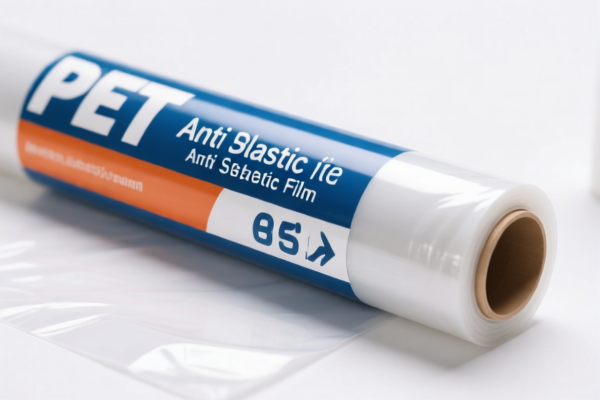
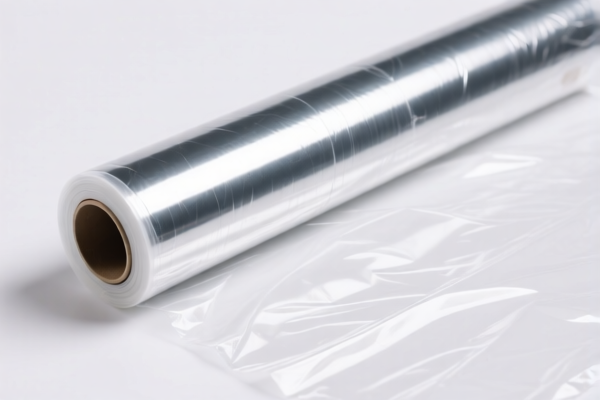
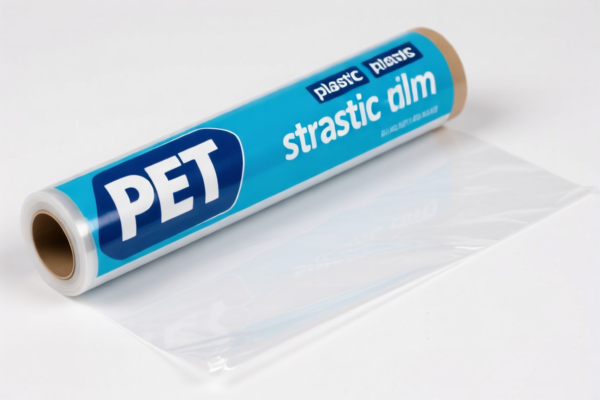
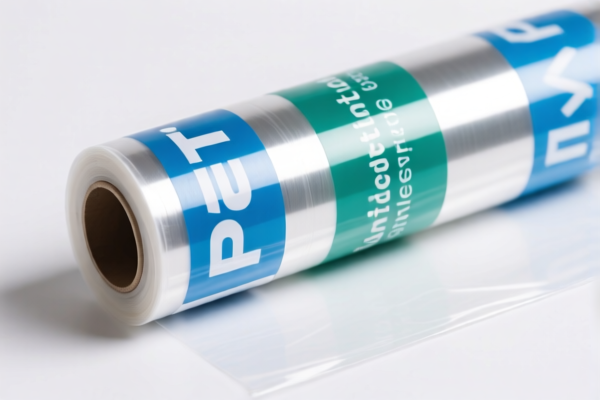
AI Analysis
🎬 Polycarbonate Anti-Static Film (PC Film)
🌐 HS Code Reference & Customs Clearance Guide | 2026 Latest Tariff Analysis | Professional Customs Strategy
📌 I. Product Definition & Classification: What Exactly is "Polycarbonate Anti-Static Film"?
Polycarbonate (PC) Anti-Static Film is a high-performance plastic film made from polycarbonate resin, treated with anti-static agents to prevent dust accumulation and electrostatic discharge. It is widely used in electronics manufacturing, solar panels, medical devices, and industrial automation.
In international trade, it can be classified into different HS codes depending on its physical form, composition, and specific application. Below are the possible classifications based on the provided data.
⚠️ Key Distinction Points:
- If it is a free-standing film (unrolled, thin, flexible) → Likely falls under Chapter 3919 (Self-adhesive or non-adhesive plastic films).
- If it is a rigid sheet/plate used as a barrier or cover → Likely falls under Chapter 3920 (Plastic plates, sheets, film).
- If it is a finished plastic article (e.g., pre-cut covers, protective masks) → Likely falls under Chapter 3926 (Other plastic articles).
- If it contains high lead content (rare for PC, but possible in specific industrial grades) → Falls under special subheadings.
📦 II. HS Code Classification Details (2026 Latest Tariff Data)
| HS Code | Product Description | Applicable Scenario | Key Characteristics |
|---|---|---|---|
3919.90.50.60 |
Polycarbonate film, classified as plastic film | Roll film, unrolled, flexible | ✅ Pure PC film, anti-static treated |
3920.69.00.00 |
Polycarbonate plastic plates, sheets, film | Rigid sheets, thick plates, or film-like sheets | ✅ Semi-rigid or rigid form |
3926.90.99.89 |
Other plastic articles, other category | Pre-cut protective covers, finished components | ✅ Not raw film, but finished product |
3926.90.94.00 |
Plastic transparent sheets with lead content ≥30% | Special industrial film with high lead (rare) | ⚠️ High lead content, special category |
3919.10.20.55 |
Plastic film, no other sub-category conflict | Standard plastic film, generic classification | ✅ General plastic film, anti-static |
🔍 Important Notes:
-3919.90.50.60and3919.10.20.55are both for plastic films. The distinction lies in specific sub-classifications. If it is a self-adhesive film, it may fall under3919.10. If it is non-adhesive, it may fall under3919.90.
-3920.69.00.00is for polycarbonate plates/sheets. If the product is rigid or thick, it may be misclassified as film. Ensure proper documentation (e.g., thickness, flexibility) to support the correct classification.
-3926.90.99.89is for finished plastic articles. If the film is pre-cut or shaped for specific use, it may not be classified as raw film.
-3926.90.94.00is a special case for films with high lead content. This is unlikely for standard anti-static PC film but must be ruled out if the product contains lead-based additives.
💰 III. 2026 Latest Tariff Rate Breakdown (Including Additional Duties)
✅ Applicable Country: United States (US)
✅ Country of Origin: China (CN)
✅ Effective Date: From November 10, 2025 (including subsequent imports)
🎯 1. 3919.90.50.60 – Polycarbonate Film (Plastic Film)
| Item | Content |
|---|---|
| Base Tariff | 5.8% (ad valorem) |
| USITC Additional Duty | +25% (Section 301) |
| IEEPA Additional Duty | +10% (for Chinese/HK products, from Nov 10, 2025) |
| 122 Provision Duty | +10% |
| Total Tariff | 40.8% |
| Tax Calculation | CIF Value × 40.8% |
| De Minimis Exemption | ❌ Not Eligible (deny_de_minimis) |
| Legal Basis Path | IEEPA:9903.01.25 → IEEPA:9903.01.24 → USITC:3919.90.50.60 → FOOTNOTE:9903.88.01 |
📌 Explanation:
- The 25% USITC duty is from Section 301 of the U.S. Trade Act;
- The 10% IEEPA duty is the additional tariff on Chinese products;
- The 10% 122 Provision duty is another layer of additional tariff;
- Total 40.8% is a very high tariff rate. Proper classification and documentation are critical to avoid misclassification penalties.
🎯 2. 3920.69.00.00 – Polycarbonate Plastic Plates/Sheets/Film
| Item | Content |
|---|---|
| Base Tariff | 4.2% |
| USITC Additional Duty | +25% |
| IEEPA Additional Duty | +10% |
| 122 Provision Duty | +10% |
| Total Tariff | 39.2% |
| Tax Calculation | CIF Value × 39.2% |
| De Minimis Exemption | ❌ Not Eligible |
| Legal Basis Path | IEEPA:9903.01.25 → IEEPA:9903.01.24 → USITC:3920.69.00.00 → FOOTNOTE:9903.88.01 |
📌 Note:
- Similar to3919.90.50.60, but with a slightly lower base tariff (4.2% vs. 5.8%).
- Applicable if the product is rigid or semi-rigid. Ensure proper documentation to support the classification.
🎯 3. 3926.90.99.89 – Other Plastic Articles (Other Category)
| Item | Content |
|---|---|
| Base Tariff | 5.3% |
| USITC Additional Duty | +7.5% |
| IEEPA Additional Duty | +10% |
| 122 Provision Duty | +10% |
| Total Tariff | 22.8% |
| Tax Calculation | CIF Value × 22.8% |
| De Minimis Exemption | ❌ Not Eligible |
| Legal Basis Path | IEEPA:9903.01.25 → IEEPA:9903.01.24 → USITC:3926.90.99.89 → FOOTNOTE:9903.88.01 |
📌 Note:
- This is the lowest total tariff (22.8%) among the options.
- Applicable if the product is a finished plastic article (e.g., pre-cut protective covers).
- Ensure the product is not considered "raw film" to qualify for this lower rate.
🎯 4. 3926.90.94.00 – Plastic Transparent Sheets with Lead Content ≥30%
| Item | Content |
|---|---|
| Base Tariff | 0.0% |
| USITC Additional Duty | +25% |
| IEEPA Additional Duty | +10% |
| 122 Provision Duty | +10% |
| Total Tariff | 35.0% |
| Tax Calculation | CIF Value × 35.0% |
| De Minimis Exemption | ❌ Not Eligible |
| Legal Basis Path | IEEPA:9903.01.25 → IEEPA:9903.01.24 → USITC:3926.90.94.00 → FOOTNOTE:9903.88.01 |
📌 Note:
- Applicable only if the product contains ≥30% lead by weight.
- This is a special case and unlikely for standard anti-static PC film.
- If the product does not meet this criteria, do not use this HS code.
🎯 5. 3919.10.20.55 – Plastic Film (No Other Sub-Category Conflict)
| Item | Content |
|---|---|
| Base Tariff | 5.8% |
| USITC Additional Duty | +25% |
| IEEPA Additional Duty | +10% |
| 122 Provision Duty | +10% |
| Total Tariff | 40.8% |
| Tax Calculation | CIF Value × 40.8% |
| De Minimis Exemption | ❌ Not Eligible |
| Legal Basis Path | IEEPA:9903.01.25 → IEEPA:9903.01.24 → USITC:3919.10.20.55 → FOOTNOTE:9903.88.01 |
📌 Note:
- Similar to3919.90.50.60but under a different subheading.
- Applicable if the product is a generic plastic film without specific sub-category conflicts.
- Ensure the product description matches this classification.
🛠️ IV. Customs Clearance Practical Advice (Real-World Pitfall Guide)
✅ 1. Required Documentation Checklist (All are mandatory)
| Document | Required | Description |
|---|---|---|
| ✅ Product Specification Sheet | ✔️ | Includes dimensions, thickness, anti-static properties, material composition |
| ✅ Material Safety Data Sheet (MSDS) | ✔️ | Proves no lead content >30% (if claiming 3926.90.99.89 or 3926.90.94.00) |
| ✅ Product Photos (including labels) | ✔️ | Clear images showing product form (roll, sheet, pre-cut) |
| ✅ Third-Party Test Report | ✔️ | Anti-static performance, lead content test, material composition |
| ✅ Commercial Invoice | ✔️ | Must accurately describe product as "Polycarbonate Anti-Static Film" |
| ✅ Certificate of Origin (CO) | ✔️ | If not from China, may qualify for reduced tariffs |
| ✅ Packing List | ✔️ | Details packaging to avoid misclassification as multiple items |
✅ 2. Declaration Tips (Key Phrases to Use)
🔥 “Form Matters: Film vs. Sheet vs. Article!”
| Scenario | Correct Declaration | Incorrect Practice |
|---|---|---|
| Roll of flexible film | 3919.90.50.60 or 3919.10.20.55 |
Misdeclare as sheet → 39.2% |
| Rigid polycarbonate sheet | 3920.69.00.00 |
Misdeclare as film → 40.8% |
| Pre-cut protective cover | 3926.90.99.89 |
Misdeclare as raw film → 40.8% |
| Product with ≥30% lead | 3926.90.94.00 |
Misdeclare as standard film → 40.8% |
✅ 3. Special Cases Handling
| Scenario | Handling Advice |
|---|---|
| OEM Custom Film | Provide customer order + design specs to avoid "non-standard" classification |
| Anti-Static Film for Electronics | Ensure it is not considered a "finished electronic component" |
| High Lead Content | If lead content is ≥30%, use 3926.90.94.00 with proper documentation |
| Pre-Cut Sizes | If pre-cut for specific use, consider 3926.90.99.89 for lower tariff |
🌍 V. Global Market Clearance Comparison (2026 Latest)
| Country/Region | Recommended HS Code | Tariff | Certification Requirements | Notes |
|---|---|---|---|---|
| 🇺🇸 United States | 3919.90.50.60 or 3926.90.99.89 |
22.8%–40.8% | FCC, RoHS (if applicable) | High tariffs for Chinese origin |
| 🇨🇳 China | 3919.90.50.60 |
5.8% | CCC, RoHS | No additional duties |
| 🇪🇺 European Union | 3919.90.50.60 |
0%–6.5% | CE, RoHS | No additional duties |
| 🇦🇺 Australia | 3919.90.50.60 |
5% | RCM | No additional duties |
| 🇯🇵 Japan | 3919.90.50.60 |
0%–5.5% | PSE | No additional duties |
📌 Conclusion:
- The United States imposes the highest tariffs on Chinese-origin polycarbonate films;
- China, EU, Australia, and Japan have lower or no additional duties;
- Consider sourcing from non-China origins to reduce tariff burden.
📌 VI. Common Mistakes & Pitfall Guide (Lessons Learned)
❌ Mistake 1: Misdeclaring a rigid sheet as a flexible film
👉 Consequence: Tariff increases from 39.2% to 40.8% → Overpayment!
❌ Mistake 2: Declaring a pre-cut product as raw film
👉 Consequence: Tariff increases from 22.8% to 40.8% → Overpayment!
❌ Mistake 3: Failing to provide lead content test for high-lead products
👉 Consequence: Misclassification → Penalties and delays!
❌ Mistake 4: Using vague descriptions like "Plastic Film"
👉 Consequence: Customs may classify under highest tariff → 40.8%!
✅ Correct Approach:
"Polycarbonate Anti-Static Film, Roll, 0.5mm Thickness, Non-Adhesive, for Electronics Protection, Model XYZ, RoHS Compliant"
🎯 VII. Conclusion: Professional Declaration Saves Money!
🎯 Remember the Key Points:
🔹 "Form determines HS: Film, Sheet, or Article!"
🔹 "Tariff range: 22.8% to 40.8%, depending on classification!"
🔹 "Documentation is key: Specifications, MSDS, Test Reports!"
📌 Pro Tip:
If your polycarbonate film is originating from Vietnam, Mexico, Thailand, or Malaysia, you may qualify for IEEPA exemption, reducing the tariff to 0%–5.8%.
Consider applying for an Advance Ruling to avoid customs disputes.
📣 Immediate Action:
📞 Contact a professional customs broker + Provide product images + Apply for HS Code Advance Ruling
🚀 Ensure smooth customs clearance, efficient export, and maximized profit!
✨ Professional customs clearance starts with accurate classification!
💼 Every cent of cost deserves precise calculation!
Customer Reviews
About HS Code Classification
The Harmonized System (HS) is an internationally standardized nomenclature developed by the World Customs Organization (WCO) to classify traded products. Over 200 countries use the HS system as the basis for customs tariffs, trade statistics, and import/export regulations.
Each HS code follows a hierarchical structure:
- Chapter (2 digits) — Broad category of goods (e.g., Chapter 84: Machinery and Mechanical Appliances)
- Heading (4 digits) — More specific grouping within the chapter
- Subheading (6 digits) — Internationally standardized breakdown, used by all WCO member countries
- National subdivisions (8-10 digits) — Country-specific extensions for further classification, such as US HTSUS 10-digit codes
Correct HS code classification is essential for smooth customs clearance, accurate duty payment, and compliance with trade regulations. Misclassification can lead to customs delays, overpayment of duties, or penalties.
When importing from CN to US, the applicable tariff rates may include:
- Most-Favored-Nation (MFN) rate — The standard duty rate applied to WTO members
- General rate — Applied to countries without trade agreements
- Trade remedy duties — Additional tariffs such as Section 301 (anti-dumping), Section 232 (national security), or countervailing duties
The information provided on this page is for reference purposes only. For official classification, please consult with your local customs authority or a licensed customs broker.