Polycarbonate Anti static Board
CN → US| HS Code | Tariff Rate | Origin | Destination | Doc |
|---|---|---|---|---|
| 3921190090 | 41.5% | CN | US | Official Doc |
| 3920992000 | 39.2% | CN | US | Official Doc |
| 3920995000 | 40.8% | CN | US | Official Doc |
| 3921905050 | 39.8% | CN | US | Official Doc |
| 3926909989 | 22.8% | CN | US | Official Doc |
Product Images
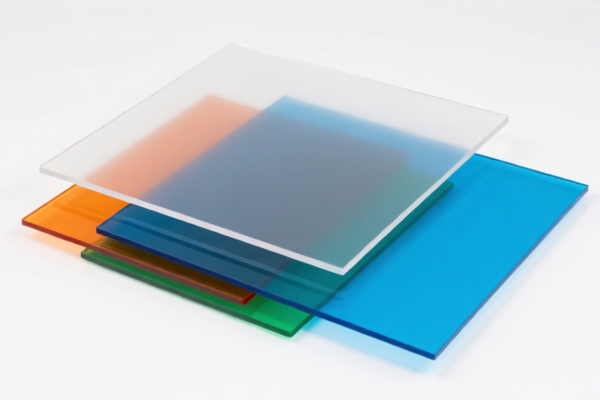


AI Analysis
🛡️ Polycarbonate Anti-static Board (PC Anti-static Board)
🌐 HS Code Reference & Clearance Guide | 2026 Latest Tariff Analysis | Professional Customs Strategy
📌 One, Product Definition & Classification: Do You Know Your "Anti-static Board"?
Polycarbonate Anti-static Boards are high-performance engineering plastics used in electronics manufacturing, cleanrooms, semiconductor packaging, and precision equipment where static electricity (ESD) must be strictly controlled.
In international trade, these boards are classified based on: - Material Composition: Polycarbonate (PC), Cellulose Ester, or other synthetic polymers. - Form Factor: Sheet, plate, or film (no further fabricated shapes like containers or fittings). - Function: Anti-static properties (usually via conductive additives or surface coatings).
⚠️ Key Classification Distinctions:
- If the board is purely a plastic sheet with anti-static treatment → Typically falls under Chapter 39 (Plastics).
- If the board includes additional functional components (e.g., embedded circuits, metal frames, or specialized fittings) → May shift to Chapter 85 (Electrical) or Chapter 90 (Optical/Measurement).
- Cellulose Ester variants (less common but possible) may fall under a different subheading due to material specificity.
📦 Two, HS Code Classification Details (2026 Latest Tariff Reference)
| HS Code | Product Description | Material / Form | Tax Rate (Total) | Key Tax Breakdown |
|---|---|---|---|---|
3921.19.00.90 |
Plastic Anti-static Board | Polycarbonate, Sheet/Plate | 41.5% | Base: 6.5% + Add-on: 25% + 122 Clause: 10% |
3920.99.20.00 |
Plastic Anti-static Board | Other Plastic, Sheet/Plate | 39.2% | Base: 4.2% + Add-on: 25% + 122 Clause: 10% |
3920.99.50.00 |
Plastic Anti-static Board | Plastic, Sheet/Plate (Generic) | 40.8% | Base: 5.8% + Add-on: 25% + 122 Clause: 10% |
3921.90.50.50 |
Plastic Anti-static Board | Polycarbonate (Inferred Category) | 39.8% | Base: 4.8% + Add-on: 25% + 122 Clause: 10% |
3926.90.99.89 |
Cellulose Ester Anti-static Board | Cellulose Ester, Other Plastic Product | 22.8% | Base: 5.3% + Add-on: 7.5% + 122 Clause: 10% |
🔍 Critical Notes:
- All Polycarbonate boards fall under 3921 or 3920 depending on whether they are "other plastics" or "other shaped plastics".
- Cellulose Ester boards are treated as "other plastic products" under 3926, with a significantly lower total tax rate (22.8%).
- All HS Codes include Section 122 additional tariffs (10%), reflecting U.S. trade policy measures on Chinese-origin goods.
💰 Three, 2026 Latest Tariff Rate Breakdown (Including Surcharges & Policy Add-ons)
✅ Applicable Country: USA
✅ Origin: China (CN)
✅ Effective Date: November 10, 2025 (including future imports)
🎯 1. 3921.19.00.90 — Polycarbonate Anti-static Board (Primary Plastic Category)
| Item | Content |
|---|---|
| Base Tariff | 6.5% |
| Section 301 Surcharge | +25% |
| 122 Clause Tariff | +10% |
| Total Tax Rate | 41.5% |
| Tax Calculation | CIF Value × 41.5% |
| De Minimis Exemption? | ❌ No (deny_de_minimis) |
| Legal Path | Section 122 → 301 List → 3921.19.00.90 |
📌 Explanation:
- The 25% surcharge comes from Section 301 of the Trade Act of 1974.
- The 10% 122 Clause reflects additional measures under the U.S.-China Trade Agreement.
- Total 41.5% is a high tariff, requiring strategic planning for cost control.
🎯 2. 3920.99.20.00 — Other Plastic Anti-static Board (Generic Plastic Category)
| Item | Content |
|---|---|
| Base Tariff | 4.2% |
| Section 301 Surcharge | +25% |
| 122 Clause Tariff | +10% |
| Total Tax Rate | 39.2% |
| Tax Calculation | CIF × 39.2% |
| De Minimis Exemption? | ❌ No |
| Legal Path | Section 122 → 301 List → 3920.99.20.00 |
📌 Note:
- Slightly lower base tariff, but same surcharges apply.
- Suitable for non-polycarbonate anti-static boards (e.g., ABS, PS, PVC blends).
🎯 3. 3920.99.50.00 — Plastic Anti-static Board (General Plastic Sheet)
| Item | Content |
|---|---|
| Base Tariff | 5.8% |
| Section 301 Surcharge | +25% |
| 122 Clause Tariff | +10% |
| Total Tax Rate | 40.8% |
| Tax Calculation | CIF × 40.8% |
| De Minimis Exemption? | ❌ No |
| Legal Path | Section 122 → 301 List → 3920.99.50.00 |
📌 Note:
- Applies to general plastic sheets with anti-static treatment.
- Common for custom-shaped or molded anti-static boards.
🎯 4. 3921.90.50.50 — Polycarbonate Board (Inferred Category)
| Item | Content |
|---|---|
| Base Tariff | 4.8% |
| Section 301 Surcharge | +25% |
| 122 Clause Tariff | +10% |
| Total Tax Rate | 39.8% |
| Tax Calculation | CIF × 39.8% |
| De Minimis Exemption? | ❌ No |
| Legal Path | Section 122 → 301 List → 3921.90.50.50 |
📌 Note:
- Inferred classification based on product characteristics.
- Often used when the exact subheading is unclear but meets general criteria.
🎯 5. 3926.90.99.89 — Cellulose Ester Anti-static Board (Special Material)
| Item | Content |
|---|---|
| Base Tariff | 5.3% |
| Section 301 Surcharge | +7.5% |
| 122 Clause Tariff | +10% |
| Total Tax Rate | 22.8% |
| Tax Calculation | CIF × 22.8% |
| De Minimis Exemption? | ❌ No |
| Legal Path | Section 122 → 301 List → 3926.90.99.89 |
📌 Note:
- Lowest tax rate among all options due to 7.5% surcharge instead of 25%.
- Ideal for cellulose-based anti-static boards or materials with unique chemical properties.
🛠️ Four, Customs Clearance Practical Tips (Avoid Pitfalls)
✅ 1. Required Documentation Checklist (All Must Be Provided)
| Document | Required? | Notes |
|---|---|---|
| ✅ Product Spec Sheet | ✔️ | Must include material type, thickness, size, anti-static properties |
| ✅ Technical Drawing / Structure Diagram | ✔️ | Clarifies if any metal or electronic components are embedded |
| ✅ Product Photos (Including Label) | ✔️ | Show model number, brand, input/output specs |
| ✅ Third-Party Test Report | ✔️ | ESD testing, RoHS, UL, FCC (if applicable) |
| ✅ Commercial Invoice | ✔️ | Must clearly state "Polycarbonate Anti-static Board" or "Cellulose Ester Anti-static Board" |
| ✅ Certificate of Origin (CO) | ✔️ | For potential tariff exemptions if origin is not China |
| ✅ Packing List | ✔️ | Avoid split declarations; keep unit integrity |
✅ 2. Declaration Tips (Key Mnemonic)
🔥 “Material First, Form Second, Function Third, Tax Last!”
| Scenario | Correct Declaration | Incorrect Action |
|---|---|---|
| Polycarbonate anti-static board | 3921.19.00.90 |
Misdeclare as 3926 → Higher tax |
| Cellulose ester board | 3926.90.99.89 |
Misdeclare as 3920 → Missed tax saving |
| Board with embedded circuit | 8528.xx.xx |
Declare as 3921 → Risk of reclassification |
| Generic plastic board | 3920.99.50.00 |
Over-specify material → Unnecessary audit |
✅ 3. Special Cases Handling
| Case | Recommendation |
|---|---|
| OEM Custom Boards | Provide client order + design specs to avoid "non-standard" classification |
| Anti-static Boards with Metal Frames | Consider separate declaration for frame (7326.90.99.99) |
| Boards for Medical Use | May qualify for "non-commercial" exemption with proof |
| Military / Aerospace Boards | Request "special use" classification; tax may be reduced |
🌍 Five, Global Market Comparison (2026 Tariff Overview)
| Country/Region | Recommended HS Code | Tariff | Certification | Notes |
|---|---|---|---|---|
| 🇺🇸 USA | 3921.19.00.90 |
41.5% (China) | RoHS, UL | Highest tax; cellulosic alternative saves 18.7% |
| 🇨🇳 China | 3921.19.00.90 |
5% | CCC + RoHS | No 301/122 surcharges |
| 🇪🇺 EU | 3921.19.00.90 |
2.7% | CE + REACH | No major surcharges |
| 🇦🇺 Australia | 3921.19.00.90 |
5% | RCM | No surcharges |
| 🇯🇵 Japan | 3921.19.00.90 |
0% | PSE | No surcharges |
📌 Conclusion:
- USA imposes the highest tariff (41.5%) for Polycarbonate boards from China.
- Cellulose Ester variant offers a 18.7% tax saving in the U.S. market.
- Consider supply chain diversification or material substitution for cost efficiency.
📌 Six, Common Mistakes & Pitfalls (Lessons Learned)
❌ Mistake 1: Declaring Polycarbonate board as "Cellulose Ester" to avoid tax
👉 Result: False declaration → Seizure + Fine
❌ Mistake 2: Mixing metal frame with board and declaring as one item
👉 Result: Tax misclassification → Back taxes + Penalty
❌ Mistake 3: Not providing anti-static test report
👉 Result: Customs delays → 30+ day clearance
❌ Mistake 4: Using vague terms like "plastic sheet" without specifying material
👉 Result: Customs audit → Reclassification + Higher tax
✅ Correct Approach:
"Polycarbonate Anti-static Board, 3mm, 1200x600mm, Surface Resistance <10^9 Ohm, ESD Safe, Model XYZ, RoHS & UL Certified"
🎯 Seven, Conclusion: Smart Classification, Faster Clearance, Lower Costs
🎯 Remember the Mnemonic:
🔹 “Material defines Code, Form follows Material, Function adds clarity, Tax follows all!”
🔹 “HS Code is life, Tax rate is death, Declare correctly, Profit stays!”
📌 Pro Tip:
If your board is originally made in Vietnam, Mexico, Thailand, or Malaysia, you may apply for Section 122/301 exemptions, reducing tax to 0%~5%.
建议 提前申请预裁定(Advance Ruling) 以避免清关风险。
📣 Take Action Now:
📞 Contact a professional customs broker + Provide product specs + Apply for HS Code Pre-Ruling
🚀 Get your Polycarbonate Anti-static Boards cleared fast, exported profitably, and scaled globally!
✨ Professional Customs, Starts with Accurate Classification!
💼 Every dollar saved is a dollar earned!
Customer Reviews
About HS Code Classification
The Harmonized System (HS) is an internationally standardized nomenclature developed by the World Customs Organization (WCO) to classify traded products. Over 200 countries use the HS system as the basis for customs tariffs, trade statistics, and import/export regulations.
Each HS code follows a hierarchical structure:
- Chapter (2 digits) — Broad category of goods (e.g., Chapter 84: Machinery and Mechanical Appliances)
- Heading (4 digits) — More specific grouping within the chapter
- Subheading (6 digits) — Internationally standardized breakdown, used by all WCO member countries
- National subdivisions (8-10 digits) — Country-specific extensions for further classification, such as US HTSUS 10-digit codes
Correct HS code classification is essential for smooth customs clearance, accurate duty payment, and compliance with trade regulations. Misclassification can lead to customs delays, overpayment of duties, or penalties.
When importing from CN to US, the applicable tariff rates may include:
- Most-Favored-Nation (MFN) rate — The standard duty rate applied to WTO members
- General rate — Applied to countries without trade agreements
- Trade remedy duties — Additional tariffs such as Section 301 (anti-dumping), Section 232 (national security), or countervailing duties
The information provided on this page is for reference purposes only. For official classification, please consult with your local customs authority or a licensed customs broker.