Polycarbonate Automotive Grade Sheet
CN → US| HS Code | Tariff Rate | Origin | Destination | Doc |
|---|---|---|---|---|
| 3907915000 | 41.5% | CN | US | Official Doc |
| 3921190090 | 41.5% | CN | US | Official Doc |
| 3921905050 | 39.8% | CN | US | Official Doc |
| 8708295160 | 0.0% | CN | US | Official Doc |
| 3921190090 | 41.5% | CN | US | Official Doc |
Product Images

AI Analysis
🚗 Polycarbonate Automotive Grade Sheet (PC Sheets)
🌐 HS Code Reference & Customs Clearance Guide | 2026 Latest Tariff Analysis | Professional Clearance Strategy
📌 Part 1: Product Definition & Classification Strategy
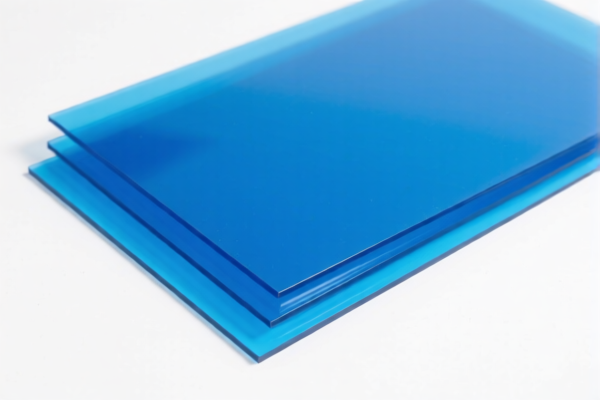
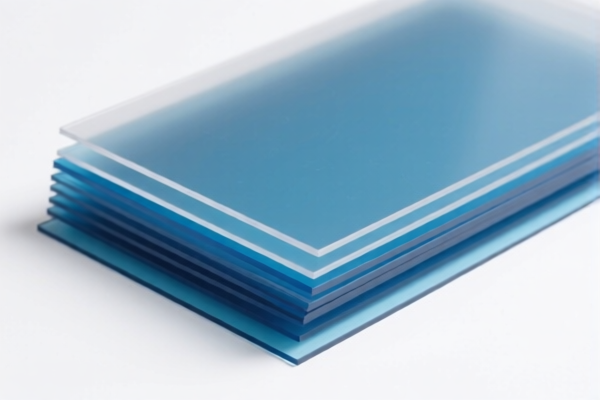
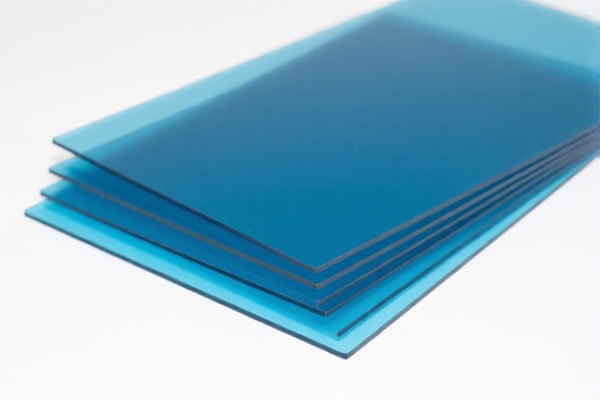
Polycarbonate (PC) sheets, specifically those rated for Automotive Grade, are high-performance transparent thermoplastics known for impact resistance, thermal stability, and optical clarity. In international trade, their classification depends heavily on whether they are viewed as a raw material (plastic sheet) or a finished/auto part.
⚠️ Critical Classification Logic:
- If the sheet is a generic flat plate used as a material substrate →归入 Chapter 39 (Plastics).
- If the sheet is shaped/specialized specifically for body parts (hoods, bumpers) and fits Chapter 87 specific descriptions → Might be misclassified under Chapter 87 (Vehicles).
- Note: Most raw PC sheets are classified as plastic plates, not vehicle parts, unless specially molded.
📦 Part 2: HS Code Classification Details (2026 Latest Tariff Mapping)
Based on the provided data for "Polycarbonate Automotive Grade Sheet," here are the potential HS Codes and their logical derivations.
| HS Code | Product Description / Logic | Applicable Scenario | Tax Rate Structure |
|---|---|---|---|
3907.91.50.00 |
Unsaturated Polyester Based (Note: Data suggests this code is considered for "Automotive Grade Plates" despite material mismatch, likely due to form factor). | Boards/Plates used in automotive contexts. | 41.5% (Base 6.5% + 25% Section 301 + 10% Sec 122) |
3921.19.00.90 |
Plastic Plates/Sheets: Fits the definition of "Plastic Resin" in plate/sheet form. Most accurate for standard PC sheets. | General purpose PC sheets, glazing, protective shields. | 41.5% (Base 6.5% + 25% Section 301 + 10% Sec 122) |
3921.90.50.50 |
Other Plastic Plates/Sheets: Falls under "Other" categories for plastic/resin boards. | Specialized resin boards not fitting standard polyethylene/polypropylene definitions. | 39.8% (Base 4.8% + 25% Section 301 + 10% Sec 122) |
8708.29.51.60 |
Vehicle Body Parts/Accessories: Classified under "Body Parts" if shaped for specific automotive use. | High Risk Classification: If the sheet is pre-formed or explicitly labeled as a body component. | 87.5% (Base 2.5% + 25% Section 301 + 10% Sec 122 + 50% Steel/Aluminum/Copper surcharge if applicable) |
3920.10.00.00 |
Polycarbonate Plates/Sheets: Specifically for Polycarbonate (PC) plastic plates. | Direct classification for PC sheets. | 39.2% (Base 4.2% + 25% Section 301 + 10% Sec 122) |
🔍 Key Observation:
- Codes3921and3907attract a 41.5% total tax.
- Code3920.10.00.00(Specifically for PC) is slightly lower at 39.2%.
- Code8708.29.51.60is dangerous due to potential additional 50% surcharge for metal-containing components or broad automotive part rules, totaling 87.5%.
💰 Part 3: Detailed Tariff Breakdown (2026 Latest Rates)
✅ Applicable Country: United States (US)
✅ Origin: China (CN)
✅ Effective Date: Post-November 2025 adjustments (Section 301 & 122 tariffs active)
🎯 1. The "Safe" Plastic Plate Classifications (3921.19.00.90, 3907.91.50.00)
| Item | Details |
|---|---|
| Base Tariff | 6.5% |
| Section 301 Tariff | +25.0% (Trade Act of 1974, Section 301) |
| Section 122 Tariff | +10.0% (Specific automotive/material surcharges) |
| Total Rate | 41.5% |
| Calculation Base | CIF Value (Cost + Insurance + Freight) |
| De Minimis Exemption | ❌ Not Applicable (Denied for China-origin goods under current rules) |
📌 Explanation:
- These codes classify the product as a plastic sheet/plate.
- The 25% Section 301 tariff is standard for most Chinese plastics.
- The 10% Section 122 is an additional punitive tariff on specific categories of Chinese imports.
- Total Burden: ~41.5% of the declared value.
🎯 2. The Specific Polycarbonate Classification (3920.10.00.00)
| Item | Details |
|---|---|
| Base Tariff | 4.2% |
| Section 301 Tariff | +25.0% |
| Section 122 Tariff | +10.0% |
| Total Rate | 39.2% |
| Calculation Base | CIF Value |
| De Minimis Exemption | ❌ Not Applicable |
📌 Advantage:
- This is the most precise code for Polycarbonate specifically.
- It saves 2.3% compared to the generic "Plastic Plate" (3921) or "Unsaturated Polyester" (3907) classifications.
- Recommendation: If the sheet is purely Polycarbonate, use3920.10.00.00to minimize cost.
🎯 3. The High-Risk Automotive Part Classification (8708.29.51.60)
| Item | Details |
|---|---|
| Base Tariff | 2.5% |
| Section 301 Tariff | +25.0% |
| Section 122 Tariff | +10.0% |
| Steel/Aluminum/Copper Surcharge | +50.0% (If deemed applicable to "auto parts" with metal content or broad categorization) |
| Total Rate | ~87.5% (2.5% + 25% + 10% + 50%) |
| De Minimis Exemption | ❌ Not Applicable |
🚨 WARNING:
- Classifying a raw sheet as a "Vehicle Body Part" (8708) is risky.
- The 50% additional tariff drastically increases costs.
- Only use this if the sheet is pre-molded, painted, and specifically designed to attach directly to a vehicle body without further fabrication.
🛠️ Part 4: Customs Clearance Practical Advice
✅ 1. Documentation Checklist
| Document | Required? | Purpose |
|---|---|---|
| Product Specification Sheet | ✅ Yes | Must explicitly state "Polycarbonate," "Automotive Grade," "Thickness," "Transparency." |
| Material Safety Data Sheet (MSDS) | ✅ Yes | Proves chemical composition (PC resin), helps avoid misclassification as hazardous materials. |
| Commercial Invoice | ✅ Yes | Clearly state "Polycarbonate Sheets" NOT "Vehicle Parts" unless fully assembled. |
| Bill of Lading | ✅ Yes | Ensure packaging matches invoice description (e.g., "Rolled Sheets" vs "Body Panels"). |
| Certificate of Origin | ✅ Yes | To determine eligibility for any potential exemptions (though unlikely for China). |
✅ 2. Critical Declaration Tips
🔥 Golden Rule:
"Declare as Plastic Sheet, NOT Auto Part, to Save 48%!"
| Scenario | Recommended HS Code | Reason |
|---|---|---|
| Raw PC Sheet (Cut to size, clear/tinted) | 3920.10.00.00 |
Most accurate; lowest tax (39.2%). |
| PC Sheet with Automotive Application Label | 3921.19.00.90 |
Safe fallback if 3920 is disputed; tax 41.5%. |
| Pre-Molded Car Hood/Fender | 8708.29.51.60 |
Avoid unless necessary; Tax 87.5%. |
| PC Sheets for Windshields/Glazing | 3920.10.00.00 |
Classified as plastic plate, not glass. |
✅ 3. Common Pitfalls to Avoid
❌ Pitfall 1: Using "Automotive Grade" in the name implies it must be a vehicle part.
👉 Fix: Describe it as "Polycarbonate Sheet for Automotive Interior/Exterior Applications" to keep it in Chapter 39.
❌ Pitfall 2: Assuming "Auto Parts" always have low base tariffs (2.5%).
👉 Fix: The 50% Section 122/301 combination for auto parts from China can exceed 80%. Plastic sheets (39-41%) are cheaper.
❌ Pitfall 3: Misidentifying the resin type.
👉 Fix: If it's Polycarbonate, do not use 3907 (Unsaturated Polyester) or 3921 (Other Plastic) if 3920 (Polycarbonate) is available. Precision saves money.
🌍 Part 5: Global Market Comparison (2026 Outlook)
| Market | Recommended HS Code | Approx. Tax (China Origin) | Key Requirement |
|---|---|---|---|
| 🇺🇸 USA | 3920.10.00.00 |
39.2% | Must prove PC material; High scrutiny on Section 301. |
| 🇨🇳 China | 3920.10.00.00 |
~6-8% | Standard import VAT + Consumption Tax (if any). |
| 🇪🇺 EU | 3920.10.00 |
~6.5% | CE Marking for automotive use; No Section 301. |
| 🇦🇺 Australia | 3920.10.00 |
~5% | GSRV Certification for auto parts. |
📌 Conclusion:
- The US market is the most expensive due to Section 301 and 122 tariffs.
- Strategic Recommendation: Always classify as3920.10.00.00(Polycarbonate Plate) rather than8708(Auto Part) or generic plastics (3921) to optimize cost and compliance.
📌 Part 6: Action Plan for Importers
- Verify Material: Confirm the sheet is 100% Polycarbonate (PC). If blended, use
3921.19.00.90. - Check Shape: Ensure the sheets are flat/rolled. If molded into specific car body shapes, consult a customs broker about
8708risks. - Documentation: Label products as "Polycarbonate Sheets" with application notes like "For automotive interior/exterior fabrication."
- Pre-Arrival Ruling: Consider applying for a Binding Ruling from CBP to lock in the
3920.10.00.00classification and avoid post-import audits.
🎯 Pro Tip:
"Don't let 'Auto Grade' scare you into 'Auto Parts' tax brackets. Stay in Chapter 39, pay 39.2%, and save your margin!"
✨ Professional Clearance Starts with Precise Classification!
💼 Your Bottom Line Depends on the First Digit of the HS Code!
Customer Reviews
About HS Code Classification
The Harmonized System (HS) is an internationally standardized nomenclature developed by the World Customs Organization (WCO) to classify traded products. Over 200 countries use the HS system as the basis for customs tariffs, trade statistics, and import/export regulations.
Each HS code follows a hierarchical structure:
- Chapter (2 digits) — Broad category of goods (e.g., Chapter 84: Machinery and Mechanical Appliances)
- Heading (4 digits) — More specific grouping within the chapter
- Subheading (6 digits) — Internationally standardized breakdown, used by all WCO member countries
- National subdivisions (8-10 digits) — Country-specific extensions for further classification, such as US HTSUS 10-digit codes
Correct HS code classification is essential for smooth customs clearance, accurate duty payment, and compliance with trade regulations. Misclassification can lead to customs delays, overpayment of duties, or penalties.
When importing from CN to US, the applicable tariff rates may include:
- Most-Favored-Nation (MFN) rate — The standard duty rate applied to WTO members
- General rate — Applied to countries without trade agreements
- Trade remedy duties — Additional tariffs such as Section 301 (anti-dumping), Section 232 (national security), or countervailing duties
The information provided on this page is for reference purposes only. For official classification, please consult with your local customs authority or a licensed customs broker.