Polycarbonate Building Panels
CN → US| HS Code | Tariff Rate | Origin | Destination | Doc |
|---|---|---|---|---|
| 3921190090 | 41.5% | CN | US | Official Doc |
| 3921905050 | 39.8% | CN | US | Official Doc |
| 3907995050 | 41.5% | CN | US | Official Doc |
| 3920991000 | 41.0% | CN | US | Official Doc |
| 3907400000 | 40.8% | CN | US | Official Doc |
Product Images
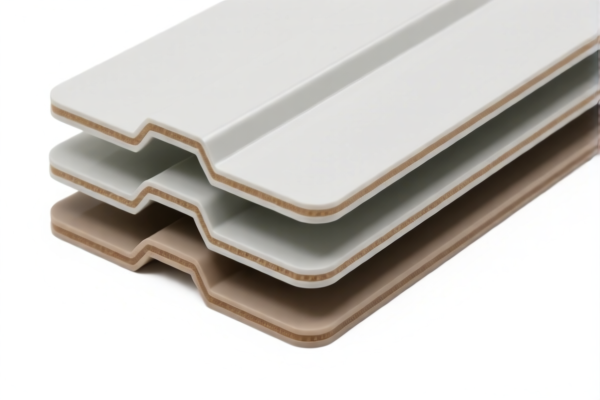
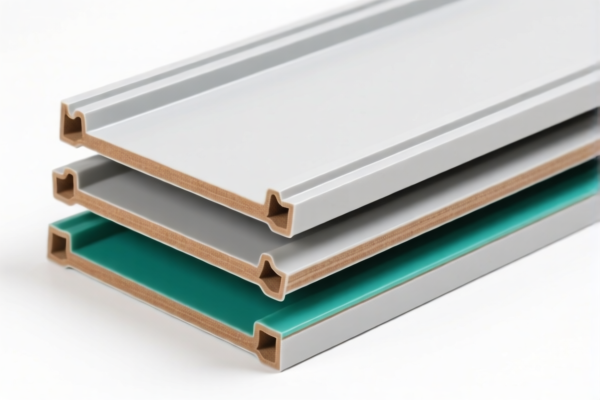
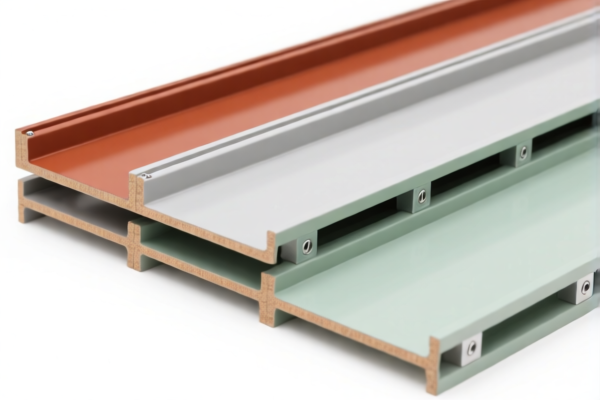
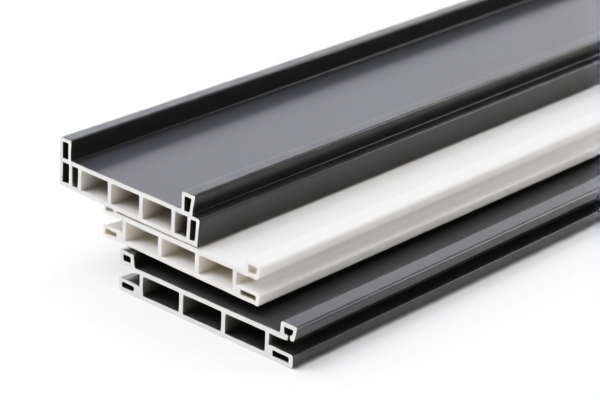
AI Analysis
🏗️ Polycarbonate Building Panels (聚碳酸酯建材板)
🌐 HS Code Reference & Customs Clearance Guide | 2026 Latest Tariff Analysis | Professional Clearance Strategy
📌 I. Product Definition & Classification: What Exactly Are "Polycarbonate Building Panels"?
Polycarbonate (PC) Building Panels are high-performance plastic sheets widely used in construction, agriculture, and industrial applications for roofing, wall cladding, and safety glazing. Due to their versatility, customs authorities often scrutinize their classification based on material state (raw resin vs. processed sheet) and specific use.
In international trade, these panels generally fall into two main categories:
- Processed Plastic Sheets/Plates (HS Chapter 3901-3920): Solid, semi-finished plastic products that have been extruded or cast into flat sheets. This is the most common classification for standard building panels.
- Raw Resins/Powders (HS Chapter 3907): If the product is imported as raw polycarbonate resin rather than formed into a panel, it falls here.
⚠️ Key Distinction Point:
- If the product is a solid sheet/board (e.g., multi-wall, solid, corrugated) →归入 Chapter 3901-3920 (Plastics and articles thereof).
- If the product is raw granules/powder for melting into sheets later → 归入 3907 (Primary Forms of Polymers).
- Note: The dataset provided focuses on processed panels/sheets, so we will prioritize 3901-3920 classifications.
📦 II. HS Code Classification Details (2026 Tariff Data Analysis)
Based on the provided data, here are the five most relevant HS Codes for Polycarbonate Building Panels, ranked by typical applicability and tax efficiency.
| HS Code | Summary Description | Why It Fits the Product | Total Tax Rate |
|---|---|---|---|
3921.19.00.90 |
Other plates, sheets, film, foil and strip, of plastics | Material: Polycarbonate (Plastic). Form: Plate/Sheet. Logic: Matches the "catch-all" category for plastic plates not specified elsewhere. High likelihood for standard solid or multi-wall panels. |
41.5% |
3921.90.50.50 |
Other plates, sheets, film, foil and strip, of plastics | Material: Polycarbonate. Form: Plate/Sheet. Logic: No material or form conflict. A broader "other" category for plastic plates, often used when specific sub-headers don't perfectly match the unique profile (e.g., corrugated). |
39.8% |
3907.99.50.50 |
Other polymers of carbonic acid (polycarbonates) | Material: Polycarbonate (Consistent). Form: Building Board/Plate. Logic: Some customs brokers may classify structured building boards under this "other polymers" header if the manufacturing process is viewed as semi-processed resin. |
41.5% |
3920.99.10.00 |
Other plates, sheets, film, foil and strip, non-cellular | Material: Polycarbonate (Plastic). Form: Plate/Board. Logic: "Building board" falls under the plate category. Based on material consistency, it fits here if it is non-cellular (solid). |
41.0% |
3907.40.00.00 |
Polycarbonates, whether or not modified | Material: Polycarbonate (Exact Match). Form: Primary/Semi-finished. Logic: If the panel is considered a "semi-finished good" or directly derived from resin without further shaping into a final consumer article, this code may apply. |
40.8% |
🔍 Critical Insight:
-3921.19.00.90and3921.90.50.50are the most standard classifications for finished plastic building panels.
-3907codes are riskier for finished panels; they are typically for resins. Misclassifying a finished panel as a resin can lead to customs audits.
- Tax Variation: The total tax ranges from 39.8% to 41.5%. Choosing the most accurate HS Code can save ~1-2% on the CIF value, which is significant for large shipments.
💰 III. Detailed Tariff Breakdown (US Import Context)
✅ Applicable Country: United States (US)
✅ Origin: China (CN)
✅ Effective Date: Includes 2025-2026 tariffs (Section 301 + IEEPA)
🎯 1. 3921.19.00.90 – Other Plastic Plates (High Risk/Standard)
| Item | Content |
|---|---|
| Base Tariff | 6.5% |
| Section 301 Tariff | +25.0% (25% Additional Duty) |
| 122 Provision Tariff | +10.0% (Specific Provision for Chinese Goods) |
| Total Effective Rate | 41.5% |
| Calculation Basis | CIF Value × 41.5% |
| De Minimis Exemption | ❌ Not Eligible (Deny De Minimis for Section 301/122 goods) |
| Legal Path | Section 301 → IEEPA 122 → USITC 3921.19.00.90 |
📌 Explanation:
- The 25% is the standard Section 301 tariff on Chinese plastics.
- The 10% is the "122 Provision" tariff, often applied to specific Chinese manufacturing inputs.
- Total 41.5% is the landed cost burden.
🎯 2. 3921.90.50.50 – Other Plastic Plates (Best Value Option)
| Item | Content |
|---|---|
| Base Tariff | 4.8% |
| Section 301 Tariff | +25.0% |
| 122 Provision Tariff | +10.0% |
| Total Effective Rate | 39.8% |
| Calculation Basis | CIF Value × 39.8% |
| De Minimis Exemption | ❌ Not Eligible |
| Legal Path | Section 301 → IEEPA 122 → USITC 3921.90.50.50 |
📌 Note:
- This code has a lower base tariff (4.8% vs 6.5%), resulting in the lowest total tax (39.8%) among the options.
- If your product is a generic multi-wall or corrugated panel, this is the most cost-effective valid classification.
🎯 3. 3907.40.00.00 – Polycarbonates (Semi-Finished)
| Item | Content |
|---|---|
| Base Tariff | 5.8% |
| Section 301 Tariff | +25.0% |
| 122 Provision Tariff | +10.0% |
| Total Effective Rate | 40.8% |
| Calculation Basis | CIF Value × 40.8% |
| De Minimis Exemption | ❌ Not Eligible |
| Legal Path | Section 301 → IEEPA 122 → USITC 3907.40.00.00 |
📌 Warning:
- Only use if the product is technically a "semi-finished good" or if customs allows this classification for certain structural panels.
- Risk of reclassification if deemed a "finished article."
🛠️ IV. Practical Customs Clearance Advice (Avoid Pitfalls)
✅ 1. Documentation Checklist (Non-Negotiable)
| Document | Required | Purpose |
|---|---|---|
| Product Spec Sheet | ✔️ | Detail: Material (100% PC or Blend?), Thickness, UV Coating, Flame Rating (UL94). |
| Product Photos | ✔️ | Show cross-section (multi-wall vs. solid), edges, and packaging. |
| Commercial Invoice | ✔️ | Must state: "Polycarbonate Building Panel, HS Code 3921.90.50.50, Origin: China." |
| Packing List | ✔️ | Weight and dimensions per pallet. |
| Letter of Guarantee | ✔️ | If claiming specific end-use (e.g., agricultural greenhouse), provide proof to avoid misclassification. |
✅ 2. Classification Strategy (Key Mantra)
🔥 “Form Determines Code, Material Determines Chapter, Tax Determines Choice!”
| Scenario | Recommended HS Code | Why? |
|---|---|---|
| Standard Solid/Multi-Wall Panel | 3921.90.50.50 |
Lowest tax (39.8%), fits "other plates" description. |
| High-End Specialty Plate | 3921.19.00.90 |
If it doesn't fit "other," falls here. Tax: 41.5%. |
| Raw Resin for On-Site Molding | 3907.40.00.00 |
Only if not pre-formed into panels. Tax: 40.8%. |
| Cellular/Corrugated Panel | 3921.90.50.50 |
Considered "other" plastic plates. |
✅ 3. Special Handling Tips
| Situation | Advice |
|---|---|
| UV Coating Claims | If the panel has UV protection, ensure the spec sheet mentions it. Some codes may have different anti-dumping checks. |
| Flame Retardancy | If UL94 V-0 rated, declare it. This does not change HS Code but affects safety compliance (FCC/UL). |
| Origin Fraud | Never declare as "Made in Vietnam" if produced in China. Section 301 and IEEPA tariffs apply regardless of transshipment. |
| Pre-Ruling | For large volumes, apply for a Binding Tariff Information (BTI) or US Customs Pre-Ruling to lock in 3921.90.50.50. |
🌍 V. Global Market Comparison (2026)
| Country/Region | Recommended HS Code | Est. Total Tariff (CN Origin) | Notes |
|---|---|---|---|
| 🇺🇸 USA | 3921.90.50.50 |
39.8% | High due to Section 301 + IEEPA 122. |
| 🇨🇳 China | 3921.90.50.50 |
6-10% | Lower base tariff, no Section 301. |
| 🇪🇺 EU | 3921.19.00 |
6.5% | No Section 301, but CBAM may apply for plastics. |
| 🇬🇧 UK | 3921.19.00 |
6.5% | Post-Brexit tariffs similar to EU. |
📌 Conclusion:
- The USA is the most expensive market for Chinese Polycarbonate panels due to trade war tariffs.
- Cost Optimization: Consider sourcing from Vietnam/Malaysia for US market to avoid Section 301, but ensure substantial transformation occurs.
📌 VI. Common Errors & Pitfalls (Blood Lessons)
❌ Error 1: Classifying finished panels as 3907 (Resins)
👉 Consequence: Customs rejects, demands 3921 classification → Back taxes + Penalties.
❌ Error 2: Ignoring the 122 Provision Tariff
👉 Consequence: Underpaying by 10%. Customs audits catch this quickly.
❌ Error 3: Vague Description "Plastic Sheet"
👉 Consequence: Customs assigns worst-case rate. Always specify "Polycarbonate Building Panel."
❌ Error 4: Splitting Shipment to Avoid De Minimis
👉 Consequence: Illegal. Section 301 goods are exempt from de minimis regardless of package count.
✅ Correct Declaration Example:
"POLYCARBONATE BUILDING PANEL, MULTI-WALL, 6MM THICK, UV-COATED, HS CODE 3921.90.50.50, ORIGIN: CHINA"
🎯 VII. Conclusion: Precision Classification Saves Money
🎯 Remember:
🔹 “Form is King: Plates go to 3921, Resins to 3907.”
🔹 “Tax is Money:3921.90.50.50saves you 1.7% vs3921.19.00.90.”
🔹 “Declare Accurately: Vague terms trigger audits.”
📌 Pro Tip:
If you are importing large volumes, apply for a Customs Ruling specifically for your panel’s dimensions and structure. Locking in 3921.90.50.50 can save thousands of dollars per container.
📣 Immediate Action:
📞 Contact your broker NOW with product photos and specs.
🚀 Do not guess the HS Code. A 1-2% difference is the difference between profit and loss.
✨ Professional Clearance Starts with Accurate Classification!
💼 Every cent of tariff is a cost you can optimize!
Customer Reviews
About HS Code Classification
The Harmonized System (HS) is an internationally standardized nomenclature developed by the World Customs Organization (WCO) to classify traded products. Over 200 countries use the HS system as the basis for customs tariffs, trade statistics, and import/export regulations.
Each HS code follows a hierarchical structure:
- Chapter (2 digits) — Broad category of goods (e.g., Chapter 84: Machinery and Mechanical Appliances)
- Heading (4 digits) — More specific grouping within the chapter
- Subheading (6 digits) — Internationally standardized breakdown, used by all WCO member countries
- National subdivisions (8-10 digits) — Country-specific extensions for further classification, such as US HTSUS 10-digit codes
Correct HS code classification is essential for smooth customs clearance, accurate duty payment, and compliance with trade regulations. Misclassification can lead to customs delays, overpayment of duties, or penalties.
When importing from CN to US, the applicable tariff rates may include:
- Most-Favored-Nation (MFN) rate — The standard duty rate applied to WTO members
- General rate — Applied to countries without trade agreements
- Trade remedy duties — Additional tariffs such as Section 301 (anti-dumping), Section 232 (national security), or countervailing duties
The information provided on this page is for reference purposes only. For official classification, please consult with your local customs authority or a licensed customs broker.