Polycarbonate Bulletproof Sheets
CN → USProduct Images

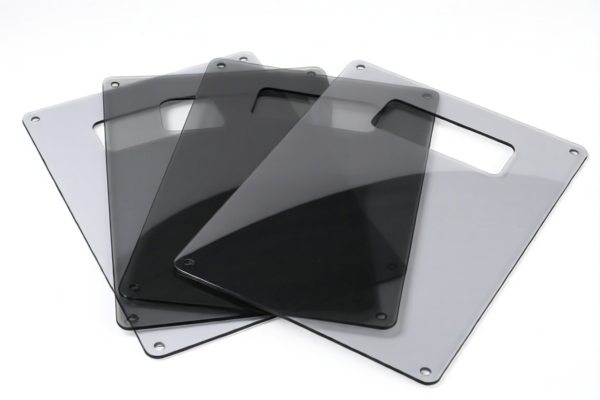
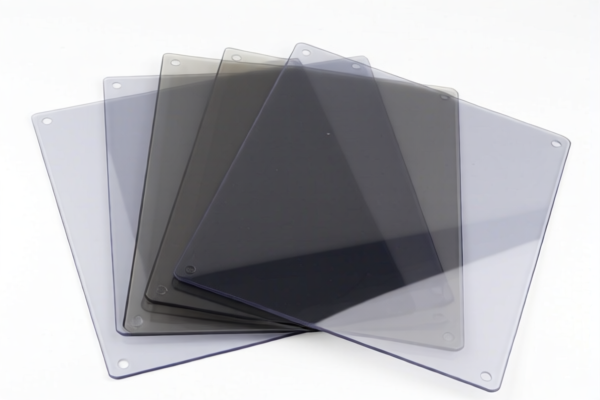
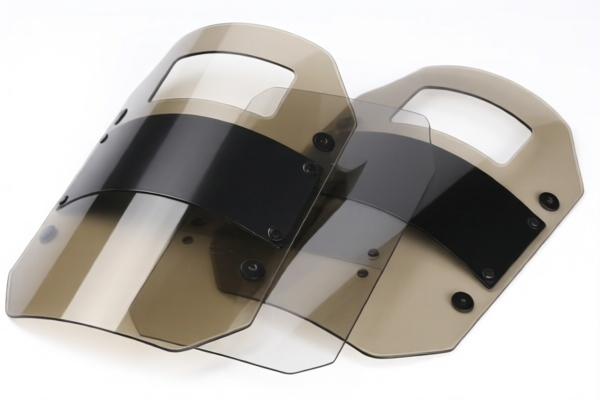
AI Analysis
🛡️ Polycarbonate Bulletproof Sheets (Bullet-Resistant Glass Alternatives)
🌐 HS Code Reference & Customs Clearance Guide | 2026 Latest Tariff Analysis | Professional-Level Customs Strategy
📌 I. Product Definition & Classification: What Exactly is "Bulletproof Sheet"?
Polycarbonate Bulletproof Sheets are high-performance transparent safety barriers used in banks, jewelry stores, government buildings, and high-end residential security. In international trade, they are NOT classified as "glass," despite their transparency.
Core Distinction: 1. Solid Polycarbonate Sheets (Pure PC): Single-layer or multi-layer polycarbonate resin, often with hard-coat surface treatment. HS Chapter 39. 2. Laminated Safety Assemblies (PC + Glass): A composite structure where polycarbonate is bonded to tempered glass or other layers. HS Chapter 70 (if glass is the essential character) or HS Chapter 39 (if polycarbonate is the essential character, though rare for thick ballistic panels).
⚠️ Critical Classification Point:
- If the product is pure polycarbonate (rigid sheet, no glass layers) → Chapter 39.
- If it is a composite (glass + PC + interlayer) → Often classified under 70.09 or 70.07 depending on which layer provides the structural integrity and if it is "safety glass."
- Most common for pure PC ballistic sheets: 3920.62.00.00 or 3920.69.90.00.
📦 II. HS Code Classification Details (2026 Latest Tariff Alignment)
| HS Code | Product Description | Application Scenario | Essential Character |
|---|---|---|---|
3920.62.00.00 |
Polymers of carbonates, other, in primary forms (e.g., plates, sheets) | Pure polycarbonate sheets (non-foamed), thickness > 0.5mm | ✅ Polycarbonate |
3920.69.90.00 |
Other plastics, plates, sheets, film, foil, and strip | Composite PC sheets with additives, coatings, or non-standard forms | ✅ Polycarbonate-based |
7009.92.00.00 |
Mirrors, whether or not framed, of glass (excluding vehicle mirrors) | Not applicable unless mirrored | ❌ N/A |
7007.21.00.00 |
Safety glass consisting of laminated glass, whether or not having an absorbing layer or fitted with an electric conducting layer | Composite Bulletproof Glass (Glass + PC + PVB) | ✅ Glass (if glass is primary) |
9013.90.80.00 |
Parts and accessories for optical instruments | Not applicable unless part of a specific device | ❌ N/A |
🔍 Key Reminder:
- Pure PC Sheets (even if thick like 10mm+ for ballistic rating) generally fall under 3920.62.
- Composite Panels (Glass face + PC backer) are often classified under 7007 (Laminated Safety Glass) by US Customs Rulings (e.g., NY N308123).
- Do NOT classify as "Glass" if it is 100% polycarbonate. This is a common error leading to misclassification.
💰 III. 2026 Latest Tariff Rate Details (Including Additional Taxes & Policy Surcharges)
✅ Applicable Country: United States (US)
✅ Country of Origin: China (CN)
✅ Effective Date: From November 10, 2025 (including subsequent imports)
🎯 1. 3920.62.00.00 —— Polycarbonate Sheets (Pure)
| Item | Content |
|---|---|
| Base Rate | 0% (ad valorem) |
| USITC Additional Tariff | +25% (from USITC Footnote 9903.88.01 for certain plastics) |
| IEEPA Additional Tariff | +10% (Targeting Chinese/HK products, effective Nov 10, 2025) |
| Total Tariff Rate | 35% |
| Tax Calculation | CIF Value × 35% |
| De Minimis Exemption? | ❌ No (deny_de_minimis) |
| Legal Basis Path | IEEPA:9903.01.25 → IEEPA:9903.01.24 → USITC:3920.62.00.00 → FOOTNOTE:9903.88.01 |
📌 Explanation:
- The 25% USITC tariff applies to many plastic products under Section 301.
- The 10% IEEPA tariff is a new layer added in late 2025 for specific Chinese goods.
- Total 35% is high for plastic sheets. Pure PC is considered a "critical material" in some contexts, so exemptions are rare.
🎯 2. 7007.21.00.00 —— Laminated Safety Glass (Composite Bulletproof)
| Item | Content |
|---|---|
| Base Rate | 0% (ad valorem) |
| USITC Additional Tariff | +25% (Footnote 9903.88.01 covers glass products too) |
| IEEPA Additional Tariff | +10% |
| Total Tariff Rate | 35% |
| Tax Calculation | CIF Value × 35% |
| De Minimis Exemption? | ❌ No |
| Legal Basis Path | IEEPA:9903.01.25 → USITC:7007.21.00.00 |
📌 Note:
- If your product is a glass-glass-PC laminate, it may be classified here.
- Tariff rate is identical (35%) to pure PC due to broad Section 301 coverage on plastics and glass products.
🎯 3. 3920.69.90.00 —— Other Plastic Sheets
| Item | Content |
|---|---|
| Base Rate | 0% |
| USITC Additional Tariff | +25% |
| IEEPA Additional Tariff | +10% |
| Total Tariff Rate | 35% |
| Tax Calculation | CIF Value × 35% |
| De Minimis Exemption? | ❌ No |
🛠️ IV. Customs Clearance Practical Advice (Real-World Pitfall Avoidance)
✅ 1. Documentation Checklist (Non-Negotiable)
| Document | Required | Explanation |
|---|---|---|
| ✅ Product Specification Sheet | ✔️ | Must specify: Material (100% Polycarbonate vs. Laminated), Thickness, Ballistic Rating (UL 752 Level), Hard Coat Status. |
| ✅ Composition Diagram | ✔️ | If laminated, show layers: Glass (mm) / PVB / PC (mm). Critical for HS Code decision. |
| ✅ Product Photos | ✔️ | Clear view of edges (to show no glass core if pure PC) and labeling. |
| ✅ Third-Party Test Report | ✔️ | UL 752, NIJ Standard-0101.06, or V50 certification. Proves it is "bulletproof" and not just "safety glass." |
| ✅ Commercial Invoice | ✔️ | Description: "Polycarbonate Ballistic Barrier Sheet, Pure Resin, No Glass, Thickness XX mm." |
| ✅ Packing List | ✔️ | Detail dimensions and weight. Fragile item handling instructions. |
✅ 2. Declaration Tips (Key Mantra)
🔥 "Pure PC is Plastic, Composite is Glass, Describe Layers, Avoid Disguise!"
| Scenario | Correct Declaration | Wrong Practice |
|---|---|---|
| 100% Polycarbonate | 3920.62.00.00 |
Misclassifying as 7007 (Glass) → Risk of penalty |
| Glass + PC Laminate | 7007.21.00.00 |
Misclassifying as 3920 → Risk of penalty |
| Mirror Surface | 7009.92.00.00 (if mirrored) |
Not applicable for ballistic sheets usually |
| Small Samples | Check de minimis ($800) | Do not use for commercial batches |
✅ 3. Special Cases & Handling
| Situation | Handling Advice |
|---|---|
| Hard-Coated PC Sheets | Still 3920.62. Hard coat is a surface treatment, not a new material. |
| Colored Tinted PC | Still 3920.62. Color does not change HS Code. |
| Pre-Cut Panels | Same HS Code. Shape does not matter for Chapter 39/70 classification. |
| Import from Vietnam/Mexico | Check Rules of Origin! If processed substantially in VN/MX, may qualify for IEEPA Exemption (0% additional tariff). |
🌍 V. Global Market Comparison (2026 Latest)
| Country/Region | Recommended HS Code | Tariff (China Origin) | Certification Required | Notes |
|---|---|---|---|---|
| 🇺🇸 USA | 3920.62.00.00 or 7007.21.00.00 |
35% (25% + 10%) | UL 752, FCC (if electronic) | High duty. Check for exemptions. |
| 🇨🇳 China | 3920.62.00.00 |
5% - 10% | CCC (if applicable) | Lower duty, but strict quality control. |
| 🇪🇺 EU | 3920.62.00.00 |
6.5% | CE, REACH, RoHS | No Section 301 equivalent, but anti-dumping possible. |
| 🇬🇧 UK | 3920.62.00.00 |
6.5% | UKCA | Post-Brexit tariffs apply. |
| 🇦🇺 Australia | 3920.62.00.00 |
5% | RCM | Moderate duty. |
📌 Conclusion:
- USA is the most expensive market due to 35% total tariffs.
- EU/UK/Australia are more cost-effective but require strict compliance with environmental regulations (REACH/RoHS).
📌 VI. Common Mistakes & Pitfalls (Lessons from Blood & Tears)
❌ Mistake 1: Calling it "Bulletproof Glass" and declaring as 7007 when it is pure PC.
👉 Consequence: Customs may reject it or reclassify it, leading to 35% duty + penalties.
✅ Fix: Use accurate material description: "Polycarbonate Sheet."
❌ Mistake 2: Under-declaring thickness to avoid "Plastic Sheet" classification.
👉 Consequence: High scrutiny, audits, and potential fraud charges.
✅ Fix: Declare exact thickness.
❌ Mistake 3: Ignoring IEEPA 10% tariff for Chinese goods.
👉 Consequence: Budget miscalculation. Profit margin eaten by unexpected 10% cost.
✅ Fix: Include 35% total duty in FOB pricing.
❌ Mistake 4: Failing to provide UL 752 reports.
👉 Consequence: Customs questions the "Ballistic" claim, may delay clearance or apply higher duty for "Other Plastic Sheets."
✅ Fix: Always attach test reports.
🎯 VII. Conclusion: Professional Declaration, Safe & Cost-Effective!
🎯 Remember the Mantra:
🔹 "Pure PC = Chapter 39, Composite = Chapter 70. Never Mix Up!"
🔹 "35% Duty in USA, Check Origins, Save Costs!"
🔹 "Documents are Key: Spec Sheet, Photos, Test Reports!"
📌 Pro Tip:
If your polycarbonate sheets are sourced from Vietnam, Mexico, or Thailand, verify if they meet the USMCA or ASEAN-US FTA rules of origin. You may qualify for 0% additional IEEPA/Section 301 tariffs, reducing total cost to 0-6.5%.
✅ Recommendation: Apply for an Advance Ruling with US Customs before shipment to secure HS Code certainty.
📣 Immediate Action:
📞 Contact a licensed US Customs Broker + Provide Product Specs + Apply for Advance Ruling
🚀 Ensure Smooth Clearance, Zero Penalties, Maximized Profit!
✨ Professional Customs Clearance Starts with Accurate Classification!
💼 Every Cent of Duty Saved is Pure Profit!
Customer Reviews
About HS Code Classification
The Harmonized System (HS) is an internationally standardized nomenclature developed by the World Customs Organization (WCO) to classify traded products. Over 200 countries use the HS system as the basis for customs tariffs, trade statistics, and import/export regulations.
Each HS code follows a hierarchical structure:
- Chapter (2 digits) — Broad category of goods (e.g., Chapter 84: Machinery and Mechanical Appliances)
- Heading (4 digits) — More specific grouping within the chapter
- Subheading (6 digits) — Internationally standardized breakdown, used by all WCO member countries
- National subdivisions (8-10 digits) — Country-specific extensions for further classification, such as US HTSUS 10-digit codes
Correct HS code classification is essential for smooth customs clearance, accurate duty payment, and compliance with trade regulations. Misclassification can lead to customs delays, overpayment of duties, or penalties.
When importing from CN to US, the applicable tariff rates may include:
- Most-Favored-Nation (MFN) rate — The standard duty rate applied to WTO members
- General rate — Applied to countries without trade agreements
- Trade remedy duties — Additional tariffs such as Section 301 (anti-dumping), Section 232 (national security), or countervailing duties
The information provided on this page is for reference purposes only. For official classification, please consult with your local customs authority or a licensed customs broker.