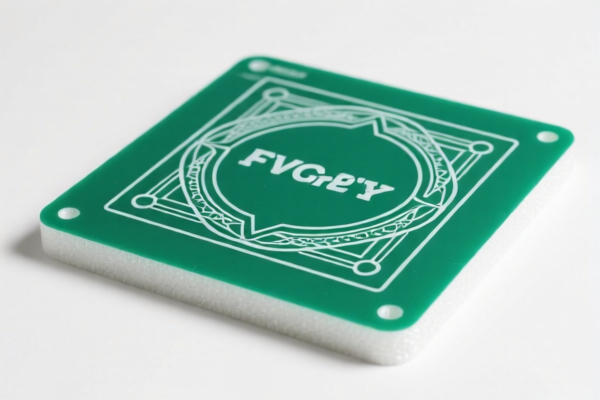
Polycarbonate Engraving Board
CN → US| HS Code | Tariff Rate | Origin | Destination | Doc |
|---|---|---|---|---|
| 3926909989 | 22.8% | CN | US | Official Doc |
| 3921190090 | 41.5% | CN | US | Official Doc |
| 3926909910 | 22.8% | CN | US | Official Doc |
| 3921905050 | 39.8% | CN | US | Official Doc |
Product Images


AI Analysis
🏷️ Polycarbonate Engraving Board (PC Board)
🌐 HS Code Reference & Customs Clearance Guide | 2026 Latest Tariff Analysis | Professional Entry Strategies
📌 I. Product Definition & Classification: Is It Just "Plastic" or a Specific "Article"?
Polycarbonate Engraving Boards are rigid, transparent, or opaque sheets made of polycarbonate resin, often used for signage, laser engraving, PCB substrates, or protective covers. In international trade, the classification hinges on two factors: 1. Material Composition: Polycarbonate is a thermoplastic polymer. 2. Form/State: They are primarily in the form of plates, sheets, or blocks.
⚠️ Key Distinction Point:
- If the board is simply a plain polycarbonate sheet (even if engraved for decoration), it is typically classified under "Other plastics articles" (Chapter 39, Heading 3926) because it is not specifically identifiable as a plate/sheet for specific industrial uses like PCBs (which might fall elsewhere if functional) or optical lenses.
- However, if it is considered a plate/sheet of plastic without further manufacture into a specific article, it may fall under Heading 3921 (Plates, Sheets, etc.).
- Crucial Note: The provided data reflects specific customs interpretations where "Engraving Board" is treated either as a finished article (3926) or a basic plate/sheet (3921) depending on the specific product specs and local customs practice.
📦 II. HS Code Classification Details (2026 Latest Tariff Mapping)
Based on the provided data, there are 5 potential HS Codes with varying tax implications. The primary differentiator is whether the item is considered a "finished plastic article" (lower base tariff) or a "plastic plate/sheet" (higher base tariff), both subject to significant trade sanctions.
| HS Code | Summary & Classification Logic | Total Tax Rate | Tax Breakdown |
|---|---|---|---|
3926.90.99.89 |
Polycarbonate Articles: Recognized as "Other Plastic Articles". Fits the category for plastic boards that are finished articles (e.g., engraved signage boards). | 22.8% | Base: 5.3% Add'l: 7.5% Sec 301: 10% |
3921.19.00.90 |
Plates/Sheets: Classified as a plastic plate/sheet. High sensitivity due to "Plate/Sheet" classification triggering higher base tariffs and trade sanctions. | 41.5% | Base: 6.5% Add'l: 25.0% Sec 301: 10% |
3926.90.99.10 |
Plastic Articles: Similar to .89, classified under "Other Plastic Articles". No material conflict; shape is plate-like but treated as an article. | 22.8% | Base: 5.3% Add'l: 7.5% Sec 301: 10% |
3921.90.50.50 |
Other Plates/Sheets: A "catch-all" for plastic plates/sheets not elsewhere specified. Also considered a plate/sheet category. | 39.8% | Base: 4.8% Add'l: 25.0% Sec 301: 10% |
3926.90.99.89 |
Patterned Plastic Articles: Specifically mentions "Patterned Polycarbonate Board". Treated as a plastic article with surface modification (engraving/pattern). | 22.8% | Base: 5.3% Add'l: 7.5% Sec 301: 10% |
🔍 Key Observation:
- The 22.8% rate applies to codes3926.90.99.89and3926.90.99.10. These are classified as "Plastic Articles" (finished goods).
- The 39.8% - 41.5% rates apply to codes3921.... These are classified as "Plates/Sheets" (semi-finished or raw material forms).
- Strategy: If the engraving process transforms the board into a distinct article (e.g., a sign, a panel with specific dimensions for a device), arguing for 3926 is significantly cheaper than 3921.
💰 III. 2026 Latest Tariff Rate Details (Including Surcharge & Policy Add-ons)
✅ Applicable Country: United States (US)
✅ Origin: China (CN)
✅ Effective Time: Ongoing (Section 301 tariffs still in effect)
🎯 1. 3926.90.99.89 / 3926.90.99.10 — Polycarbonate Articles (Best Option)
| Item | Content |
|---|---|
| Base Duty Rate | 5.3% (Standard MFN Rate) |
| Section 301 Surcharge (122-Clause) | +7.5% |
| Section 301 Additional Tariff | +10% (List 3/4 items subject to 10-25% additional tariffs; here fixed at 10% in data) |
| Total Effective Duty | 22.8% |
| Calculation Basis | CIF Value × 22.8% |
| De Minimis Eligibility | ❌ No (Section 301 goods are generally excluded from de minimis exemptions) |
| Legal Reference Path | USITC:3926.90.99.89 → Section 301: +7.5% → Section 301 List: +10% |
📌 Explanation:
- This classification treats the engraving board as a "finished plastic article".
- The 7.5% is likely the "additional tariff" from the original 301 list adjustment.
- The 10% is the current standard "122 Clause" or specific section 301 add-on for this subheading.
- Total 22.8% is relatively manageable compared to the alternative.
🎯 2. 3921.19.00.90 — Plastic Plates/Sheets (High Cost)
| Item | Content |
|---|---|
| Base Duty Rate | 6.5% |
| Section 301 Surcharge | +25.0% (High-tier 301 surcharge for plastic sheets) |
| Section 301 Additional Tariff | +10% |
| Total Effective Duty | 41.5% |
| Calculation Basis | CIF Value × 41.5% |
| De Minimis Eligibility | ❌ No |
| Legal Reference Path | USITC:3921.19.00.90 → Section 301: +25% → Section 301 List: +10% |
📌 Warning:
- Plastic plates and sheets (Heading 3921) are heavily targeted by US trade policy due to manufacturing capacity concerns.
- The 25% surcharge is significantly higher than the 7.5% in the 3926 category.
- Risk: If customs views the engraved board as merely a "sheet" (even if engraved), you pay 41.5%.
🎯 3. 3921.90.50.50 — Other Plastic Plates/Sheets
| Item | Content |
|---|---|
| Base Duty Rate | 4.8% |
| Section 301 Surcharge | +25.0% |
| Section 301 Additional Tariff | +10% |
| Total Effective Duty | 39.8% |
| Calculation Basis | CIF Value × 39.8% |
| De Minimis Eligibility | ❌ No |
| Legal Reference Path | USITC:3921.90.50.50 → Section 301: +25% → Section 301 List: +10% |
📌 Note:
- This is a "catch-all" for plastic sheets not specified elsewhere.
- Despite a lower base rate (4.8%), the 25% surcharge makes it nearly as expensive as3921.19.
🛠️ IV. Customs Clearance Operational Advice (Practical Pitfall Guide)
✅ 1. Documentation Checklist (Mandatory)
| Document | Required? | Description |
|---|---|---|
| ✅ Product Specification Sheet | ✔️ | Must clearly state: Material (Polycarbonate), Thickness, Dimensions, and Purpose (e.g., "Signage Board", "PCB Substrate"). |
| ✅ Technical Drawing / Screenshot | ✔️ | Show the engraving pattern to prove it is a finished article (supports 3926) rather than a raw sheet. |
| ✅ Commercial Invoice | ✔️ | Description should be specific: "Polycarbonate Engraving Board for Signage" NOT just "Plastic Sheet". |
| ✅ Certificate of Origin (CO) | ✔️ | Mandatory for Section 301 tariff determination. |
| ✅ Packing List | ✔️ | Detail quantity and weight. |
✅ 2. Declaration Strategy (Key Mantra)
🔥 "Finish Art, Not Raw Sheet! Describe Use, Not Just Shape!"
| Scenario | Correct Declaration | Wrong Declaration |
|---|---|---|
| Engraved Board for Signage | 3926.90.99.89 (Plastic Article) | "Plastic Sheet" → 41.5% |
| Raw PC Sheet (No Engraving) | 3921.19.00.90 (Plastic Plate) | "Signage Board" → Misdeclaration risk |
| PCB Substrate (Functional) | Check 3921 or 8534 (if circuitry present) | Misclassification |
📌 Critical Tip:
- The engraving is the key. A plain sheet is 3921. A sheet that has been engraved to create a specific product (like a nameplate, sign, or panel) can be argued as a 3926 Article.
- Provide photos of the final product in use, not just the raw material.
✅ 3. Special Considerations
| Situation | Handling Advice |
|---|---|
| Thin vs. Thick Boards | Thin sheets (<1mm) are more likely to be classified as 3921. Thicker, rigid boards are easier to argue as 3926 articles. |
| Exporting from China | Ensure the CO clearly states "Polycarbonate". Avoid vague terms like "Plastic Product". |
| Customs Audit | Be prepared to explain why the board is not a "plate or sheet" under 3921. Emphasize the value-added process (engraving) and specific application. |
🌍 V. Global Market Comparison (2026)
| Country/Region | Recommended HS Code | Duty Rate (China Origin) | Notes |
|---|---|---|---|
| 🇺🇸 USA | 3926.90.99.89 |
22.8% | Best rate. Argue as "Article". Avoid 3921 (41.5%). |
| 🇨🇳 China | 3926.90.99.89 |
~6.5% (Import Duty) | No Section 301. Lower overall cost. |
| 🇪🇺 EU | 3926.90.99 |
6.5% | No trade sanctions. CE marking may be required. |
| 🇬🇧 UK | 3926.90.99 |
6.5% | Post-Brexit tariffs apply. No US-style surcharges. |
📌 Conclusion:
- The US market is the most challenging due to Section 301 tariffs.
- The key to saving 18.7%+ in duty is correctly classifying the engraved board as a 3926 Article rather than a 3921 Sheet.
📌 VI. Common Mistakes & Pitfalls (Lessons Learned)
❌ Mistake 1: Declaring as "Plastic Sheet" when it's a finished board.
👉 Consequence: Pay 41.5% instead of 22.8%. Overpayment of ~$18,700 per $100k shipment!
❌ Mistake 2: Using generic terms like "Plastic Board" without specifying "Polycarbonate".
👉 Consequence: Customs may assign a higher default rate or delay shipment for inspection.
❌ Mistake 3: Ignoring the "Engraving" aspect in the description.
👉 Consequence: Customs may view it as a raw material (3921) because the modification isn't documented.
✅ Correct Declaration Example:
"Polycarbonate Engraving Board, Finished Article, for Signage Use, Transparent, 2mm Thickness, Model XYZ"
HS Code:3926.90.99.89
Duty: 22.8%
🎯 VII. Conclusion: Smart Classification, Smart Savings!
🎯 Remember the Mantra:
🔹 "Engraved = Article = 22.8%!"
🔹 "Plain Sheet = 3921 = 41.5%!"
🔹 "Document the Process, Save the Duty!"
📌 Pro Tip:
If you are importing large volumes, consider Advance Rulings from US Customs to secure the 3926 classification. This provides legal certainty and protects against retroactive duty adjustments.
📣 Immediate Action:
📞 Consult a licensed customs broker with product photos.
📄 Provide a detailed technical description emphasizing the engraving as a value-added step.
🚀 Optimize your supply chain to handle the 22.8% duty efficiently.
✨ Professional Customs Clearance Starts with Precise Classification!
💼 Every Percent Saved is Pure Profit!
Customer Reviews
About HS Code Classification
The Harmonized System (HS) is an internationally standardized nomenclature developed by the World Customs Organization (WCO) to classify traded products. Over 200 countries use the HS system as the basis for customs tariffs, trade statistics, and import/export regulations.
Each HS code follows a hierarchical structure:
- Chapter (2 digits) — Broad category of goods (e.g., Chapter 84: Machinery and Mechanical Appliances)
- Heading (4 digits) — More specific grouping within the chapter
- Subheading (6 digits) — Internationally standardized breakdown, used by all WCO member countries
- National subdivisions (8-10 digits) — Country-specific extensions for further classification, such as US HTSUS 10-digit codes
Correct HS code classification is essential for smooth customs clearance, accurate duty payment, and compliance with trade regulations. Misclassification can lead to customs delays, overpayment of duties, or penalties.
When importing from CN to US, the applicable tariff rates may include:
- Most-Favored-Nation (MFN) rate — The standard duty rate applied to WTO members
- General rate — Applied to countries without trade agreements
- Trade remedy duties — Additional tariffs such as Section 301 (anti-dumping), Section 232 (national security), or countervailing duties
The information provided on this page is for reference purposes only. For official classification, please consult with your local customs authority or a licensed customs broker.