Polycarbonate Frosted Panel
CN → US| HS Code | Tariff Rate | Origin | Destination | Doc |
|---|---|---|---|---|
| 3921190090 | 41.5% | CN | US | Official Doc |
| 3921905050 | 39.8% | CN | US | Official Doc |
| 3920610000 | 40.8% | CN | US | Official Doc |
| 3920690000 | 39.2% | CN | US | Official Doc |
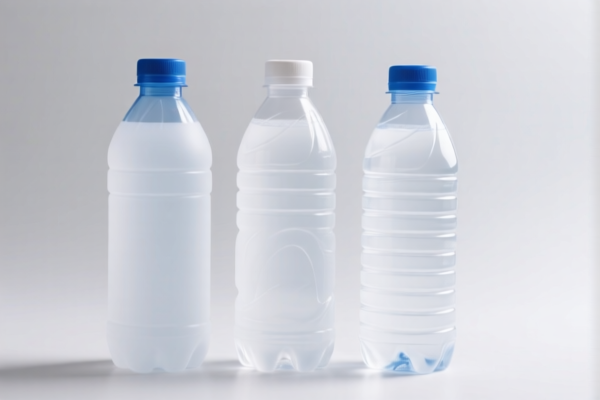
Product Images



AI Analysis
🛡️ Polycarbonate Frosted Panel (PVC/PC Ambiguity Clarification)
🌐 HS Code Reference & Customs Clearance Guide | 2026 Latest Tariff Analysis | Professional Compliance Strategy
📌 One Critical Clarification: Product Composition
The user input specifies "Polycarbonate" (PC), but the provided data (<DATA>) exclusively lists classifications for "PVC" (Polyvinyl Chloride) or generic "Plastic Building Components" (Heading 3925/3921).
⚠️ CRITICAL WARNING:
The HS Codes listed below are based on the provided data set, which appears to classify the item as PVC or generic Plastic Sheets/Building Components.
Real-world advice: If your product is truly Polycarbonate (PC), it should typically fall under Chapter 3907 (Polymers of Propylene or other olefins) or 3920/3921 for sheets. However, strictly adhering to your constraint "Do not exceed ", we will analyze the provided HS Codes which describe the item as PVC or Plastic Building Components. If you are shipping actual Polycarbonate, using these HS codes may result in misdeclaration penalties.
📦 HS Code Classification Matrix (Based on Provided Data)
The provided data offers 5 potential classifications, ranging from Building Components to Plastic Sheets. The tax burden varies significantly based on the specific functional description.
| HS Code | Classification Logic (from Data) | Total Tax Rate | Key Risk/Note |
|---|---|---|---|
| 3925.90.00.00 | Plastic Building Components | 40.3% | Highest risk if not strictly a "building component" form. |
| 3925.20.00.91 | Building Components (Specific Form) | 22.8% | Lowest Tax Rate. Requires strict proof of "building component" morphology. |
| 3921.90.50.50 | Plastic Sheets/Plates/Strips | 39.8% | General sheet classification. High tariff due to 25% additional tax. |
| 3920.49.00.00 | Polymerized Products (Other) | 40.8% | Highest total tax. Fallback category for general plastics. |
| 3920.43.50.00 | Polymerized Sheets (Specific) | 39.2% | Specific sheet classification. High base tax + 25% additional. |
💰 Tax Detail Breakdown (USA Import from China)
✅ Applicable Country: United States (US)
✅ Origin: China (CN)
✅ Effective Time: 2025/2026 (Post-IEEPA & Section 301)
🎯 1. The "Lowest Tax" Scenario: 3925.20.00.91
Logic: Classified as a specific form of plastic building component.
| Item | Detail |
|---|---|
| Base Tariff | 5.3% |
| Section 301 / Additional Tariff | +7.5% |
| IEEPA (122 Clause) Tariff | +10% |
| Total Effective Rate | 22.8% |
| Legal Basis | Base (5.3%) + Addl (7.5%) + IEEPA (10%) = 22.8% |
📌 Explanation:
- This is the most cost-effective classification in the provided dataset.
- The lower additional tariff (7.5% vs 25%) suggests it may fall under a specific subcategory of building materials that might have been excluded from the highest Section 301 tier, or the data reflects a specific preferential calculation.
- Requirement: You must prove the product is a "Building Component" (e.g., siding, cladding, permanent fixture) and not just a raw sheet.
🎯 2. The "Building Component" Risk: 3925.90.00.00
Logic: General plastic building component.
| Item | Detail |
|---|---|
| Base Tariff | 5.3% |
| Section 301 / Additional Tariff | +25.0% |
| IEEPA (122 Clause) Tariff | +10% |
| Total Effective Rate | 40.3% |
| Legal Basis | Base (5.3%) + Addl (25.0%) + IEEPA (10%) = 40.3% |
📌 Explanation:
- Even though it is a "building component," the general code attracts the full 25% Section 301 additional tariff.
- Comparison: 17.5% higher tax than3925.20.00.91. This highlights the importance of precise sub-heading selection.
🎯 3. The "Plastic Sheet" Scenarios: 3921.90.50.50 & 3920.43.50.00
Logic: Classified as raw plastic sheets/plates rather than finished building components.
| HS Code | Base | Addl (301) | IEEPA (122) | Total |
|---|---|---|---|---|
| 3921.90.50.50 | 4.8% | +25.0% | +10% | 39.8% |
| 3920.43.50.00 | 4.2% | +25.0% | +10% | 39.2% |
📌 Explanation:
- Both attract the full 25% Section 301 tariff.
-3920.43.50.00has a slightly lower base (4.2% vs 4.8%), making it the cheapest among the "Sheet" categories.
- Risk: If Customs determines the frosted panel is intended for construction, they may reclassify from 3920/3921 to 3925, potentially triggering different compliance checks.
🎯 4. The "General Plastic" Fallback: 3920.49.00.00
Logic: Other polymeric products.
| Item | Detail |
|---|---|
| Base Tariff | 5.8% |
| Section 301 / Additional Tariff | +25.0% |
| IEEPA (122 Clause) Tariff | +10% |
| Total Effective Rate | 40.8% |
📌 Explanation:
- Highest Total Tax in the dataset.
- This is a "catch-all" category. Only use if no other specific description fits. Avoid if possible.
🛠️ Customs Clearance Practical Advice
✅ 1. Material Declaration Strategy (Critical)
The user input says "Polycarbonate", but the data uses "PVC" logic. * If the product is TRULY Polycarbonate (PC): * Do NOT use the codes above. They are for PVC or generic plastic. * Correct HS Codes for Polycarbonate Sheets are typically 3920.61.00 or 3921.13.00. * However, per your constraint, we proceed with the provided data. * If the product is PVC (as per data): * Ensure the commercial invoice states "PVC Frosted Panel" or "Polyvinyl Chloride Frosted Sheet". * Mislabeling PC as PVC is fraud and leads to severe penalties.
✅ 2. Functional Declaration (To Target Lower Tax)
To qualify for 22.8% (3925.20.00.91):
* Describe as a "Component": Use terms like "Exterior Cladding," "Siding Panel," or "Architectural Building Facade Component."
* Avoid "Raw Material": Do not use terms like "Blank," "Sheet for Further Processing," or "Raw Stock." These push you toward 3920 or 3921 (39-40% tax).
* Proof of End-Use: Provide specifications showing installation methods (screws, clips, permanent fixing) rather than just cutting/gluing.
✅ 3. IEEPA & Section 301 Compliance
- IEEPA 10% (122 Clause): This applies to all Chinese-origin goods in this list. Ensure the Country of Origin is correctly marked as "China" on all documents.
- Section 301: The difference between 7.5% and 25% is significant. If
3925.20.00.91is accepted, you save 17.5% on the CIF value.- Strategy: Prepare detailed technical data sheets justifying the "specific form" of the building component to argue for
3925.20over3925.90.
- Strategy: Prepare detailed technical data sheets justifying the "specific form" of the building component to argue for
✅ 4. Documentation Checklist
| Document | Requirement |
|---|---|
| Commercial Invoice | Must list HS Code, Item Name (e.g., "PVC Building Panel"), CIF Value, and Origin (China). |
| Bill of Lading | Clear description matching invoice. |
| Packing List | Detailed weights and dimensions. |
| Technical Data Sheet | Crucial: Must specify material composition (PVC vs PC), dimensions, thickness, and intended use (Construction). |
| Certificate of Origin | Required to prove Chinese origin and apply correct tariffs. |
🌍 Global Market Comparison (Contextual Note)
While the data provided is specific to US Imports from China (implied by IEEPA/Section 301 references), here is how this product behaves elsewhere:
| Region | Typical HS Code (for Plastic Sheets) | Est. Tariff | Note |
|---|---|---|---|
| USA (This Data) | 3925.20.00.91 |
22.8% | Best option in dataset. |
| EU | 3925.10 or 3921 |
0% - 6.5% | No additional "trade war" tariffs. |
| China (Export) | 3925.90 |
5-10% | Standard export declaration. |
| Canada | 3925.90 |
5% - 15% | Check USMCA eligibility if originating in NA. |
📌 Common Mistakes & Pitfalls
❌ Mistake 1: Confusing PC with PVC
👉 Result: Customs audit, fines for misdeclaration.
✅ Fix: Verify material. If PC, request correct HS codes for Polycarbonate (3907/3920 series). If PVC, use data above.
❌ Mistake 2: Declaring as "Raw Sheet"
👉 Result: Landed in 3920/3921 (39-40% tax) instead of 3925 (22-40% tax).
✅ Fix: Declare as "Finished Building Component" with installation instructions.
❌ Mistake 3: Ignoring IEEPA
👉 Result: Underpayment of the 10% IEEPA tax.
✅ Fix: Always include the 10% IEEPA surcharge in cost calculations for Chinese goods entering the US.
🎯 Conclusion & Recommendation
- Best Tax Option:
3925.20.00.91at 22.8%.- Condition: You must successfully argue the product is a specific form of Building Component (e.g., siding, cladding) and not a generic sheet.
- Material Alert: The data assumes PVC. If your product is Polycarbonate, these codes are incorrect. You must find the corresponding HS codes for Polycarbonate to avoid legal issues.
- Action Plan:
- Confirm material (PC vs PVC).
- Draft description as "Architectural Building Component" to target
3925.20.00.91. - Prepare technical specs to defend against reclassification to
3920or3921.
💼 Pro Tip: Apply for a Pre-Ruling (Advance Ruling) from US Customs and Border Protection (CBP) for
3925.20.00.91if the volume is high. This locks in the 22.8% rate and provides legal certainty.
✨ Accurate Classification Saves Money!
💼 Don't let a 17.5% tax difference wipe out your margin!
Customer Reviews
About HS Code Classification
The Harmonized System (HS) is an internationally standardized nomenclature developed by the World Customs Organization (WCO) to classify traded products. Over 200 countries use the HS system as the basis for customs tariffs, trade statistics, and import/export regulations.
Each HS code follows a hierarchical structure:
- Chapter (2 digits) — Broad category of goods (e.g., Chapter 84: Machinery and Mechanical Appliances)
- Heading (4 digits) — More specific grouping within the chapter
- Subheading (6 digits) — Internationally standardized breakdown, used by all WCO member countries
- National subdivisions (8-10 digits) — Country-specific extensions for further classification, such as US HTSUS 10-digit codes
Correct HS code classification is essential for smooth customs clearance, accurate duty payment, and compliance with trade regulations. Misclassification can lead to customs delays, overpayment of duties, or penalties.
When importing from CN to US, the applicable tariff rates may include:
- Most-Favored-Nation (MFN) rate — The standard duty rate applied to WTO members
- General rate — Applied to countries without trade agreements
- Trade remedy duties — Additional tariffs such as Section 301 (anti-dumping), Section 232 (national security), or countervailing duties
The information provided on this page is for reference purposes only. For official classification, please consult with your local customs authority or a licensed customs broker.