Polycarbonate Frosted Sheet
CN → US| HS Code | Tariff Rate | Origin | Destination | Doc |
|---|---|---|---|---|
| 3925301000 | 20.8% | CN | US | Official Doc |
| 3925900000 | 40.3% | CN | US | Official Doc |
| 3920610000 | 40.8% | CN | US | Official Doc |
| 3920992000 | 39.2% | CN | US | Official Doc |
| 3926909400 | 35.0% | CN | US | Official Doc |
| 3926909989 | 22.8% | CN | US | Official Doc |
| 9001200000 | 35.0% | CN | US | Official Doc |
| 9001909000 | 35.0% | CN | US | Official Doc |
Product Images
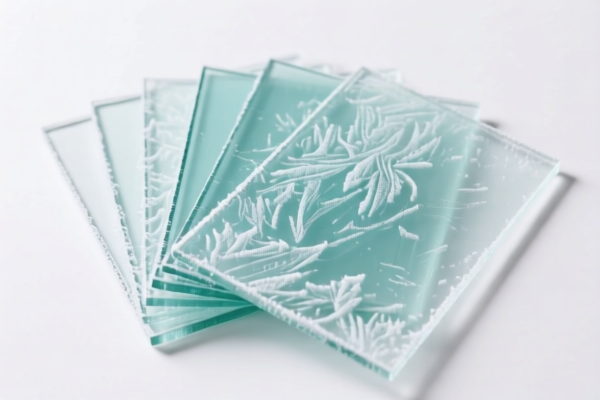
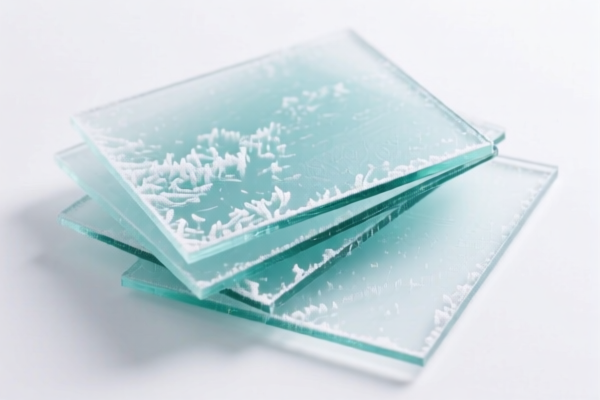
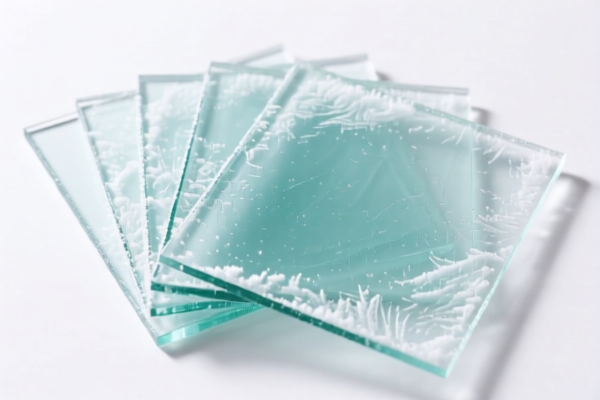
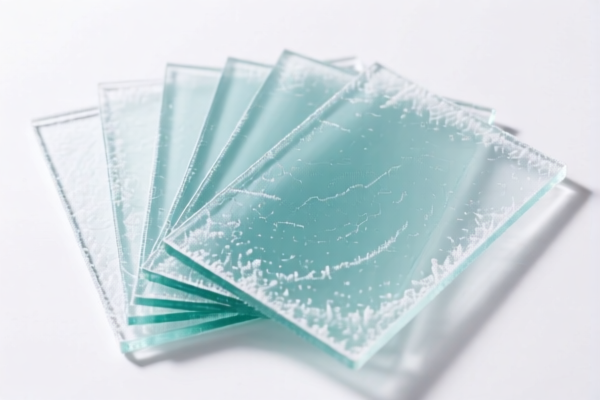
AI Analysis
🛡️ Polycarbonate Frosted Sheet (PC Frosted Sheet)
🌐 HS Code Reference & Customs Clearance Guide | 2026 Latest Tariff Analysis | Professional Clearance Strategy
📌 I. Product Definition & Classification: Do You Really Understand "PC Frosted Sheet"?
Polycarbonate (PC) Frosted Sheets are high-performance transparent building materials and industrial components. They are prized for their impact resistance, UV stability, and diffused light transmission. In international trade, while the material is Polycarbonate, the form and application dictate the HS Code.
⚠️ Critical Distinction:
- Is it a construction component (e.g., roofing, wall panels)? → Likely Chapter 39.25
- Is it a raw/semi-finished plate for further processing? → Likely Chapter 39.20/39.21
- ⚠️ Warning: Do not confuse with PVC sheets. Although visually similar, PC is chemically and tariff-wise distinct from PVC. Misclassification leads to significant duty discrepancies.
📦 II. HS Code Classification Details (2026 Latest Tariff Authoritative Comparison)
| HS Code | Product Description | Application Scenario | Tax Impact |
|---|---|---|---|
3925.90.00.00 |
Plastic building fittings | Roofing, cladding, wall panels, architectural fixtures | ⚠️ High (40.3%) |
3925.20.00.91 |
Building fittings for doors/windows | Window frames, sash components, glazing supports | ✅ Moderate (22.8%) |
3921.90.50.50 |
Plastic sheets/plates, n.e.c. | Raw material for fabrication, industrial liners | ⚠️ High (39.8%) |
3920.49.00.00 |
Other polycarbonate plates | General-purpose plastic plates, non-building specific | ⚠️ High (40.8%) |
3920.43.50.00 |
Polycarbonate plates, sheets | Standard PC plates, technical applications | ✅ Lower (39.2%) |
🔍 Key Insight:
- 3925 Codes are for products intended for immediate installation in construction.
- 3920/3921 Codes are for plates/sheets that may be further processed or sold as generic materials.
- The difference between3920.43(Polycarbonate specific) and3920.49(Other plastics) is crucial. Since your product is Polycarbonate,3920.43is the most technically accurate for plates, but3925applies if it's a finished building part.
💰 III. 2026 Latest Tariff Rate Detailed Explanation (Including Surcharges & Policy Add-ons)
✅ Applicable Country: United States (US)
✅ Origin: China (CN)
✅ Effective Date: November 10, 2025 (and subsequent imports)
🎯 1. 3925.90.00.00 —— Plastic Building Fittings, N.E.C.
| Item | Content |
|---|---|
| Base Tariff | 5.3% |
| Section 301 Surcharge | +25.0% |
| Section 122 Tariff | +10.0% |
| Total Tariff Rate | 40.3% |
| Tax Calculation | CIF Value × 40.3% |
| De Minimis Eligibility | ❌ Not Eligible (High risk of audit/rejection) |
| Legal Basis Path | HTSUS:3925.90.00.00 → Section 301: Footnote 9903.01.25 → Section 122: Authority |
📌 Explanation:
- This code is often used for generic "plastic building parts" like gutters, downspouts, or siding.
- Why 40.3%? It attracts the full suite of punitive tariffs: 5.3% base + 25% (Section 301) + 10% (Section 122).
- Risk: If the product is a simple sheet, customs may reclassify it to3920or3921, potentially altering the tax burden.
🎯 2. 3925.20.00.91 —— Building Fittings for Doors, Windows...
| Item | Content |
|---|---|
| Base Tariff | 5.3% |
| Section 301 Surcharge | +7.5% |
| Section 122 Tariff | +10.0% |
| Total Tariff Rate | 22.8% |
| Tax Calculation | CIF Value × 22.8% |
| De Minimis Eligibility | ❌ Not Eligible |
| Legal Basis Path | HTSUS:3925.20.00.91 → Section 301: Footnote 9903.01.24 → Section 122 |
📌 Explanation:
- Best Case Scenario? If the PC frosted sheet is specifically designed as a window panel or part of a door system, this code offers the lowest total duty (22.8%).
- Section 301 Rate: Only 7.5% instead of 25%. This is a significant savings.
- Condition: Must be demonstrably part of a door/window assembly or fit for immediate installation as such.
🎯 3. 3921.90.50.50 —— Plastic Sheets, Plates, etc. (N.E.C.)
| Item | Content |
|---|---|
| Base Tariff | 4.8% |
| Section 301 Surcharge | +25.0% |
| Section 122 Tariff | +10.0% |
| Total Tariff Rate | 39.8% |
| Tax Calculation | CIF Value × 39.8% |
| De Minimis Eligibility | ❌ Not Eligible |
📌 Explanation:
- Used for plastic sheets not specifically covered elsewhere (e.g., not polycarbonate-specific plates).
- High duty due to the 25% Section 301 surcharge.
🎯 4. 3920.49.00.00 —— Other Plates, Sheets... of Polycarbonate
| Item | Content |
|---|---|
| Base Tariff | 5.8% |
| Section 301 Surcharge | +25.0% |
| Section 122 Tariff | +10.0% |
| Total Tariff Rate | 40.8% |
| Tax Calculation | CIF Value × 40.8% |
| De Minimis Eligibility | ❌ Not Eligible |
📌 Explanation:
- "Other" subheading implies it doesn't fit the primary polycarbonate plate codes (3920.43).
- Highest base duty (5.8%) among the options, plus full surcharges.
🎯 5. 3920.43.50.00 —— Plates, Sheets... of Polycarbonate
| Item | Content |
|---|---|
| Base Tariff | 4.2% |
| Section 301 Surcharge | +25.0% |
| Section 122 Tariff | +10.0% |
| Total Tariff Rate | 39.2% |
| Tax Calculation | CIF Value × 39.2% |
| De Minimis Eligibility | ❌ Not Eligible |
📌 Explanation:
- This is the most technically accurate code for raw or semi-finished Polycarbonate Plates/Sheets.
- Lowest base duty (4.2%) in the 3920 series.
- However, it still carries the 25% Section 301 and 10% Section 122 surcharges, totaling 39.2%.
🛠️ IV. Customs Clearance Practical Advice (Battle-Tested Pitfall Avoidance)
✅ 1. Documentation Checklist (Non-Negotiable)
| Document | Mandatory? | Notes |
|---|---|---|
| ✅ Product Specification Sheet | ✔️ | Must state "Polycarbonate", not just "Plastic". Include thickness, UV coating, fire rating. |
| ✅ Composition Proof | ✔️ | Lab report confirming PC material vs. PVC/PMMA. |
| ✅ Commercial Invoice | ✔️ | Clearly describe as "Polycarbonate Frosted Sheet for [Application]". Avoid vague terms like "Plastic Panel". |
| ✅ Country of Origin Certificate | ✔️ | Essential for calculating Section 122 and 301 duties. |
| ✅ Photos of Product & Packaging | ✔️ | Show frosted texture, edges, and any branding. |
✅ 2. Classification Strategy & Tips
🔥 “Material Matters, Application Defines, Code Determines Cost!”
| Scenario | Recommended HS Code | Total Duty | Strategy |
|---|---|---|---|
| PC Sheet sold as raw material/plate | 3920.43.50.00 |
39.2% | Most accurate for material. Lowest base rate. |
| PC Sheet used as Roofing/Wall Cladding | 3925.90.00.00 |
40.3% | Higher duty, but legally defensible if "building fitting". |
| PC Sheet specifically for Windows/Doors | 3925.20.00.91 |
22.8% | LOWEST DUTY! Must prove it fits window/door standards. |
| Mixed/Unknown Plastic | 3921.90.50.50 |
39.8% | Risky. Avoid unless material is unclear. |
✅ 3. Special Handling Notes
| Situation | Handling Advice |
|---|---|
| OEM Custom Sizes | Provide cut lists. If cut to size for a specific window, argue for 3925.20.00.91. |
| Laminated Sheets | If laminated with other materials, classification may change. Declare composite nature. |
| Fire-Rated PC | Mention fire rating in specs. May affect "building fitting" status but not HS code directly. |
| Small Samples (De Minimis) | ❌ Not Eligible. Section 301 and 122 tariffs apply regardless of value for Chinese-origin goods above $800 threshold (or lower for specific exclusions). |
🌍 V. Global Market Comparison (2026 Update)
| Market | Recommended HS Code | Est. Duty (China Origin) | Key Requirement |
|---|---|---|---|
| 🇺🇸 USA | 3925.20.00.91 (Best) |
22.8% | Window/Door proof. Otherwise 39.2%-40.8%. |
| 🇨🇳 China | 3920.43.50.00 |
~5-10% | Standard import duties. No Section 301/122. |
| 🇪🇺 EU | 3920.43.00 |
~5-6% | CE Marking, REACH Compliance. No punitive surcharges. |
| 🇬🇧 UK | 3920.43.00 |
~5-6% | UKCA Marking. Post-Brexit tariffs similar to EU pre-Brexit. |
| 🇦🇺 Australia | 3920.43.00 |
~5% | No major surcharges. Standard import GST applies. |
📌 Conclusion:
- The USA is the most challenging market due to Section 301 (25%) and Section 122 (10%) tariffs.
- Strategic Move: If the PC frosted sheet can be classified as a door/window component (3925.20.00.91), you save ~17% in total duty compared to generic building fittings or plates.
- Evidence is Key: Maintain documentation proving the product is designed for window/door installation to justify the lower tariff code.
📌 VI. Common Mistakes & Pitfalls (Lessons Learned)
❌ Mistake 1: Classifying PC sheets as PVC (3921 or 3920 PVC codes)
👉 Consequence: If detected, penalties for misdeclaration. Also, PVC may have different surcharges.
👉 Fix: Always specify "Polycarbonate" in material composition.
❌ Mistake 2: Using 3925.90.00.00 for raw sheets
👉 Consequence: Overpaying by ~1% vs 3920.43, but more importantly, customs may reject "building fitting" classification for raw materials, leading to delays.
👉 Fix: Use 3920.43.50.00 for raw/semi-finished plates.
❌ Mistake 3: Ignoring Section 122 tariffs
👉 Consequence: Unprepared for the extra 10% cost, eroding margins.
👉 Fix: Factor 10% into all cost calculations for Chinese-origin goods.
✅ Correct Practice:
"Polycarbonate Frosted Sheet, UV-Coated, 4mm Thickness, For Architectural Glazing, Model XYZ, Compliant with ASTM Standards"
🎯 VII. Conclusion: Precision in Classification, Savings in Cost
🎯 Remember the Mantra:
🔹 "PC is not PVC, Sheet is not Panel, Window Fit Saves 17%!"
🔹 "Section 122 is 10%, Section 301 is 25%, Plan Ahead or Pay More!"
📌 Pro Tip:
If your polycarbonate sheets are imported from Vietnam, Malaysia, or Thailand, you may be exempt from Section 301 and 122 tariffs, reducing the duty to 4.8%-5.8%.
Consider supply chain diversification if volume justifies it.
For US imports, apply for an Advance Ruling if your use case (e.g., window component) is borderline.
📣 Take Action Now:
📞 Consult a Licensed Customs Broker + Provide Material Specs + Verify End-Use
🚀 Clear Customs Smoothly, Maximize Profit, Minimize Risk!
✨ Professional Clearance Starts with Accurate Classification!
💼 Every Percentage Point of Duty Saved is Pure Profit!
Customer Reviews
About HS Code Classification
The Harmonized System (HS) is an internationally standardized nomenclature developed by the World Customs Organization (WCO) to classify traded products. Over 200 countries use the HS system as the basis for customs tariffs, trade statistics, and import/export regulations.
Each HS code follows a hierarchical structure:
- Chapter (2 digits) — Broad category of goods (e.g., Chapter 84: Machinery and Mechanical Appliances)
- Heading (4 digits) — More specific grouping within the chapter
- Subheading (6 digits) — Internationally standardized breakdown, used by all WCO member countries
- National subdivisions (8-10 digits) — Country-specific extensions for further classification, such as US HTSUS 10-digit codes
Correct HS code classification is essential for smooth customs clearance, accurate duty payment, and compliance with trade regulations. Misclassification can lead to customs delays, overpayment of duties, or penalties.
When importing from CN to US, the applicable tariff rates may include:
- Most-Favored-Nation (MFN) rate — The standard duty rate applied to WTO members
- General rate — Applied to countries without trade agreements
- Trade remedy duties — Additional tariffs such as Section 301 (anti-dumping), Section 232 (national security), or countervailing duties
The information provided on this page is for reference purposes only. For official classification, please consult with your local customs authority or a licensed customs broker.