Polycarbonate Scratch Resistant Board
CN → US| HS Code | Tariff Rate | Origin | Destination | Doc |
|---|---|---|---|---|
| 9001200000 | 35.0% | CN | US | Official Doc |
| 9001909000 | 35.0% | CN | US | Official Doc |
Product Images
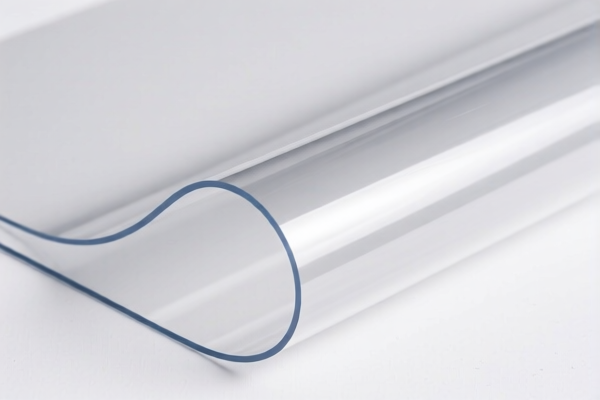
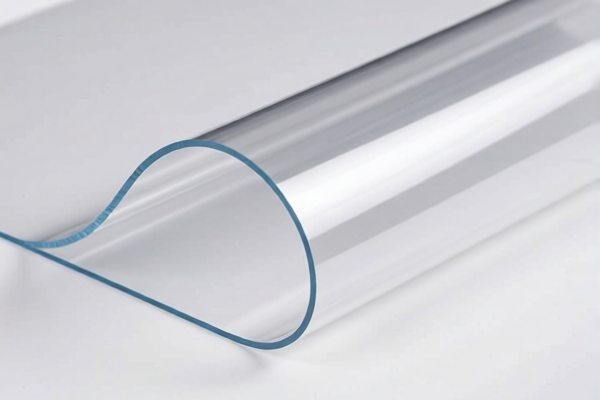

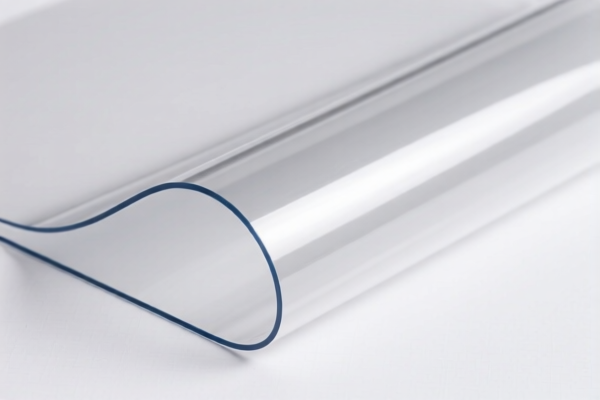
AI Analysis
🛡️ Polycarbonate Scratch Resistant Board (Optical Sheets/Plates)
🌐 HS Code Reference & Clearance Guide | 2026 Latest Tariff Analysis | Professional Customs Strategy
📌 Part 1: Product Definition & Classification: Do You Really Know What This "Board" Is?
The Polycarbonate Scratch Resistant Board described in the data falls under the category of optical materials. In international trade, it is not treated as a simple plastic sheet (like heading 3920/3921) but as a specialized optical element.
Key Distinction:
- Sheets/Plates of Polarizing Material: If the board is used for polarization (e.g., in LCDs, sunglasses, or optical filters), it belongs to 9001.20.
- Other Optical Elements (Sheets/Plates): If it is a transparent polycarbonate sheet with optical functions (anti-reflective, scratch-resistant coatings for lenses or displays) but not polarizing, it falls under 9001.90.
⚠️ Critical Note:
- The term "Board" here refers to optical sheets or plates (unmounted).
- If it is mounted into a frame or device, it may no longer be "unmounted."
- Polycarbonate is a material; the function (optical work) dictates the HS Code under Chapter 90.
📦 Part 2: HS Code Classification Details (2026 Tariff Authority Cross-Reference)
Based on the provided <DATA>, the product is classified into two primary HS Codes depending on its specific optical function:
| HS Code | Product Description | Application Scenario | Optical Function |
|--------|--------------------------|--------------------|
| 9001.20.00.00 | Sheets and plates of polarizing material | Polarizers for displays, optical filters, LCD components | ✅ Polarizing |
| 9001.90.90.00 | Other optical elements: Sheets and plates, other | Scratch-resistant optical lenses, anti-glare plates, unmounted optical sheets | ❌ Non-Polarizing (General Optical) |
🔍 Key Reminder:
- Both codes refer to unmounted optical elements.
- If the "board" is already cut to shape and coated for specific optical use, it is still considered an "element of any material, unmounted."
- Glass is excluded unless optically worked; Polycarbonate is explicitly included.
💰 Part 3: 2026 Latest Tariff Rate Breakdown (Including Surcharges)
✅ Applicable Country: United States (US)
✅ Origin: China (CN) (Implied by the 25% Section 301 tariff mentioned in data)
✅ Effective Date: Current as per 2026 Tariff Schedule
🎯 1. 9001.20.00.00 —— Sheets and Plates of Polarizing Material
| Item | Detail |
|---|---|
| Basic Tariff | 0.0% (ad valorem) |
| Section 301 Surcharge | +25.0% (USITC Footnote related to Chinese origin) |
| Total Tax Rate | 25.0% |
| Tax Calculation | CIF Value × 25% |
| De Minimis Exemption | ❌ Not Available (High duty rate prevents de minimis) |
| Legal Basis Path | USITC:9001.20.00.00 → Section 301: 25% Surcharge |
📌 Explanation:
- The 0% basic tariff reflects that optical materials are generally low-duty.
- The 25% surcharge is the critical cost driver for Chinese-origin goods.
- This is a high-cost category due to the surcharge.
🎯 2. 9001.90.90.00 —— Other Optical Elements (Other: Other: Other)
| Item | Detail |
|---|---|
| Basic Tariff | 0.0% (ad valorem) |
| Section 301 Surcharge | +25.0% |
| Total Tax Rate | 25.0% |
| Tax Calculation | CIF Value × 25% |
| De Minimis Exemption | ❌ Not Available |
| Legal Basis Path | USITC:9001.90.90.00 → Section 301: 25% Surcharge |
📌 Note:
- Even though this is "Other," it is still subject to the same 25% surcharge as polarizing sheets.
- Scratch-resistant coatings do not change the classification away from Chapter 90.
- Total duty burden is 25%, regardless of whether it is polarizing or general optical.
🛠️ Part 4: Clearance Practical Advice (Avoid Pitfalls)
✅ 1. Documentation Checklist (Essential)
| Document | Required? | Description |
|---|---|---|
| ✅ Product Specification Sheet | ✔️ | Must state: Material (Polycarbonate), Function (Optical, Scratch-Resistant), Thickness, Dimensions. |
| ✅ Technical Data Sheet | ✔️ | Show optical properties (Refractive Index, Transmission Rate, Coating Type). |
| ✅ Photos (Labeled) | ✔️ | Clear images of the board, edges, and any coatings. |
| ✅ Commercial Invoice | ✔️ | Must use precise description: "Polycarbonate Optical Sheet, Unmounted, Scratch-Resistant Coated" — Avoid vague terms like "Plastic Board." |
| ✅ Packing List | ✔️ | List net/gross weight accurately. |
| ✅ Country of Origin Certificate | ✔️ | Critical for proving Chinese origin (to apply the correct 25% surcharge). |
✅ 2. Declaration Tips (Key Mantra)
🔥 “Optical Function, Unmounted, Polycarbonate, Not Just Plastic!”
| Scenario | Correct Declaration | Incorrect Action |
|---|---|---|
| Polarizing Film/Sheet | 9001.20.00.00 |
Declare as "Plastic Sheet" (3920) → Risk of misclassification penalty. |
| Clear Optical Sheet (Coated) | 9001.90.90.00 |
Declare as "Polycarbonate Plate" (3920) → 25% Surcharge still applies, but wrong HTS leads to seizure. |
| Mounted in Frame | Not 9001 | If mounted, it may be part of a larger device (e.g., 8517, 9002). Check if it’s "unmounted." |
| Glass vs. Polycarbonate | Specify Material | Do not say "Glass" if it’s Polycarbonate. Wrong material = Wrong code = Delays. |
✅ 3. Special Situations
| Situation | Handling Advice |
|---|---|
| OEM Custom Optical Sheets | Provide client’s tech specs to prove "optical work" and "unmounted" status. |
| Mixed Shipments (Optical + Non-Optical) | Split Declaration. Optical sheets (9001) vs. Regular Polycarbonate sheets (3920). Different duties! |
| Small Samples (< $800) | Still subject to 25% surcharge. De minimis (Section 321) does not apply to goods from China subject to Section 301 duties. |
| Coated vs. Uncoated | Both are "optically worked." Coating enhances optical function, keeping it in Chapter 90. |
🌍 Part 5: Global Market Comparison (2026 Update)
| Country/Region | Recommended HS Code | Tariff (China Origin) | Certification Required | Notes |
|---|---|---|---|---|
| 🇺🇸 USA | 9001.20.00.00 / 9001.90.90.00 |
25% (Total) | None specific for optics | High duty due to 301. |
| 🇨🇳 China | 9001.20.00.00 / 9001.90.90.00 |
0% - 6% | CCC (if applicable) | Lower duty for domestic trade. |
| 🇪🇺 EU | 9001.20.00 / 9001.90.00 |
0% | CE Marking (if part of device) | No surcharge for optics. |
| 🇬🇧 UK | 9001.20.00 / 9001.90.00 |
0% | UKCA (if part of device) | Post-Brexit tariffs generally low for optics. |
| 🇯🇵 Japan | 9001.20.00 / 9001.90.00 |
0% - 6% | PSE (if electronic) | Very favorable for optical components. |
📌 Conclusion:
- USA is the most expensive market due to the 25% Section 301 surcharge.
- EU, UK, Japan, and China offer significantly lower or zero tariffs for optical materials.
- Strategy: If targeting the US, consider duty minimization strategies (e.g., sourcing from non-China origins if possible, or ensuring accurate classification to avoid penalties).
📌 Part 6: Common Mistakes & Pitfalls (Lessons Learned)
❌ Mistake 1: Declaring as "Plastic Sheet" (3920)
👉 Consequence: Customs may reclassify to 9001 + 25% surcharge + penalties. Incorrect HS Code.
❌ Mistake 2: Ignoring "Unmounted" Status
👉 Consequence: If mounted, it’s no longer 9001. Wrong classification leads to shipment hold.
❌ Mistake 3: Assuming De Minimis Applies
👉 Consequence: US does not exempt Chinese-origin goods subject to 301 tariffs from de minimis. 25% duty still applies.
❌ Mistake 4: Vague Description "Polycarbonate Board"
👉 Consequence: Customs officer may guess, leading to audit and back-taxes.
✅ Correct Approach:
"Polycarbonate Optical Sheet, Unmounted, Scratch-Resistant Coated, Clear/Transparent, [Dimensions], For Optical Applications, Origin: China"
🎯 Part 7: Conclusion: Precision in Classification Saves Money!
🎯 Remember the Mantra:
🔹 "Optical, Unmounted, Polycarbonate, 25% Duty for China!"
🔹 "Don't call it plastic, call it optical. Don't say 'board,' say 'sheet/plate.'”
📌 Pro Tip:
- If your product is not polarizing and just a clear scratch-resistant sheet, use 9001.90.90.00.
- If it polarizes light, use 9001.20.00.00.
- Both have 25% total duty for China-origin goods.
- Always provide technical specs to prove "optical work" and prevent reclassification.
📣 Immediate Action:
📞 Consult a Customs Broker + Provide Tech Specs + Double-Check HS Code
🚀 Ensure Smooth US Clearance, Avoid Delays, and Manage Costs Efficiently!
✨ Professional Clearance Starts with Accurate Classification!
💼 Your Every Dollar of Duty is Worth Calculating!
Customer Reviews
About HS Code Classification
The Harmonized System (HS) is an internationally standardized nomenclature developed by the World Customs Organization (WCO) to classify traded products. Over 200 countries use the HS system as the basis for customs tariffs, trade statistics, and import/export regulations.
Each HS code follows a hierarchical structure:
- Chapter (2 digits) — Broad category of goods (e.g., Chapter 84: Machinery and Mechanical Appliances)
- Heading (4 digits) — More specific grouping within the chapter
- Subheading (6 digits) — Internationally standardized breakdown, used by all WCO member countries
- National subdivisions (8-10 digits) — Country-specific extensions for further classification, such as US HTSUS 10-digit codes
Correct HS code classification is essential for smooth customs clearance, accurate duty payment, and compliance with trade regulations. Misclassification can lead to customs delays, overpayment of duties, or penalties.
When importing from CN to US, the applicable tariff rates may include:
- Most-Favored-Nation (MFN) rate — The standard duty rate applied to WTO members
- General rate — Applied to countries without trade agreements
- Trade remedy duties — Additional tariffs such as Section 301 (anti-dumping), Section 232 (national security), or countervailing duties
The information provided on this page is for reference purposes only. For official classification, please consult with your local customs authority or a licensed customs broker.