Polycarbonate Sheet
CN → US| HS Code | Tariff Rate | Origin | Destination | Doc |
|---|---|---|---|---|
| 3907995050 | 41.5% | CN | US | Official Doc |
| 3921190090 | 41.5% | CN | US | Official Doc |
| 3921905050 | 39.8% | CN | US | Official Doc |
| 3920991000 | 41.0% | CN | US | Official Doc |
| 3907400000 | 40.8% | CN | US | Official Doc |
Product Images
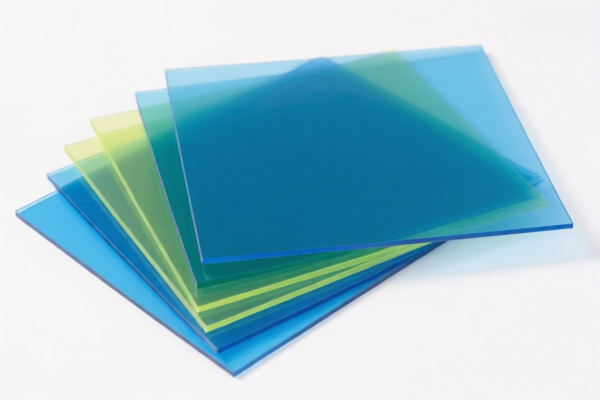

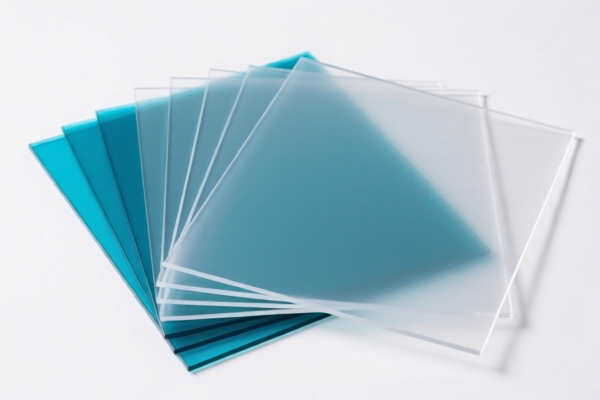

AI Analysis
📦 Polycarbonate Sheet (PC Board/Plates)
🌐 HS Code Reference & Customs Clearance Guide | 2026 Latest Tariff Analysis | Professional Entry Strategies
📌 I. Product Definition: Is It "Construction Material" or "Plastic Plate"?
Polycarbonate (PC) sheets are high-performance engineering plastics known for transparency, impact resistance, and durability. In international trade, the critical distinction lies in intended use and physical form:
1. Construction/Building Materials (Raw/Form): If the polycarbonate is intended for use as roofing, siding, or glazing in construction, it often falls under Heading 3907 (Polymers of Carbonic Acid) or specific subheadings for building materials.
2. General Plastic Plates/Sheets: If the polycarbonate is a general-purpose plastic sheet (for fabrication, signage, industrial use, etc.), it falls under Heading 3920/3921 (Other plates, sheets, film, foil, and strip, of plastics).
⚠️ Key Distinction Point: - If the product is specifically marketed, shaped, or certified for building/construction applications (e.g., multi-wall roofing sheets), it leans towards 3907.99.50.50. - If it is a generic plastic sheet/plate for industrial or commercial use, it leans towards 3921 or 3920.
📊 II. HS Code Classification Matrix (2026 Latest Tariff Authority)
| HS Code | Product Description | Application Scenario | Tax Rate (China to US) |
|---|---|---|---|
3907.99.50.50 |
Polycarbonate material, shape: Building Material Board | Roofing, siding, construction glazing | 41.5% |
3921.19.00.90 |
Polycarbonate, shape: Plate, falls under "Other"兜底 category | General industrial plates, custom shapes | 41.5% |
3921.90.50.50 |
Polycarbonate material, shape: Plate, fits "plates, sheets" description | Standard commercial plastic sheets | 39.8% |
3920.99.10.00 |
Polycarbonate, shape: Plate, belongs to "Other" category | General plastic plates, not for specific use | 41.0% |
3907.40.00.00 |
Polycarbonate material matches code; building board is plate shape | Specific PC building boards | 40.8% |
🔍 Critical Insight: -
3921.90.50.50offers the lowest total tariff (39.8%) among the options provided. -3907.99.50.50and3921.19.00.90both carry 41.5%, the highest in this dataset. - The classification heavily depends on whether Customs views the product as a "Building Material" (3907) or a generic "Plastic Plate" (3920/3921).
💰 III. 2026 Latest Tariff Rate Breakdown (Including Surcharges & Policy Add-ons)
✅ Applicable Country: United States (US)
✅ Origin: China (CN)
✅ Effective Date: Post-2025 (Includes Section 301 & 122 Clauses)
🎯 1. 3907.99.50.50 —— Polycarbonate Building Board
| Item | Detail |
|---|---|
| Base Tariff | 6.5% (Ad valorem) |
| Section 301 Surcharge | +25.0% (301 Terms) |
| Section 122 Clause Tariff | +10.0% |
| Total Tariff | 41.5% |
| Tax Calculation | CIF Value × 41.5% |
| De Minimis Exemption | ❌ Not Eligible (Subject to high tariffs) |
| Legal Path | HTS:3907.99.50.50 → Section 301: Footnote 9903.88.01 → Section 122: Add-on |
📌 Explanation:
- The 25% is the standard Section 301 tariff on Chinese plastics. - The 10% is an additional clause (likely related to specific trade remedies or "122" provisions mentioned in your data). - Total 41.5% is extremely high. Ensure the "Building Material" classification is strictly justified.
🎯 2. 3921.19.00.90 —— Polycarbonate Plate (General "Other")
| Item | Detail |
|---|---|
| Base Tariff | 6.5% |
| Section 301 Surcharge | +25.0% |
| Section 122 Clause Tariff | +10.0% |
| Total Tariff | 41.5% |
| Tax Calculation | CIF Value × 41.5% |
| De Minimis Exemption | ❌ Not Eligible |
| Legal Path | HTS:3921.19.00.90 → Section 301 → Section 122 |
📌 Note:
- Classified as "Other" plates. No special duty reduction applies. - Same high tariff burden as 3907.99.50.50.
🎯 3. 3921.90.50.50 —— Polycarbonate Plate/Sheet (Recommended)
| Item | Detail |
|---|---|
| Base Tariff | 4.8% |
| Section 301 Surcharge | +25.0% |
| Section 122 Clause Tariff | +10.0% |
| Total Tariff | 39.8% |
| Tax Calculation | CIF Value × 39.8% |
| De Minimis Exemption | ❌ Not Eligible |
| Legal Path | HTS:3921.90.50.50 → Section 301 → Section 122 |
📌 Advantage:
- Base tariff is 1.7% lower than the 3907/3921.19 options. - Total savings: 1.7% on CIF value. For large shipments, this is significant. - Justification: Classify as a generic "Plate/Sheet" of plastic, not specifically as a "Building Material" if possible.
🎯 4. 3920.99.10.00 —— Polycarbonate Plate (Other)
| Item | Detail |
|---|---|
| Base Tariff | 6.0% |
| Section 301 Surcharge | +25.0% |
| Section 122 Clause Tariff | +10.0% |
| Total Tariff | 41.0% |
| Tax Calculation | CIF Value × 41.0% |
| De Minimis Exemption | ❌ Not Eligible |
📌 Note:
- Slightly better than 41.5%, but still higher than3921.90.50.50.
🎯 5. 3907.40.00.00 —— Polycarbonate Specific Board
| Item | Detail |
|---|---|
| Base Tariff | 5.8% |
| Section 301 Surcharge | +25.0% |
| Section 122 Clause Tariff | +10.0% |
| Total Tariff | 40.8% |
| Tax Calculation | CIF Value × 40.8% |
| De Minimis Exemption | ❌ Not Eligible |
📌 Note:
- Middle-ground option. If the product is strictly a PC board, this may be the most accurate, but not the cheapest.
🛠️ IV. Customs Clearance Practical Advice (Risk Avoidance Guide)
✅ 1. Documentation Checklist (Mandatory)
| Document | Required? | Description |
|---|---|---|
| ✅ Product Specification Sheet | ✔️ | Must specify material: "Polycarbonate (PC)", thickness, dimensions, transparency. |
| ✅ HS Code Justification Letter | ✔️ | Explain why it’s classified as 3921.90.50.50 (e.g., "General purpose plastic sheet, not pre-cut for construction"). |
| ✅ Commercial Invoice | ✔️ | Clearly state "Polycarbonate Sheet/Plate" – avoid vague terms like "Building Material" if aiming for 3921. |
| ✅ Bill of Lading | ✔️ | Consistent with invoice. |
| ✅ Certificate of Origin | ✔️ | For US-China trade, confirms origin as China. |
✅ 2. Classification Strategy (Key Mnemonic)
🔥 "Don't call it 'Building', Call it 'Plate'. 3921 is cheaper!"
| Scenario | Recommended HS Code | Why? |
|---|---|---|
| Generic PC Sheet (for signage, fabrication, DIY) | 3921.90.50.50 |
Lowest Tax (39.8%). Best for general use. |
| Pre-cut Roofing/Siding (certified for building) | 3907.99.50.50 |
Must be classified as building material. Higher tax (41.5%). |
| Specialty PC Board (electronics/medical) | 3907.40.00.00 |
Specific use case. Tax 40.8%. |
⚠️ Warning:
- Do not misclassify a building-specific product as a general plate to save 1.7%. Customs may challenge this based on product packaging, marketing, or usage. - If the product is multi-wall or corrugated for roofing, it is almost certainly a "Building Material" →3907.99.50.50.
✅ 3. Special Case Handling
| Situation | Advice |
|---|---|
| Multi-wall PC Sheets | Typically classified as 3907.99.50.50 (Building Material). Justify with building code compliance. |
| Solid PC Sheets | Can argue for 3921.90.50.50 (General Plate) if not specifically designed for construction. |
| Mixed Shipment | Separate invoices for building materials vs. general plates to optimize tax. |
🌍 V. Global Market Comparison (2026)
| Country/Region | Recommended HS Code | Estimated Tariff (China) | Notes |
|---|---|---|---|
| 🇺🇸 USA | 3921.90.50.50 |
39.8% | Includes 25% Sec 301 + 10% 122 Clause. |
| 🇨🇳 China | 3921.19.00.90 |
~5-10% | No Section 301. Import duties are lower. |
| 🇪🇺 EU | 3921.19.00.00 |
~6.5% | No Section 301. CE marking required. |
📌 Conclusion:
- USA is the most expensive market due to Section 301 and 122 Clause tariffs. - Optimization: If possible, source PC sheets from Vietnam, Malaysia, or Thailand to avoid China-specific surcharges (subject to rules of origin).
📌 VI. Common Mistakes & Pitfalls (Lessons Learned)
❌ Mistake 1: Calling it "Polycarbonate Roofing Panel" in the invoice.
👉 Result: Customs forces classification into 3907.99.50.50 (41.5%). You lose the 1.7% savings.
✅ Fix: Use "Polycarbonate Sheet, General Purpose" unless specifically marketed as building material.
❌ Mistake 2: Ignoring the "122 Clause".
👉 Result: Underpayment of 10%. Customs will assess back-taxes + penalties.
✅ Fix: Always account for 25% (301) + 10% (122) in cost calculations.
❌ Mistake 3: Misdeclaring material as "Acrylic" or "PVC".
👉 Result: High risk of audit. If found as PC, penalties apply.
✅ Fix: Provide material test reports (IR Spectroscopy) to prove it is Polycarbonate.
🎯 VII. Conclusion: Professional Declaration, Cost Saving
🎯 Remember:
🔹 "General Plate = 39.8%, Building Board = 41.5%. 1.7% makes a difference!"
🔹 "Don't volunteer 'Building Material' unless necessary."
🔹 "25% + 10% is non-negotiable for China-origin PC sheets in the US."
📌 Pro Tip:
If your polycarbonate sheets are translucent and used for industrial fabrication, strongly argue for 3921.90.50.50.
If they are multi-wall, colored for roofing, or certified for construction, prepare for 3907.99.50.50.
📣 Immediate Action:
📞 Consult a licensed customs broker to confirm if your specific product (thickness, structure, packaging) qualifies for 3921.90.50.50.
🚀 Optimize your HS Code, minimize your tax burden, and ensure smooth clearance!
✨ Professional Customs Clearance Starts with Accurate Classification!
💼 Every percentage point matters in the US-China trade lane!
Customer Reviews
About HS Code Classification
The Harmonized System (HS) is an internationally standardized nomenclature developed by the World Customs Organization (WCO) to classify traded products. Over 200 countries use the HS system as the basis for customs tariffs, trade statistics, and import/export regulations.
Each HS code follows a hierarchical structure:
- Chapter (2 digits) — Broad category of goods (e.g., Chapter 84: Machinery and Mechanical Appliances)
- Heading (4 digits) — More specific grouping within the chapter
- Subheading (6 digits) — Internationally standardized breakdown, used by all WCO member countries
- National subdivisions (8-10 digits) — Country-specific extensions for further classification, such as US HTSUS 10-digit codes
Correct HS code classification is essential for smooth customs clearance, accurate duty payment, and compliance with trade regulations. Misclassification can lead to customs delays, overpayment of duties, or penalties.
When importing from CN to US, the applicable tariff rates may include:
- Most-Favored-Nation (MFN) rate — The standard duty rate applied to WTO members
- General rate — Applied to countries without trade agreements
- Trade remedy duties — Additional tariffs such as Section 301 (anti-dumping), Section 232 (national security), or countervailing duties
The information provided on this page is for reference purposes only. For official classification, please consult with your local customs authority or a licensed customs broker.