Polyester Anti static Raw Material
CN → US| HS Code | Tariff Rate | Origin | Destination | Doc |
|---|---|---|---|---|
| 3907912000 | 35.0% | CN | US | Official Doc |
| 3907914000 | 40.8% | CN | US | Official Doc |
| 5402479020 | 43.0% | CN | US | Official Doc |
| 5402479040 | 43.0% | CN | US | Official Doc |
Product Images
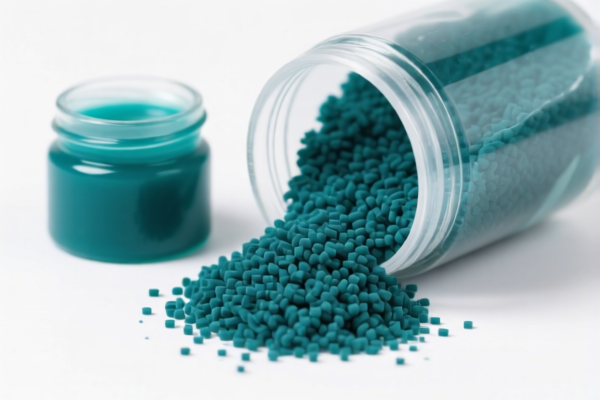
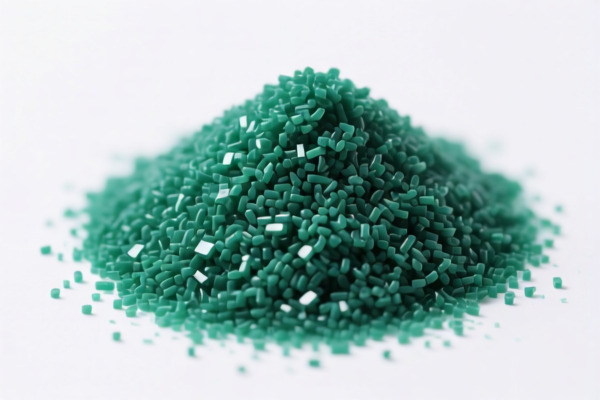
AI Analysis
🧵 Polyester Anti-Static Raw Materials (Chemical & Textile Intermediates)
🌐 HS Code Reference & Customs Clearance Guide | 2026 Latest Tariff Analysis | Professional Entry Strategy
📌 I. Product Definition & Classification: Do You Know What "Anti-Static Polyester Raw Material" Actually Is?
"Polyester anti-static raw material" is a broad trade term that lacks precision in customs declaration. In international trade, it generally refers to two distinct categories of goods. The classification depends entirely on the physical form and chemical nature of the product.
Category A: Polymer Resins & Chemically Modified Polyesters
These are primary form polymers (granules, powders, or liquids) where anti-static properties are achieved through chemical modification during synthesis (e.g., copolymers, specific polyesters). They are considered Plastics/Resins.
Category B: Synthetic Filament Yarns (Finished Intermediates)
These are synthetic filament yarns (monofilament or multifilament) made of polyester, often with a twist, used for weaving into anti-static fabrics. They are considered Textiles/Yarns.
⚠️ Critical Distinction Point:
- If the product is in granular, powdered, or liquid resin form → It is a Plastic/Resin (Chapter 39).
- If the product is in yarn/filament form (spooled, wound) → It is a Textile Yarn (Chapter 54).
- Do not declare "yarn" as "resin" or vice versa, as the HS codes and tax implications differ significantly.
📦 II. HS Code Classification Details (2026 Latest Tariff Authority Comparison)
Based on the provided <DATA>, here are the specific HS Codes relevant to "Polyester Anti-Static Raw Materials" falling into the two categories above.
| HS Code | Product Description | Applicable Scenario | Form |
|---|---|---|---|
3907.91.20.00 |
Unsaturated Polyesters: Allyl Resins: Allyl resins, uncompounded | Chemical Resin: Unsaturated polyesters (like allyl resins) in primary form, uncompounded. Often used as a base for modified plastics. | ✅ Granules/Powder/Liquid (Primary Form) |
3907.91.40.00 |
Unsaturated Polyesters: Allyl Resins: Other | Chemical Resin: Other unsaturated polyesters or allyl resins in primary form, not specifically "uncompounded" allyl resins. | ✅ Granules/Powder/Liquid (Primary Form) |
5402.47.90.20 |
Synthetic Filament Yarn: Other, of Polyesters: Other Monofilament; Multifilament, untwisted or twist < 5 turns/m | Textile Yarn: Single polyester yarn, untwisted or low twist. Used for weaving anti-static fabrics. | ✅ Yarn (Spooled/Wound) |
5402.47.90.40 |
Synthetic Filament Yarn: Other, of Polyesters: Other Multifilament, with twist of 5 turns or more per meter | Textile Yarn: Single polyester yarn, twisted (5+ turns/m). Common for industrial weaving. | ✅ Yarn (Spooled/Wound) |
🔍 Key Reminder:
- Chapter 39 (Resins): Applies to the chemical raw material before it is spun into fiber. If you import granules to melt-spin, use these codes. - Chapter 54 (Yarn): Applies if you import finished yarn ready for weaving. If you import spools of thread, use these codes. - "Anti-Static" is not a separate HS category: It is a functional property. The base material (Polyester Resin or Polyester Yarn) determines the code.
💰 III. 2026 Latest Tariff Rate Details (Including Additional Taxes & Policy Surcharges)
✅ Applicable Country: United States (US)
✅ Origin: China (CN)
✅ Effective Time: Current trade rules apply (Check latest USITC/IEEPA updates)
🎯 1. 3907.91.20.00 —— Unsaturated Polyesters (Allyl Resins, Uncompounded)
| Item | Content |
|---|---|
| Base Tariff | 0.0% (ad valorem) |
| Section 301 Additional Tariff | 25.0% |
| Total Tariff Rate | 25.0% |
| Tax Calculation | CIF Value × 25% |
| De Minimis Exemption? | ❌ No (Section 301 goods are generally excluded from de minimis relief) |
| Legal Basis | Section 301 Tariff List |
📌 Explanation:
- This code falls under Chapter 39 (Plastics). - 25% additional tariff applies to Chinese-origin unsaturated polyesters. - No base duty, but the 25% surcharge is significant. This is a high-cost import category if sourced from China.
🎯 2. 3907.91.40.00 —— Unsaturated Polyesters (Allyl Resins, Other)
| Item | Content |
|---|---|
| Base Tariff | 0.0% |
| Section 301 Additional Tariff | 0.0% |
| Total Tariff Rate | 0.0% |
| Tax Calculation | CIF Value × 0% |
| De Minimis Exemption? | ✅ Yes (If value is below $800) |
| Legal Basis | Section 301 Tariff List (Excluded) |
📌 Note:
- This code also falls under Chapter 39. - Zero total tax! This is a major advantage. - Crucial: Ensure the product truly fits "Other" (non-uncompounded allyl resins or other unsaturated polyesters) to qualify for 0%. Misclassification here can lead to severe penalties. - Warning: Verify with the supplier that the product is not "uncompounded allyl resin" (which would go to3907.91.20.00and incur 25%).
🎯 3. 5402.47.90.20 & 5402.47.90.40 —— Synthetic Filament Yarns (Polyester)
| Item | Content |
|---|---|
| Base Tariff | 0.0% |
| Section 301 Additional Tariff | 0.0% |
| Total Tariff Rate | 0.0% |
| Tax Calculation | CIF Value × 0% |
| De Minimis Exemption? | ✅ Yes (If value is below $800) |
| Legal Basis | Section 301 Tariff List (Excluded) |
📌 Note:
- These codes fall under Chapter 54 (Synthetic Filament Yarn). - Zero total tax! Both untwisted (...20) and twisted (...40) polyester yarns currently have no additional tariffs. - This makes importing polyester yarn for anti-static fabrics highly cost-effective compared to resin imports.
🛠️ IV. Customs Clearance Practical Advice (Real-World Pitfall Avoidance)
✅ 1. Documentation Checklist (缺一不可)
| Document | Required? | Notes |
|---|---|---|
| ✅ Product Specification Sheet | ✔️ | Must clearly state: Chemical composition (for resins) or Denier/Twist (for yarns). |
| ✅ Physical Form Description | ✔️ | CRITICAL: Must specify if it is Granules/Powder (Resin) or Yarn/Spool (Textile). |
| ✅ Function Claim | ✔️ | "Anti-static" is a functional claim. Provide test reports (e.g., surface resistance < 10^9 ohms). |
| ✅ Commercial Invoice | ✔️ | Must match the HS Code description precisely. |
| ✅ Packing List | ✔️ | Net/Gross weight, number of packages. |
| ✅ Certificate of Origin | ✔️ | If claiming preferential rates (e.g., from Vietnam, not China). |
| ✅ Test Reports | ✔️ | For anti-static properties (critical for FDA/CPSC if used in specific industries). |
✅ 2. Declaration Tips (Key Mnemonics)
🔥 "Form Determines Code: Resin is 39, Yarn is 54, Check the Twist!"
| Scenario | Correct Declaration | Wrong Declaration | Consequence |
|---|---|---|---|
| Polymer Granules | 3907.91.40.00 (if "Other") |
5402.47.90.40 (Yarn) |
Rejection/Delay: Customs will see granules, not yarn. |
| Yarn (Twisted) | 5402.47.90.40 |
3907.91.20.00 (Resin) |
Penalty: Misclassification, potential 25% retroactive tax. |
| Yarn (Untwisted) | 5402.47.90.20 |
5402.47.90.40 |
Risk: If twist >5 turns/m, it should be ...40. Minor discrepancy. |
| "Anti-Static" Resin | 3907.91.40.00 |
3907.91.20.00 |
Tax Impact: ...20 has 25% tax, ...40 has 0%. Save 25%! |
✅ 3. Special Situations
| Situation | Handling Advice |
|---|---|
| Blended Materials | If the "raw material" is a blend of polyester and anti-static additives (not chemically bound), it may still be classified as polyester resin (3907) if the polyester is the primary component. Provide blending ratio. |
| Pre-Dispersed Yarns | If yarn is already dyed or treated with anti-static agents, it may still fall under 5402.47. However, if it's a "finished fabric," it would be Chapter 55 or 60. Ensure it's still "yarn". |
| Origin Shifting | If imported from Vietnam or Thailand, apply for Certificate of Origin to potentially avoid Section 301 tariffs (though currently, these yarns/resins seem to have 0% or 25% regardless, verify origin-specific rules). |
| De Minimis (Section 321) | For shipments under $800, 5402.47 yarns can enter duty-free with minimal paperwork. 3907 resins with 25% tax (3907.91.20.00) may still incur duties unless exempted by current policy. |
🌍 V. Global Market Comparison (2026 Latest)
| Country/Region | Recommended HS Code | Tariff (China Origin) | Certification | Notes |
|---|---|---|---|---|
| 🇺🇸 USA | 3907.91.40.00 / 5402.47.90.40 |
0% (for these codes) | No special certification required | 3907.91.20.00 has 25% |
| 🇪🇺 EU | 3907.91 / 5402.47 |
~5-6% | REACH Registration | Anti-static claims may require safety data |
| 🇨🇳 China | 3907.91 / 5402.47 |
0-5% | CCC (if applicable) | Low import duty |
| 🇯🇵 Japan | 3907.91 / 5402.47 |
0% | PSE (if electrical) | No additional tariffs |
📌 Conclusion:
- USA: Yarn (5402.47) and Specific Resin (3907.91.40.00) are 0% duty. Avoid3907.91.20.00if possible due to 25% tax. - Global: Most markets have low base duties for these chemical/textile intermediates.
📌 VI. Common Errors & Pitfalls (Blood & Tears Lessons)
❌ Error 1: Declaring "Anti-Static Resin" as 3907.91.20.00 when it qualifies as 3907.91.40.00
👉 Consequence: Pay 25% extra tax unnecessarily.
✅ Fix: Confirm if the resin is "uncompounded allyl resin." If not, use ...40.00.
❌ Error 2: Importing Yarn but declaring it as Resin (3907)
👉 Consequence: Customs seizure/delay. Physical form mismatch is easily detected.
✅ Fix: Ensure the declared HS Code matches the physical form (Yarn vs. Granules).
❌ Error 3: Ignoring the Twist Level in Yarn Declaration
👉 Consequence: Misclassification between ...20 and ...40. If twist is >5 turns/m, it must be ...40.
✅ Fix: Provide twist meters per meter (T/m) data in specs.
❌ Error 4: Not Providing Anti-Static Test Reports
👉 Consequence: Customs may classify it as "standard" polyester, leading to disputes if the buyer claims anti-static benefits for regulatory reasons (e.g., ESD safety).
✅ Fix: Include surface resistance test reports (ASTM D257).
🎯 VII. Conclusion: Professional Declaration, Cost Savings, Compliance!
🎯 Remember the Mnemonic:
🔹 "Resin Granules: Check 39. Twist Yarn: Check 54. 'Other' Resin is 0% Tax, 'Uncompounded' Allyl is 25% Tax!"
🔹 "Form First: Granule vs. Spool. Twist Second: <5 vs. >5 Turns. Tax Third: 0% vs. 25%."
📌 Pro Tip:
If your anti-static polyester raw material is imported as yarn (5402.47), you enjoy 0% tariff. If it is resin (3907.91), carefully choose between ...20.00 (25% tax) and ...40.00 (0% tax) based on the exact chemical definition.
Recommendation: Consult with a customs broker to verify if your specific resin product fits 3907.91.40.00 to save 25%.
📣 Immediate Action:
📞 Contact your customs broker with physical form and chemical specs.
🚀 Optimize your HS Code to3907.91.40.00or5402.47for 0% tariff savings!
✨ Professional Customs Clearance Starts with Accurate Classification!
💼 Every Percent Saved is Pure Profit!
Customer Reviews
About HS Code Classification
The Harmonized System (HS) is an internationally standardized nomenclature developed by the World Customs Organization (WCO) to classify traded products. Over 200 countries use the HS system as the basis for customs tariffs, trade statistics, and import/export regulations.
Each HS code follows a hierarchical structure:
- Chapter (2 digits) — Broad category of goods (e.g., Chapter 84: Machinery and Mechanical Appliances)
- Heading (4 digits) — More specific grouping within the chapter
- Subheading (6 digits) — Internationally standardized breakdown, used by all WCO member countries
- National subdivisions (8-10 digits) — Country-specific extensions for further classification, such as US HTSUS 10-digit codes
Correct HS code classification is essential for smooth customs clearance, accurate duty payment, and compliance with trade regulations. Misclassification can lead to customs delays, overpayment of duties, or penalties.
When importing from CN to US, the applicable tariff rates may include:
- Most-Favored-Nation (MFN) rate — The standard duty rate applied to WTO members
- General rate — Applied to countries without trade agreements
- Trade remedy duties — Additional tariffs such as Section 301 (anti-dumping), Section 232 (national security), or countervailing duties
The information provided on this page is for reference purposes only. For official classification, please consult with your local customs authority or a licensed customs broker.