Polyester Business Backpack
CN → US| HS Code | Tariff Rate | Origin | Destination | Doc |
|---|---|---|---|---|
| 4202923120 | 52.6% | CN | US | Official Doc |
| 4202923131 | 52.6% | CN | US | Official Doc |
| 6305390000 | 25.9% | CN | US | Official Doc |
| 3923290000 | 38.0% | CN | US | Official Doc |
| 6305330080 | 25.9% | CN | US | Official Doc |
Product Images
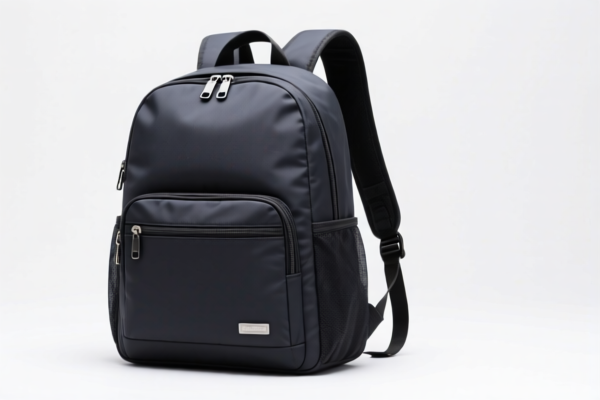
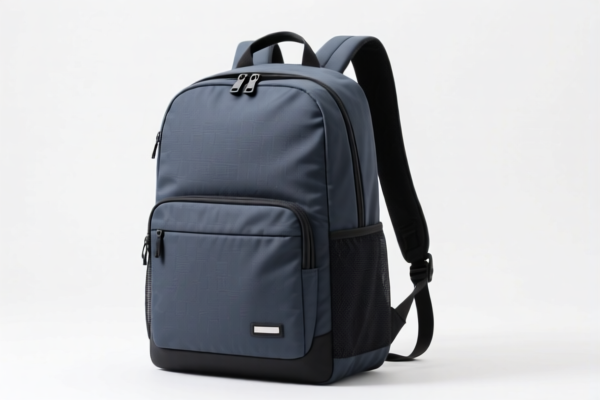
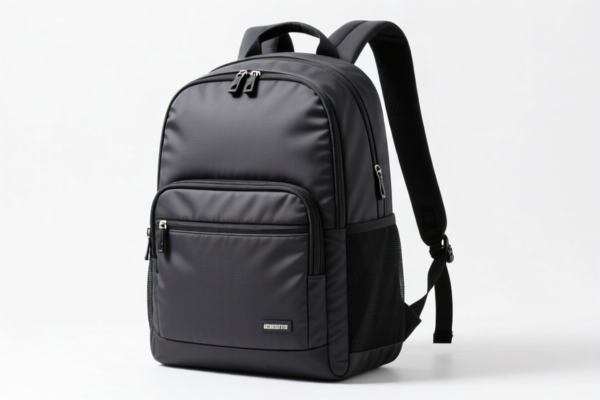
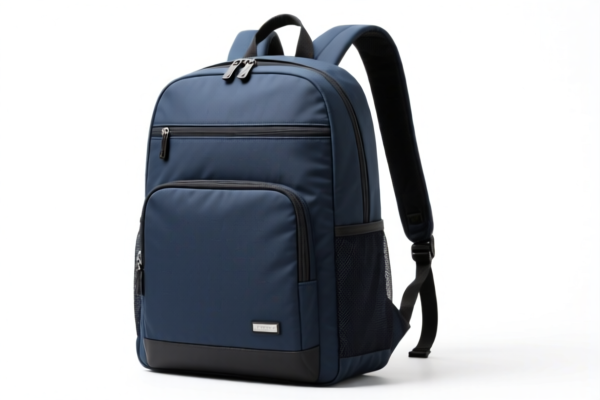
AI Analysis
🎒 Polyester Business Backpacks (Synthetic Fiber Travel/Business Bags)
🌐 HS Code Reference & Customs Clearance Guide | 2024/2025 Latest Tariff Analysis | Strategic Compliance Strategy
📌 I. Product Definition & Classification: What Exactly is a "Polyester Business Backpack"?
A Polyester Business Backpack falls under the broader category of Articles of apparel and clothing accessories, not knit or crochet or Travel, Sports, and Similar Goods. In international trade, the classification hinges on two critical factors: 1. Material Composition: Is it primarily synthetic fibers (Polyester)? 2. Form & Function: Is it a structured bag/backpack, or a loose packaging material?
⚠️ Critical Distinction:
- If it is a structured backpack with zippers, handles, and straps for personal use → It falls under Chapter 42 (Articles of Apparel).
- If it is a bulk transport bag or simple sack without complex hardware → It may fall under Chapter 63 (Other Made-up Textile Articles).
- Misclassification Risk: Declaring a complex backpack as a simple "textile bag" (Ch 63) to avoid higher tariffs is a common but risky customs error.
📦 II. HS Code Classification Details (Based on Provided Data)
The following HS Codes are derived strictly from the provided <DATA> for Polyester Business Backpacks imported into the US (implied by the 122 Clause and additional tariffs).
| HS Code | Product Description | Material/Form | Total Tax Rate |
|---|---|---|---|
4202.92.31.20 |
Polyester Tear-Resistant Backpack / Sports Bag Material: Synthetic Fiber Form: Backpack or Sports Bag |
Primary: Synthetic Fiber Structure: Structured Bag |
52.6% |
4202.92.31.31 |
Polyester Tear-Resistant Backpack Material: Artificial Fiber Form: Backpack (Travel/Sports Category) |
Primary: Artificial Fiber Structure: Structured Bag |
52.6% |
6305.39.00.00 |
Polyester Sports Bag Material: Artificial Textile Material Form: Bag (Packaging/Cartage Purpose) |
Primary: Artificial Textile Structure: Simple Bag/Packaging |
25.9% |
3923.29.00.00 |
Polyester Sports Bag Material: Plastics/Synthetic Fiber Form: Packaging/Cartage Articles |
Primary: Plastic-like/Synthetic Structure: Packaging |
38.0% |
6305.33.00.80 |
Polyester Sports Bag Material: Artificial Textile Material Form: Bag (Packaging/Cartage Purpose) |
Primary: Artificial Textile Structure: Simple Bag/Packaging |
25.9% |
🔍 Key Insight:
- Chapter 42 (Codes ending in .31): Represents finished, structured backpacks with zippers, straps, and specific shapes. These attract the highest tariffs (52.6%) due to Section 301 and Section 122 clauses.
- Chapter 63 (Codes ending in .00): Represents generic textile bags or sacks. These have lower tariffs (25.9%) but require the product to genuinely lack the characteristics of a "backpack" (e.g., no complex padding, no rigid structure, used primarily for storage/transport rather than personal carry).
- Chapter 39 (Code 3923.29): Rare for polyester; implies a plastic-coated or plastic-based bag. High tax (38.0%).
💰 III. 2024/2025 Latest Tariff Rate Breakdown (Including Surcharges)
✅ Applicable Market: United States (US)
✅ Origin: China (CN)
✅ Effective Time: Current (Includes Section 301, 232, and Section 122 tariffs)
🎯 1. 4202.92.31.20 & 4202.92.31.31 —— Structured Polyester Backpacks (Chapter 42)
| Item | Detail |
|---|---|
| Base Duty Rate | 17.6% (Standard MFN rate for Bags/Backpacks) |
| Section 301 Surcharge | +25.0% (Additional US-China Trade War Tariff) |
| Section 122 Surcharge | +10.0% (Specific tariff on certain textile/apparel goods from China) |
| Total Tax Rate | 52.6% |
| Calculation Basis | CIF Value × 52.6% |
| De Minimis Exemption? | ❌ NO (Deny de minimis. Section 301 and 122 tariffs cannot be waived under $800 rule.) |
| Legal Path | HTSUS 4202.92 → USITC Footnote 9903.04.03 (Sec 301) + 122 Clause |
📌 Explanation:
- The 17.6% is the baseline duty for "Backpacks" in Chapter 42.
- The +25% is the standard Section 301 tariff applied to most Chinese goods in this category.
- The +10% is the specific Section 122 tariff targeting specific textile and apparel products, further increasing the cost.
- Total Impact: For every $100 of goods, you pay $52.60 in duties alone. This significantly impacts profit margins.
🎯 2. 6305.39.00.00 & 6305.33.00.80 —— Generic Polyester Bags (Chapter 63)
| Item | Detail |
|---|---|
| Base Duty Rate | 8.4% (Standard rate for other made-up textile articles) |
| Section 301 Surcharge | +7.5% (Reduced Section 301 rate for some textile accessories) |
| Section 122 Surcharge | +10.0% (Applies if classified as textile/apparel-related packaging) |
| Total Tax Rate | 25.9% |
| Calculation Basis | CIF Value × 25.9% |
| De Minimis Exemption? | ❌ NO (Generally denied for Section 301 items, though enforcement varies, it is risky.) |
| Legal Path | HTSUS 6305.39 → USITC Footnote 9903.04.03 (Sec 301) + 122 Clause |
📌 Explanation:
- These codes apply if the item is not considered a "backpack" but rather a "bag" or "sack."
- The tax is half of the Chapter 42 rate, but misclassification is a major customs violation risk.
- Risk: If customs inspects the item and finds zippers, padded straps, and ergonomic design, they will reclassify it to Chapter 42 and assess the 52.6% rate + penalties.
🎯 3. 3923.29.00.00 —— Plastic-like Polyester Bags (Chapter 39)
| Item | Detail |
|---|---|
| Base Duty Rate | 3.0% |
| Section 301 Surcharge | +25.0% |
| Section 122 Surcharge | +10.0% |
| Total Tax Rate | 38.0% |
| De Minimis Exemption? | ❌ NO |
📌 Explanation:
- This code is for plastic packaging articles. Polyester backpacks rarely fit here unless they are heavily plastic-coated sacks. Unlikely for business backpacks.
🛠️ IV. Customs Clearance Practical Advice (Battle-Tested Pitfall Avoidance)
✅ 1. Document Checklist (Non-Negotiable)
| Document | Required | Purpose |
|---|---|---|
| ✅ Product Specifications | ✔️ | Detail material (100% Polyester), dimensions, weight, and components (zippers, buckles). |
| ✅ Detailed Photos | ✔️ | Show exterior, interior, zippers, straps, and labels. Proves if it's a "backpack" or a "bag." |
| ✅ Commercial Invoice | ✔️ | Must clearly state "Polyester Business Backpack" and value. Avoid vague terms like "Textile Item." |
| ✅ Packing List | ✔️ | Itemize contents. Ensure no hidden hardware that changes the classification. |
| ✅ Material Test Report | ✔️ | Proof of polyester content. Crucial for distinguishing between Ch 42 and Ch 63. |
✅ 2. Classification Strategy (Key Mantra)
🔥 "Structure Defines Chapter 42, Simplicity Allows Chapter 63. Misclassification is a Fine Trap!"
| Scenario | Correct HS Code | Risk if Wrong |
|---|---|---|
| Business Backpack (Padded, zippers, straps, ergonomic) | 4202.92.31.20 / .31 |
If declared as Ch 63 → 52.6% back-duties + penalties. |
| Simple Tote/Sack (No padding, basic handle, bulk use) | 6305.39.00.00 / .33 |
If declared as Ch 42 → Overpay duty (25.9% vs 52.6%). |
| Plastic-Coated Bag | 3923.29.00.00 |
Rare for backpacks. Unlikely to be accepted for standard polyester packs. |
✅ 3. Special Customs Handling
| Situation | Recommendation |
|---|---|
| OEM Branding | Ensure labels are consistent. If the label says "Backpack," customs expects Ch 42. |
| Mixed Containers | Clearly separate "Backpacks" (Ch 42) and "Storage Bags" (Ch 63) in the invoice. Do not mix them under one HS code. |
| Section 122 Impact | Be aware that the 10% Section 122 tariff is specific to certain goods. Confirm if your specific style is targeted. For backpacks, it currently applies. |
| De Minimis (Section 321) | DO NOT rely on $800 de minimis for these HS codes. The 10% Section 122 tariff and 25% Section 301 tariff explicitly deny de minimis treatment for most of these items. |
🌍 V. Global Market Comparison (2024/2025)
| Country/Region | Recommended HS Code | Estimated Duty (China Origin) | Key Requirements |
|---|---|---|---|
| 🇺🇸 USA | 4202.92.31.20 |
52.6% (Heavy Tariff) | Section 301 + Section 122 apply. No de minimis. |
| 🇨🇳 China (Export) | 4202.92.31.20 |
20% (Export Duty, if any) | Check local export policies. |
| 🇪🇺 EU | 4202.92.00 |
~10-12% (Standard) | No Section 301/122. CE marking not required for bags. |
| 🇬🇧 UK | 4202.92.00 |
~10-12% | Post-Brexit tariffs apply. No US-style surcharges. |
📌 Conclusion:
- The US is the highest-cost market for polyester backpacks due to cumulative tariffs (17.6% + 25% + 10%).
- EU/UK are significantly more favorable for cost purposes.
- Supply Chain Strategy: Consider shifting final assembly to Vietnam or Mexico for US market to avoid Section 301, though origin rules (Substantial Transformation) must be met.
📌 VI. Common Errors & Pitfall Guide (Lessons Learned)
❌ Error 1: Declaring a padded, zipped backpack as a "Textile Bag" (6305.39) to save tax.
👉 Consequence: Customs inspection reveals zippers/padding → Reclassification to 4202.92.31.20 → Pay 52.6% + 25% penalty + legal fees.
❌ Error 2: Ignoring Section 122.
👉 Consequence: Assuming only Section 301 applies. The additional 10% is automatic for many textile/apparel goods from China. Total tax is 52.6%, not 42.6%.
❌ Error 3: Relying on De Minimis ($800) for small shipments.
👉 Consequence: US Customs and Border Protection (CBP) has revoked de minimis for Section 301 and Section 122 goods. Your small package will be seized or taxed.
✅ Correct Approach:
"Polyester Business Backpack, 15L, Zippered Closure, Padded Shoulder Straps, Model XYZ, 100% Polyester Outer, Nylon Lining."
🎯 VII. Conclusion: Professional Classification, Cost Control
🎯 Remember the Mantra:
🔹 "Backpack = Ch 42 = 52.6% Tax. Bag = Ch 63 = 25.9% Tax. Structure is King."
🔹 "No De Minimis for Sec 301/122. Plan your logistics accordingly."
📌 Pro Tip:
If you are importing large volumes, consider applying for a Customs Ruling to confirm if your specific design can be classified under the lower-tax Chapter 63 codes. However, be prepared with detailed structural diagrams to prove it lacks "backpack" characteristics.
📣 Immediate Action Required:
📞 Consult your customs broker with high-resolution photos of the backpack.
📊 Calculate landed cost using the 52.6% rate for Chapter 42 items. Do not underestimate.
🚀 Optimize your supply chain to mitigate high US tariffs.
✨ Professional Clearance Starts with Accurate Classification!
💼 Your Profit Margin Depends on Getting the HS Code Right!
Customer Reviews
About HS Code Classification
The Harmonized System (HS) is an internationally standardized nomenclature developed by the World Customs Organization (WCO) to classify traded products. Over 200 countries use the HS system as the basis for customs tariffs, trade statistics, and import/export regulations.
Each HS code follows a hierarchical structure:
- Chapter (2 digits) — Broad category of goods (e.g., Chapter 84: Machinery and Mechanical Appliances)
- Heading (4 digits) — More specific grouping within the chapter
- Subheading (6 digits) — Internationally standardized breakdown, used by all WCO member countries
- National subdivisions (8-10 digits) — Country-specific extensions for further classification, such as US HTSUS 10-digit codes
Correct HS code classification is essential for smooth customs clearance, accurate duty payment, and compliance with trade regulations. Misclassification can lead to customs delays, overpayment of duties, or penalties.
When importing from CN to US, the applicable tariff rates may include:
- Most-Favored-Nation (MFN) rate — The standard duty rate applied to WTO members
- General rate — Applied to countries without trade agreements
- Trade remedy duties — Additional tariffs such as Section 301 (anti-dumping), Section 232 (national security), or countervailing duties
The information provided on this page is for reference purposes only. For official classification, please consult with your local customs authority or a licensed customs broker.