Polyester Business Lunch Bag
CN → US| HS Code | Tariff Rate | Origin | Destination | Doc |
|---|---|---|---|---|
| 4202920807 | 42.0% | CN | US | Official Doc |
| 6307909884 | 24.5% | CN | US | Official Doc |
| 3923900080 | 38.0% | CN | US | Official Doc |
| 3923290000 | 38.0% | CN | US | Official Doc |
| 4202920809 | 42.0% | CN | US | Official Doc |
Product Images
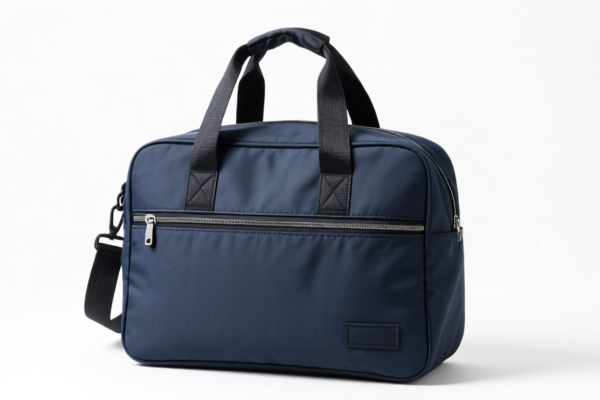
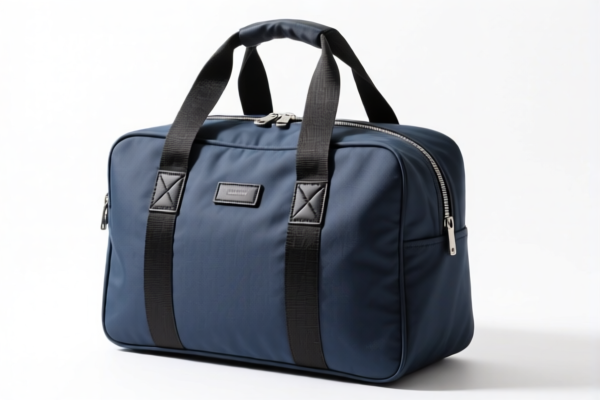
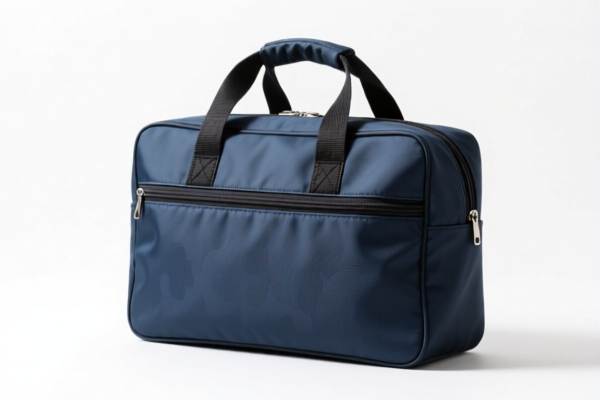
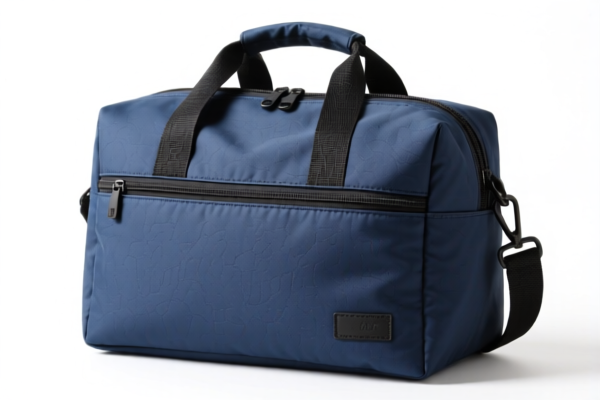
AI Analysis
🎒 Polyester Business Lunch Bag (Cooler Bag)
🌐 HS Code Reference & Customs Clearance Guide | 2026 Latest Tariff Analysis | Professional Clearance Strategy
📌 One, Product Definition & Classification: Do You Really Understand "Polyester Lunch Bag"?
A Polyester Business Lunch Bag is a portable food container, typically used for keeping food warm or cool during commutes. In international trade, its classification depends on the material, structure, and intended use.
Key Distinctions: * As an Accessory (Bag): If it’s a soft-sided bag with handles, zippers, or straps, it usually falls under Chapter 42 (Articles of Leather; Saddle Harness) or Chapter 63 (Other Made-up Textile Articles). * As Packaging: If it’s a simple sack or pouch used primarily for retail packaging, it may fall under Chapter 39 (Plastics) or Chapter 63.
⚠️ Critical Classification Point:
- If it resembles a "bag with outer surface of text material" (like polyester fabric) → Chapter 42.
- If it is a simple sack/pouch without rigid structure → Chapter 63.
- If it is perceived as a plastic packaging item (e.g., lined with plastic film as primary function) → Chapter 39.
📦 Two, HS Code Classification Details (2026 Latest Tariff Authority Comparison)
Based on the provided data, here are the five possible HS Codes for Polyester Cartoon/Design Lunch Bags:
| HS Code | Product Description | Application Scenario | Material/Structure |
|---|---|---|---|
4202.92.08.07 |
Polyester Cartoon Lunch Bag; Material: Polyester (Artificial Fibers); Form: Lunch Bag | Standard insulated lunch bags with polyester exterior | ✅ Outer surface of textile materials (Polyester) |
6307.90.98.84 |
Polyester Cartoon Lunch Bag; Material: Polyester (Artificial Fibers); Form: Lunch Bag; Classified as Other Made-up Textile Articles | Generic textile accessories, non-specific bag type | ✅ Other made-up textile articles |
3923.90.00.80 |
Polyester Cartoon Lunch Bag; Material: Polyester (Synthetic/Plastic-like); Use: Packaging | Perceived as plastic packaging due to lining/coating | ✅ Plastics and articles thereof (Packaging) |
3923.29.00.00 |
Polyester Cartoon Lunch Bag; Material: Plastic/Synthetic Fiber; Form: Sack/Bag; Use: Packaging/Storage | Sack-like bags, often for retail packaging | ✅ Plastics and articles thereof (Sacks) |
4202.92.08.09 |
Polyester Cartoon Lunch Bag; Material: Polyester (Synthetic/Artificial Fiber); Form: Lunch Bag; Inferred as Insulated Bag Material | Similar to .07, but broader "insulated bag" inference | ✅ Outer surface of textile materials (Polyester) |
6307.90.98.91 |
Polyester Cartoon Lunch Bag; Material: Polyester (Polyester Fiber); Form: Lunch Bag; Classified as Other Made-up Articles | Generic polyester textile finished goods | ✅ Other made-up textile articles |
🔍 Key Reminder:
- Chapter 42 items are generally treated as bags (with handles/straps) and may face higher duties due to "Section 301" and "122" tariffs.
- Chapter 63 items are treated as other textile articles and may have slightly lower surtaxes in some interpretations.
- Chapter 39 items are treated as plastic packaging, often with higher base tariffs.
💰 Three, 2026 Latest Tariff Rate Breakdown (Including Additional Taxes & Policy Surcharges)
✅ Applicable Country: United States (US)
✅ Origin: China (CN)
✅ Effective Date: Ongoing (Post-2024 Trade Policies)
🎯 1. 4202.92.08.07 & 4202.92.08.09 —— Polyester Lunch Bags (Chapter 42)
| Item | Content |
|---|---|
| Base Tariff | 7.0% (Ad Valorem) |
| Section 301 Surcharge | 25.0% (Due to China Origin) |
| 122-Clause Surcharge | 10.0% (Specific to China-made goods under recent rules) |
| Total Tax Rate | 42.0% |
| Tax Calculation | CIF Value × 42% |
| De Minimis Exemption | ❌ Not Eligible (Deemed commercial import) |
| Legal Basis Path | HTSUS:4202.92.08.07 → USITC Footnote → IEEPA:9903.01.25 (25%) → 122 Clause (10%) |
📌 Explanation:
- 7.0% is the standard MFN (Most Favored Nation) duty for bags of textile materials.
- 25% is the Section 301 tariff on Chinese goods.
- 10% is an additional surcharge under "122 Clause" (often related to forced labor or specific trade remedy actions).
- Total: 42%. This is a high-cost category.
🎯 2. 6307.90.98.84 & 6307.90.98.91 —— Other Made-up Textile Articles (Chapter 63)
| Item | Content |
|---|---|
| Base Tariff | 7.0% (Ad Valorem) |
| Section 301 Surcharge | 7.5% (Note: Lower surcharge rate for this subheading) |
| 122-Clause Surcharge | 10.0% |
| Total Tax Rate | 24.5% |
| Tax Calculation | CIF Value × 24.5% |
| De Minimis Exemption | ❌ Not Eligible |
| Legal Basis Path | HTSUS:6307.90.98.84 → USITC Footnote → IEEPA:9901.25 (7.5%) → 122 Clause (10%) |
📌 Explanation:
- While the base tariff is the same (7.0%), the Section 301 surcharge is lower (7.5% vs 25%) for this specific classification.
- Total: 24.5%. This is a significant savings compared to Chapter 42.
- Strategy: If the product qualifies as an "other made-up textile article" rather than a "bag," this classification is preferred.
🎯 3. 3923.90.00.80 & 3923.29.00.00 —— Plastic Packaging / Sacks (Chapter 39)
| Item | Content |
|---|---|
| Base Tariff | 3.0% (Ad Valorem) |
| Section 301 Surcharge | 25.0% |
| 122-Clause Surcharge | 10.0% |
| Total Tax Rate | 38.0% |
| Tax Calculation | CIF Value × 38.0% |
| De Minimis Exemption | ❌ Not Eligible |
| Legal Basis Path | HTSUS:3923.90.00.80 → USITC Footnote → IEEPA:9903.01.25 (25%) → 122 Clause (10%) |
📌 Explanation:
- Base tariff is low (3.0%), but the Section 301 surcharge is high (25%).
- Total: 38.0%. Higher than Chapter 63, lower than Chapter 42.
- Risk: If customs determines the bag is primarily a "textile bag" (Chapter 42/63), misclassifying as plastic can lead to penalties.
🛠️ Four, Customs Clearance Practical Advice (Battle-Tested Pitfall Avoidance)
✅ 1. Document Checklist (Non-Negotiable)
| Document | Required | Notes |
|---|---|---|
| ✅ Product Specification Sheet | ✔️ | Must detail material (Polyester), lining (if insulated), dimensions, zippers, handles |
| ✅ Product Photos | ✔️ | Show exterior, interior, lining, and structure (handles/straps) |
| ✅ Commercial Invoice | ✔️ | Clearly state "Lunch Bag" or "Food Carrier," not just "Textile Article" |
| ✅ Packing List | ✔️ | Weight and dimensions of package |
| ✅ Certificate of Origin (CO) | ✔️ | Essential for proving China origin (affects surtaxes) |
| ✅ Third-Party Test Report | ✔️ | Material composition analysis (confirm 100% Polyester vs. blend) |
✅ 2. Classification Strategy (Key Mantra)
🔥 "Structure Determines Code, Material Determines Rate, Clarity Prevents Penalty!"
| Scenario | Recommended HS Code | Risk |
|---|---|---|
| Bag with handles/straps, soft structure | 4202.92.08.07 or 4202.92.08.09 |
Higher duty (42%) but accurate if it looks like a bag |
| Generic textile pouch/sack, no rigid structure | 6307.90.98.84 or 6307.90.98.91 |
Preferred for savings (24.5%) if it doesn't clearly look like a "bag" |
| Simple sack for retail packaging | 3923.29.00.00 |
Risk of misclassification if it has polyester exterior |
| Insulated Lunch Bag (with foil lining) | 4202.92.08.07 |
Still Chapter 42 if outer material is textile |
📌 Note:
- Chapter 42 (Bags) is more expensive (42%) due to higher Section 301 surcharge.
- Chapter 63 (Other Textile Articles) is cheaper (24.5%) due to lower surcharge.
- Strategy: If the product can be argued as a "textile accessory" rather than a "bag," pursue 6307.90.98.84.
✅ 3. Special Cases
| Case | Handling Advice |
|---|---|
| Insulated Lunch Bag | If lined with aluminum foil, still classified as textile bag (4202) if outer material is polyester. |
| Cartoon/Printed Design | Does not affect classification; still based on material and structure. |
| Small Sample Imports | Even small quantities are subject to full tariffs if deemed commercial. No de minimis. |
| OEM Custom Bags | Provide design drawings to prove it's a finished bag, not a raw material. |
🌍 Five, Global Market Comparison (2026 Latest)
| Country/Region | Recommended HS Code | Tariff Rate | Notes |
|---|---|---|---|
| 🇺🇸 USA | 6307.90.98.84 |
24.5% | Best rate if classified as textile article. Avoid 4202 if possible. |
| 🇨🇳 China | 6307.90.98.84 |
5-10% | No Section 301 or 122 surcharges. Lower cost. |
| 🇪🇺 EU | 4202.92 |
4-6% | No high surcharges. Easier classification. |
| 🇬🇧 UK | 4202.92 |
4-6% | Post-Brexit tariffs similar to EU. |
| 🇦🇺 Australia | 4202.92 |
5% | No significant surcharges. |
📌 Conclusion:
- USA is the most expensive market due to Section 301 and 122 Clause surcharges.
- Classification strategy is critical: Choosing 6307 over 4202 saves 17.5% in tariffs.
- EU/UK/Australia have lower and more stable tariffs.
📌 Six, Common Mistakes & Pitfall Avoidance (Blood-Led Lessons)
❌ Mistake 1: Classifying a handle-equipped lunch bag as 6307 (Textile Article) to save taxes.
👉 Consequence: If customs insists it's a "bag," they will reclassify to 4202, apply 42% tax, and charge penalties.
✅ Fix: Only use 6307 if the item is truly a pouch/sack without typical bag features (handles, zippers, straps).
❌ Mistake 2: Using "Plastic Bag" description for a Polyester Bag.
👉 Consequence: Misclassification to 3923, leading to 38% tax + potential fraud accusations.
✅ Fix: Accurately describe material: "100% Polyester Outer, Foil Lining."
❌ Mistake 3: Ignoring 122 Clause surcharges.
👉 Consequence: Underestimating total cost. Many traders only consider Section 301 (25%) and forget the extra 10%.
✅ Fix: Always calculate Base + 301 + 122.
✅ Correct Description Example:
"Polyester Lunch Bag, 100% Polyester Outer Fabric, Aluminum Foil Insulation Lining, Zipper Closure, Handle, Model XYZ, Chinese Origin"
🎯 Seven, Conclusion: Professional Classification Saves Money!
🎯 Remember the Mantra:
🔹 "Handles? Think 4202 (42%). No Handles? Try 6307 (24.5%). Plastic? Think 3923 (38%). Choose wisely!"
🔹 "Tariff difference is 17.5%, that's real profit in your pocket!"
📌 Pro Tip:
If your lunch bags are shipped from Vietnam, Thailand, or Malaysia, you may be eligible for IEEPA Exemptions, reducing tariffs to 0-5%.
Recommendation: Apply for Pre-Ruling (Advance Ruling) with US Customs to confirm whether your specific design qualifies for6307(24.5%) vs4202(42%).
📣 Immediate Action:
📞 Consult a customs broker + Provide product photos + Request HS Code pre-ruling.
🚀 Ensure your lunch bags clear customs smoothly, reduce costs, and maximize profit!
✨ Professional clearance starts with accurate classification!
💼 Every penny of cost should be precisely calculated!
Customer Reviews
About HS Code Classification
The Harmonized System (HS) is an internationally standardized nomenclature developed by the World Customs Organization (WCO) to classify traded products. Over 200 countries use the HS system as the basis for customs tariffs, trade statistics, and import/export regulations.
Each HS code follows a hierarchical structure:
- Chapter (2 digits) — Broad category of goods (e.g., Chapter 84: Machinery and Mechanical Appliances)
- Heading (4 digits) — More specific grouping within the chapter
- Subheading (6 digits) — Internationally standardized breakdown, used by all WCO member countries
- National subdivisions (8-10 digits) — Country-specific extensions for further classification, such as US HTSUS 10-digit codes
Correct HS code classification is essential for smooth customs clearance, accurate duty payment, and compliance with trade regulations. Misclassification can lead to customs delays, overpayment of duties, or penalties.
When importing from CN to US, the applicable tariff rates may include:
- Most-Favored-Nation (MFN) rate — The standard duty rate applied to WTO members
- General rate — Applied to countries without trade agreements
- Trade remedy duties — Additional tariffs such as Section 301 (anti-dumping), Section 232 (national security), or countervailing duties
The information provided on this page is for reference purposes only. For official classification, please consult with your local customs authority or a licensed customs broker.