Polyester Coating Agent Raw Material
CN → US| HS Code | Tariff Rate | Origin | Destination | Doc |
|---|---|---|---|---|
| 3907912000 | 35.0% | CN | US | Official Doc |
| 3907915000 | 41.5% | CN | US | Official Doc |
| 3824401000 | 41.5% | CN | US | Official Doc |
| 3824992500 | 41.5% | CN | US | Official Doc |
| 3206491000 | 40.9% | CN | US | Official Doc |
Product Images
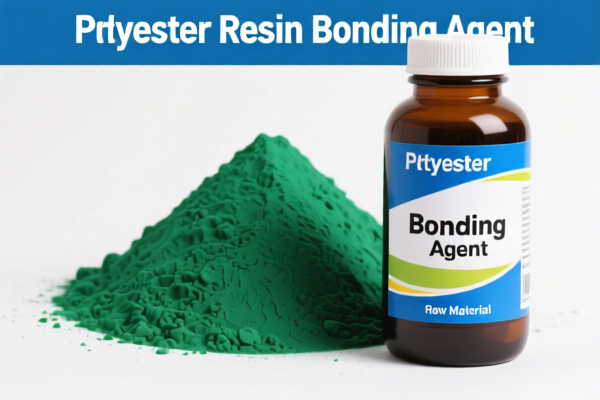
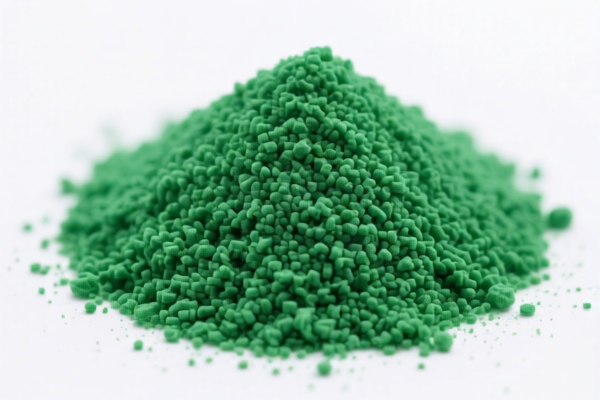
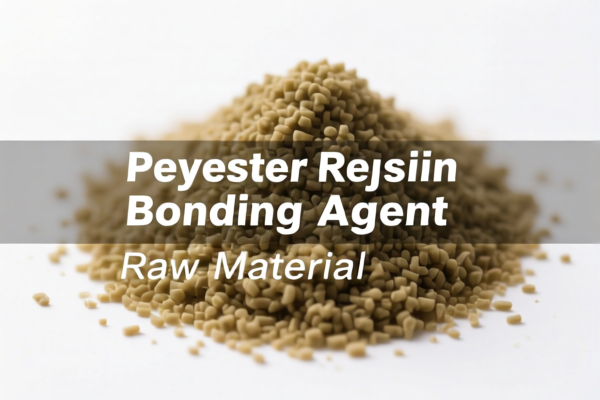

AI Analysis
🏭 Polyester Coating Agent Raw Material
🌐 HS Code Reference & Customs Clearance Guide | 2026 Latest Tariff Analysis | Professional Entry Strategies
📌 I. Product Definition and Classification: What Exactly Is It?
Polyester Coating Agent Raw Materials are essential chemical components used in the manufacturing of protective coatings, finishes, and laminates. In international trade, these materials are primarily categorized based on their chemical structure (unsaturated polyester resins vs. other polyesters) and their functional role (base resin, curing agent, or pigment).
Key distinctions define the HS Code: * Unsaturated Polyester Resins (Raw Material State): Classified under Chapter 39. These are liquid or solid precursors used for glass-reinforced plastics or coatings. * Chemical Preparations/Additives: Classified under Chapter 38. This includes curing agents (hardeners), accelerators, or specific chemical mixtures that are not pure resins but essential for the coating process. * Pigments/Dyes: Classified under Chapter 32. If the material is primarily a colorant mixed with a polyester base, it falls here.
⚠️ Critical Distinction Point:
- If it is a pure resin in a primary form → Chapter 39
- If it is a curing agent/hardener or specialized chemical prep → Chapter 38
- If it is a pigment/colorant → Chapter 32
📦 II. HS Code Classification Details (2026 Latest Tariff Authoritative Comparison)
| HS Code | Product Description | Application Scenario | Tariff Type |
|---|---|---|---|
3907.91.20.00 |
Unsaturated Polyester Resins, in primary forms | Base resin for coatings, fiberglass laminates; liquid/solid raw form | Resin Primary Form |
3907.91.50.00 |
Other Unsaturated Polyesters, in primary forms | General polyester raw materials not specified elsewhere | Other Resin |
3824.40.10.00 |
Chemical Resins Preparations; Curing Agents | Hardeners, accelerators, or additives for polyester resins | Chemical Additive |
3824.99.25.00 |
Other Chemical Preparations (incl. Curing Agents) | Specialty chemical mixtures for coating processes | Special Prep |
3206.49.10.00 |
Pigments, Dyes, and Colorants (Polyester-based) | Colored pigments for polyester coatings | Pigment |
🔍 Key Reminder:
- Resins vs. Additives: Do not confuse the base polymer (3907) with the curing agent (3824). They are chemically distinct and often shipped separately. - Primary Form: The items listed are defined as "raw materials" or "primary forms." If the product is a fully finished coating paste ready for application, it may fall under a different chapter (e.g., Chapter 32 for paints).
💰 III. 2026 Latest Tariff Rate Detailed Explanation (Including Additional Taxes & Policy Surcharges)
✅ Applicable Country: United States (US)
✅ Country of Origin: China (CN)
✅ Effective Time: From November 10, 2025 (for subsequent imports)
🎯 1. 3907.91.20.00 — Unsaturated Polyester Resins (Primary Forms)
| Item | Content |
|---|---|
| Base Tariff | 0.0% (ad valorem) |
| Section 301 Additional Duty | +25.0% |
| IEEPA Surcharge (122 Clause) | +10.0% (Targeting specific Chinese chemical inputs) |
| Total Rate | 35.0% |
| Tax Calculation | CIF Value × 35% |
| De Minimis Eligibility | ❌ Not Eligible (High tariff threshold prevents low-value exemption) |
| Legal Basis Path | USITC:3907.91.20.00 → Section 301: Footnote 9903.88.01 → IEEPA:9903.01.25 |
📌 Explanation:
- The 0% base rate reflects standard trade agreements for polymers. - The 25% is the standard Section 301 tariff on Chinese polyesters. - The 10% is a specific surcharge under the 122 Clause (IEEPA) targeting certain chemical raw materials. - Total 35% is a significant cost factor that must be priced into the CIF value.
🎯 2. 3907.91.50.00 — Other Unsaturated Polyesters (Primary Forms)
| Item | Content |
|---|---|
| Base Tariff | 6.5% |
| Section 301 Additional Duty | +25.0% |
| IEEPA Surcharge (122 Clause) | +10.0% |
| Total Rate | 41.5% |
| Tax Calculation | CIF Value × 41.5% |
| De Minimis Eligibility | ❌ Not Eligible |
| Legal Basis Path | USITC:3907.91.50.00 → Section 301 → IEEPA:9903.01.24 |
📌 Note:
- This code applies to polyester variants not specifically listed under.20. - The 6.5% base rate makes this category more expensive initially than.20. - Total 41.5% is the highest among the resin categories.
🎯 3. 3824.40.10.00 — Chemical Resin Preparations (Curing Agents)
| Item | Content |
|---|---|
| Base Tariff | 6.5% |
| Section 301 Additional Duty | +25.0% |
| IEEPA Surcharge (122 Clause) | +10.0% |
| Total Rate | 41.5% |
| Tax Calculation | CIF Value × 41.5% |
| De Minimis Eligibility | ❌ Not Eligible |
| Legal Basis Path | USITC:3824.40.10.00 → Section 301 → IEEPA:9903.01.24 |
📌 Critical Insight:
- Curing agents are often misunderstood as simple chemicals, but they are treated as "Chemical Resin Preparations." - The 6.5% base applies here. - Total 41.5% is identical to3907.91.50.00.
🎯 4. 3824.99.25.00 — Other Chemical Preparations
| Item | Content |
|---|---|
| Base Tariff | 6.5% |
| Section 301 Additional Duty | +25.0% |
| IEEPA Surcharge (122 Clause) | +10.0% |
| Total Rate | 41.5% |
| Tax Calculation | CIF Value × 41.5% |
| De Minimis Eligibility | ❌ Not Eligible |
| Legal Basis Path | USITC:3824.99.25.00 → Section 301 → IEEPA:9903.01.24 |
📌 Note:
- This is a "catch-all" for specific chemical preparations not covered in.40. - If your curing agent or additive doesn't fit.40.10, it defaults here. - Total 41.5% remains consistent.
🎯 5. 3206.49.10.00 — Pigments (Polyester/Plastic based)
| Item | Content |
|---|---|
| Base Tariff | 5.9% |
| Section 301 Additional Duty | +25.0% |
| IEEPA Surcharge (122 Clause) | +10.0% |
| Total Rate | 40.9% |
| Tax Calculation | CIF Value × 40.9% |
| De Minimis Eligibility | ❌ Not Eligible |
| Legal Basis Path | USITC:3206.49.10.00 → Section 301 → IEEPA:9903.01.24 |
📌 Note:
- If the raw material is a pigment (color powder/liquid) rather than a resin or hardener, it falls under Chapter 32. - Total 40.9% is slightly lower than the resin/curing agent options due to the specific base rate.
🛠️ IV. Customs Clearance Practical Advice (Real-World Pitfall Avoidance Guide)
✅ 1. Documentation Checklist (Non-Negotiable)
| Document | Mandatory? | Explanation |
|---|---|---|
| ✅ Technical Data Sheet (TDS) | ✔️ | Must specify: Chemical composition, HS Code justification, Physical state (liquid/solid). |
| ✅ Safety Data Sheet (SDS/MSDS) | ✔️ | Critical for chemical classification. Shows flash point, toxicity, and hazard class. |
| ✅ Certificate of Analysis (COA) | ✔️ | Proves purity and confirms it is a "raw material" and not a finished good. |
| ✅ Commercial Invoice | ✔️ | Must clearly describe the item as "Raw Material" or "Resin Base," not "Finished Paint." |
| ✅ Bill of Lading | ✔️ | Ensure packaging details match the declaration (e.g., drums, IBC totes). |
| ✅ Origin Certificate | ✔️ | Required for Section 301/IEEPA assessment. |
✅ 2. Declaration Techniques (Key Mnemonics)
🔥 "Resin vs. Prep, Base vs. Additive, State Matters!"
| Scenario | Correct Declaration | Wrong Practice | Consequence |
|---|---|---|---|
| Base Resin | 3907.91.20.00 (Unsaturated Polyester, Primary Form) |
Declare as "Paint" or "Coating" | Misclassification → High penalties |
| Curing Agent | 3824.40.10.00 (Chemical Resin Preparation) |
Declare as "Polyester Resin" | Rate may differ; confusion at border |
| Pigment Mix | 3206.49.10.00 (Pigment) |
Declare as "Resin" | Tax error (40.9% vs 35%) |
| Finished Coating | Chapter 32 (Paints/Varnishes) | Declare as "Raw Material" | False Declaration → Seizure |
✅ 3. Special Circumstances Handling
| Situation | Handling Advice |
|---|---|
| Mixed Shipment (Resin + Hardener) | Declare Separately. Do not combine 3907 and 3824 into one line item. Each requires its own HS Code and tax calculation. |
| Liquid vs. Solid State | Confirm "Primary Form." If it is a solution or dispersion, ensure it doesn't fall under "Preparation" (3824) instead of "Resin" (3907). |
| Sample Shipments | Even small samples are subject to 35%-41.5% tariffs. De Minimis ($800) does NOT apply to these HS codes due to the high tariff threshold. |
| Re-export from China | If the resin is imported into China, processed, and re-exported, ensure the "Origin" is accurately declared to avoid double taxation or anti-dumping issues. |
🌍 V. Global Market Comparison (2026 Latest)
| Country/Region | Recommended HS Code | Tariff (China Origin) | Certification | Notes |
|---|---|---|---|---|
| 🇺🇸 USA | 3907.91.20.00 / 3824.40.10.00 |
35.0% - 41.5% | OSHA, EPA, TSCA | High additional duties; strict SDS review. |
| 🇨🇳 China | 3907.91.20.00 |
~6.5% | No extra surcharge | Base rate only; no Section 301. |
| 🇪🇺 EU | 3907.91.00 |
~5.3% | REACH, CLP | No US-style surcharges; REACH compliance is key. |
| 🇬🇧 UK | 3907.91.00 |
~5.0% | UKCA, CLP | Post-Brexit rules; similar to EU. |
| 🇯🇵 Japan | 3907.91.00 |
~4.0% | JIS, PRTR | Low base tariff; environmental reporting required. |
📌 Conclusion:
- The USA is the most expensive market for polyester raw materials due to Section 301 + IEEPA surcharges. - China, EU, Japan, and UK have significantly lower base tariffs (4-6.5%). - Risk Management: For US-bound goods, consider supply chain diversification (e.g., sourcing from Southeast Asia if origin rules allow) or absorbing the 35-41% cost into pricing.
📌 VI. Common Errors & Pitfall Guide (Lessons Learned)
❌ Error 1: Declaring a Curing Agent as Polyester Resin (3907)
👉 Consequence: While both have similar high tariffs, customs may flag the mismatch between description and HS code, causing delays or audits.
❌ Error 2: Ignoring the IEEPA 10% Surcharge in cost calculations
👉 Consequence: Profit margin erosion. The total cost is not just Base + 25%, but Base + 35% (or 41.5%).
❌ Error 3: Claiming De Minimis ($800) for small samples
👉 Consequence: Seizure and fines. These HS codes are explicitly excluded from low-value exemptions when originating from China.
❌ Error 4: Providing an incomplete SDS
👉 Consequence: CBP holds the shipment for chemical review, leading to storage fees and potential demurrage.
✅ Correct Approach:
"Unsaturated Polyester Resin, Liquid, Primary Form, CAS No. XXXXX-XX-X, Pure Raw Material, Not a Finished Coating."
🎯 VII. Conclusion: Professional Declaration, Risk Reduction, Cost Optimization!
🎯 Remember the Mnemonics:
🔹 "Resin Base: 35%, Other Resin: 41.5%, Curing Agent: 41.5%, Pigment: 40.9%."
🔹 "No De Minimis! Always declare separately! SDS is King!"
📌 Pro Tip:
If your products are shipped from Vietnam, Thailand, or Malaysia and meet Rules of Origin requirements, you may apply for IEEPA Exemptions or Section 301 Exclusions, potentially reducing tariffs to 0%-6.5%.
Recommendation: Apply for an Advance Ruling (CBP Ruling) before shipment to confirm the exact HS Code and tariff liability.
📣 Immediate Action:
📞 Contact a certified customs broker + Provide Full SDS/TDS + Apply for HS Code Advance Ruling
🚀 Ensure your polyester raw materials clear customs smoothly, avoid penalties, and protect your margins!
✨ Professional Clearance Starts with Accurate Classification!
💼 Every cent of your cost deserves precise calculation!
Customer Reviews
About HS Code Classification
The Harmonized System (HS) is an internationally standardized nomenclature developed by the World Customs Organization (WCO) to classify traded products. Over 200 countries use the HS system as the basis for customs tariffs, trade statistics, and import/export regulations.
Each HS code follows a hierarchical structure:
- Chapter (2 digits) — Broad category of goods (e.g., Chapter 84: Machinery and Mechanical Appliances)
- Heading (4 digits) — More specific grouping within the chapter
- Subheading (6 digits) — Internationally standardized breakdown, used by all WCO member countries
- National subdivisions (8-10 digits) — Country-specific extensions for further classification, such as US HTSUS 10-digit codes
Correct HS code classification is essential for smooth customs clearance, accurate duty payment, and compliance with trade regulations. Misclassification can lead to customs delays, overpayment of duties, or penalties.
When importing from CN to US, the applicable tariff rates may include:
- Most-Favored-Nation (MFN) rate — The standard duty rate applied to WTO members
- General rate — Applied to countries without trade agreements
- Trade remedy duties — Additional tariffs such as Section 301 (anti-dumping), Section 232 (national security), or countervailing duties
The information provided on this page is for reference purposes only. For official classification, please consult with your local customs authority or a licensed customs broker.