Polyester Colored Board
CN → US| HS Code | Tariff Rate | Origin | Destination | Doc |
|---|---|---|---|---|
| 3920620090 | 39.2% | CN | US | Official Doc |
| 3926909400 | 35.0% | CN | US | Official Doc |
| 3921190090 | 41.5% | CN | US | Official Doc |
| 3926909989 | 22.8% | CN | US | Official Doc |
| 3920690000 | 39.2% | CN | US | Official Doc |
Product Images
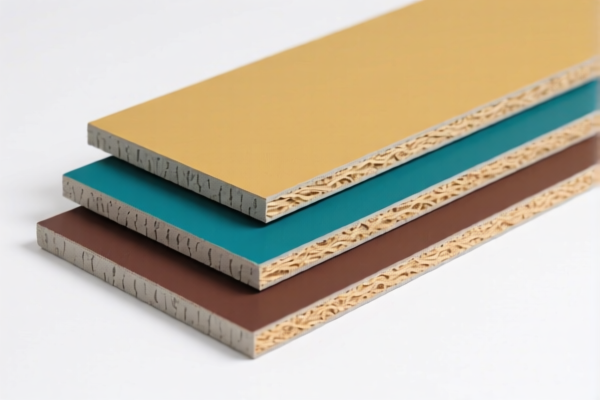
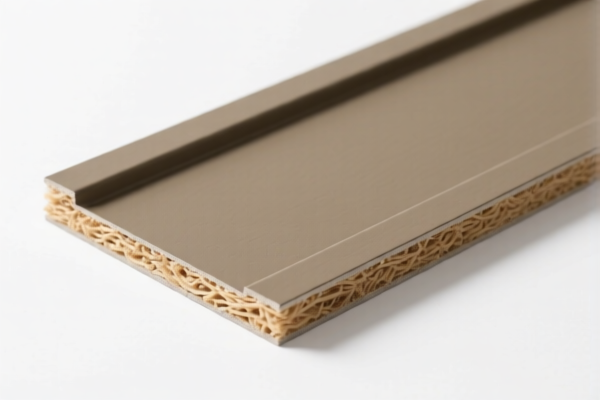
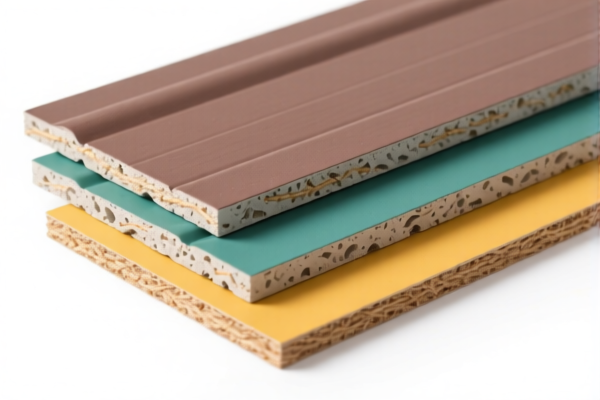
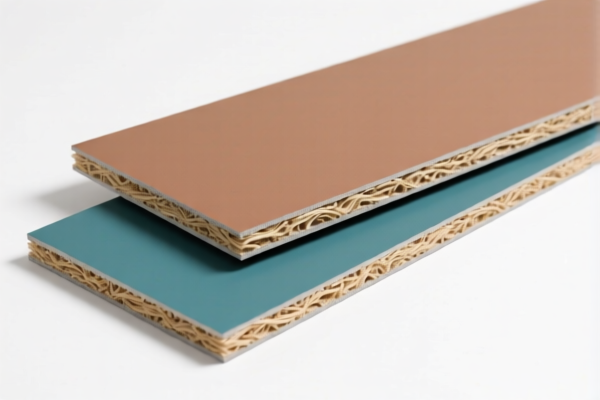
AI Analysis
🧱 Polyester Colored Board (Polyester Plastic Sheets)
🌐 HS Code Reference & Customs Clearance Guide | 2026 Latest Tariff Analysis | Professional-Level Compliance Strategy 📌 I. Product Definition & Classification: Do You Really Understand "Polyester Boards"?
Polyester Colored Boards are rigid, flat plastic products primarily made from Polyethylene Terephthalate (PET). In international trade, they are often confused with general plastics or specific textile substrates. However, their classification depends strictly on their physical form (sheets/boards), material composition (PET), and processing level (whether they are reinforced or metallized).
⚠️ Key Distinction Points: - If the board is metallized or has metal layers → It does NOT fall under these codes. - If the board is reinforced (e.g., with fiberglass) → It may fall under 3921.19. - If it is a pure polyester (PET) sheet/board without reinforcement or metal coating → It typically falls under 3920.62 or 3920.69. - If it is a general plastic item that doesn't fit neatly into specific sub-headings, it may fall under the "Other" category 3926.90.
📦 II. HS Code Classification Details (2026 Latest Tariff Authoritative Comparison)
Based on the provided data, here are the five potential HS Codes for "Polyester Colored Boards," along with their specific descriptions and tax implications.
| HS Code | Product Description | Tax Rate (Total) | Key Characteristics & Conflict Check |
|---|---|---|---|
| 3920.62.00.90 | Polyester Plastic Board (PET) | 39.2% | Material: Polyethylene Terephthalate (PET). Form: Board/Sheet. Note: No metallization or reinforced lamination. Status: Primary classification for pure PET sheets. |
| 3920.69.00.00 | Polyester Plastic Board (Polyester) | 39.2% | Material: Polyester (Generic). Form: Board/Sheet. Note: Matches the "Polyester" material category. Status: Alternative to 3920.62 if PET is not explicitly specified, but tax rate is identical. |
| 3921.19.00.90 | Polyester Plastic Board (Other Plastics) | 41.5% | Material: Other Plastics. Form: Board/Sheet. Note: Conflict Check: If the product is explicitly "Polyester," this code is less accurate than 3920.xx. Used as a fallback if material is unclear. Status: Higher tax rate; use only if material is ambiguous. |
| 3926.90.94.00 | Polyester Plastic Products (Other) | 35.0% | Category: Other plastic articles. Note: No material conflict. Status: Used for "catch-all" categories. Lower tax than 3920/3921, but may be challenged if the item is clearly a sheet/board. |
| 3926.90.99.89 | Polyester Plastic Board (Other) | 22.8% | Category: Other plastic articles. Note: Material fits within 3901-3914 plastics. Status: Lowest tax rate, but highest risk of classification error. Only used if the item does not strictly meet 3920/3921 definitions. |
🔍 Important Reminder: - 3920.62 and 3920.69 are the most technically accurate for pure Polyester (PET) sheets. - 3926.90 codes are "catch-all" categories. While taxes are lower (22.8%–35.0%), customs may scrutinize these more heavily if the product is clearly a "sheet/board." - 3921.19 has a higher tax rate (41.5%) and is generally reserved for reinforced plastics, so it is less likely to be the correct code for a standard polyester board.
💰 III. 2026 Latest Tariff Rate Details (Including Additional Taxes & Policy Add-ons)
✅ Applicable Country: United States (US) ✅ Origin: China (CN) ✅ Effective Date: From November 10, 2025 (including subsequent imports)
🎯 1. 3920.62.00.90 & 3920.69.00.00 —— Polyester Plastic Boards (PET/Polyester)
| Item | Content |
|---|---|
| Basic Tariff | 4.2% (Ad Valorem) |
| Section 301 Tariff | +25.0% (Additional Tariff) |
| Section 122 Tariff | +10.0% (Specific to Chinese Goods) |
| Total Tariff Rate | 39.2% |
| Tax Calculation | CIF Value × 39.2% |
| De Minimis Exemption | ❌ Not Eligible (Deny De Minimis) |
| Legal Basis Path | USITC:3920.62.00.90 → 301 Footnote → 122 Provision |
📌 Explanation: - "Basic Tariff 4.2%": The standard MFN duty for non-reinforced polyester plastic sheets. - "Section 301 Tariff 25%": The additional tariff imposed on Chinese goods under Trade Promotion Authority. - "Section 122 Tariff 10%": An additional duty under Section 122 of the Trade Expansion Act of 1962 (applicable to certain imports from China). - Combined Total: 39.2%. This is a significant cost that must be factored into your pricing strategy.
🎯 2. 3921.19.00.90 —— Polyester Plastic Board (Other Plastics)
| Item | Content |
|---|---|
| Basic Tariff | 6.5% (Ad Valorem) |
| Section 301 Tariff | +25.0% (Additional Tariff) |
| Section 122 Tariff | +10.0% (Specific to Chinese Goods) |
| Total Tariff Rate | 41.5% |
| Tax Calculation | CIF Value × 41.5% |
| De Minimis Exemption | ❌ Not Eligible |
| Legal Basis Path | USITC:3921.19.00.90 → 301 Footnote → 122 Provision |
📌 Note: - This code has a higher basic rate (6.5%) than 3920.xx codes. - Use only if the product is reinforced or if the material is not clearly polyester. - Total Tax: 41.5% is the highest among the provided options. Avoid if possible.
🎯 3. 3926.90.94.00 & 3926.90.99.89 —— Polyester Plastic Products (Other)
| Item | Content |
|---|---|
| Basic Tariff | 0.0% (for 3926.90.94) / 5.3% (for 3926.90.99) |
| Section 301 Tariff | +25.0% (for 3926.90.94) / +7.5% (for 3926.90.99) |
| Section 122 Tariff | +10.0% |
| Total Tariff Rate | 35.0% (for 3926.90.94) / 22.8% (for 3926.90.99) |
| Tax Calculation | CIF Value × Rate |
| De Minimis Exemption | ❌ Not Eligible |
📌 Critical Analysis: -
3926.90.99.89(22.8%): This has the lowest total tax rate. However, it is a "catch-all" category. Customs may challenge this classification if the product is clearly a "sheet/board" (which belongs in Chapter 39, Section 3920). High risk of audit. -3926.90.94.00(35.0%): Better than 3921, but still a "general" category. Use only if the product is a finished article (e.g., a decorative panel with specific use) rather than a raw sheet.
🛠️ IV. Customs Clearance Practical Advice (Real-World Pitfall Avoidance Guide)
✅ 1. Required Documentation Checklist (Non-Negotiable)
| Document | Must Provide | Description |
|---|---|---|
| ✅ Product Specification Sheet | ✔️ | Must explicitly state: Material: 100% Polyester (PET), Form: Sheet/Board, Thickness, Dimensions. |
| ✅ Technical Data Sheet | ✔️ | Include chemical composition, tensile strength, and whether it is reinforced or metallized. |
| ✅ Product Photos | ✔️ | Clear images showing the flat sheet/board, cross-section (to show no metal/reinforcement), and labeling. |
| ✅ Commercial Invoice | ✔️ | Describe as "Polyester Plastic Sheet, Unreinforced, Non-Metallized". Avoid vague terms like "Plastic Product." |
| ✅ Packing List | ✔️ | Clearly separate sheets from any packaging or accessories. |
| ✅ Origin Certificate | ✔️ | Essential for proving Chinese origin to apply correct Section 122 tariffs. |
✅ 2. Declaration Tips (Key Mantras)
🔥 "Pure PET = 3920. Reinforced = 3921. Vague = 3926 (High Risk)."
| Scenario | Correct Declaration | Wrong Practice |
|---|---|---|
| Pure PET Board | 3920.62.00.90 (39.2%) |
Misdeclare as 3926.90.99.89 (22.8%) → Audit Risk! |
| Reinforced Polyester Board | 3921.19.00.90 (41.5%) |
Misdeclare as 3920.xx → Underpayment Penalty! |
| Finished Decorative Panel | 3926.90.94.00 (35.0%) |
Declare as raw sheet → Classification Error |
| Metallized Board | NOT IN LIST | Declare as 3920 → Seizure Risk (Wrong Chapter) |
📌 Key Advice: - Do NOT arbitrarily choose the lowest tax rate (
3926.90.99.89) if the product is clearly a sheet/board. Customs authorities frequently audit "other plastic articles" for items that fit more specific headings. - Be precise with material description. If it is Polyethylene Terephthalate (PET), use 3920.62.00.90. If it is generic "Polyester," use 3920.69.00.00.
✅ 3. Special Case Handling
| Situation | Handling Advice |
|---|---|
| OEM Custom Colors | Provide color swatches or Pantone codes. Does not affect HS Code if material is still PET. |
| Board with Adhesive Backing | If adhesive is integral, it may still be 3920. If it's a separate tape, declare separately. |
| Packaged in Rolls vs. Sheets | Both can be 3920.62. Ensure description matches "Sheet" or "Roll" consistently. |
| Recycled Polyester | Still falls under 3920.62 if it is pure PET. No tariff advantage unless origin changes. |
🌍 V. Global Market Clearance Comparison (2026 Latest)
| Country/Region | Recommended HS Code | Tariff (China Origin) | Certification Requirements | Notes |
|---|---|---|---|---|
| 🇺🇸 USA | 3920.62.00.90 |
39.2% | None specific for plastic sheets | Highest tax due to 301 + 122. |
| 🇨🇳 China | 3920.62.00.90 |
~5-6% (Import Duty) | CCC (if applicable) | No additional Section 122 tariffs. |
| 🇪🇺 EU | 3920.62.00.00 |
6.5% | REACH Compliance | No Section 301/122 equivalents. |
| 🇬🇧 UK | 3920.62.00.00 |
6.5% | UKCA Marking | Post-Brexit rules apply. |
| 🇯🇵 Japan | 3920.62.00.00 |
5.0% | PSE (if electrical) | Stable, low tariff environment. |
📌 Conclusion: - USA is the most expensive market for polyester boards due to Section 301 and Section 122 tariffs. - EU and Japan offer significantly lower tariffs (5-6.5%). - Consider supply chain diversification (e.g., sourcing from Vietnam or Thailand) to avoid US additional tariffs if volume is large.
📌 VI. Common Mistakes & Pitfall Avoidance (Blood Lessons)
❌ Mistake 1: Using 3926.90.99.89 (22.8%) for a standard PET sheet to save tax.
👉 Consequence: Customs issues a Postponement of Appraisal or Audit, requiring back payment + interest. High risk.
❌ Mistake 2: Describing the product as "Plastic Board" without specifying "Polyester/PET."
👉 Consequence: Customs may classify it under 3921.19 (41.5%) or 3920.69 (39.2%) based on worst-case assumptions. Uncertainty.
❌ Mistake 3: Failing to declare "Non-Metallized" and "Non-Reinforced." 👉 Consequence: If found to be metallized, it falls under 3921.11 (different tariff). Misclassification Penalty.
❌ Mistake 4: Ignoring Section 122 (10%) in cost calculations. 👉 Consequence: Underestimating landed cost by 10%. Profit Margin Erosion.
✅ Correct Practice:
"Polyethylene Terephthalate (PET) Plastic Sheet, Unreinforced, Non-Metallized, Solid Color, 2mm Thickness, Model XYZ, HS 3920.62.00.90"
🎯 VII. Conclusion: Professional Declaration, Save Time, Reduce Costs!
🎯 Remember the Mantra:
🔹 "Pure PET = 3920 (39.2%). Reinforced = 3921 (41.5%). Vague = 3926 (Risk)." 🔹 "HS Code Determines Tariff. A 1% difference in Basic Rate + 25% Section 301 + 10% Section 122 = Big Impact."
📌 Pro Tip: If your polyester board originates from Vietnam, Malaysia, or Thailand, you may be exempt from Section 122 (10%) and potentially Section 301 (25%) tariffs.
Recommendation: Apply for an Advance Ruling (Pre-Ruling) from US Customs and Border Protection (CBP) to confirm the correct HS Code and tax rate. This avoids costly audits and delays.
📣 Immediate Action:
📞 Contact a Professional Customs Broker + Provide Product Specs + Apply for HS Code Pre-Ruling 🚀 Ensure your polyester boards clear customs smoothly, efficiently, and profitably!
✨ Professional Customs Clearance Starts with Accurate Classification! 💼 Every Cent of Cost Deserves Precise Calculation!
Customer Reviews
About HS Code Classification
The Harmonized System (HS) is an internationally standardized nomenclature developed by the World Customs Organization (WCO) to classify traded products. Over 200 countries use the HS system as the basis for customs tariffs, trade statistics, and import/export regulations.
Each HS code follows a hierarchical structure:
- Chapter (2 digits) — Broad category of goods (e.g., Chapter 84: Machinery and Mechanical Appliances)
- Heading (4 digits) — More specific grouping within the chapter
- Subheading (6 digits) — Internationally standardized breakdown, used by all WCO member countries
- National subdivisions (8-10 digits) — Country-specific extensions for further classification, such as US HTSUS 10-digit codes
Correct HS code classification is essential for smooth customs clearance, accurate duty payment, and compliance with trade regulations. Misclassification can lead to customs delays, overpayment of duties, or penalties.
When importing from CN to US, the applicable tariff rates may include:
- Most-Favored-Nation (MFN) rate — The standard duty rate applied to WTO members
- General rate — Applied to countries without trade agreements
- Trade remedy duties — Additional tariffs such as Section 301 (anti-dumping), Section 232 (national security), or countervailing duties
The information provided on this page is for reference purposes only. For official classification, please consult with your local customs authority or a licensed customs broker.