Polyester Diffusion Foil
CN → USProduct Images
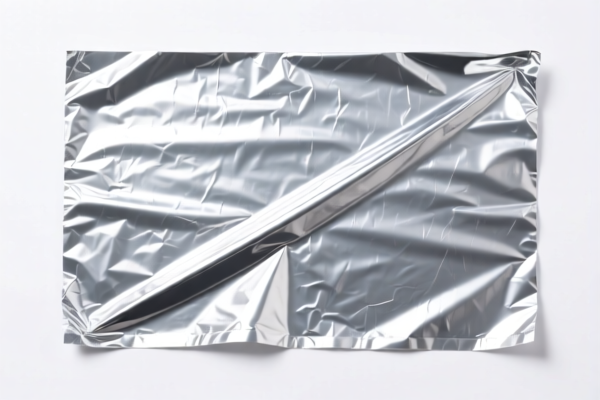
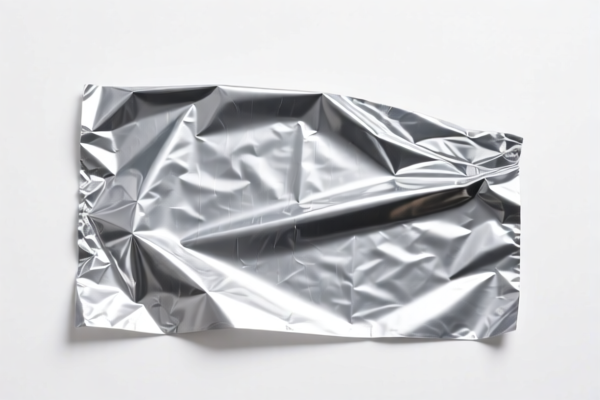


AI Analysis
🌬️ Polyester Diffusion Foil (Acoustic/Filter Media)
🌐 HS Code Reference & Customs Clearance Guide | 2026 Latest Tariff Analysis | Professional Compliance Strategy
📌 Part 1: Product Definition & Classification: What Exactly is "Polyester Diffusion Foil"?
Polyester Diffusion Foil is a specialized film made from polyethylene terephthalate (PET) or similar polyester materials, engineered with micro-perforations or textured patterns. Its primary functions include:
- Acoustic Diffusion: Used in speaker cabinets and acoustic panels to scatter sound waves, reducing standing waves and improving audio quality.
- Air/Filtration Diffusion: Used in HVAC systems or industrial filters to evenly distribute airflow or act as a primary filter media.
Critical Distinction:
- If for Acoustic Use (Speakers): It is classified under electrical/electronic equipment accessories.
- If for Industrial Filtration/HVAC: It may be classified as plastic filters or air-purifying articles.
- If Raw Material Only: If sold as a bulk roll without specific finishing for immediate use, it might fall under general plastic films (Chapter 39), but "Foil" usually implies finished goods or specific assemblies.
⚠️ Key Classification Point:
- Most commonly, "Polyester Diffusion Foil" for audio equipment is treated as a part/accessory of speakers or acoustic components.
- If it is a standalone filter element for air conditioning, it falls under Chapter 84 (Machinery) or Chapter 90 (Optical/Medical).
- Do not confuse it with "Aluminum Foil" (Chapter 76) or plain "Plastic Film" (Chapter 39) if it has specific functional properties (perforation, bonding to mesh, etc.).
📦 Part 2: HS Code Classification Details (2026 Latest Tariff Authority)
| HS Code | Product Description | Application Scenario | Functional Basis |
|---|---|---|---|
8518.90.10.00 |
Parts of loudspeakers, headphones, etc. | Acoustic diffusion foil for speaker cabinets | Part of audio equipment |
8518.90.50.00 |
Other parts of loudspeakers | Acoustic foam/fabric covers | Acoustic treatment |
8421.99.90.00 |
Parts of air filtering/purifying machinery | HVAC diffusion foils, filter media | Part of air handling units |
3920.93.00.00 |
Other plates, sheets, film, foil, strip of plastics (PET) | Raw polyester film rolls (unperforated/unprocessed) | General plastic material |
9018.90.00.00 |
Instruments & appliances used in medical sciences | Medical air dispersion devices | Medical application |
🔍 Important Note:
- The most common classification for audio-grade polyester diffusion foil is8518.90.10.00(Parts of loudspeakers).
- For industrial air filtration, it is typically8421.99.90.00.
- If the product is simply a roll of perforated polyester film without specific assembly, US Customs may attempt to classify it under3920.93.00.00(Plastic Film), but this often triggers lower duty rates that may be contested if it is marketed specifically for acoustic use. Proactive Ruling is recommended.
💰 Part 3: 2026 Latest Tariff Rate Details (Including Additional Taxes)
✅ Applicable Country: United States (US)
✅ Origin: China (CN)
✅ Effective Date: November 10, 2025 (and subsequent imports)
🎯 1. 8518.90.10.00 – Parts of Loudspeakers (Acoustic Diffusion Foil)
| Item | Details |
|---|---|
| Base Duty Rate | 0% (ad valorem) |
| USITC Additional Duty | +25% (Under USITC Footnote 9903.88.01 / Section 301) |
| IEEPA Additional Duty | +10% (针对中国/香港产品,自2025年11月10日起) |
| Total Rate | 35% |
| Tax Calculation | CIF Value × 35% |
| De Minimis Eligibility | ❌ Not Eligible (deny_de_minimis) |
| Legal Basis Path | IEEPA:9903.01.25 → IEEPA:9903.01.24 → USITC:8518.90.10.00 → FOOTNOTE:9903.88.01 |
📌 Explanation:
- "25% USITC Additional Duty" comes from the Section 301 tariffs on Chinese goods.
- "10% IEEPA Additional Duty" is the new surcharge on Chinese/origin goods effective Nov 2025.
- Total 35%, which is a high tariff rate. Must be factored into cost models.
🎯 2. 8421.99.90.00 – Parts of Air Filtering Machinery (HVAC/Filtration Foil)
| Item | Details |
|---|---|
| Base Duty Rate | 0% |
| USITC Additional Duty | +25% |
| IEEPA Additional Duty | +10% |
| Total Rate | 35% |
| Tax Calculation | CIF Value × 35% |
| De Minimis Eligibility | ❌ Not Eligible |
| Legal Basis Path | IEEPA:9903.01.25 → IEEPA:9903.01.24 → USITC:8421.99.90.00 → FOOTNOTE:9903.88.01 |
📌 Note:
- Even if marketed as "air filter media," if it is a component of machinery, it attracts the same Section 301 + IEEPA penalties as other mechanical parts.
🎯 3. 3920.93.00.00 – Plastic Film (Raw Material Classification)
| Item | Details |
|---|---|
| Base Duty Rate | 5.3% (approx., varies by specific PET type) |
| USITC Additional Duty | +25% |
| IEEPA Additional Duty | +10% |
| Total Rate | ~40.3% |
| Tax Calculation | CIF Value × 40.3% |
| De Minimis Eligibility | ❌ Not Eligible |
| Legal Basis Path | IEEPA:9903.01.25 → IEEPA:9903.01.24 → USITC:3920.93.00.00 → FOOTNOTE:9903.88.01 |
📌 Caution:
- If Customs reclassifies your "Diffusion Foil" as generic plastic film, the base rate is higher than the 0% for speaker parts, but the total impact is similar. Incorrect classification leads to penalties.
🛠️ Part 4: Customs Clearance Practical Advice (Battle-Tested Guide)
✅ 1. Required Documentation Checklist (Mandatory)
| Document | Required | Description |
|---|---|---|
| ✅ Product Specification Sheet | ✔️ | Detail material (PET), thickness, perforation pattern, density |
| ✅ Intended Use Statement | ✔️ | Explicitly state: "Used as acoustic diffusion component in speaker cabinets" OR "Used as filter media in HVAC systems" |
| ✅ Product Photos (Clear) | ✔️ | Show perforation pattern, roll ends, and any branding |
| ✅ Third-Party Test Report | ✔️ | Acoustic performance data (for audio) or filtration efficiency (for HVAC) |
| ✅ Commercial Invoice | ✔️ | Describe as "Polyester Acoustic Diffusion Film" or "PET Filter Media" |
| ✅ Packing List | ✔️ | Weight, dimensions, number of rolls/sheets |
✅ 2. Declaration Tips (Key Mnemonics)
🔥 "Function Dictates Code, Don't Guess, Just Prove!"
| Scenario | Correct Declaration | Incorrect Practice |
|---|---|---|
| Acoustic Foil | HS 8518.90.10.00 + "Part of Loudspeaker" |
Misdeclare as "Plastic Sheet" → Risk of Audit |
| Filter Foil | HS 8421.99.90.00 + "Part of Air Filter" |
Misdeclare as "Plastic Film" → Base rate differs |
| Raw Roll (Unfinished) | HS 3920.93.00.00 + "Plastic Film" |
Misdeclare as "Finished Part" → Overcomplication |
| Medical Dispersion Foil | HS 9018.90.00.00 + "Medical Device Part" |
Wrong Chapter → FDA/Customs Delay |
✅ 3. Special Situation Handling
| Situation | Recommendation |
|---|---|
| OEM Custom Perforation | Provide customer design specs + perforation map to prove it is a specialized part, not generic film. |
| Multi-Purpose Foil | If used for both audio and HVAC, declare based on primary intended use in the US market. |
| Bundled with Speaker | If sold with the speaker, it is absorbed into the speaker's HS Code (8518.21/22/29). Do not split-line itemize unless asked. |
| Vietnam/China Origin Mix | If processed significantly in Vietnam, ensure Certificate of Origin (Form A) reflects sufficient substantial transformation to avoid US IEEPA penalties. |
🌍 Part 5: Global Market Comparison (2026 Latest)
| Country/Region | Recommended HS Code | Duty Rate | Certification Required | Remarks |
|---|---|---|---|---|
| 🇺🇸 USA | 8518.90.10.00 |
35% (China) | FCC (if part of electronic) | High tariffs apply |
| 🇨🇳 China | 8518.90.10.00 |
0% | None | No additional duties |
| 🇪🇺 EU | 8518.90.89 |
0% | CE (if part of audio) | No additional EU duties |
| 🇬🇧 UK | 8518.90.89 |
0% | UKCA | Post-Brexit alignment |
| 🇯🇵 Japan | 8518.90.80 |
0% | PSE (if audio part) | Low duty rates |
📌 Conclusion:
- USA is the most expensive market due to Section 301 + IEEPA tariffs.
- EU and Japan remain tariff-neutral for these components.
- Strategic Recommendation: Consider dual-sourcing or final assembly in Vietnam/Mexico to mitigate US tariffs.
📌 Part 6: Common Mistakes & Pitfalls (Lessons Learned)
❌ Mistake 1: Declaring as "Plastic Film" (3920) when it is clearly an acoustic part
👉 Consequence: Customs may audit for "Undervaluation" or "Misclassification" → Penalties + Back Taxes
❌ Mistake 2: Ignoring IEEPA Additional Duty for China-Origin Goods
👉 Consequence: Unexpected 10% charge on top of existing 25% → Profit Margin Erosion
❌ Mistake 3: Providing vague descriptions like "Foil" or "Film"
👉 Consequence: CBP issues Request for Information (RFI) → Shipment Delayed at Port
❌ Mistake 4: Mixing Audio and HVAC lines in one shipment without clear labeling
👉 Consequence: Different HS Codes required → Rejection or Split Assessment
✅ Correct Practice:
"Polyester Acoustic Diffusion Foil, Perforated PET, for Speaker Cabinet Assembly, Model XYZ, Made in China"
🎯 Part 7: Conclusion: Precision Classification Saves Money!
🎯 Remember the Mnemonics:
🔹 "Acoustic Foil goes to 8518, HVAC Foil to 8421, Plastic Film to 3920"
🔹 "China Origin means 35% Total, Plan Ahead or Change Supply Chain!"
📌 Pro Tip:
If your Polyester Diffusion Foil is originally from Vietnam, Malaysia, or Thailand, you may qualify for IEEPA Exemptions or lower Section 301 rates.
Recommendation: Apply for a Binding Ruling from US Customs and Border Protection (CBP) before large-scale shipments to lock in your HS Code and duty rate.
📣 Immediate Action Required:
📞 Contact your freight forwarder + Provide Product Specs + Request CBP Ruling
🚀 Ensure Compliance, Avoid Delays, Protect Margins!
✨ Professional Clearance Starts with Accurate Classification!
💼 Your Bottom Line Depends on the Right HS Code!
Customer Reviews
About HS Code Classification
The Harmonized System (HS) is an internationally standardized nomenclature developed by the World Customs Organization (WCO) to classify traded products. Over 200 countries use the HS system as the basis for customs tariffs, trade statistics, and import/export regulations.
Each HS code follows a hierarchical structure:
- Chapter (2 digits) — Broad category of goods (e.g., Chapter 84: Machinery and Mechanical Appliances)
- Heading (4 digits) — More specific grouping within the chapter
- Subheading (6 digits) — Internationally standardized breakdown, used by all WCO member countries
- National subdivisions (8-10 digits) — Country-specific extensions for further classification, such as US HTSUS 10-digit codes
Correct HS code classification is essential for smooth customs clearance, accurate duty payment, and compliance with trade regulations. Misclassification can lead to customs delays, overpayment of duties, or penalties.
When importing from CN to US, the applicable tariff rates may include:
- Most-Favored-Nation (MFN) rate — The standard duty rate applied to WTO members
- General rate — Applied to countries without trade agreements
- Trade remedy duties — Additional tariffs such as Section 301 (anti-dumping), Section 232 (national security), or countervailing duties
The information provided on this page is for reference purposes only. For official classification, please consult with your local customs authority or a licensed customs broker.