Polyester Flame Retardant Raw Material
CN → US| HS Code | Tariff Rate | Origin | Destination | Doc |
|---|---|---|---|---|
| 3824992900 | 41.5% | CN | US | Official Doc |
| 3907992000 | 35.0% | CN | US | Official Doc |
| 3907995050 | 41.5% | CN | US | Official Doc |
| 3824994900 | 41.5% | CN | US | Official Doc |
| 3921905050 | 39.8% | CN | US | Official Doc |
Product Images

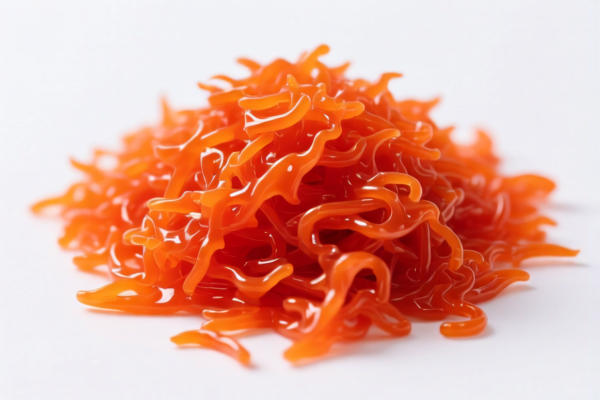

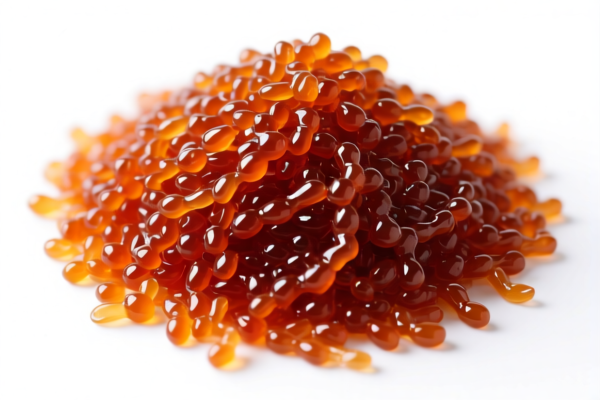
AI Analysis
🔥 Polyester Flame Retardant Raw Material (Polymer & Chemical Intermediate)
🌐 HS Code Reference & Customs Clearance Guide | 2026 Latest Tariff Analysis | Professional Entry Strategy
📌 I. Product Definition: What is "Polyester Flame Retardant Raw Material"?
This product refers to Polyester Resins or Composites modified with flame retardants. In international trade, its classification depends heavily on its chemical nature and physical form (whether it is a basic chemical intermediate, a semi-finished plastic product, or a finished composite material).
⚠️ Key Distinction:
- Is it a Chemical Resin/Intermediate? → Likely Chapter 38 or Chapter 39 (Primary Forms).
- Is it a Processed Composite Sheet/Film? → Likely Chapter 39 (Plastic Sheets).
📦 II. HS Code Classification Details (2026 Latest Tariff Authority)
| HS Code | Product Description | Application Scenario | Material Attribute |
|---|---|---|---|
3824.99.29.00 |
Other chemical products/preparations (Flame Retardant Polyester Resin) | Chemical raw materials, resin intermediates | ✅ Chemical/Preparation |
3907.99.20.00 |
Other polyesters (Thermoplastic aromatic polyester copolymers) | Engineering plastics, high-performance resins | ✅ Polymer (Primary) |
3907.99.50.50 |
Other polyesters (Raw material/Primary form) | General polyester raw materials, pellets, powder | ✅ Polymer (Primary) |
3824.99.49.00 |
Chemical industry preparations (Hydrocarbon derivatives) | Flame retardant additives, mixed resin preparations | ✅ Chemical/Preparation |
3921.90.50.50 |
Other plates, sheets, film, foil, strip (Plastic/Composite) | Pre-formed flame retardant sheets, laminates | ✅ Finished Plastic Product |
🔍 Critical Reminder:
- If the product is in pellet, powder, or liquid resin form (primary state), it generally falls under 3907 or 3824.
- If the product is already formed into sheets, films, or boards, it falls under 3921.
- Misclassification Risk: Declaring a sheet as "resin" or resin as a "sheet" will lead to significant tax discrepancies and customs delays.
💰 III. 2026 Latest Tariff Rate Breakdown (Including Surcharges)
✅ Applicable Country: United States (US)
✅ Origin: China (CN)
✅ Effective Date: 2025-11-10 onwards (including subsequent imports)
🎯 1. 3824.99.29.00 & 3824.99.49.00 —— Chemical Preparations/Resins
These codes classify the material as a chemical preparation rather than a pure polymer.
| Item | Content |
|---|---|
| Basic Tariff | 6.5% (Ad Valorem) |
| Section 301 Surcharge | +25.0% |
| IEEPA Surcharge (122 Clause) | +10.0% |
| Total Tariff | 41.5% |
| Calculation Base | CIF Value × 41.5% |
| De Minimis Exemption | ❌ Not Eligible (deny_de_minimis) |
| Legal Basis Path | USITC:3824.99.29.00 → FOOTNOTE:301 → IEEPA:9903.01.25 |
📌 Explanation:
- The 6.5% basic rate applies to most chemical preparations not specified elsewhere.
- The 25% Section 301 tariff is the standard penalty for Chinese origin goods in this category.
- The 10% IEEPA tariff is a recent addition targeting specific chemical/polymer-related imports from China.
- Total Impact: 41.5% is a high tariff burden, significantly impacting profit margins.
🎯 2. 3907.99.20.00 —— Other Polyesters (Specialized Resins)
This code is used for specialty polyesters (e.g., thermoplastic liquid aromatic polyester copolymers).
| Item | Content |
|---|---|
| Basic Tariff | 0.0% |
| Section 301 Surcharge | +25.0% |
| IEEPA Surcharge (122 Clause) | +10.0% |
| Total Tariff | 35.0% |
| Calculation Base | CIF Value × 35.0% |
| De Minimis Exemption | ❌ Not Eligible (deny_de_minimis) |
| Legal Basis Path | USITC:3907.99.20.00 → FOOTNOTE:301 → IEEPA:9903.01.25 |
📌 Advantage:
- Compared to code3824, this code has no basic tariff (0%), resulting in a 6.5% lower total rate.
- However, it requires strict proof that the material is a specific type of polyester copolymer, not a general chemical mix.
🎯 3. 3907.99.50.50 —— Other Polyesters (General Raw Materials)
This code covers generic polyester raw materials in primary forms.
| Item | Content |
|---|---|
| Basic Tariff | 6.5% |
| Section 301 Surcharge | +25.0% |
| IEEPA Surcharge (122 Clause) | +10.0% |
| Total Tariff | 41.5% |
| Calculation Base | CIF Value × 41.5% |
| De Minimis Exemption | ❌ Not Eligible (deny_de_minimis) |
| Legal Basis Path | USITC:3907.99.50.50 → FOOTNOTE:301 → IEEPA:9903.01.25 |
📌 Note:
- If the product is a standard polyester resin (like PET or PBT pellets), this is the most common code.
- The rate is identical to Chapter 38 codes (41.5%).
🎯 4. 3921.90.50.50 —— Plastic Sheets/Composites
If the flame retardant polyester is already formed into sheets, films, or plates.
| Item | Content |
|---|---|
| Basic Tariff | 4.8% |
| Section 301 Surcharge | +25.0% |
| IEEPA Surcharge (122 Clause) | +10.0% |
| Total Tariff | 39.8% |
| Calculation Base | CIF Value × 39.8% |
| De Minimis Exemption | ❌ Not Eligible (deny_de_minimis) |
| Legal Basis Path | USITC:3921.90.50.50 → FOOTNOTE:301 → IEEPA:9903.01.25 |
📌 Comparison:
- This rate (39.8%) is slightly lower than the raw resin rates (41.5%).
- BUT: You must ensure the product is indeed a sheet/film. If it is shipped as granules, this code is incorrect and will cause customs seizure.
🛠️ IV. Customs Clearance Practical Advice (Avoiding Pitfalls)
✅ 1. Required Documentation Checklist
| Document | Required | Notes |
|---|---|---|
| ✅ Product Specification Sheet | ✔️ | Must specify: Chemical name, CAS number (if applicable), Flame Retardant type, Physical form (pellet/powder/sheet). |
| ✅ Certificate of Origin (CO) | ✔️ | Essential for verifying Chinese origin and applying surcharges. |
| ✅ Commercial Invoice | ✔️ | Must clearly describe the HS Code and product nature (e.g., "Polyester Resin" vs. "Polyester Sheet"). |
| ✅ Bill of Lading | ✔️ | Consistent with invoice description. |
| ✅ Safety Data Sheet (SDS) | ✔️ | Crucial for chemical products to prove safety and composition. |
| ✅ Third-Party Test Report | ✔️ | To prove flame retardancy properties and material composition. |
✅ 2. Declaration Strategy (Key Mantras)
🔥 "Form Defines Code, Composition Defines Tax!"
| Scenario | Correct HS Code | Risk of Misclassification |
|---|---|---|
| Polyester Resin (Pellets/Powder) | 3907.99.50.50 or 3824.99.29.00 |
High risk if declared as "Plastic Sheet" |
| Specialized Copolymer Resin | 3907.99.20.00 |
Must provide chemical structure proof for 0% basic rate |
| Flame Retardant Additive/Mix | 3824.99.49.00 |
If not a pure polymer, but a chemical preparation |
| Polyester Sheet/Film | 3921.90.50.50 |
Cannot be declared as resin if pre-formed |
⚠️ Warning:
- Do NOT use "Polymer" as a generic description. Be specific: "Thermoplastic Polyester Resin" or "Flame Retardant Polyester Sheet." - If the product contains other chemicals mixed with polyester, it may fall under Chapter 38 (3824), which has a 6.5% base tariff instead of 0%.
✅ 3. Special Handling for Flame Retardants
| Issue | Solution |
|---|---|
| Chemical Classification Dispute | Provide CAS Numbers for the base polymer and flame retardant. If the flame retardant is >50% by weight, it might shift classification. |
| IEEPA 10% Surcharge | This applies to all codes listed. Ensure your EO number is correctly referenced in the customs entry. |
| Section 301 Exclusions | Check if your specific product has an exclusion. Most polyester resins do not have exclusions. |
🌍 V. Global Market Comparison (2026)
| Country/Region | Recommended HS Code | Tariff (China Origin) | Key Certification |
|---|---|---|---|
| 🇺🇸 USA | 3907.99.50.50 / 3824.99.29.00 |
41.5% (Resin) / 35.0% (Special Copolymer) | None specific, but SDS required |
| 🇪🇺 EU | 3907.99 / 3824.99 |
0% - 6.5% | REACH Registration Required |
| 🇨🇳 China | 3907.99 / 3824.99 |
5% - 6.5% | CCC (if final product) |
| 🇯🇵 Japan | 3907.99 / 3824.99 |
0% - 6% | JIS Standards |
📌 Conclusion for US Importers:
- The 35% vs. 41.5% difference is critical. If your product is a specialized thermoplastic aromatic polyester copolymer, pushing for3907.99.20.00saves 6.5% on the base tariff.
- However, this requires robust technical documentation.
- For standard polyester resins, the rate is 41.5%.
- For sheets, the rate is 39.8%, but only if physically pre-formed.
📌 VI. Common Errors & Pitfalls (Blood & Tears Lessons)
❌ Error 1: Declaring resin pellets as "Plastic Sheets" (3921)
👉 Consequence: Customs rejection, fines, or forced re-declaration at 39.8% + penalties.
❌ Error 2: Declaring chemical mixtures as "Pure Polyesters" (3907)
👉 Consequence: If the mixture contains significant additives, it may be reclassified to 3824 (41.5% instead of 0% base), leading to back taxes.
❌ Error 3: Ignoring the 10% IEEPA Surcharge
👉 Consequence: Underpayment by 10%. Since 2025-11-10, this is mandatory for many Chinese polymer imports.
❌ Error 4: Vague Description ("Polyester Raw Material")
👉 Consequence: Customs holds the shipment for examination, causing delays and storage fees.
✅ Correct Approach:
"Flame Retardant Thermoplastic Polyester Resin, Pellet Form, CAS No. [XX-XX-XX], Not Designed for Direct Use as Sheet."
🎯 VII. Conclusion: Precision is Profit
🎯 Remember the Mantra:
🔹 "Pellets are Resin (41.5% or 35%), Sheets are Composites (39.8%). Be specific, avoid fines."
🔹 "IEEPA 10% is mandatory. Plan your cost structure accordingly."
📌 Pro Tip:
If you are importing specialized aromatic polyester copolymers (3907.99.20.00), consult with a customs broker to ensure the chemical structure supports the 0% base rate. This 6.5% saving can be substantial on large shipments.
📣 Immediate Action:
📞 Contact your customs broker with detailed technical specs.
🚀 Request an Advance Ruling if the product nature is ambiguous.
💼 Your supply chain efficiency depends on accurate HS Codes!
✨ Professional Clearance, Starts with Accurate Classification!
💼 Every Cent Counts in High-Tariff Environments!
Customer Reviews
About HS Code Classification
The Harmonized System (HS) is an internationally standardized nomenclature developed by the World Customs Organization (WCO) to classify traded products. Over 200 countries use the HS system as the basis for customs tariffs, trade statistics, and import/export regulations.
Each HS code follows a hierarchical structure:
- Chapter (2 digits) — Broad category of goods (e.g., Chapter 84: Machinery and Mechanical Appliances)
- Heading (4 digits) — More specific grouping within the chapter
- Subheading (6 digits) — Internationally standardized breakdown, used by all WCO member countries
- National subdivisions (8-10 digits) — Country-specific extensions for further classification, such as US HTSUS 10-digit codes
Correct HS code classification is essential for smooth customs clearance, accurate duty payment, and compliance with trade regulations. Misclassification can lead to customs delays, overpayment of duties, or penalties.
When importing from CN to US, the applicable tariff rates may include:
- Most-Favored-Nation (MFN) rate — The standard duty rate applied to WTO members
- General rate — Applied to countries without trade agreements
- Trade remedy duties — Additional tariffs such as Section 301 (anti-dumping), Section 232 (national security), or countervailing duties
The information provided on this page is for reference purposes only. For official classification, please consult with your local customs authority or a licensed customs broker.