Polyester Foil
CN → US| HS Code | Tariff Rate | Origin | Destination | Doc |
|---|---|---|---|---|
| 3920620050 | 39.2% | CN | US | Official Doc |
| 3920620020 | 39.2% | CN | US | Official Doc |
Product Images
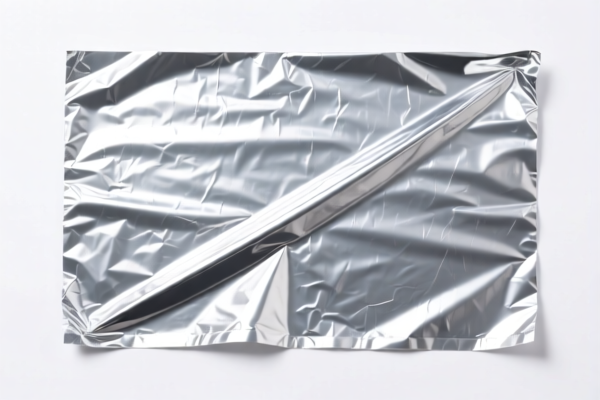
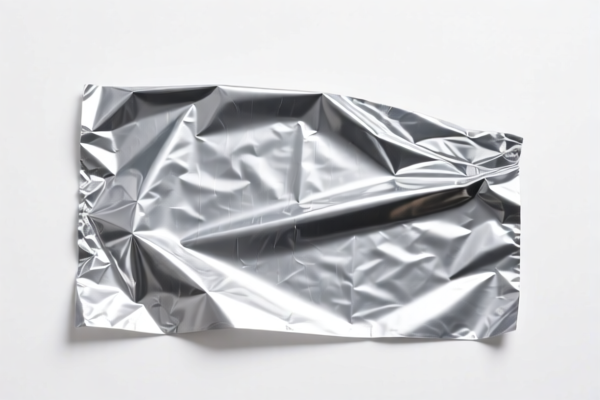


AI Analysis
🎀 Metallized PET Film (Polyester Foil)
🌐 HS Code Reference & Customs Clearance Guide | 2024/2025 Latest Tariff Analysis | Professional-Level Entry Strategy
📌 I. Product Definition & Classification: Do You Truly Understand "Polyester Foil"?
"Polyester Foil," commonly referred to as Metallized PET Film, is a versatile material created by vacuum metallizing (usually with aluminum) on a Polyethylene Terephthalate (PET) base. In international trade, it is strictly classified under Chapter 39 (Plastics and Articles Thereof).
It is primarily divided into two functional categories for customs purposes:
1. General Metallized PET Film (Industrial/Other Use)
Used for packaging, labeling, electronics shielding, and general industrial applications where decorative appeal or barrier properties are not the primary consumer-facing feature.
2. Metallized PET Film for Gift Wrap (Decorative)
Specifically designed for wrapping gifts, featuring high reflectivity, decorative patterns, or colors intended for consumer aesthetic appeal.
⚠️ Key Distinction Point:
- If the film is used for industrial packaging, electronics, or general wrapping → Classified as "Other" under HS Code 3920.62.00.50.
- If the film is explicitly marketed and used for gift wrapping (decorative, shiny, consumer retail) → Classified as "Gift Wrap" under HS Code 3920.62.00.20.
📦 II. HS Code Classification Details (2024/2025 Latest Tariff Authority对照)
| HS Code | Product Description | Application Scenario | Key Identifier |
|---|---|---|---|
3920.62.00.50 |
Other plates, sheets, film, foil, strip of plastics: Of PET: Metallized PET film: Other | Industrial packaging, label backing, electronics shielding, technical films | ❌ Not for gift decoration |
3920.62.00.20 |
Other plates, sheets, film, foil, strip of plastics: Of PET: Metallized PET film: Gift wrap | Christmas wrapping, gift boxes, decorative ribbons, consumer retail packaging | ✅ Decorative/Gift Purpose |
🔍 Critical Reminder:
- Both codes fall under Subheading 3920.62 (Other plates, sheets, film, foil and strip, of plastics, noncellular and not reinforced... of polyesters: Of poly(ethylene terephthalate)). - The only difference lies in the final use declared in the commercial invoice and packing list. - Misclassification can lead to significant audit risks, although in this specific data set, the total tax rate is identical for both codes.
💰 III. 2024/2025 Latest Tariff Rate Details (Including Surtaxes)
✅ Applicable Country: United States (US)
✅ Country of Origin: China (CN)
✅ Effective Time: Current (2024/2025)
🎯 1. 3920.62.00.50 —— Metallized PET Film (Other)
| Item | Content |
|---|---|
| Base Tariff Rate | 4.2% (ad valorem) |
| Section 301 Surtax | +25.0% (Trade Act of 1974, Section 301) |
| Total Tax Rate | 29.2% |
| Tax Calculation | CIF Value × 29.2% |
| De Minimis Eligibility | ❌ No (Deny de minimis) |
| Legal Basis Path | USITC:3920.62.00.50 → FOOTNOTE:9903.88.01 → Section 301 |
📌 Explanation:
- The 4.2% is the standard Most Favored Nation (MFN) duty for PET films under HTSUS. - The 25% surtax is applied because PET films are on the List 4A/4B of products subject to Section 301 tariffs against China. - Total 29.2% is high. Importers must budget for this cost. There are no exclusions currently available for this specific subheading for general industrial use.
🎯 2. 3920.62.00.20 —— Metallized PET Film (Gift Wrap)
| Item | Content |
|---|---|
| Base Tariff Rate | 4.2% (ad valorem) |
| Section 301 Surtax | +25.0% (Trade Act of 1974, Section 301) |
| Total Tax Rate | 29.2% |
| Tax Calculation | CIF Value × 29.2% |
| De Minimis Eligibility | ❌ No (Deny de minimis) |
| Legal Basis Path | USITC:3920.62.00.20 → FOOTNOTE:9903.88.01 → Section 301 |
📌 Note:
- Despite the different functional description, the tax burden is identical to the "Other" category. - Whether it is used for wrapping a gift or insulating a wire, if it is metallized PET from China, it faces the same 29.2% combined duty. - Do not assume gift wrap has lower taxes; the 301 tariff applies uniformly across this PET film subheading.
🛠️ IV. Customs Clearance Practical Advice (Combat Pitfall Guide)
✅ 1. Required Documentation Checklist (Non-negotiable)
| Document | Must Provide | Notes |
|---|---|---|
| ✅ Commercial Invoice | ✔️ | Must clearly state "Metallized PET Film" and specify end-use (e.g., "For Gift Wrapping" vs. "For Industrial Packaging") |
| ✅ Packing List | ✔️ | Must match invoice exactly. Include net/gross weight, dimensions, and number of rolls/sheets |
| ✅ Product Specification Sheet | ✔️ | Confirm material composition: 100% PET Base + Aluminum Metallization. No other plastic layers |
| ✅ Declaration of Use | ✔️ | If claiming "Gift Wrap," provide evidence (e.g., retail packaging, marketing materials) to justify HS Code 3920.62.00.20. If industrial, state "Other" |
| ✅ Bill of Lading (B/L) | ✔️ | Ensure consistent description with invoice |
✅ 2. Declaration Tips (Key Mnemonic)
🔥 "Metallized PET, 3920.62, 29.2% Tax, 301 Applies, No Exemption!"
| Scenario | Correct Declaration | Wrong Practice |
|---|---|---|
| Gift Wrap | HS: 3920.62.00.20Description: "Metallized PET Film for Gift Wrapping" |
Mislabeling as "Plastic Sheet" → Misclassification |
| Industrial Use | HS: 3920.62.00.50Description: "Metallized PET Film, Other Use" |
Labeling as "Gift Wrap" → Unnecessary audit if found in industrial stock |
| Mixed Orders | Split invoice or clarify in remarks | Blending gift and industrial use → Risk of penalty |
✅ 3. Special Case Handling
| Situation | Handling Advice |
|---|---|
| Non-China Origin | If produced in Vietnam, Thailand, etc., 301 surtax may not apply. Ensure COO (Certificate of Origin) is issued correctly. |
| Composite Films | If the film is laminated with other materials (e.g., PE, PP), it may fall under a different subheading. This data only applies to non-laminated, non-reinforced metallized PET. |
| De Minimis Exemption | ❌ Not Available. Section 301 goods are explicitly excluded from the $800 de minimis exemption (Section 321). Full duties must be paid even for small shipments. |
🌍 V. Global Market Customs Comparison (2024/2025)
| Country/Region | Recommended HS Code | Tariff (China Origin) | Certification Requirements | Notes |
|---|---|---|---|---|
| 🇺🇸 USA | 3920.62.00.20 / 50 |
29.2% (4.2% Base + 25% 301) | FDA (if food contact), Prop 65 | High duty due to Section 301 |
| 🇪🇺 EU | 3920.62.00 (varies) |
~6-8% | REACH, RoHS | No Section 301 equivalent, but CE marking may be needed |
| 🇨🇳 China | 3920.62.00 |
~6-10% (Import Duty) | N/A | Export duty may apply for Chinese manufacturers |
| 🇨🇦 Canada | 3920.62.00 |
~5-7% | N/A | No 301-style surtax, but anti-dumping checks |
📌 Conclusion:
- USA is the most challenging market for Chinese-origin metallized PET films due to the 25% Section 301 surtax. - Total duty of 29.2% significantly impacts profit margins. - Supply chain diversification (e.g., sourcing from non-China origins) is a common strategy to mitigate this cost.
📌 VI. Common Errors & Pitfall Guide (Blood & Tears Lessons)
❌ Error 1: Declaring "Plastic Film" without specifying "Metallized PET"
👉 Consequence: Customs may reject the clearance or assign a generic higher rate.
👉 Fix: Always use the full description: "Metallized Polyethylene Terephthalate Film."
❌ Error 2: Assuming "Gift Wrap" has lower duties
👉 Consequence: Wasted time on research. Both codes have 29.2%.
👉 Fix: Focus on accurate classification for audit trails, not tax savings.
❌ Error 3: Ignoring the 301 Surtax for small shipments
👉 Consequence: Attempting to ship under de minimis ($800) and getting seized.
👉 Fix: No de minimis for Section 301 goods. Pay duties on all shipments.
❌ Error 4: Laminated vs. Non-Laminated Confusion
👉 Consequence: Misclassification. If the PET is laminated with another plastic, it may not be 3920.62.
👉 Fix: Verify if the film is single-layer PET + metallization (correct) or multi-layer laminate (different code).
✅ Correct Practice:
"Metallized PET Film, 12 Microns, Aluminum Coated, 1000 Rolls, For Gift Wrapping (HS: 3920.62.00.20), Origin: China"
🎯 VII. Conclusion: Professional Declaration, Save Time, Reduce Risk
🎯 Remember the Key Points:
🔹 "Metallized PET, HS 3920.62, 29.2% Tax, 301 Applies, No Exemption!"
🔹 "Gift Wrap vs. Other: Same Tax, Different Code, Audit Trail Required."
🔹 "Small Shipments? Still Pay Duty. De Minimis Does Not Apply."
📌 Pro Tip:
If your metallized PET film is shipped from a third country (e.g., Vietnam) but made in China, be aware of Transshipment Rules. The US CBP may still apply the 301 tariff if substantial transformation does not occur. Ensure proper Country of Origin documentation.
📣 Immediate Action:
📞 Contact your customs broker + Provide product specs + Confirm Country of Origin
🚀 Ensure your Commercial Invoice explicitly states "Metallized PET Film" and the correct End-Use to avoid delays.
✨ Professional Clearance Starts with Accurate Classification!
💼 Your every cent in duty is worth calculating precisely!
Customer Reviews
About HS Code Classification
The Harmonized System (HS) is an internationally standardized nomenclature developed by the World Customs Organization (WCO) to classify traded products. Over 200 countries use the HS system as the basis for customs tariffs, trade statistics, and import/export regulations.
Each HS code follows a hierarchical structure:
- Chapter (2 digits) — Broad category of goods (e.g., Chapter 84: Machinery and Mechanical Appliances)
- Heading (4 digits) — More specific grouping within the chapter
- Subheading (6 digits) — Internationally standardized breakdown, used by all WCO member countries
- National subdivisions (8-10 digits) — Country-specific extensions for further classification, such as US HTSUS 10-digit codes
Correct HS code classification is essential for smooth customs clearance, accurate duty payment, and compliance with trade regulations. Misclassification can lead to customs delays, overpayment of duties, or penalties.
When importing from CN to US, the applicable tariff rates may include:
- Most-Favored-Nation (MFN) rate — The standard duty rate applied to WTO members
- General rate — Applied to countries without trade agreements
- Trade remedy duties — Additional tariffs such as Section 301 (anti-dumping), Section 232 (national security), or countervailing duties
The information provided on this page is for reference purposes only. For official classification, please consult with your local customs authority or a licensed customs broker.