Polyester Foldable Backpack
CN → US| HS Code | Tariff Rate | Origin | Destination | Doc |
|---|---|---|---|---|
| 4202923120 | 52.6% | CN | US | Official Doc |
| 4202923131 | 52.6% | CN | US | Official Doc |
| 3923290000 | 38.0% | CN | US | Official Doc |
| 6305330080 | 25.9% | CN | US | Official Doc |
| 4202923131 | 52.6% | CN | US | Official Doc |
Product Images
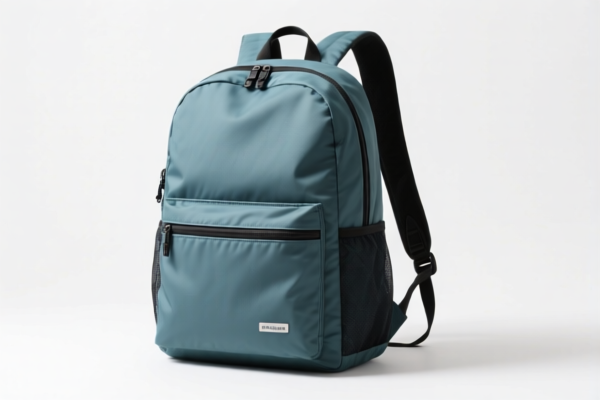
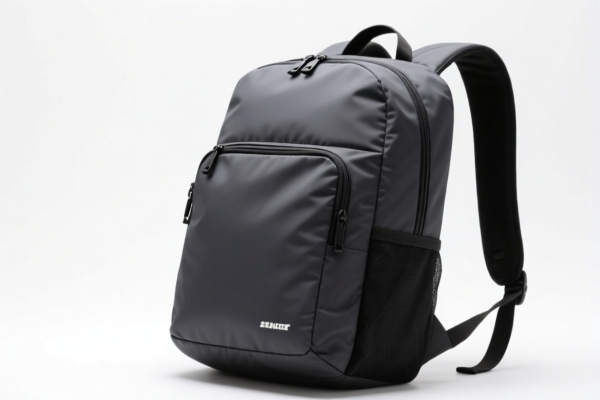
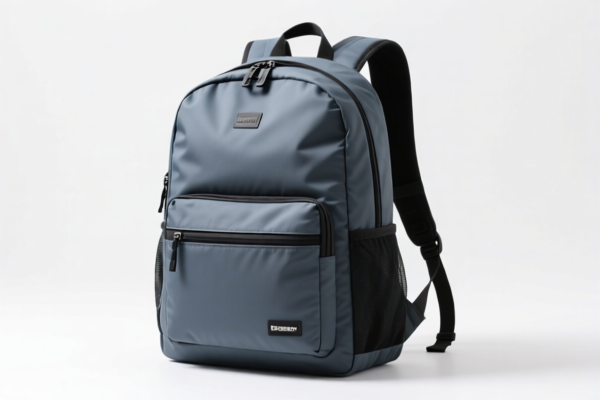
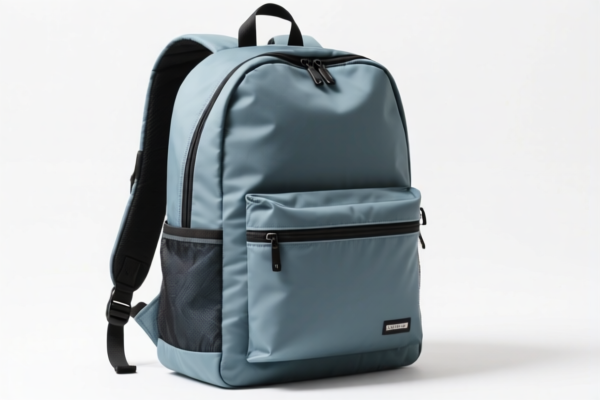
AI Analysis
🎒 Polyester Foldable Backpack (Polyester Lightweight/Travel Bag)
🌐 HS Code Reference & Customs Clearance Guide | 2026 Latest Tariff Analysis | Professional Clearance Strategy
📌 I. Product Definition & Classification: Do You Really Understand "Polyester Foldable Backpack"?
The Polyester Foldable Backpack is a lightweight, portable bag made primarily from polyester fabric, designed for travel, sports, or daily commuting. In international trade, its classification depends heavily on its material composition, structure, and specific use case.
Key distinctions:
- Foldable vs. Rigid Structure: If it retains its shape when not in use, it may be classified as a "backpack" (Heading 4202). If it collapses into a small pouch, it might still be a backpack but could be scrutinized for packaging classification.
- Material Type: "Polyester" can be natural, synthetic, or man-made fiber. This affects the HS Code subheading significantly.
- Usage: Is it for general travel, sports, or packaging?
⚠️ Critical Distinction:
- Backpacks with structure → Heading 4202 (Articles of apparel or accessory).
- Plastic-based or textile packaging → Heading 3923 or 6305 (Packaging articles).
- Man-made fibers vs. Synthetic fibers → Changes tariff rates due to base duty differences.
📦 II. HS Code Classification Details (2026 Latest Tariff Alignment)
Based on the provided data, here are the relevant HS Codes for Polyester Foldable Backpacks, categorized by material and description:
| HS Code | Product Description | Material Key | Total Tax Rate | Applicable Scenario |
|---|---|---|---|---|
4202.92.31.20 |
Polyester tear-resistant backpack | Synthetic Fiber | 52.6% | Tear-resistant, synthetic material, backpack form |
4202.92.31.31 |
Polyester sports bag (Type 1) | Man-made Fiber | 52.6% | Sports/travel bag, man-made fiber, specific subheading |
3923.29.00.00 |
Polyester sports bag (Packaging) | Plastic/Synthetic Fiber | 38.0% | Packaging/carrying item, plastic/synthetic blend |
6305.33.00.80 |
Polyester bag (Textile Packaging) | Man-made Textile Material | 25.9% | Packaging/carrying bag, man-made textile |
4202.92.31.31 |
Polyester tear-resistant backpack (Type 2) | Man-made Fiber | 52.6% | Travel/sports bag, man-made fiber, tear-resistant |
🔍 Key Observation:
- HS Code4202is the most common for backpacks (articles of apparel/accessories).
- HS Code3923and6305are used when the bag is considered a packaging article or textile bag rather than a durable accessory.
- Man-made fibers (4202.92.31.31) and Synthetic fibers (4202.92.31.20) both incur 52.6% total tax, but the base duty differs (17.6% vs. 8.4% in6305).
💰 III. 2026 Latest Tariff Rate Breakdown (Including Additional Taxes)
✅ Applicable Country: United States (US)
✅ Origin: China (CN)
✅ Effective Date: 2025/2026 (Post-November 10 changes)
🎯 1. 4202.92.31.20 & 4202.92.31.31 — Backpacks (Synthetic/Man-made Fiber)
| Item | Details |
|---|---|
| Base Duty | 17.6% (for synthetic/man-made fiber backpacks under 4202.92.31) |
| Section 301 Tariff | +25.0% (Additional tariff on Chinese goods) |
| IEEPA Tariff (Section 122) | +10.0% (Specific 122 Clause Tariff on certain textile/apparel items) |
| Total Tax Rate | 52.6% |
| Tax Calculation | CIF Value × 52.6% |
| De Minimis Exemption | ❌ Not Eligible (Deny De Minimis for these categories) |
| Legal Path | IEEPA:9903.01.25 → Section 301: Footnote 9903.88.01 → USITC:4202.92.31.20/31 |
📌 Explanation:
- The 52.6% rate is a combination of base duty (17.6%), Section 301 tariff (25%), and 122 Clause tariff (10%).
- This is a high-risk classification due to the significant additional tariffs on Chinese-origin backpacks.
🎯 2. 3923.29.00.00 — Polyester Sports Bag (Plastic/Synthetic Blend)
| Item | Details |
|---|---|
| Base Duty | 3.0% |
| Section 301 Tariff | +25.0% |
| IEEPA Tariff (Section 122) | +10.0% |
| Total Tax Rate | 38.0% |
| Tax Calculation | CIF Value × 38.0% |
| De Minimis Exemption | ❌ Not Eligible |
| Legal Path | IEEPA:9903.01.25 → Section 301: Footnote 9903.88.01 → USITC:3923.29.00.00 |
📌 Explanation:
- Lower base duty (3.0%) makes this cheaper than backpacks (4202), but still subject to heavy additional tariffs.
- Classification as "plastic/synthetic" rather than "textile backpack" reduces base duty but doesn't eliminate additional taxes.
🎯 3. 6305.33.00.80 — Polyester Bag (Man-made Textile)
| Item | Details |
|---|---|
| Base Duty | 8.4% |
| Section 301 Tariff | +7.5% |
| IEEPA Tariff (Section 122) | +10.0% |
| Total Tax Rate | 25.9% |
| Tax Calculation | CIF Value × 25.9% |
| De Minimis Exemption | ❌ Not Eligible |
| Legal Path | IEEPA:9903.01.25 → Section 301: Footnote 9903.88.01 → USITC:6305.33.00.80 |
📌 Explanation:
- This is the most cost-effective classification at 25.9%.
- It classifies the item as a textile packaging bag rather than a backpack, which has lower base duties and Section 301 rates (7.5% vs. 25%).
🛠️ IV. Customs Clearance Practical Advice (Avoiding Pitfalls)
✅ 1. Documentation Checklist (All Required)
| Document | Required? | Notes |
|---|---|---|
| ✅ Product Specification Sheet | ✔️ | Must detail material composition (e.g., "100% Polyester", "Synthetic Fiber"). |
| ✅ Product Photos | ✔️ | Show folds/collapsibility, zippers, straps, and labels. |
| ✅ Commercial Invoice | ✔️ | Clearly state "Polyester Foldable Backpack" or "Packaging Bag" based on HS Code. |
| ✅ Packing List | ✔️ | Include dimensions and weight. |
| ✅ Certificate of Origin (CO) | ✔️ | Essential for origin verification. |
| ✅ Third-Party Test Report | ✔️ | If claiming "Tear-resistant," provide test results. |
✅ 2. Classification Strategy (Key Mnemonic)
🔥 "Structure Determines Code, Material Dictates Duty, 122 Clause Adds 10%!"
| Scenario | Recommended HS Code | Why? | Risk |
|---|---|---|---|
| Durable Backpack (with structure, used for travel/sports) | 4202.92.31.20 or 4202.92.31.31 |
Classified as apparel accessory. High duty (52.6%). | High tax burden. |
| Packaging/Carrying Bag (Plastic/Synthetic blend) | 3923.29.00.00 |
Classified as packaging. Moderate duty (38.0%). | Medium tax burden. |
| Textile Bag (Man-made fiber, not a backpack) | 6305.33.00.80 |
Classified as textile packaging. Lowest duty (25.9%). | Low tax burden. Best for cost savings. |
📌 Strategic Tip:
- If the bag is not rigid and is used primarily for carrying or packaging, consider classifying under6305or3923to save on tariffs.
- Avoid classifying as4202unless it is clearly a durable, structured backpack, as the 52.6% rate is significantly higher.
✅ 3. Special Cases & Handling
| Situation | Advice |
|---|---|
| OEM Custom Bags | Provide design drawings to prove "backpack" vs. "packaging" intent. |
| Foldable Design | Emphasize "packaging" or "portable bag" language in description to support 6305 classification. |
| Material Mix | If bag contains >20% plastic, 3923 may be more appropriate than 4202. |
| 122 Clause Tariff | Always applicable for Chinese-origin textile/apparel items. Budget for +10%. |
🌍 V. Global Market Comparison (2026 Update)
| Country/Region | Recommended HS Code | Tariff | Notes |
|---|---|---|---|
| 🇺🇸 USA | 6305.33.00.80 |
25.9% | Best rate for textile bags. 4202 is 52.6%. |
| 🇨🇳 China | 6305.33.00.80 |
~5-8% | No additional tariffs. Standard MFN rate. |
| 🇪🇺 EU | 6305.33.00.80 |
~0-5% | Low duty for textile packaging. |
| 🇬🇧 UK | 6305.33.00.80 |
~5% | Post-Brexit rules apply. |
| 🇯🇵 Japan | 6305.33.00.80 |
~0-5% | Low duty for textile bags. |
📌 Conclusion:
- USA is the most expensive market due to Section 301 and IEEPA tariffs.
- Classifying as6305(textile packaging) instead of4202(backpack) can save ~26.7% in tariffs for US imports.
📌 VI. Common Errors & Pitfalls (Lessons Learned)
❌ Error 1: Classifying a foldable bag as a backpack (4202) when it’s used as packaging (6305).
👉 Consequence: Overpaying 26.7% in tariffs.
❌ Error 2: Ignoring the 122 Clause Tariff (+10%) for Chinese-origin items.
👉 Consequence: Unexpected tax bill and clearance delays.
❌ Error 3: Using "Backpack" in description for a plastic/synthetic blend bag.
👉 Consequence: Misclassification risk, potential penalties.
✅ Correct Approach:
"Polyester Foldable Bag, Man-made Textile, Non-Structured, for Packaging/Carrying" → HS Code
6305.33.00.80
🎯 VII. Conclusion: Professional Classification, Cost Optimization!
🎯 Key Takeaway:
🔹 "Structure = Backpack (
4202), Packaging = Bag (6305/3923)."
🔹 "122 Clause Adds 10%, Section 301 Adds 25%, Don’t Forget These!"
🔹 "Classifying as6305Can Save You 26.7% vs.4202!"
📌 Pro Tip:
- If your product is originating in Vietnam, Mexico, or Thailand, you may qualify for IEEPA Exemptions, reducing tariffs to 0-5%.
- Apply for Advance Ruling with US Customs to secure the correct HS Code before shipment.
📣 Immediate Action:
📞 Contact a professional customs broker.
📄 Provide product specs and photos.
🚀 Optimize your HS Code to minimize tariffs and ensure smooth clearance.
✨ Professional Clearance Starts with Accurate Classification!
💼 Every Percent Saved is Profit Earned!
Customer Reviews
About HS Code Classification
The Harmonized System (HS) is an internationally standardized nomenclature developed by the World Customs Organization (WCO) to classify traded products. Over 200 countries use the HS system as the basis for customs tariffs, trade statistics, and import/export regulations.
Each HS code follows a hierarchical structure:
- Chapter (2 digits) — Broad category of goods (e.g., Chapter 84: Machinery and Mechanical Appliances)
- Heading (4 digits) — More specific grouping within the chapter
- Subheading (6 digits) — Internationally standardized breakdown, used by all WCO member countries
- National subdivisions (8-10 digits) — Country-specific extensions for further classification, such as US HTSUS 10-digit codes
Correct HS code classification is essential for smooth customs clearance, accurate duty payment, and compliance with trade regulations. Misclassification can lead to customs delays, overpayment of duties, or penalties.
When importing from CN to US, the applicable tariff rates may include:
- Most-Favored-Nation (MFN) rate — The standard duty rate applied to WTO members
- General rate — Applied to countries without trade agreements
- Trade remedy duties — Additional tariffs such as Section 301 (anti-dumping), Section 232 (national security), or countervailing duties
The information provided on this page is for reference purposes only. For official classification, please consult with your local customs authority or a licensed customs broker.