Polyester Handbags
CN → US| HS Code | Tariff Rate | Origin | Destination | Doc |
|---|---|---|---|---|
| 3923290000 | 38.0% | CN | US | Official Doc |
| 6305330080 | 25.9% | CN | US | Official Doc |
| 4202923131 | 52.6% | CN | US | Official Doc |
| 4202923120 | 52.6% | CN | US | Official Doc |
| 6305390000 | 25.9% | CN | US | Official Doc |
Product Images
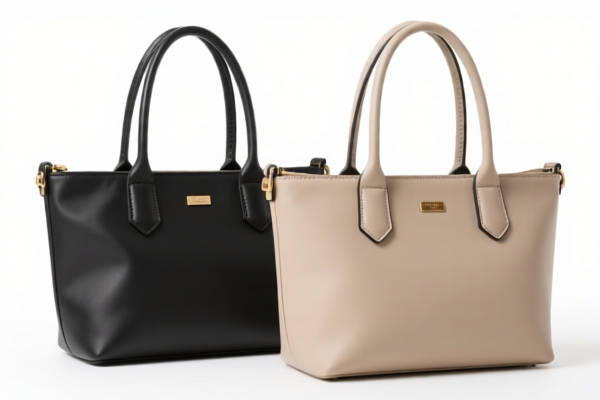
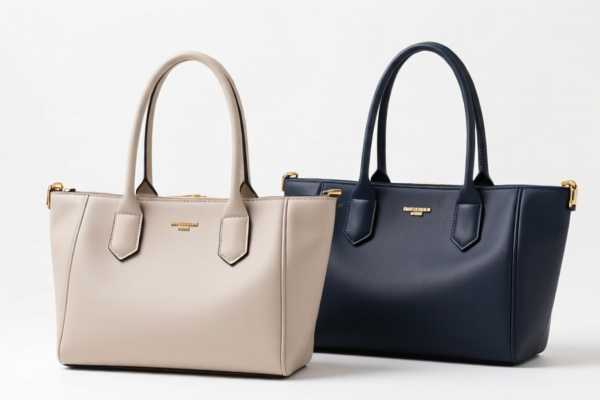
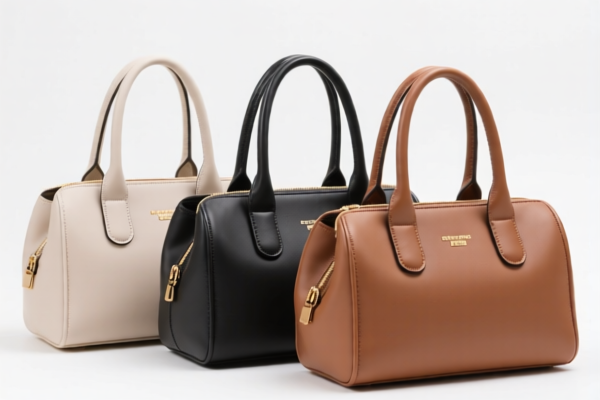
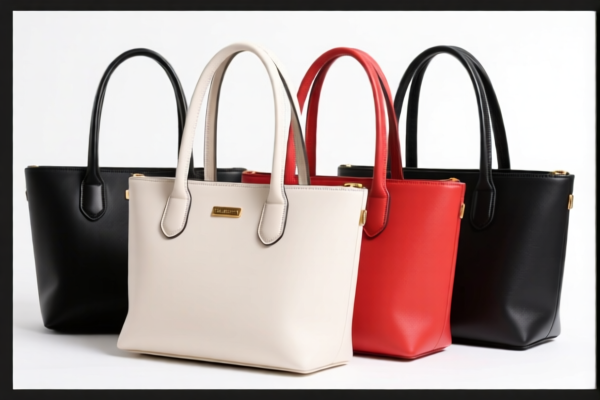
AI Analysis
👜 Polyester Handbags & Bags: The Ultimate HS Code & Tariff Breakdown
🌐 HS Code Reference & Customs Clearance Guide | 2026 Latest Tariff Rules | Professional通关 Strategy for US Imports
📌 I. Product Definition & Classification: Is It a "Bag" or a "Pack"?
Polyester (Polyethylene Terephthalate, PET) handbags and carrying articles are ubiquitous in global trade. However, in customs classification, the intended use and material composition dictate the HS Code, which drastically affects the duty rate. In the context of US-China trade relations, the distinction between general "carrying articles" and specialized "sports bags" is critical.
⚠️ Key Distinction Point:
- General Carrying Articles: Handbags, tote bags, or pouches not specifically designed for sports or protective equipment → Typically fall under Chapter 42 or Chapter 63.
- Sports/Protective Bags: Bags specifically shaped or designed to carry sports gear (e.g., golf bags, sports duffels) → Often classified under Chapter 42 with higher base duties.
- Textile Sacks/Sacks: Bulk packaging or generic bags made of man-made textiles → Chapter 63.
📦 II. HS Code Classification Matrix (2026 Latest Tariff Alignment)
Based on the provided data, here is the authoritative classification for Polyester Bags imported into the US from China.
| HS Code | Product Description | Material Focus | Total Tax Rate | Key Tax Components |
|---|---|---|---|---|
| 3923.29.00.00 | Packaging/Carrying Articles made of plastics (Polyester/PET film/plasticized) | Plastic/Artificial Material | 38.0% | Base: 3.0% + Section 301: 25.0% + IEEPA Sec 122: 10% |
| 6305.33.00.80 | Sacks & Bags (man-made textile) for packaging of goods | Polyester (Artificial Fiber) | 25.9% | Base: 8.4% + Section 301: 7.5% + IEEPA Sec 122: 10% |
| 6305.39.00.00 | Other Sacks/Bags of man-made textile materials | Polyester (Artificial Fiber) | 25.9% | Base: 8.4% + Section 301: 7.5% + IEEPA Sec 122: 10% |
| 4202.92.31.31 | Sports Bags with outer surface of artificial fiber textiles | Artificial Fiber (Sports Use) | 52.6% | Base: 17.6% + Section 301: 25.0% + IEEPA Sec 122: 10% |
| 4202.92.31.20 | Sports Bags made of synthetic fibers | Synthetic Fiber (Sports Use) | 52.6% | Base: 17.6% + Section 301: 25.0% + IEEPA Sec 122: 10% |
🔍 Critical Observation:
- Sports Bags (4202.92.31.x) carry the highest tariff burden (52.6%) due to a higher base duty (17.6%).
- General Packaging Bags (6305.x) offer a lower total rate (25.9%).
- Plasticized/Plastic-like Carrying Articles (3923.29.00) sit in the middle (38.0%), with a very low base duty (3.0%) but subject to full 25% Section 301 and 10% Section 122.
💰 III. 2026 Latest Tariff Rate Breakdown (Detailed Tax Analysis)
✅ Applicable Market: United States (US)
✅ Origin: China (CN)
✅ 生效时间: 2025年11月10日起 (Post-Nov 10, 2025 Imports)
🎯 1. 3923.29.00.00 —— Plastic-like Carrying Articles (The "Mid-Range" Trap)
| Item | Detail |
|---|---|
| Base Duty | 3.0% |
| Section 301 Duty | +25.0% |
| IEEPA Sec 122 Duty | +10.0% |
| Total Effective Rate | 38.0% |
| Calculation | CIF Value × 38% |
| De Minimis Exemption? | ❌ No (Denied) |
| Legal Path | IEEPA:9903.01.25 → USITC:3923.29.00.00 → Footnote: 301 |
📌 Interpretation:
- This code is often used for plasticized polyester films or rigid plastic containers/pouches.
- While the base duty is low, the 35% surcharge (25% + 10%) makes it expensive.
- Risk: If the bag is clearly a soft textile handbag, misclassifying here as "plastic" may trigger customs audits.
🎯 2. 6305.33.00.80 & 6305.39.00.00 —— Textile Sacks/Bags (The "Low-Cost" Option)
| Item | Detail |
|---|---|
| Base Duty | 8.4% |
| Section 301 Duty | +7.5% |
| IEEPA Sec 122 Duty | +10.0% |
| Total Effective Rate | 25.9% |
| Calculation | CIF Value × 25.9% |
| De Minimis Exemption? | ❌ No (Denied) |
| Legal Path | IEEPA:9903.01.24 → USITC:6305.33.00.80/6305.39.00.00 → Footnote: 301 |
📌 Interpretation:
- Best for: Large bulk bags, generic tote bags not designed for specific sports, or packaging sacks.
- Advantage: Lowest total tariff (25.9%) among all listed codes.
- Caveat: Must NOT be designed specifically as a "sports bag" or "personal handbag" (which would push it to Chapter 42). If it looks like a handbag, CBP may reject Chapter 63.
🎯 3. 4202.92.31.31 & 4202.92.31.20 —— Sports Bags (The "High-Cost" Category)
| Item | Detail |
|---|---|
| Base Duty | 17.6% |
| Section 301 Duty | +25.0% |
| IEEPA Sec 122 Duty | +10.0% |
| Total Effective Rate | 52.6% |
| Calculation | CIF Value × 52.6% |
| De Minimis Exemption? | ❌ No (Denied) |
| Legal Path | IEEPA:9903.01.25 → USITC:4202.92.31.x → Footnote: 301 |
📌 Interpretation:
- Applies to: Golf bags, sports duffels, gym bags with specific padding/structure.
- Highest Burden: Over 50% total duty.
- Reason: The "Base Duty" for sports accessories is high (17.6%), and it attracts the full 25% Section 301 surcharge (unlike the reduced 7.5% for textile sacks).
🛠️ IV. Customs Clearance Operational Advice (Pitfall Avoidance Guide)
✅ 1. Documentation Checklist (Non-Negotiable)
| Document | Required? | Purpose |
|---|---|---|
| ✅ Product Specification Sheet | ✔️ | Must specify material (e.g., "100% Polyester Woven"), dimensions, and intended use (e.g., "General Purpose," "Sports," "Packaging"). |
| ✅ Product Photos | ✔️ | Clear shots of the bag, including any logos, handles, and interior lining. |
| ✅ Commercial Invoice | ✔️ | Must match the HS Code description. Avoid vague terms like "Bag." Use "Polyester Sports Duffel" or "Polyester Packing Sack." |
| ✅ Packing List | ✔️ | Show unit weight and quantity. |
| ✅ Origin Certificate | ❌ (Optional) | If claiming any preferential status (unlikely for China/US under current terms). |
✅ 2. Classification Strategy: How to Lower Your Duty?
🔥 "Define the Use, Not Just the Material!"
| Scenario | Recommended HS Code | Duty Rate | Strategy |
|---|---|---|---|
| Generic Tote/Handbag | 6305.33.00.80 or 6305.39.00.00 | 25.9% | Argue it is a "man-made textile bag for packaging/general use," NOT a specific sports or personal accessory. Risk: CBP may disagree if it looks like a fashion item. |
| Plasticized/PVC-like Bag | 3923.29.00.00 | 38.0% | Use if the bag has a plastic coating or is made of PET film. Justification: "Article of plastic." |
| Gym Bag/Sports Duffel | 4202.92.31.20/31 | 52.6% | If it is clearly for sports (padded, specific shape), you MUST classify here. Trying to hide it as a "general bag" leads to fraud penalties. |
✅ 3. Common Mistakes & Consequences
❌ Mistake 1: Labeling a Sports Bag as a "General Polyester Bag" (6305) to save tax.
👉 Consequence: CBP audits will reclassify it to 4202, issuing back duties + penalties + interest. The rate difference is ~27%.
❌ Mistake 2: Labeling a Fashion Handbag as "Plastic Packaging" (3923).
👉 Consequence: If the item is soft, woven, and clearly a textile bag, CBP will reject the plastic classification. May result in port hold and re-inspection.
❌ Mistake 3: Ignoring the IEEPA 122 Clause.
👉 Consequence: All listed codes include a 10% IEEPA surcharge. Failure to declare this can lead to refusal of entry.
🌍 V. Global Market Comparison (2026 Snapshot)
| Market | Typical HS Code | Approx. Duty (China Origin) | Notes |
|---|---|---|---|
| 🇺🇸 USA | 4202.92.31 (Sports) or 6305 (General) |
25.9% – 52.6% | High Section 301 & IEEPA 122 tariffs apply. |
| 🇨🇳 China | 4202.92 or 6305 |
10% – 15% | No Section 301. Lower base duties. |
| 🇪🇺 EU | 4202.92 or 6305 |
4% – 12% | No major punitive tariffs on polyester bags. |
| 🇬🇧 UK | 4202.92 or 6305 |
4% – 12% | Post-Brexit, similar to EU but independent rules. |
📌 Conclusion:
- The US is the most expensive market for polyester bags due to political tariffs.
- Strategy: If possible, avoid "Sports Bag" classification if the product can be reasonably argued as a "General Purpose Textile Bag" (6305) to save ~27% in duties.
- Compliance: Never misclassify a clear sports item. The risk of penalties outweighs the savings.
📌 VI. Actionable Takeaways
- For Fashion/General Handbags:
- Consider if they can be classified under 6305 (25.9%) rather than 4202 (52.6%).
-
Tip: Avoid specific sports features (padded straps, ball pockets). Use generic designs.
-
For Sports Bags:
- Prepare to pay 52.6%.
-
Tip: Ensure the product description explicitly states "Sports Bag" to avoid CBP rejection for misclassification.
-
For Packaging Sacks:
- Use 6305.33.00.80 (25.9%).
- Tip: These are usually larger, bulkier, and less "fashion-oriented."
🎯 VII. Final Words: Precision Saves Dollars
🎯 Remember:
🔹 "Sports = 52.6%, General Textile = 25.9%, Plastic-like = 38.0%"
🔹 "One word difference in description can save 27% in duties!"
🔹 "But misclassification leads to 100% penalty + 0% speed!"
📌 Pro Tip:
If your supply chain allows, consider Third-Country Transshipment (e.g., Vietnam, Thailand) for polyester bags to potentially bypass US Section 301 and IEEPA 122 tariffs. However, ensure substantial transformation occurs to change the Origin Certificate legally.
📣 Immediate Action:
📞 Consult a Licensed Customs Broker to review your product photos.
📄 Request an Advance Ruling from CBP if you are unsure whether your bag is "Sports" or "General."
🚀 Optimize Your Classification today to protect your margin in 2026!
✨ Smart Classification, Smooth Clearance, Maximized Profit!
💼 Your Bag’s Destiny is Written in the HS Code!
Customer Reviews
About HS Code Classification
The Harmonized System (HS) is an internationally standardized nomenclature developed by the World Customs Organization (WCO) to classify traded products. Over 200 countries use the HS system as the basis for customs tariffs, trade statistics, and import/export regulations.
Each HS code follows a hierarchical structure:
- Chapter (2 digits) — Broad category of goods (e.g., Chapter 84: Machinery and Mechanical Appliances)
- Heading (4 digits) — More specific grouping within the chapter
- Subheading (6 digits) — Internationally standardized breakdown, used by all WCO member countries
- National subdivisions (8-10 digits) — Country-specific extensions for further classification, such as US HTSUS 10-digit codes
Correct HS code classification is essential for smooth customs clearance, accurate duty payment, and compliance with trade regulations. Misclassification can lead to customs delays, overpayment of duties, or penalties.
When importing from CN to US, the applicable tariff rates may include:
- Most-Favored-Nation (MFN) rate — The standard duty rate applied to WTO members
- General rate — Applied to countries without trade agreements
- Trade remedy duties — Additional tariffs such as Section 301 (anti-dumping), Section 232 (national security), or countervailing duties
The information provided on this page is for reference purposes only. For official classification, please consult with your local customs authority or a licensed customs broker.