Polyester Packaging Foil
CN → US| HS Code | Tariff Rate | Origin | Destination | Doc |
|---|---|---|---|---|
| 7607205000 | 17.5% | CN | US | Official Doc |
| 7607201000 | 13.7% | CN | US | Official Doc |
Product Images
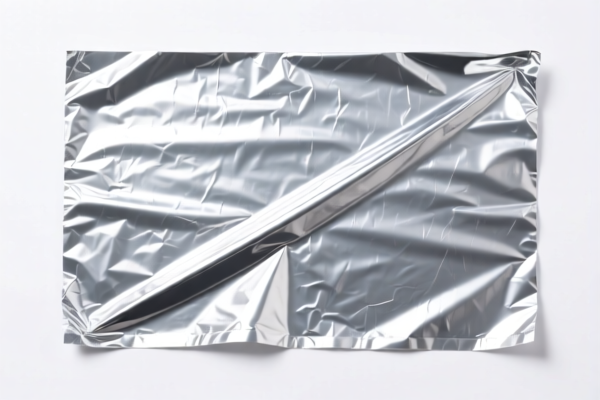
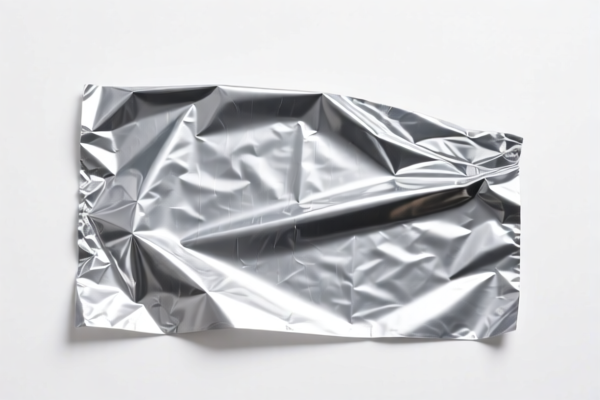
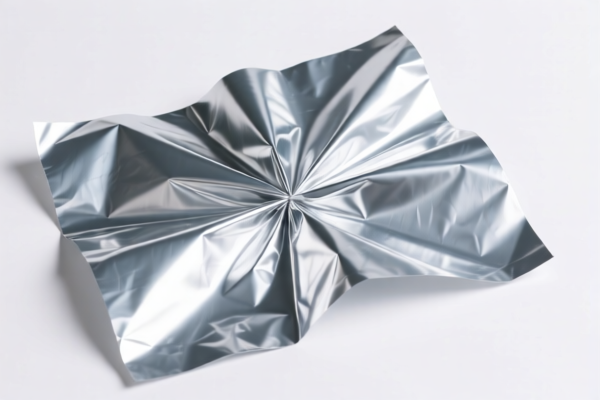

AI Analysis
🎁 Polyester Packaging Foil (Aluminum Foil Backed with Plastics/Polyester)
🌐 HS Code Reference & Customs Clearance Guide | 2026 Latest Tariff Analysis | Strategic通关 Strategy
📌 I. Product Definition & Classification: What is "Polyester Packaging Foil"?
Polyester Packaging Foil refers to aluminum foil (thickness ≤ 0.2 mm) that has been laminated or backed with a polyester film or other plastic materials. In international trade, this product falls under Chapter 76 (Aluminum) because the aluminum is the essential character, but the backing material (polyester/plastic) determines the specific subheading.
⚠️ Key Distinction: - If the foil is backed with paper, paperboard, plastics, or similar materials, it is classified under 7607.20. - The critical factor for tariff purposes is whether the backing is "Other" (plain) or "Covered/Decorated" (printed, patterned, fancy effect).
📦 II. HS Code Classification Details (2026 Latest Tariff Authority)
| HS Code | Product Description | Application Scenario | Tariff Rate (US from CN) |
|--------|--------------------------|--------------------------|
| 7607.20.50.00 | Aluminum foil (≤0.2mm), Backed, Other | Plain polyester-backed foil, white or natural finish, no print | 7.5% |
| 7607.20.10.00 | Aluminum foil (≤0.2mm), Backed, Covered/Decorated | Printed, patterned, fancy effect, or decorated polyester-backed foil | 0.0% |
🔍 Critical Insight: -
7607.20.50.00applies to plain polyester-backed foils. These are subject to additional duties. -7607.20.10.00applies to printed or decorated foils. These benefit from a 0% total tax rate. - Misclassification Risk: Declaring printed foil as "plain" to avoid duties is high-risk and can lead to penalties.
💰 III. 2026 Latest Tariff Rate Breakdown (Including Additional Taxes)
✅ Applicable Country: United States (US)
✅ Country of Origin: China (CN)
✅ Effective Date: 2025 onwards (Current policy)
🎯 1. 7607.20.50.00 —— Polyester-Backed Foil (Plain/Other)
| Item | Content |
|---|---|
| Base Tariff | 0% (ad valorem) |
| Section 301 Additional Tariff | +7.5% |
| Total Tax Rate | 7.5% |
| Tax Calculation | CIF Value × 7.5% |
| De Minimis Exemption | ❌ Not Applicable (Standard threshold does not override Section 301 for this category in most cases) |
| Legal Basis Path | HTSUS:7607.20.50.00 → Section 301 Footnote |
📌 Explanation: - The base tariff for aluminum foil backed with plastic is 0%. - However, due to Section 301 tariffs on Chinese goods, an additional 7.5% is applied. - Total Cost Impact: 7.5% of the CIF value.
🎯 2. 7607.20.10.00 —— Polyester-Backed Foil (Decorated/Printed)
| Item | Content |
|---|---|
| Base Tariff | 0% (ad valorem) |
| Section 301 Additional Tariff | 0% (Exempt or Not Applicable for this specific subheading under current list) |
| Total Tax Rate | 0.0% |
| Tax Calculation | CIF Value × 0.0% |
| De Minimis Exemption | N/A (Already 0%) |
| Legal Basis Path | HTSUS:7607.20.10.00 |
📌 Explanation: - Decorated or printed aluminum foil backed with plastic enjoys a 0% total tariff. - This creates a significant incentive for manufacturers to include custom printing or decorative patterns if feasible for the application.
🛠️ IV. Customs Clearance Practical Advice (Avoid Pitfalls)
✅ 1. Document Checklist (Essential)
| Document | Required | Description |
|---|---|---|
| ✅ Commercial Invoice | ✔️ | Must clearly state: "Aluminum Foil, Thickness 0.X mm, Backed with Polyester" |
| ✅ Product Specification | ✔️ | Detail: Aluminum layer thickness, Polyester layer thickness, Total thickness |
| ✅ Photos of Product | ✔️ | Show whether the surface is plain (for 7607.20.50.00) or printed/decorated (for 7607.20.10.00) |
| ✅ Packing List | ✔️ | List net/gross weight, number of rolls, dimensions |
| ✅ Certificate of Origin | ✔️ | Proves CN origin, subject to Section 301 |
✅ 2. Declaration Strategy (Key Tips)
🔥 "Plain Pays, Print Saves: Choose Wisely!"
| Scenario | Correct HS Code | Tax Rate | Risk if Misdeclared |
|---|---|---|---|
| Plain Polyester Foil (No print) | 7607.20.50.00 |
7.5% | If declared as printed, risk of fraud penalty |
| Printed/Decorated Foil | 7607.20.10.00 |
0.0% | If declared as plain, you overpay 7.5% unnecessarily |
| Foil Thickness > 0.2mm | 7607.10.xxxx |
Different | Major Error: Must be ≤0.2mm for 7607.20 |
| Foil with Paper Backing | 7607.20.30.00 |
7.5% | Different subheading, similar tax |
📌 Important Note: - Ensure the thickness is explicitly stated as ≤ 0.2 mm (excluding backing). If it exceeds 0.2 mm, it falls under
7607.10, which may have different tax implications. - For7607.20.10.00, the decoration must be more than just incidental branding; it should be a "character, design, fancy effect, or pattern."
✅ 3. Special Cases
| Situation | Handling Advice |
|---|---|
| Sample Shipments | Even for samples, use the correct HS Code. 7.5% tax still applies if plain. |
| Mixed Shipments (Plain + Printed) | Declare separately. Do not mix into one line item with ambiguous description. |
| Custom Printing | Provide print design files if requested by customs to verify "decorated" status for 0% rate. |
🌍 V. Global Market Comparison (2026 Latest)
| Country/Region | Recommended HS Code | Tariff Rate (from CN) | Remarks |
|---|---|---|---|
| 🇺🇸 USA | 7607.20.50.00 / 7607.20.10.00 |
7.5% (Plain) / 0% (Printed) | Section 301 applies to plain foil |
| 🇨🇳 China | 7607.20.50.00 / 7607.20.10.00 |
~1.0% - 2.0% | Import duties are low |
| 🇪🇺 EU | 7607.20.50 / 7607.20.10 |
0% | No additional duties for China in most cases |
| 🇬🇧 UK | 7607.20.50 / 7607.20.10 |
0% - 5% | Check post-Brexit specific rates |
| 🇯🇵 Japan | 7607.20.50 / 7607.20.10 |
0% - 3.1% | Generally low tariffs |
📌 Conclusion: - The USA is the only major market with a significant 7.5% additional tariff on plain polyester-backed aluminum foil. - Printed/decorated foil enjoys 0% duty in the US, providing a strategic advantage for branding-heavy products.
📌 VI. Common Mistakes & Pitfalls (Blood Lessons)
❌ Mistake 1: Declaring printed foil as "plain" to avoid 7.5% tax. 👉 Consequence: Customs inspection reveals print → Back taxes + 10-20% penalty + potential seizure.
❌ Mistake 2: Ignoring thickness specification.
👉 Consequence: If thickness > 0.2 mm, it falls under 7607.10, which may have different tax rates and documentation requirements.
❌ Mistake 3: Confusing "backed" with "coated." 👉 Consequence: Coated foil (paint/varnish directly on aluminum) is different from backed foil (laminated with paper/plastic). Misclassification leads to delays.
✅ Correct Declaration Example:
"Aluminum Foil, 0.15mm thick, laminated with 12-micron Polyester film, Plain Surface (No Print), for Packaging Use. HS Code: 7607.20.50.00"
🎯 VII. Conclusion: Professional Declaration, Cost Optimization!
🎯 Key Takeaway:
🔹 "Plain Foil = 7.5% Tax (US). Printed Foil = 0% Tax (US)."
🔹 "Check Thickness: Must be ≤ 0.2mm for 7607.20."
🔹 "Declare Accurately: 'Decorated' means visible print/pattern, not just logo."
📌 Pro Tip:
If your packaging foil is plain but you need to reduce US tariff costs, consider:
1. Adding subtle decorative patterns during manufacturing to qualify for 7607.20.10.00 (0% tax).
2. Applying for HTSUS Exclusions (if applicable for your specific product type, though rare for standard foil).
3. Supply Chain Adjustment: Source from non-CN countries if volume is high, though this is less flexible for foil.
📣 Immediate Action:
📞 Consult with a licensed customs broker.
📄 Provide product images showing whether the foil is printed or plain.
📏 Confirm exact thickness (excluding backing).
🚀 Optimize your HS Code declaration to save 7.5% in the US market!
✨ Precision in Classification, Profit in Clearance!
💼 Don't let a 7.5% oversight eat your margins!
Customer Reviews
About HS Code Classification
The Harmonized System (HS) is an internationally standardized nomenclature developed by the World Customs Organization (WCO) to classify traded products. Over 200 countries use the HS system as the basis for customs tariffs, trade statistics, and import/export regulations.
Each HS code follows a hierarchical structure:
- Chapter (2 digits) — Broad category of goods (e.g., Chapter 84: Machinery and Mechanical Appliances)
- Heading (4 digits) — More specific grouping within the chapter
- Subheading (6 digits) — Internationally standardized breakdown, used by all WCO member countries
- National subdivisions (8-10 digits) — Country-specific extensions for further classification, such as US HTSUS 10-digit codes
Correct HS code classification is essential for smooth customs clearance, accurate duty payment, and compliance with trade regulations. Misclassification can lead to customs delays, overpayment of duties, or penalties.
When importing from CN to US, the applicable tariff rates may include:
- Most-Favored-Nation (MFN) rate — The standard duty rate applied to WTO members
- General rate — Applied to countries without trade agreements
- Trade remedy duties — Additional tariffs such as Section 301 (anti-dumping), Section 232 (national security), or countervailing duties
The information provided on this page is for reference purposes only. For official classification, please consult with your local customs authority or a licensed customs broker.