Polyester Picnic Lunch Bag
CN → US| HS Code | Tariff Rate | Origin | Destination | Doc |
|---|---|---|---|---|
| 3923290000 | 38.0% | CN | US | Official Doc |
| 3926903300 | 16.5% | CN | US | Official Doc |
| 3926901000 | 20.9% | CN | US | Official Doc |
| 4202920809 | 42.0% | CN | US | Official Doc |
| 4202920807 | 42.0% | CN | US | Official Doc |
Product Images
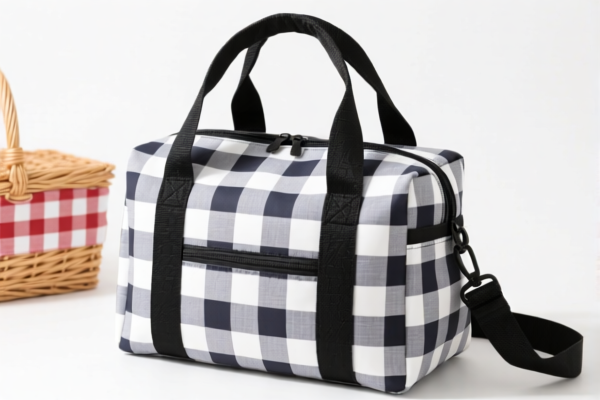
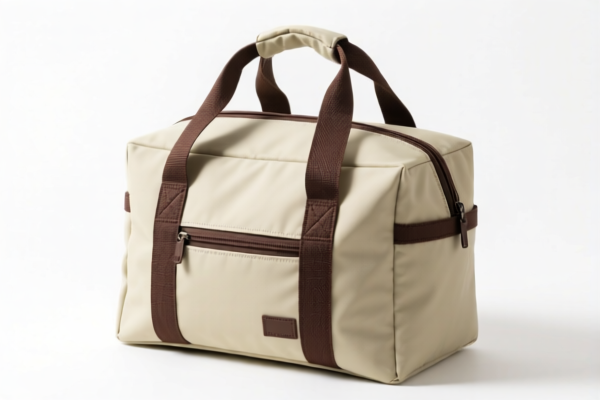
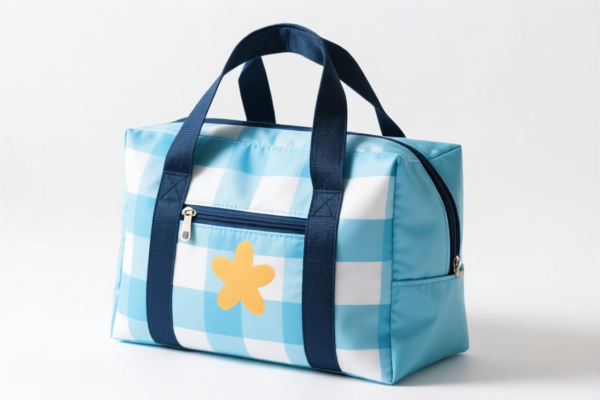
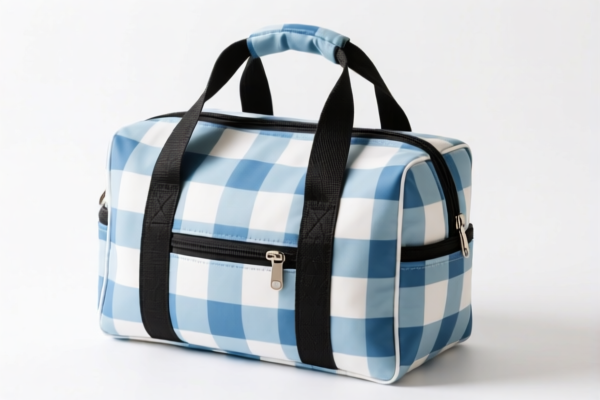
AI Analysis
👜 Polyester Picnic Lunch Bag (Portable Food Bags)
🌐 HS Code Reference & Customs Clearance Guide | 2026 Latest Tariff Analysis | Professional Entry Strategy
📌 I. Product Definition & Classification: Do You Truly Understand the "Polyester Lunch Bag"?
The Polyester Picnic Lunch Bag is a portable container designed for storing and transporting food and beverages. In international trade, its classification is critical because it sits at the intersection of plastics and textiles/apparel accessories. The correct HS Code depends on whether it is viewed primarily as a plastic packaging item or a textile/leather-like accessory.
⚠️ Key Distinction Points:
- If the bag is essentially a plastic pouch/sack (even if polyester material, used for food packaging): → 3923.29.00.00
- If it is an insulated bag made of man-made fibers (polyester) with lining/insulation: → 4202.92.08.xx
- If it is a general plastic article not fitting other specific plastic categories: → 3926.90.xx.00
📦 II. HS Code Classification Details (2026 Latest Tariff Authority Comparison)
Based on the provided data, here are the five potential HS Codes for "Polyester Portable Food Bags" and their corresponding tax implications.
| HS Code | Product Description & Logic | Tax Rate (Total) | Tax Breakdown |
|---|---|---|---|
| 3923.29.00.00 | Plastic Sacks and Bags: Classified as plastic sacks/sacs for food. Polyester is often treated as a plastic polymer in this context. | 38.0% | Base: 3.0% + Section 301: 25.0% + Section 122: 10% |
| 3926.90.33.00 | Other Plastic Articles: Classified as "other" plastic manufactured items not specified elsewhere. | 16.5% | Base: 6.5% + Section 301: 0.0% + Section 122: 10% |
| 3926.90.10.00 | Polyester Plastic Articles: Specifically for plastic articles made of polyester. | 20.9% | Base: 3.4% + Section 301: 7.5% + Section 122: 10% |
| 4202.92.08.09 | Insulated Food/Drink Bags (Other Material): Classified as insulated bags made of other materials (e.g., composite textiles with plastic lining). | 42.0% | Base: 7.0% + Section 301: 25.0% + Section 122: 10% |
| 4202.92.08.07 | Insulated Food/Drink Bags (Man-Made Fiber): Specifically insulated bags made of synthetic fabrics (polyester). | 42.0% | Base: 7.0% + Section 301: 25.0% + Section 122: 10% |
🔍 Critical Insight:
- Cost Advantage:3926.90.33.00offers the lowest total tariff at 16.5%.
- High Cost Risk:4202.92.08.07/09and3923.29.00.00carry high Section 301 tariffs (25%), pushing total rates to 38-42%.
- Ambiguity: The choice between Chapter 39 (Plastics) and Chapter 42 (Articles of Leather/Travel Goods) depends on the bag’s construction. If it has significant insulation and textile structure, Customs may prefer Chapter 42. If it is a simple pouch, Chapter 39 is more likely.
💰 III. 2026 Latest Tariff Rate Details (Including Surcharges & Policy Add-ons)
✅ Applicable Country: United States (US)
✅ Origin: China (CN)
✅ Effective Date: November 10, 2025 (and subsequent imports)
🎯 1. 3923.29.00.00 —— Plastic Sacks and Bags
| Item | Content |
|---|---|
| Base Tariff | 3.0% (ad valorem) |
| USITC Additional Tariff | +25% (Section 301) |
| IEEPA Additional Tariff | +10% (Section 122, targeting China/HK products) |
| Total Tariff | 38.0% |
| Tax Calculation | CIF Value × 38% |
| De Minimis Exemption | ❌ Not Eligible (deny_de_minimis) |
| Legal Basis Path | IEEPA:9903.01.25 → Section 301: 3923.29.00.00 → FOOTNOTE:9903.88.01 |
📌 Explanation:
- This code treats the polyester bag as a standard plastic packaging item.
- The 25% Section 301 tariff is applied because most polyester plastics are subject to US trade remedies.
- High Cost: Nearly 40% tax significantly impacts profit margins.
🎯 2. 3926.90.33.00 —— Other Plastic Articles (Lowest Tax Strategy)
| Item | Content |
|---|---|
| Base Tariff | 6.5% |
| USITC Additional Tariff | 0.0% (Exempt from Section 301 surcharge for this specific subheading) |
| IEEPA Additional Tariff | +10% (Section 122) |
| Total Tariff | 16.5% |
| Tax Calculation | CIF Value × 16.5% |
| De Minimis Exemption | ❌ Not Eligible |
| Legal Basis Path | IEEPA:9901.25 → Section 301 Exemption → USITC:3926.90.33.00 |
📌 Note:
- This is the most cost-effective option among the plastic classifications.
- It classifies the bag as a general plastic article, avoiding the high Section 301 rate.
- Strategy: If your product can be legitimately classified as "other plastic articles" (e.g., simple non-insulated pouches), this is the optimal HS Code.
🎯 3. 3926.90.10.00 —— Polyester Plastic Articles
| Item | Content |
|---|---|
| Base Tariff | 3.4% |
| USITC Additional Tariff | +7.5% (Partial Section 301 application) |
| IEEPA Additional Tariff | +10% (Section 122) |
| Total Tariff | 20.9% |
| Tax Calculation | CIF Value × 20.9% |
| De Minimis Exemption | ❌ Not Eligible |
| Legal Basis Path | IEEPA:9901.25 → Section 301 Partial → USITC:3926.90.10.00 |
📌 Note:
- Specific to polyester-based plastic items.
- Lower base rate (3.4%) but higher Section 301 surcharge (7.5%) compared to3926.90.33.00.
- Total cost is slightly higher than3926.90.33.00due to the added surcharge.
🎯 4. 4202.92.08.09 & 4202.92.08.07 —— Insulated Food/Drink Bags
| Item | Content |
|---|---|
| Base Tariff | 7.0% |
| USITC Additional Tariff | +25% (Full Section 301) |
| IEEPA Additional Tariff | +10% (Section 122) |
| Total Tariff | 42.0% |
| Tax Calculation | CIF Value × 42% |
| De Minimis Exemption | ❌ Not Eligible |
| Legal Basis Path | IEEPA:9903.01.25 → Section 301: 4202.92.08.xx |
📌 Explanation:
- These codes apply to insulated bags (often with foil lining, thick padding, or zippers typical of lunchboxes).
- Highest Tax Burden: 42% is the most expensive option.
- Risk: If you claim this code but the bag lacks insulation, Customs may reclassify it, leading to penalties.
🛠️ IV. Customs Clearance Practical Advice (Battle-Tested Pitfall Guide)
✅ 1. Preparation Checklist (Mandatory)
| Material | Required? | Explanation |
|---|---|---|
| ✅ Product Specification Sheet | ✔️ | Must detail dimensions, material composition (e.g., "100% Polyester Outer, Aluminum Foil Lining"), and insulation type. |
| ✅ Product Photos | ✔️ | Clear images of the bag’s interior (lining), exterior, and any insulation layers. |
| ✅ Commercial Invoice | ✔️ | Describe as "Polyester Food Storage Bag" or "Insulated Lunch Bag" consistently with HS Code. |
| ✅ Packing List | ✔️ | Indicate if bags are sold individually or in sets. |
| ✅ Material Safety Data Sheet (MSDS) | ⚠️ Optional | If the bag contains chemical coatings or adhesives, Customs may request MSDS. |
✅ 2. Declaration Strategy (Key Mantra)
🔥 "Check Insulation, Check Lining, Choose Chapter 39 or 42, Avoid 42% Trap!"
| Scenario | Recommended HS Code | Why? |
|---|---|---|
| Simple Pouch (No insulation, thin polyester) | 3923.29.00.00 or 3926.90.33.00 |
Fits "plastic sack" or "other plastic article". Lower tax. |
| Insulated Bag (Thick, foil-lined, zipped) | 4202.92.08.07 |
Fits "article of textiles, insulated". High tax but accurate. |
| Hybrid (Polyester outer, plastic inner) | Consult Broker | Risk of reclassification. 3926.90.33.00 may be argued if plastic lining dominates. |
| Bag with Handles/Straps | 4202.92.08.07 |
Presence of structured handles often pushes classification to Chapter 42 (Travel Goods). |
✅ 3. Special Handling Tips
| Situation | Recommendation |
|---|---|
| OEM Custom Bags | Provide design drawings showing material layers. If the outer fabric is polyester but the functional layer is plastic, argue for Chapter 39. |
| "Lunch Bag" vs. "Food Bag" | Avoid vague terms. Use "Polyester Food Storage Pouch" for Chapter 39; use "Insulated Lunch Box" for Chapter 42. |
| De Minimis Loophole (Section 321) | ❌ Not Available: All listed codes have deny_de_minimis. Shipments under $800 will still be taxed if declared under these codes. |
| Section 122 Impact | Remember: All codes above include a 10% Section 122 tariff. This is a new/additional levy on many Chinese goods. Factor this into pricing. |
🌍 V. Global Market Comparison (2026 Latest)
| Country/Region | Recommended HS Code | Est. Tariff (China Origin) | Notes |
|---|---|---|---|
| 🇺🇸 USA | 3926.90.33.00 |
16.5% | Best rate for plastic articles. Avoid 4202 if possible (42%). |
| 🇨🇳 China | 3923.29.00.00 |
~3-6% | Low import duties into China, but this guide is for US Exports. |
| 🇪🇺 EU | 4202.92.00 |
~4-12% | EU uses 8-digit codes differently. No Section 301/122 equivalent. |
| 🇨🇦 Canada | 4202.92.00 |
~5-10% | USMCA may apply if originating in NA. |
📌 Conclusion:
- US Market is Hardest: High Section 301 and Section 122 tariffs make classification critical.
- Optimization: Try to classify under3926.90.33.00(16.5%) if the product structure allows.
- Risk: Misclassifying an insulated bag as a simple plastic sack to save tax can lead to seizure, fines, and back-taxes.
📌 VI. Common Mistakes & Pitfall Guide (Lessons from Blood & Tears)
❌ Mistake 1: Declaring an insulated bag as 3923.29.00.00
👉 Consequence: Customs may reclassify to 4202.92.08.07 (42% tax) → Back-taxes + Penalties!
❌ Mistake 2: Ignoring Section 122 (10%) in cost calculations
👉 Consequence: Profit margin erosion. Many brokers forget this new levy.
❌ Mistake 3: Using "Lunch Box" for a soft bag
👉 Consequence: "Lunch Box" often implies rigid plastic/metal (3924 or 7323). Soft bags should use 3923 or 4202.
✅ Correct Practice:
"Soft-sided Insulated Lunch Bag, 100% Polyester Outer, Aluminum Foil Inner, Zip Closure, No Wheels" →
4202.92.08.07
"Simple Polyester Food Storage Pouch, No Insulation, Zippered" →3926.90.33.00(Argue for lower tax)
🎯 VII. Conclusion: Professional Declaration, Save Costs, Ensure Smooth Clearance!
🎯 Remember the Mantra:
🔹 "Insulated = Chapter 42 (42% Tax); Simple Pouch = Chapter 39 (16-38% Tax)."
🔹 "Section 122 is 10% Extra; Don’t forget it in your margin calculation."
🔹 "Best Rate =3926.90.33.00(16.5%), but only if product fits!"
📌 Pro Tip:
- If your bags are simple pouches without heavy insulation, insist on
3926.90.33.00during pre-clearance.- For insulated bags, accept
4202.92.08.07but ensure the description matches (e.g., mention "insulated" clearly).- Apply for a Binding Ruling if shipping large volumes to lock in the HS Code and avoid audits.
📣 Immediate Action:
📞 Contact your customs broker before shipment.
📤 Send product photos and material specs.
🚀 Optimize your HS Code to save up to 25% in tariffs!
✨ Professional Customs Clearance Starts with Accurate Classification!
💼 Every Percent Saved is Pure Profit!
Customer Reviews
About HS Code Classification
The Harmonized System (HS) is an internationally standardized nomenclature developed by the World Customs Organization (WCO) to classify traded products. Over 200 countries use the HS system as the basis for customs tariffs, trade statistics, and import/export regulations.
Each HS code follows a hierarchical structure:
- Chapter (2 digits) — Broad category of goods (e.g., Chapter 84: Machinery and Mechanical Appliances)
- Heading (4 digits) — More specific grouping within the chapter
- Subheading (6 digits) — Internationally standardized breakdown, used by all WCO member countries
- National subdivisions (8-10 digits) — Country-specific extensions for further classification, such as US HTSUS 10-digit codes
Correct HS code classification is essential for smooth customs clearance, accurate duty payment, and compliance with trade regulations. Misclassification can lead to customs delays, overpayment of duties, or penalties.
When importing from CN to US, the applicable tariff rates may include:
- Most-Favored-Nation (MFN) rate — The standard duty rate applied to WTO members
- General rate — Applied to countries without trade agreements
- Trade remedy duties — Additional tariffs such as Section 301 (anti-dumping), Section 232 (national security), or countervailing duties
The information provided on this page is for reference purposes only. For official classification, please consult with your local customs authority or a licensed customs broker.