Polyester Plastic Sheet (Protective Cover)
CN → US| HS Code | Tariff Rate | Origin | Destination | Doc |
|---|---|---|---|---|
| 3921190090 | 41.5% | CN | US | Official Doc |
| 3921905050 | 39.8% | CN | US | Official Doc |
| 3920620090 | 39.2% | CN | US | Official Doc |
| 3919905060 | 40.8% | CN | US | Official Doc |
| 3919905040 | 40.8% | CN | US | Official Doc |
Product Images
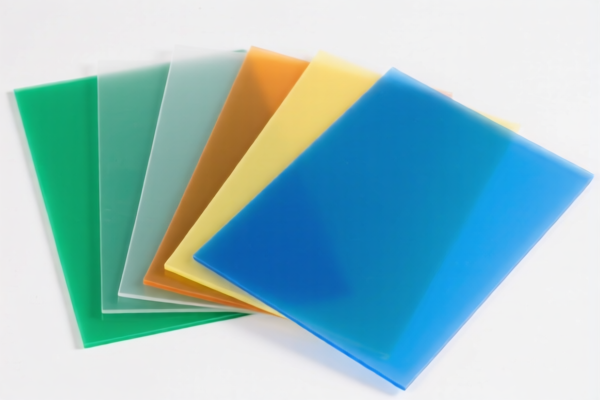
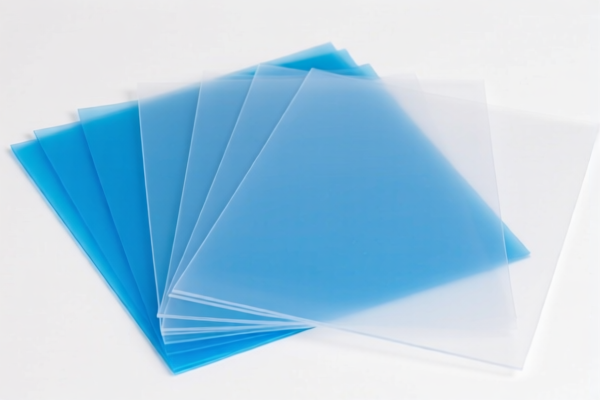

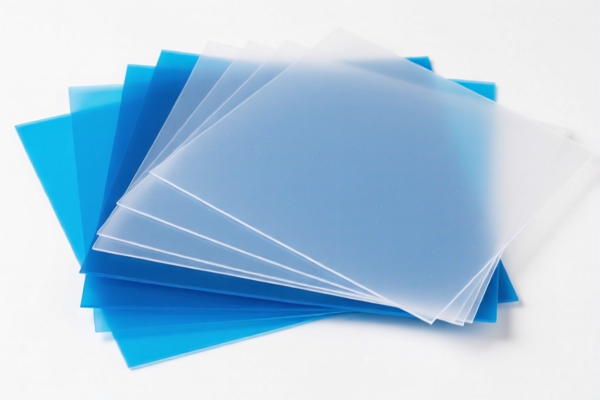
AI Analysis
🖥️ Polyester Plastic Sheets (Protective Covers for Advertising)
🌐 HS Code Reference & Customs Clearance Guide | 2026 Latest Tariff Analysis | Professional Compliance Strategy 📌 I. Product Definition & Classification: What Exactly is "Polyester Plastic Sheet" for Advertising?
Polyester plastic sheets, specifically those used for advertising and protective covering, are versatile materials in the global trade of polymers. They are typically made from Polyethylene Terephthalate (PET) or other polyester resins. In international customs classification, the exact HS Code depends on the physical form (sheet, film, plate), adhesive properties (self-adhesive or not), and specific chemical composition.
⚠️ Key Distinction Points:
- Non-Adhesive vs. Self-Adhesive: If the sheet has an adhesive backing, it falls under different subheadings than plain sheets.
- Form Factor: Is it a rigid "plate/panel" (thicker) or a flexible "film/foil" (thinner)? Customs often distinguishes between Chapter 3902 (Polymers of Ethylene), Chapter 3903 (Other Plastics), and Chapter 3901/3920/3921.
- Use Case: "Advertising" usually implies printing surfaces, which often aligns with PET sheets (Chapter 3920 or 3921).
📦 II. HS Code Classification Details (2026 Authoritative Data)
Based on the provided data, here are the 5 specific HS Codes associated with "Polyester Plastic Sheets for Advertising," along with their detailed tax implications. All entries include a 25% Additional Tariff and a 122-Clause Tariff (10%), resulting in high total duties.
| HS Code | Product Description | Total Tax Rate | Tax Breakdown |
|---|---|---|---|
| 3921.19.00.90 | Polyester Plastic Sheets, for Advertising, classified as Other Plastic Plates, Sheets, Film, Foil and Strip | 41.5% | Base: 6.5% + Add'l: 25.0% + Clause 122: 10% |
| 3921.90.50.50 | Polyester Plastic Sheets, for Advertising, classified as Plastic Plates, Sheets, Film, Foil and Strip (Other) | 39.8% | Base: 4.8% + Add'l: 25.0% + Clause 122: 10% |
| 3920.62.00.90 | Polyester Plastic Sheets, for Advertising, classified as Plates, Sheets, Film, Foil and Strip of Polyesters (PET) | 39.2% | Base: 4.2% + Add'l: 25.0% + Clause 122: 10% |
| 3919.90.50.60 | Polyester Plastic Sheets, for Advertising, classified as Self-Adhesive Plates, Sheets, Film, Foil, Tape, Strip and Other Flat Shapes | 40.8% | Base: 5.8% + Add'l: 25.0% + Clause 122: 10% |
| 3919.90.50.40 | Polyester Plastic Sheets, for Advertising, classified as Other Self-Adhesive Flat Shapes | 40.8% | Base: 5.8% + Add'l: 25.0% + Clause 122: 10% |
🔍 Critical Insight:
- 3920.62.00.90 offers the lowest total tax (39.2%) if the product is a non-adhesive PET sheet.
- 3921.19.00.90 is the highest tax (41.5%) for general polyester plastic plates/sheets.
- 3919 series applies if the sheet is self-adhesive (e.g., adhesive vinyl for signs).
💰 III. Detailed 2026 Tariff Structure (Including Surtaxes)
✅ Jurisdiction: USA (Import from China)
✅ Effective Date: Current trade policies including Section 301 and Section 122 measures
✅ Base Rate: Varies by HS Code (4.2% – 6.5%)
✅ Additional Tariff (Section 301): +25%
✅ 122-Clause Tariff: +10%
✅ Total Effective Duty: 39.2% – 41.5%
🎯 1. Low-Tax Option: 3920.62.00.90 (PET Sheets)
- Base Duty: 4.2%
- Section 301 Surcharge: +25%
- 122-Clause Surcharge: +10%
- Total: 39.2%
- Calculation: CIF Value × 39.2%
- Legal Basis:
USITC:3920.62.00.90→Footnote:301+122-Clause
📌 Why it’s cheaper: PET (Polyethylene Terephthalate) sheets often fall under specific polyester classifications with lower base duties compared to "other plastics."
🎯 2. High-Tax Option: 3921.19.00.90 (Other Plastic Sheets)
- Base Duty: 6.5%
- Section 301 Surcharge: +25%
- 122-Clause Surcharge: +10%
- Total: 41.5%
- Calculation: CIF Value × 41.5%
📌 Warning: This classification is used for generic polyester sheets not specified as PET or other named polymers. The higher base rate (6.5%) makes it the most expensive option.
🎯 3. Self-Adhesive Options: 3919.90.50.x0
- Base Duty: 5.8%
- Section 301 Surcharge: +25%
- 122-Clause Surcharge: +10%
- Total: 40.8%
- Note: Applies if the sheet has an adhesive backing. Distinguish between
50.60(general self-adhesive) and50.40(other self-adhesive).
🛠️ IV. Customs Clearance Practical Advice (Avoid Pitfalls)
✅ 1. Documentation Checklist
| Document | Requirement | Notes |
|---|---|---|
| Commercial Invoice | Must specify "Polyester Plastic Sheet" or "PET Sheet" | Avoid vague terms like "plastic cover" |
| Product Specification Sheet | Include material composition (e.g., 100% PET), thickness, width | Critical for distinguishing between 3920 and 3921 |
| Photo of Product | Show surface texture, edges, and any adhesive backing | Helps customs determine if it’s self-adhesive (3919) |
| Adhesive Details | If self-adhesive, provide adhesive type and coverage | Required for 3919 classification |
| Certificate of Origin | Prove country of origin (China) | Subject to additional tariffs if from China |
✅ 2. Classification Strategy
🔥 Golden Rule: "Material First, Adhesive Second, Form Third!"
| Scenario | Recommended HS Code | Reason |
|---|---|---|
| Non-adhesive PET sheet (Clear/White) | 3920.62.00.90 |
Lowest base duty (4.2%), clearly PET |
| Non-adhesive General Polyester sheet | 3921.19.00.90 |
Generic classification, higher base duty |
| Self-adhesive vinyl/sheet | 3919.90.50.60 or 50.40 |
Adhesive presence moves it to Chapter 3919 |
| Thick Plate vs. Thin Film | Check thickness | If >1mm, may lean toward 3920/3921; if <1mm, consider film classifications |
✅ 3. Common Mistakes to Avoid
❌ Mistake 1: Calling it "Plastic Film" when it’s a "Sheet"
👉 Consequence: Misclassification → Potential penalties or delays.
✅ Fix: Use "Sheet" if rigid/thick, "Film" if flexible/thin.
❌ Mistake 2: Ignoring the Adhesive Factor
👉 Consequence: Using 3920 (non-adhesive) for self-adhesive products → Incorrect HS Code.
✅ Fix: If it sticks, use 3919.
❌ Mistake 3: Not Calculating Total Landed Cost
👉 Consequence: Surprising 40%+ duties eroding margins.
✅ Fix: Include 39.2–41.5% in your pricing model.
🌍 V. Global Market Comparison (2026)
| Country/Region | Recommended HS Code | Estimated Total Duty | Key Requirements |
|---|---|---|---|
| 🇺🇸 USA | 3920.62.00.90 |
39.2% | Section 301 + 122-Clause apply |
| 🇨🇳 China | 3920.62.00.90 |
6.5% | No additional surtaxes |
| 🇪🇺 EU | 3920.62.00.90 |
6.5% | CE marking may apply |
| 🇬🇧 UK | 3920.62.00.90 |
6.5% | Post-Brexit rules apply |
| 🇨🇦 Canada | 3920.62.00.90 |
5-6% | No Section 301 equivalent |
📌 Conclusion:
- The USA is the most expensive market due to additional tariffs.
- Diversify sourcing if targeting the US: Consider manufacturing in Vietnam, India, or Thailand to avoid Section 301 duties (if applicable under new rules).
📌 VI. Pro Tips for Cost Optimization
- Apply for HTS Code Exclusions: Check if your specific product type is excluded from Section 301 tariffs (though 122-Clause may still apply).
- Precise Material Description: Use "Polyethylene Terephthalate (PET) Sheet" instead of "Polyester Sheet" to target
3920.62.00.90. - Avoid Self-Adhesive if Possible: Non-adhesive sheets (
3920series) may have lower base duties than self-adhesive (3919series) in some cases. - Pre-Ruling Application: Submit a binding ruling request to US Customs (CBP) for a definitive HS Code determination before shipping.
🎯 VII. Final Checklist for Importers
✅ Step 1: Confirm Material (100% PET?)
✅ Step 2: Confirm Form (Sheet vs. Film vs. Plate)
✅ Step 3: Confirm Adhesive (Yes/No?)
✅ Step 4: Select HS Code (3920.62.00.90 is optimal for non-adhesive PET)
✅ Step 5: Calculate Total Duty (Base + 25% + 10%)
✅ Step 6: Prepare Documentation (Invoice, Spec Sheet, Photos)
📣 Final Advice:
"With duties nearing 40%, precision in classification is not just compliance—it’s profit protection."
Consult a licensed customs broker to verify your specific product’s HTS Code before shipping.
✨ Professional Clearance, Starting from Accurate Classification!
💼 Every Percent of Duty Saved is Pure Profit!
Customer Reviews
About HS Code Classification
The Harmonized System (HS) is an internationally standardized nomenclature developed by the World Customs Organization (WCO) to classify traded products. Over 200 countries use the HS system as the basis for customs tariffs, trade statistics, and import/export regulations.
Each HS code follows a hierarchical structure:
- Chapter (2 digits) — Broad category of goods (e.g., Chapter 84: Machinery and Mechanical Appliances)
- Heading (4 digits) — More specific grouping within the chapter
- Subheading (6 digits) — Internationally standardized breakdown, used by all WCO member countries
- National subdivisions (8-10 digits) — Country-specific extensions for further classification, such as US HTSUS 10-digit codes
Correct HS code classification is essential for smooth customs clearance, accurate duty payment, and compliance with trade regulations. Misclassification can lead to customs delays, overpayment of duties, or penalties.
When importing from CN to US, the applicable tariff rates may include:
- Most-Favored-Nation (MFN) rate — The standard duty rate applied to WTO members
- General rate — Applied to countries without trade agreements
- Trade remedy duties — Additional tariffs such as Section 301 (anti-dumping), Section 232 (national security), or countervailing duties
The information provided on this page is for reference purposes only. For official classification, please consult with your local customs authority or a licensed customs broker.