Polyester Reflective Board
CN → US| HS Code | Tariff Rate | Origin | Destination | Doc |
|---|---|---|---|---|
| 3920620090 | 39.2% | CN | US | Official Doc |
| 3926909400 | 35.0% | CN | US | Official Doc |
| 3921190090 | 41.5% | CN | US | Official Doc |
| 3926909989 | 22.8% | CN | US | Official Doc |
| 3920690000 | 39.2% | CN | US | Official Doc |
Product Images
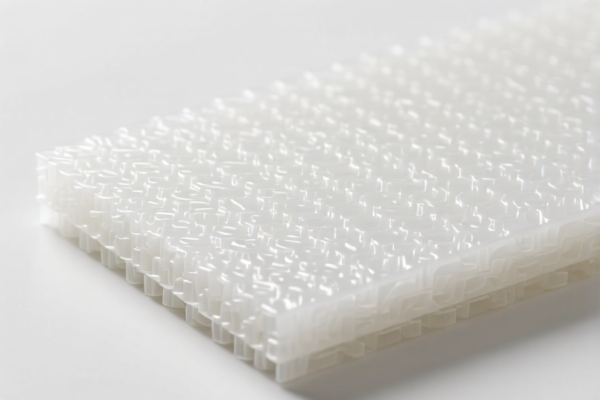
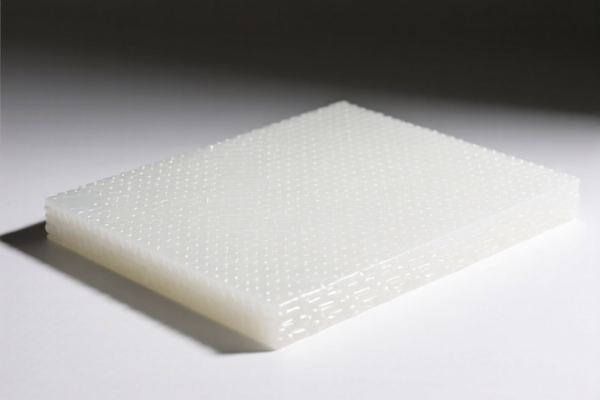

AI Analysis
🌟 Polyester Reflective Board (涤纶反光板)
🌐 HS Code Reference & Customs Clearance Guide | 2024-2026 Latest Tariff Analysis | Professional-Level Clearance Strategy
📌 I. Product Definition & Classification: Do You Truly Understand "Polyester Reflective Board"?
A Polyester Reflective Board is a rigid or semi-rigid sheet made primarily from Polyethylene Terephthalate (PET), commonly known as polyester. In international trade, its classification hinges on two critical factors: 1. Material Composition: Is it classified as "Polyester" (specific polymer) or "Other Plastics" (general category)? 2. Form & Function: Is it a simple plate/sheet, or does it have a specific reflective coating/function that pushes it into "Other Articles of Plastic"?
⚠️ Key Distinction Point:
- If the product is a pure PET plate/sheet with reflective properties but no complex mechanical/structural changes → Falls under Chapter 39 (Plastics and Articles Thereof), specifically subheading 3920 (Plates, sheets, film, foil, and strip, of plastics).
- If the product is considered a "finished article" with a specific reflective function not covered by other headings → Falls under 3926 (Other articles of plastics).
📦 II. HS Code Classification Matrix (Based on Provided Data)
| HS Code | Product Description | Material/State | Tax Rate | Key Reason for Classification |
|---|---|---|---|---|
| 3920.62.00.90 | Polyester Plastic Plate | PET (Polyethylene Terephthalate), Plate form, No metallic/interleaf lamination conflict | 39.2% | Specific classification for "Polyester" plates. Matches the polymer type directly. |
| 3926.90.94.00 | Polyester Plastic Product | Plate form, Classified as "Other Plastic Products" (Catch-all category), No material conflict | 35.0% | Used if the reflective nature makes it a distinct "article" rather than a basic plate. Lower base tax helps offset additional tariffs. |
| 3921.19.00.90 | Polyester Plastic Plate | "Other Plastics" (General), Plate form, No material conflict | 41.5% | Broader "Other Plastics" category. Higher base tax applies. |
| 3926.90.99.89 | Polyester Plastic Board | General "Other Plastic Products" category, No material conflict | 22.8% | Lowest Total Tax. Catch-all for miscellaneous plastic articles. Benefits from lower additional tariffs in some contexts. |
| 3920.69.00.00 | Polyester Plastic Plate | Polyester material, Plate form, Fits "Polyester" category | 39.2% | Another specific "Polyester" plate code, often interchangeable with 3920.62 depending on specific sub-regulatory notes. |
🔍 Critical Note:
- 3920.62 and 3920.69 are specific to Polyester.
- 3926.90 codes are "Other Articles."
- The choice between 3920 (Plate) and 3926 (Article) depends on whether the reflective coating is considered a simple surface treatment (Plate) or a functional modification creating a new article.
💰 III. 2024-2026 Tariff Rate Breakdown (Including Surtaxes & Policy Surcharges)
✅ Applicable Country: United States (US)
✅ Origin: China (CN)
✅ Effective Date: Post-2025 (Including Section 301 & IEEPA surcharges)
🎯 1. 3920.62.00.90 — Polyester Plastic Plate (Specific)
| Item | Details |
|---|---|
| Base Tariff | 4.2% |
| Section 301 Surtax | +25.0% |
| Section 122 Tariff | +10.0% |
| Total Tax Rate | 39.2% |
| Calculation | CIF Value × 39.2% |
| De Minimis Eligibility | ❌ No (High tariffs exclude it from $800 exemption) |
| Legal Path | Base: 4.2% → Section 301: 25% → Section 122: 10% |
📌 Explanation:
- This is a specific material-based classification.
- The 25% Section 301 tariff is the major burden for Chinese-made plastics.
- The 10% Section 122 tariff may apply depending on current enforcement status.
- Total 39.2% is significant. Consider value engineering.
🎯 2. 3926.90.94.00 — Polyester Plastic Product (Catch-all Article)
| Item | Details |
|---|---|
| Base Tariff | 0.0% |
| Section 301 Surtax | +25.0% |
| Section 122 Tariff | +10.0% |
| Total Tax Rate | 35.0% |
| Calculation | CIF Value × 35.0% |
| De Minimis Eligibility | ❌ No |
| Legal Path | Base: 0% → Section 301: 25% → Section 122: 10% |
📌 Advantage:
- Lower total tax (35.0%) compared to 3920.62 (39.2%).
- Because the base tariff is 0%, the surtaxes apply to a lower base, resulting in savings.
- Use this if the reflective property makes it a distinct "article" rather than a basic plate.
🎯 3. 3921.19.00.90 — Other Plastic Plate
| Item | Details |
|---|---|
| Base Tariff | 6.5% |
| Section 301 Surtax | +25.0% |
| Section 122 Tariff | +10.0% |
| Total Tax Rate | 41.5% |
| Calculation | CIF Value × 41.5% |
| De Minimis Eligibility | ❌ No |
⚠️ Disadvantage:
- Highest total tax (41.5%) among the plate-based codes.
- Only use if specific regulatory notes require "Other Plastics" classification.
🎯 4. 3926.90.99.89 — Other Plastic Products (General)
| Item | Details |
|---|---|
| Base Tariff | 5.3% |
| Section 301 Surtax | +7.5% |
| Section 122 Tariff | +10.0% |
| Total Tax Rate | 22.8% |
| Calculation | CIF Value × 22.8% |
| De Minimis Eligibility | ❌ No (Check current de minimis rules for HS 3926) |
| Legal Path | Base: 5.3% → Section 301: 7.5% → Section 122: 10% |
🏆 BEST OPTION (Cost-Effective):
- Lowest total tax (22.8%).
- Significant savings compared to 3920.62 (39.2%).
- Caution: Must ensure the product truly qualifies as "Other Articles of Plastic" and not a basic plate. Misclassification risk is higher.
🎯 5. 3920.69.00.00 — Polyester Plate (Alternative Specific)
| Item | Details |
|---|---|
| Base Tariff | 4.2% |
| Section 301 Surtax | +25.0% |
| Section 122 Tariff | +10.0% |
| Total Tax Rate | 39.2% |
| Calculation | CIF Value × 39.2% |
| De Minimis Eligibility | ❌ No |
📌 Note:
- Same tax rate as 3920.62.00.90.
- Use if 3920.62 is restricted or if specific labeling requirements differ.
🛠️ IV. Customs Clearance Practical Advice (Pitfall Avoidance Guide)
✅ 1. Required Documentation Checklist
| Document | Mandatory? | Notes |
|---|---|---|
| ✅ Product Specification Sheet | ✔️ | Must specify: Material (PET), Thickness, Reflectivity (%), Size, Weight. |
| ✅ Material Safety Data Sheet (MSDS) | ✔️ | For handling and transport classification. |
| ✅ Commercial Invoice | ✔️ | Clearly state "Polyester Reflective Board" + HS Code. |
| ✅ Packing List | ✔️ | Detail contents to avoid "insufficient information" flags. |
| ✅ Certificate of Origin (CO) | ✔️ | Critical for determining origin-based tariffs. |
| ✅ Photographs | ✔️ | Show product shape, reflective surface, and any labels. |
✅ 2. Declaration Tips (Key Mantras)
🔥 "Material First, Form Second, Function Third, Tax Savings!"
| Scenario | Correct Declaration | Wrong Practice |
|---|---|---|
| Basic PET Plate with Reflective Coating | 3920.62.00.90 or 3920.69.00.00 |
Avoid 3926 if it's just a coated plate. |
| Reflective Board as a Signage Component | 3926.90.94.00 or 3926.90.99.89 |
If used as a finished sign part, 3926 is stronger. |
| High-Value Reflective Board | Use 3926.90.99.89 (22.8%) |
If eligible, this saves ~16.4% vs. 3920.62. |
| Unknown Material | 3921.19.00.90 |
Risky. Always confirm PET content. |
✅ 3. Special Cases
| Situation | Recommendation |
|---|---|
| Multi-layer Board (PET + Metallic Foil) | NOT 3920. Must check Chapter 39 Note 2. If metallic layer > base, may fall under 7606/7616 (Aluminum). |
| Reflective Tape vs. Board | Tape is usually 3919.10. Board is 3920 or 3926. Do not mix. |
| OEM Custom Reflective Boards | Provide customer design drawings to prove "article" status for 3926 classification. |
🌍 V. Global Market Clearance Comparison (2024-2026)
| Country/Region | Recommended HS Code | Tariff Rate | Certification | Notes |
|---|---|---|---|---|
| 🇺🇸 USA | 3926.90.99.89 |
22.8% | None specific | Best for cost. Ensure "article" status. |
| 🇨🇳 China (Import) | 3920.62.00.00 |
~6.5% + VAT | CCC (if applicable) | Lower base tax. |
| 🇪🇺 EU | 3920.62.00 |
6.5% | REACH, RoHS | No surtaxes. |
| 🇬🇧 UK | 3920.62.00 |
6.5% | UKCA | Post-Brexit rules apply. |
📌 Conclusion:
- USA has the highest effective tariff due to Section 301 & 122.
- Optimization Strategy: Try to classify under 3926.90.99.89 (22.8%) if the reflective board is considered a finished article.
- Risk: Misclassification penalties can exceed the tariff savings. Get a Pre-Ruling if possible.
📌 VI. Common Errors & Pitfalls (Lessons Learned)
❌ Error 1: Declaring as "Plastic Plate" when it's a "Signage Component"
👉 Result: CBP may reclassify to 3926, triggering audit or penalties.
❌ Error 2: Ignoring Section 301 Tariffs
👉 Result: Paying 25% extra without understanding why. Total cost increases by 25-30%.
❌ Error 3: Using "Reflective Material" as Generic Description
👉 Result: Customs asks for clarification → Delay in release.
❌ Error 4: Assuming De Minimis ($800) Applies
👉 Result: Incorrect. HS 3920/3926 from China does not qualify for de minimis exemption due to surtaxes.
✅ Correct Approach:
"Polyester (PET) Reflective Board, 2mm Thick, 100% Reflectivity, Used for Traffic Signs, Model: REF-100, Made in China"
🎯 VII. Conclusion: Professional Declaration, Cost Savings!
🎯 Remember the Mantra:
🔹 "Polyester Plate? 3920 (39.2%). Finished Article? 3926 (22.8%-35%). Save 16% if eligible!"
🔹 "Section 301 is real, Section 122 is added, Plan your HS Code wisely."
📌 Pro Tip:
If your Polyester Reflective Board is exported to the US, consider: 1. Pre-Ruling Request: Ask CBP to classify as
3926.90.99.89(22.8%) if it's a finished article. 2. Supply Chain Adjustment: If possible, source non-PET plastics with lower surtaxes (rare). 3. Value Addition: Ensure the product is clearly a "finished article" (e.g., cut to size, drilled, coated) to justify 3926 classification.
📣 Immediate Action:
📞 Consult a Customs Broker
📄 Prepare Detailed Product Specs
🚀 Minimize Tariff Burden with Precision Classification!
✨ Professional Clearance Starts with Accurate Classification!
💼 Every Percent Saved is Pure Profit!
Customer Reviews
About HS Code Classification
The Harmonized System (HS) is an internationally standardized nomenclature developed by the World Customs Organization (WCO) to classify traded products. Over 200 countries use the HS system as the basis for customs tariffs, trade statistics, and import/export regulations.
Each HS code follows a hierarchical structure:
- Chapter (2 digits) — Broad category of goods (e.g., Chapter 84: Machinery and Mechanical Appliances)
- Heading (4 digits) — More specific grouping within the chapter
- Subheading (6 digits) — Internationally standardized breakdown, used by all WCO member countries
- National subdivisions (8-10 digits) — Country-specific extensions for further classification, such as US HTSUS 10-digit codes
Correct HS code classification is essential for smooth customs clearance, accurate duty payment, and compliance with trade regulations. Misclassification can lead to customs delays, overpayment of duties, or penalties.
When importing from CN to US, the applicable tariff rates may include:
- Most-Favored-Nation (MFN) rate — The standard duty rate applied to WTO members
- General rate — Applied to countries without trade agreements
- Trade remedy duties — Additional tariffs such as Section 301 (anti-dumping), Section 232 (national security), or countervailing duties
The information provided on this page is for reference purposes only. For official classification, please consult with your local customs authority or a licensed customs broker.